
Your snow blower surging at full throttle is one of the most frustrating cold-weather breakdowns. Snow blower surging happens when the engine wildly swings between high and low RPMs, creating an erratic “hunting” pattern that makes the machine nearly impossible to control. The problem typically appears under heavy load, like clearing wet or packed drifts, and almost always traces back to a fuel or air imbalance inside the carburetor.
In most cases, surging stems from a clogged jet, a lean fuel mixture, or a small vacuum leak. Left alone, it leads to overheating, poor cutting performance, and permanent engine wear. You’ll learn exactly how to diagnose the cause, clean the carburetor properly, fix stubborn Tecumseh surging, and prevent the issue from returning next winter.
Recognize the Surge Pattern
How Snow Blower Surging Actually Works
Snow blower surging is not random. The engine revs to full speed, then suddenly drops, then revs again in a repeating loop. This happens because the carburetor’s main (high-speed) circuit runs lean at top RPM. As the engine slows, the idle (low-speed) circuit takes over with a richer mix, the engine accelerates again, and the cycle restarts.
The governor responds to each RPM drop by opening the throttle wide, which keeps the loop going. Most users notice the problem most during heavy snow clearing at full throttle.
Spot the Signs of a Lean Mixture
A lean fuel mixture is the most common underlying cause. Your engine runs lean if it runs better with the choke slightly engaged. Other clear signs include:
- White or light gray spark plug tip
- Glowing red muffler (especially on Tecumseh engines)
- Engine only starts or stays running with the choke pulled
A lean mix means too much air or too little fuel is reaching the combustion chamber. Factory emissions settings often leave engines on the lean side, and clogged jets make it worse.
Watch for Choke Dependency
Engines that only run with the choke on are screaming for help. This almost always points to fuel delivery problems, especially after sitting in storage. Ethanol-blended fuel attracts moisture and dries into varnish that clogs tiny passages. If your machine started surging after summer storage, stale fuel is the prime suspect.
Diagnose the Root Cause

Test for Vacuum Leaks
A cracked intake gasket or loose carburetor mount lets unmeasured air sneak into the engine, leaning out the mix. This is common on Honda and Chonda (Chinese Honda clone) engines.
Spray carburetor cleaner or starting fluid around the carburetor base and intake manifold while the engine surges. If the RPM jumps or the surging changes character, you have a vacuum leak. Replace the intake gasket or tighten the mounting bolts to fix it.
Inspect the Spark Plug
Pull the spark plug and check its color:
- White or light gray: Lean burn
- Black and sooty: Rich burn
- Tan or brown: Ideal mixture
Even a brand-new plug can misfire if the fuel mix is off. Swap in a quality NGK spark plug, but remember: a new plug only confirms the symptom, it does not cure the cause.
Run the Choke Test
Run your snow blower at high throttle where surging occurs. Slowly engage the choke. If the engine smooths out immediately, you have a confirmed lean condition. Hold the test for 10 to 15 seconds. Smooth operation means you should focus your repair on fuel delivery, not ignition or mechanical parts.
Clean the Carburetor the Right Way
Remove and Disassemble Safely
Shut off the fuel valve or drain the tank. Disconnect the fuel line and remove the carburetor. Take off the float bowl carefully and set the thin gasket aside where it will not get bent or twisted.
Disassemble everything completely:
- Remove the main jet (brass screw in the center of the bowl)
- Remove the idle jet (small screw under a plastic or tin cap)
- Check the bowl nut for a tiny side hole (critical on Tecumseh engines)
Keep parts organized in order. Soak all metal components in carburetor cleaner.
Clear Every Jet Passage
Use torch tip cleaners or stiff wire to poke through every hole:
- Main jet: Clear the center hole and the slot across it
- Idle jet: Often heavily clogged; use a fine wire or small drill bit
- Bowl nut: On Tecumseh engines, the small side hole plugs with corrosion; use wire from a wire brush clamped in vise grips
Blow compressed air through every passage at least five times. Some holes are nearly invisible, so shine a bright light through them to confirm they are open.
Reassemble Without Leaks
Before reinstalling the float bowl:
- Apply a thin smear of grease to the carburetor body where the gasket sits
- Place the gasket flat and press it gently into place
- Install the bowl and tighten evenly
A twisted gasket causes fuel leaks and air ingress. If you see gas dripping after reassembly, take it apart and reseat the gasket.
Fix Stubborn Tecumseh Carburetor Issues
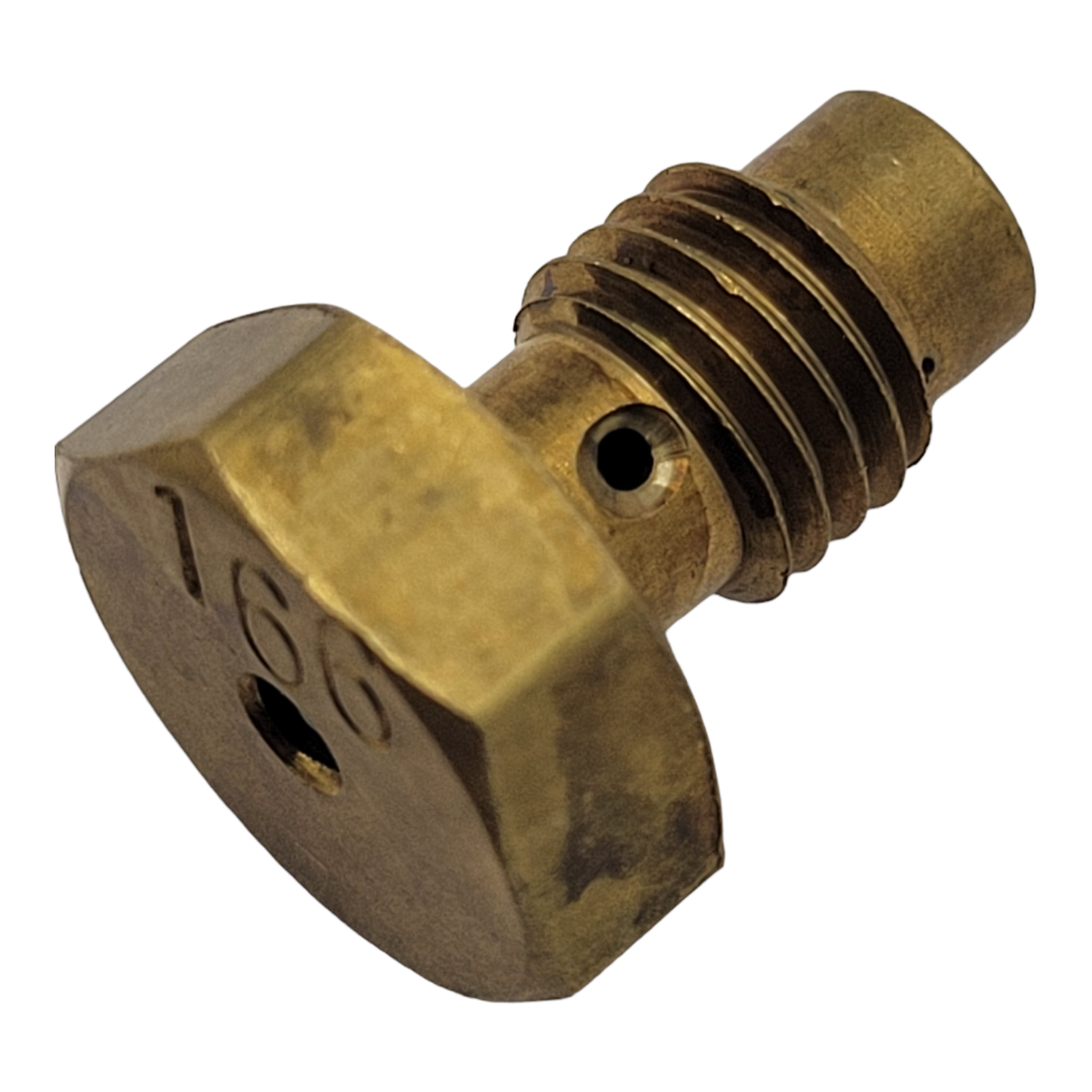
Clear the Bowl Nut Side Hole
On Tecumseh engines like the OHH55 and H80, a tiny hole on the side of the bowl nut feeds the idle circuit. This hole is easy to miss and quickly clogs with rust or varnish.
Use stiff wire to clear it. Many users do not believe the hole exists until they see it under bright light. Skipping this step leaves the idle circuit starved and surging intact.
Drill the Idle Jet for a Permanent Fix
If cleaning fails to solve surging, drilling the idle jet is the proven fix for Tecumseh engines.
Steps:
- Remove the idle screw under the plastic cap
- Clamp it in a vise and drill the center hole with a 0.013–0.015 inch micro drill bit
- Enlarge the side hole slightly with a bigger bit
- Reinstall and leave the cap off as a reminder the jet has been modified
This enriches the low-speed circuit and breaks the lean/rich surge cycle. Most users report smooth operation immediately after this modification.
Replace With a Budget Carburetor
New Tecumseh carburetors cost under $20 online, but many are Chinese clones with incorrect jet sizing. If a new carb still surges:
- Remove the main jet (bowl nut) and idle jet
- Drill each two sizes larger, one at a time
- Test after each increase
This method resolved surging on a Coleman generator with an OHH55 Tecumseh engine after a direct replacement carb failed.
Adjust or Replace the Carburetor
Tune the Mixture Screw
If your carburetor has an adjustable mixture screw:
- Turn clockwise until the engine starts to die (lean limit)
- Turn counterclockwise until surging stops (optimal point)
Do not over-richen the mix, as that causes fouling. The idle speed screw only controls idle RPM, it does not adjust fuel mixture.
Upgrade to a Better Carb
Generic 6.5hp carburetors (Honda-style) cost under $30 and often outperform OEM units. For Craftsman 208cc models, a 6.5hp carb is a direct swap. Some may need slight drilling to match jet size perfectly.
Replace When Cleaning Is Not Worth It
If you have spent 3+ hours cleaning a clogged carb with no results, replace it. New carburetors from Amazon or Tractor Supply include gaskets and jets, are often more reliable than repeated cleanings, and may still need jet tweaks for ideal performance.
Prevent Future Surging

Drain Fuel Before Winter Ends
Eps your snow blower for storage with these steps:
- Drain the fuel tank
- Run the engine dry to empty the carburetor
- Or use fresh fuel with Stabil (2 oz per gallon)
Ethanol-blended fuel attracts water, leading to corrosion and varnish that destroy carburetors. Do not rely on stabilizer alone, as many users report issues even with treatment.
Use Fresh Gas Every Season
If last year’s fuel does not smell like fresh gasoline, siphon and replace it. Old gas forms gum and varnish that clog jets quickly. Use non-ethanol fuel when possible. Otherwise, treat every fill with Mechanic-In-A-Bottle or Berryman’s B12 Chemtool for stronger cleaning power than Sea Foam.
Clean the Carburetor Annually
Even if your machine runs fine, remove and clean the carburetor bowl once a year. Check jets, replace gaskets, and blow out passages. Prevention takes 30 minutes; fixing surging takes hours.
Frequently Asked Questions About Snow Blower Surging
Why Does My Snow Blower Surge at Full Throttle?
Surging at high RPM happens because the carburetor’s main fuel circuit runs lean at top speed. The engine slows, the idle circuit richens the mix, and the governor opens the throttle again, creating a repeating cycle.
Can a Bad Spark Plug Cause Snow Blower Surging?
A worn or incorrect spark plug can contribute to surging, but it is rarely the root cause. Check the plug color first: white means lean, tan means normal. Replace with an NGK plug if damaged, then focus on the carburetor.
What Is the Easiest Way to Confirm a Lean Fuel Mixture?
Run the engine at full throttle and slowly engage the choke. If surging stops or smooths out, the mixture is lean. This is the fastest diagnostic for fuel delivery problems.
Is It Worth Replacing the Carburetor Instead of Cleaning It?
If cleaning takes more than two hours with no improvement, replacement is usually faster and cheaper. New aftermarket carburetors cost $20 to $30 and often include gaskets and jets.
Why Does My Tecumseh Snow Blower Keep Surging After Cleaning?
Tecumseh carburetors have a tiny side hole in the bowl nut that feeds the idle circuit. It clogs easily and is easy to miss. If cleaning does not solve the problem, drill the idle jet with a 0.013–0.015 inch micro drill bit for a permanent fix.
Key Takeaways for Fixing Snow Blower Surging
Snow blower surging almost always comes down to carburetor problems. Start with a simple choke check to verify a lean condition. Clean the carburetor thoroughly, paying special attention to the bowl nut side hole on Tecumseh engines. If cleaning fails, drill the idle jet or replace the entire carburetor for under $30.
Prevent future problems by draining fuel at season’s end, using fresh gas, and cleaning the carburetor bowl once a year. With the right approach, your snow blower will start easily and run smoothly all winter long.