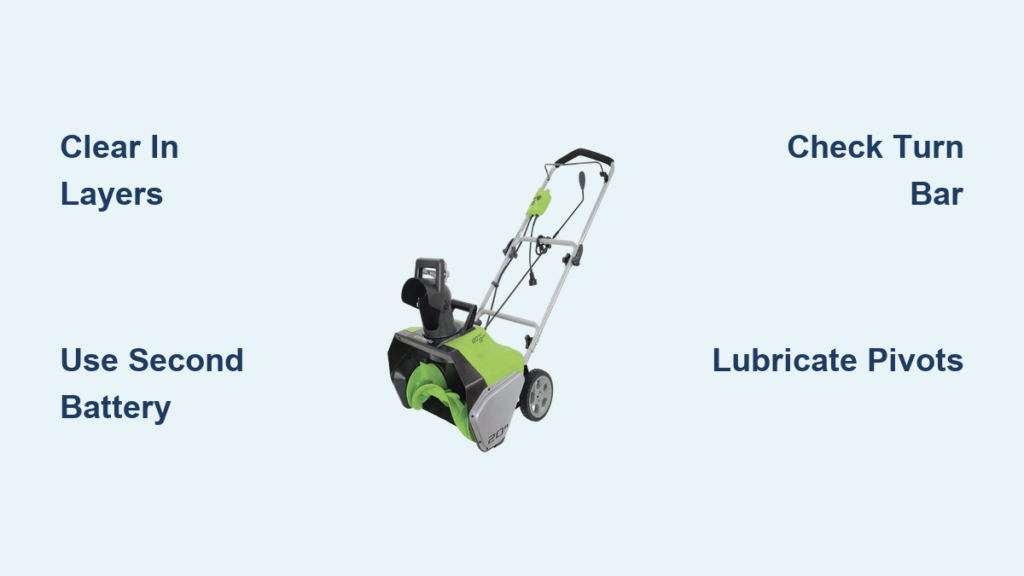
You bought a Greenworks snow blower for easy starts, quiet operation, and zero gas hassle. But when the first real storm hits, you notice the auger slowing down in heavy snow, the battery draining faster than expected, or the chute refusing to rotate. These common greenworks snow blower problems frustrate owners of the 80V 22-inch and 20-inch models alike, especially during back-to-back storms or deep accumulations.
This guide breaks down every major issue reported by real users and supported by technical data. You will learn how to diagnose performance drops, extend battery life, fix stiff controls, and prevent breakdowns before they happen. Whether you are troubleshooting right now or preparing for next winter, these actionable solutions will keep your driveway clear and your blower running strong.
Handle Deep Snow Without Overloading the Auger
Reduce Strain with Layered Clearing
The Greenworks 80V 22-inch model struggles when snow exceeds 8 inches or becomes wet and packed. The motor cannot always keep up with heavy loads, which causes clogs and reduced throwing distance.
- Take a shallow first pass of 3 to 4 inches, then go back for the rest
- Clear fresh snow before it compacts into wet, dense layers
- Stop immediately if the discharge chute slows down or stops throwing
Pro Tip: Walk slowly and let the machine do the work. Pushing too fast reduces efficiency and drains the battery faster.
Match Speed to Snow Conditions
Running at full power continuously in heavy snow wastes energy and stresses components. Use medium speed for wet snow and high speed for dry, fluffy snow. Alternating the chute direction also prevents piling snow where you still need to clear.
Maximize Battery Runtime and Charging Efficiency
Extend Runtime with a Second Battery
The included 80V 5.0Ah battery delivers about 45 minutes under moderate use. Runtime drops sharply in heavy snow or continuous operation, leaving you stranded mid-driveway.
- Purchase a second battery and swap mid-job to eliminate downtime
- Use Eco Mode or lower speeds when possible to conserve power
- Plug in the battery as soon as snow is in the forecast (charging takes about 6 hours)
Reduce Charging Delays
Long charging times rank among the top complaints from Greenworks owners. Verify your charger is working correctly and optimize your setup.
- Confirm the charger light turns green when charging completes
- Use a dedicated wall outlet and avoid extension cords that reduce efficiency
- Some third-party fast chargers claim shorter times, but verify compatibility with your battery before buying
Store Batteries to Prevent Degradation
Improper storage ruins batteries over time. Keep yours healthy with these habits.
- Store at 50% charge during summer months
- Inspect terminals for corrosion and clean with a dry cloth
- Avoid extreme temperatures, both freezing garages and hot sheds
Warning: Never leave a battery fully charged or completely drained for weeks. This shortens overall lifespan significantly.
Reassemble the Folded Handle Correctly After Storage
Restore the Handle Before First Use
The Greenworks 80-Volt Pro features a foldable handle for compact summer storage. After months in the garage, the handle must be reassembled properly or it can collapse during operation.
- Lift the handle upright into position
- Reinsert the turn bar (metal pin) to lock it in place
- Confirm it clicks securely and test all levers
Common Mistake: Forgetting the turn bar entirely. This is the single most reported post-storage issue. Double-check it before heading outside.
Maintain the Auger and Impeller System

Clear Debris After Every Use
Snow, ice, and slush freeze inside the auger housing and reduce performance over time. A quick post-use routine prevents buildup from hardening.
- Run the blower for 30 seconds after clearing to dry internal parts
- Use a soft brush or cloth to remove packed snow from the auger and impeller
- Never use metal tools, as they damage rubber blades and housing
Inspect Rubber Auger Blades Seasonally
The rubber-tipped auger protects your driveway but wears down with use. Check for cracks, tears, uneven wear, or loss of flexibility. Replace blades when rubber becomes thin or chunks are missing, as this reduces traction and throwing power.
Diagnose and Fix Drive Belt Problems

Spot Belt Wear Early
Some Greenworks models use a drive belt for propulsion. Check your manual to confirm whether yours has one. Warning signs include wheels spinning slower than usual, loss of forward or reverse power, and squeaking during movement.
- Inspect every season for cracks, fraying, or stretching
- Check tension: belt should have ¼ to ½ inch deflection
- Replace if worn, since a loose belt slips and a too-tight belt damages bearings
Lubricate Moving Parts the Right Way
Apply Lubricant to Key Pivot Points
Dry pivots cause stiff controls and premature wear. Focus on the auger shaft, chute rotation mechanism, and drive wheel axles. Use a light silicone-based lubricant or white lithium grease for best results.
Critical Warning: Do not over-lubricate. Excess grease attracts dirt and forms an abrasive paste that accelerates wear on bearings and seals.
Free Up a Stiff Chute
If the chute will not rotate or feels stuck, start by cleaning ice and debris from the chute collar. Apply a small amount of lubricant to the turning ring, then rotate the chute by hand several times to distribute the lube evenly.
Troubleshoot Starting and Power Failures
Diagnose No-Power Issues Step by Step
Even electric models fail to start sometimes. Work through this checklist before calling support.
- Reseat the battery: Remove it and click it back into place firmly
- Check charge level: Look at indicator lights or plug in to verify
- Test the charger: Try a different outlet or test with another battery
- Engage the safety switch: Some models require the lever fully pressed
If the unit still has no power, contact Greenworks support. The issue may be an internal fuse or motor fault.
Follow an Annual Pre-Season Maintenance Checklist
Complete This Tune-Up Every Fall
Performing a full inspection before the first storm prevents mid-storm breakdowns. Work through these steps in late fall, before snow arrives.
- Reassemble handle and turn bar
- Inspect auger and impeller, then clean and check for damage
- Check drive belt and replace if cracked or loose
- Lubricate auger shaft, chute, and wheel pivots
- Test skid shoes and replace if worn through
- Clean battery terminals
- Charge battery fully
- Test all functions: auger, impeller, drive, and chute control
Choose Between the 20-Inch and 22-Inch Models

Match the Blower to Your Driveway
| Feature | 20-Inch Model | 22-Inch Model |
|---|---|---|
| Best For | Small driveways, sidewalks | Medium driveways |
| Weight | Lighter, easier to store | Slightly heavier |
| Clearing Path | Narrower, more passes | Wider, fewer passes |
| Battery System | 80V (interchangeable) | 80V (interchangeable) |
Know When to Choose Gas Instead
Greenworks snow blowers excel in light to moderate snowfall but are not for every situation. Consider a gas model if you regularly get over 8 inches of snow, have a long or double-wide driveway, need continuous runtime, or cannot wait 6 hours between charges.
Prevent Costly Repairs with Early Part Replacement
Replace Wear-Prone Components on Schedule
| Component | Replace Every | Warning Signs |
|---|---|---|
| Skid Shoes | Annually | Driveway scraping, uneven height |
| Drive Belt | 2 to 3 seasons | Slipping, poor traction |
| Auger Blades | As needed | Cracks, missing rubber |
| Battery | 3 to 5 years | Short runtime, won’t hold charge |
Always use OEM parts when possible. Aftermarket options may not fit or perform to spec.
Recognize When It Is Time to Upgrade
Signs You Need a Replacement
Even well-maintained blowers wear out. Consider upgrading if your battery no longer holds a charge, the auger or impeller is damaged beyond repair, the drive system fails repeatedly, or you consistently face snow deeper than 8 inches. Look for newer Greenworks Pro models with improved motors or faster charging options.
Frequently Asked Questions About Greenworks Snow Blower Problems
Why does my Greenworks snow blower stop throwing snow in heavy conditions?
The motor cannot keep up when snow exceeds 8 inches or is wet and packed. Reduce depth per pass, clear fresh snow before it compacts, and stop immediately if the chute slows to prevent further strain.
How long does the 80V 5.0Ah battery actually last?
Expect about 45 minutes on medium settings under moderate use. Runtime drops significantly in heavy snow or continuous operation. Purchasing a second battery is the most common solution among users.
Can I leave the battery on the charger overnight?
Greenworks chargers are designed to stop when charging is complete, but leaving the battery connected for extended periods is not recommended for long-term battery health. Unplug once the indicator light turns green.
What is the turn bar and why does it matter?
The turn bar is the metal pin that locks the foldable handle in its upright position after summer storage. Forgetting to reinsert it is a common mistake and can cause the handle to collapse during use.
How do I fix a chute that will not rotate?
First, clear ice and debris from the chute collar. Then apply a small amount of silicone-based lubricant to the turning ring and rotate the chute by hand several times to distribute it.
Is the Greenworks snow blower good for a 2-car driveway?
Yes, for light to moderate snowfall up to 8 inches. A second battery is recommended for larger driveways to avoid mid-job charging delays.
Final Thoughts on Solving Greenworks Snow Blower Problems
Most greenworks snow blower problems come down to three key factors: battery management, snow depth expectations, and routine maintenance. Clear in multiple passes when snow exceeds 8 inches, invest in a second battery for longer sessions, and run through the annual checklist every fall before the first storm.
Your next step is simple: pull your blower out of storage today, work through the pre-season checklist, and order a backup battery if you do not already have one. With the right habits, your Greenworks will deliver quiet, reliable performance for many winters to come.