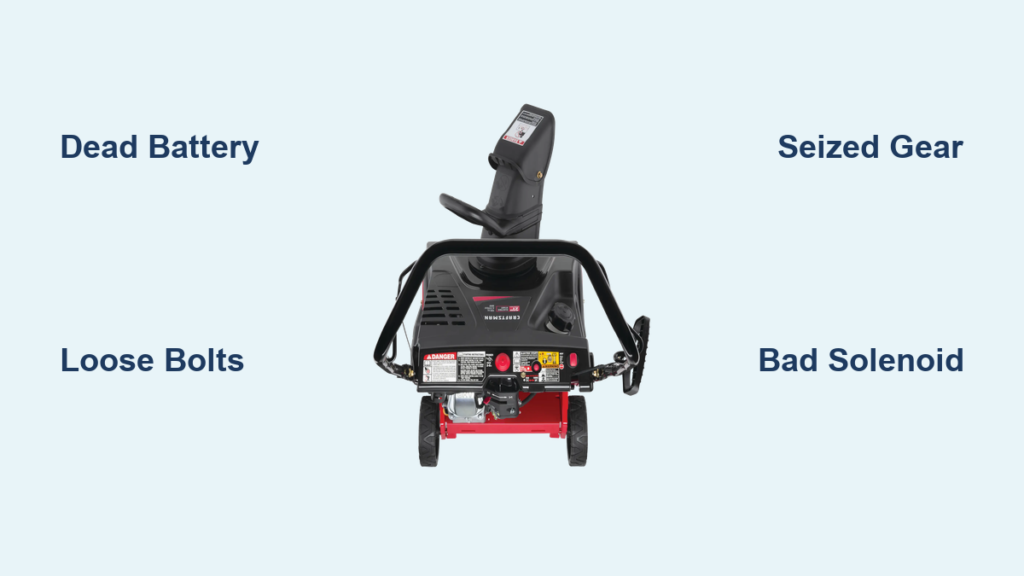
You press the electric start button on your snow blower and nothing happens. No crank, no spin, just silence or an annoying click. Meanwhile, the snow is piling up and your pull cord works just fine. This exact scenario plays out for thousands of homeowners every winter, and the frustration is real.
The good news about a snow blower electric start not working is that the problem is almost never the entire machine. In most cases, the issue traces back to one of three things: a seized gear, loose mounting bolts, or a dead battery. These are all repairable with basic tools and under an hour of your time. This guide walks you through every diagnosis and fix, from quick 10-minute checks to full starter replacement.
Decode Common Electric Start Symptoms
Before grabbing any tools, listen carefully to what your snow blower is telling you. The sound (or silence) when you press the start button reveals exactly where to look.
Nothing Happens When You Press Start
Complete silence points to an electrical problem. The circuit isn’t completing, so no power reaches the starter motor. Common culprits include:
- A dead or weak battery
- Loose or corroded battery connections
- A failed solenoid or start switch
- A tripped thermal overload (electric models)
- Safety interlock switches that aren’t engaged
Start by checking the battery voltage with a multimeter. A healthy reading sits at 12.6 volts or higher. If voltage is fine, inspect the terminals for white or greenish corrosion and clean them with a baking soda paste and wire brush. On electric models, confirm the power cord is fully plugged in and the outlet works.
Single Click With No Cranking
One solid click means the solenoid is engaging but the starter motor isn’t turning. This usually indicates low battery voltage, a failed solenoid, or a bad starter motor. The battery might show a full charge but lack the cranking amps needed under load.
Quick diagnostic test: With the engine off and battery disconnected, briefly bridge the solenoid’s two large terminals with a screwdriver. If the starter spins, replace the solenoid. If nothing happens, suspect the starter motor or battery.
Grinding or Clunking Noise

A grinding sound during startup almost always means mechanical misalignment, not a dead motor. On most snow blowers (especially Husqvarna and Tecumseh-powered models), the starter is held by two mounting bolts. Vibration over time can loosen these bolts, allowing the starter to shift during engagement. The drive gear partially meshes with the flywheel, creating that awful grinding sound.
The fix takes under 10 minutes:
- Remove the starter using a T30 star driver or 3/8-inch wrench
- Tighten both mounting bolts securely
- Apply blue thread locker before reinstalling
- Reattach and test
Starter Spins But Engine Doesn’t Crank
This is the most common electric start failure and the most misunderstood. The motor whirs away, but the engine doesn’t turn over. The cause is almost always a seized starter gear sprocket.
In Tecumseh and similar engines, the starter gear slides along a shaft to mesh with the flywheel. Rust buildup can seize the gear in the up position, so it spins uselessly without dropping down to engage. You might also notice corrosion on the shaft, a dried rubber bushing, or a weakened return spring.
To free it:
- Use a flathead screwdriver to gently pry the gear down one tooth at a time
- Apply penetrating oil (PB Blaster or Liquid Wrench) to the shaft
- Let it sit for 10–15 minutes
- Scrub with a nylon toothbrush to remove rust
- Lubricate with light non-detergent oil like CRC Air Tool Oil
- Test smooth movement and spring return
Avoid heavy grease. It attracts dirt and degrades rubber bushings.
Replace a Failed Starter Motor Step by Step
If cleaning and tightening don’t solve the problem, the starter motor itself may be dead. This is common in Yard Machine 10.5 HP models and other Tecumseh-powered units. The good news: replacement is fast and affordable.
Tools and Parts Needed
- 10mm socket or wrench
- Phillips screwdriver
- T30 star driver (optional)
- Replacement starter ($50–$80 on Amazon, or salvage one from a junked snow blower)
Replacement Steps
1. Disconnect the battery by removing the ground cable first to prevent accidental starts.
2. Remove the gas tank by taking out the two 10mm bolts that secure it to the frame. Lift the tank up and angle it out of the way. You don’t need to disconnect fuel lines, but note that the tank has a groove that fits over a frame tab for proper alignment later.
3. Access the starter by removing two 10mm bolts on the bottom of the starter and two 10mm nuts on the lower bracket. The two upper star-bit screws may only need loosening, not full removal.
4. Disconnect the wiring by unplugging the electrical connector. Note its orientation so you can reconnect it the same way.
5. Install the new starter by aligning it with the mounting holes, inserting the lower bolts, reattaching the bracket nuts, and reconnecting the wiring until it clicks.
6. Reinstall the gas tank by lowering it into place, aligning the groove with the frame tab, and tightening the 10mm bolts.
Reconnect the battery and test. You should hear smooth cranking and a clean start.
Fix Electric Snow Blowers That Start Then Shut Off
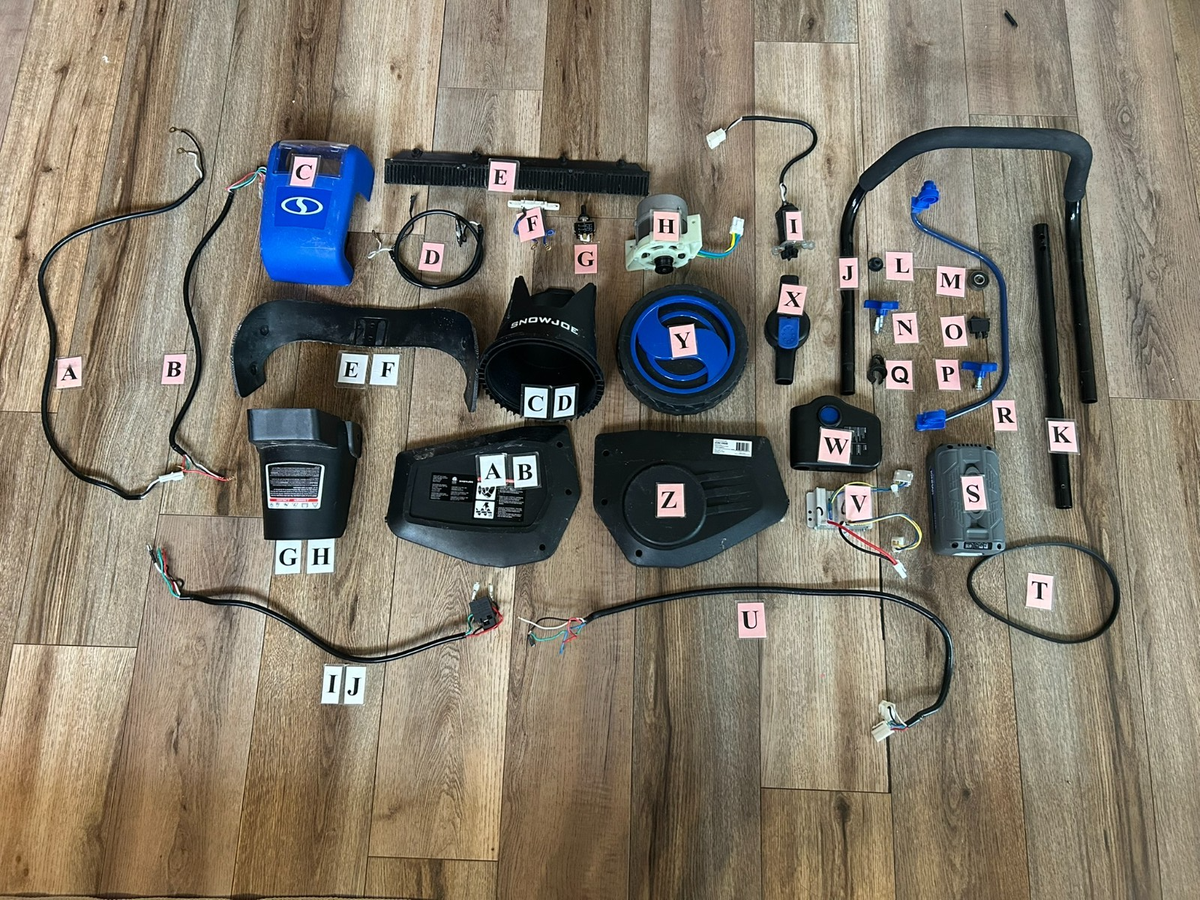
Corded electric models like Snow Joe have different failure patterns than gas units. A common complaint is the machine runs briefly, then cuts out. Here’s what to check.
Tripped Thermal Overload Switch
The motor overheats and shuts off automatically to protect itself. Let it cool for 5–10 minutes, then press the reset button. To prevent repeat trips, clear auger jams quickly and avoid prolonged use.
Safety Interlock Switch Failure
Handle bar and chute guard switches must be fully engaged. If misaligned or dirty, the motor cuts out. Clean the switches with contact cleaner and ensure all safety levers are fully depressed.
Bad Motor Capacitor
The capacitor helps the motor start under load. A swollen or leaking capacitor causes startup failure. Replace it by opening the motor housing, disconnecting power, and swapping in a matching replacement.
Jammed Auger
Even a small ice chunk can overload the motor. Turn off and unplug the unit, then use a wooden stick or plastic scraper to clear the chute. Never use your hands or metal tools.
Faulty Power Cord
Cords can have internal breaks that aren’t visible. Test with a known-working outlet and a heavy-duty 15A outdoor extension cord. Replace the cord if damaged or undersized.
Diagnose Electrical Issues Systematically
When the electric start fails, follow this logical path to isolate the problem.
Step 1: Test the Pull Start
If the pull cord works, the engine is fine. The problem is isolated to the electric start system. If the pull cord also fails, look at fuel, spark, and compression first.
Step 2: Listen for Specific Sounds
| Sound | Likely Issue |
|---|---|
| Nothing | Battery, wiring, or switch problem |
| Click | Solenoid or weak battery |
| Grinding | Loose bolts or misalignment |
| Spinning without crank | Seized gear or damaged flywheel |
Step 3: Inspect Key Components
Battery: Test voltage (12.6V is fully charged), clean terminals with a wire brush, and check the ground wire for corrosion.
Wiring harness: Inspect all connectors for looseness, cracked insulation, or rodent damage. Apply dielectric grease to prevent future corrosion.
Solenoid and switch: Test continuity with a multimeter. On many models, the starter comes with a built-in solenoid, so replace the unit as one piece.
Prevent Future Electric Start Failures
Most electric start problems are preventable with simple annual maintenance.
Annual Inspection Checklist
- Check starter gear movement (should slide freely)
- Inspect the rubber bushing for cracks
- Test return spring tension
- Tighten starter mounting bolts
- Clean and lubricate the shaft with air tool oil
- Verify battery charge and terminal condition
Lubrication Guidelines
Use light non-detergent oil only. Penetrating oil works for rust removal, but heavy grease degrades rubber bushings and attracts dirt. Apply blue thread locker to mounting bolts to prevent vibration loosening. Store your snow blower in a dry place and run the electric start monthly during the off-season if possible.
Cost and Repair Time Summary
| Issue | Fix | Cost | Time |
|---|---|---|---|
| Seized gear | Clean and lubricate | $0–$10 | 30–60 min |
| Loose bolts | Tighten with thread locker | $5 | Under 10 min |
| Dead battery | Replace | $30–$60 | 10 min |
| Bad starter | Replace unit | $50–$80 | 10 min |
| Bad capacitor | Replace | $10–$20 | 30 min |
| Power cord issue | Replace cord | $20–$40 | 15 min |
Most repairs cost under $100 and take less than an hour. There’s no need to replace the entire machine.
Frequently Asked Questions About Snow Blower Electric Start
Why does my snow blower electric start click but not crank?
A single click means the solenoid is engaging but the starter isn’t turning. The most common causes are low battery voltage (even a “charged” battery may lack cranking amps), a failed solenoid, or a bad starter motor. Bridge the solenoid terminals with a screwdriver to test. If the starter spins, the solenoid is bad. If nothing happens, suspect the starter or battery.
Can I use starting fluid if the electric start isn’t working?
Starting fluid won’t help if the starter motor isn’t turning the engine. The problem in most electric start failures is the starting system itself, not fuel delivery. If the pull start works, the engine is getting fuel fine. Focus on diagnosing the electric start components instead.
How do I know if my snow blower starter motor is bad?
Signs of a failed starter include complete silence when pressing the button, a click with no cranking, or the starter spinning without engaging the flywheel. If the pull start works perfectly but the electric start does nothing, the starter motor is the prime suspect. Test by checking for power at the starter terminal when pressing the button.
How long do snow blower starter motors last?
With proper maintenance, a starter motor can last 8–10 years or more. However, exposure to moisture, vibration, and lack of lubrication shortens lifespan significantly. Annual inspection and lubrication of the gear mechanism can prevent premature failure.
Is it worth replacing a starter on an old snow blower?
Absolutely. A replacement starter costs $50–$80 and takes about 10 minutes to install. That’s far cheaper than a new snow blower, which runs $500–$2,000. As long as the engine runs well on the pull start, the machine has years of life left.
What causes a snow blower electric start to grind?
Grinding usually means loose mounting bolts. The starter shifts during engagement, causing the drive gear to partially mesh with the flywheel. Tighten the two starter mounting bolts and apply blue thread locker to prevent future loosening. This fix takes under 10 minutes and resolves the issue in most cases.
Final Tips for Reliable Electric Starts Every Winter
Start with the simple stuff. Check the battery, mounting bolts, and gear movement before assuming the worst. In roughly 90% of cases, what looks like a dead starter is actually a seized gear or loose bolts. Use the right oil: light air tool oil penetrates rust without damaging rubber components. Test the pull cord first to confirm the engine is functional. Don’t skip safety steps: disconnect the battery, work on a stable surface, and keep dry hands around electrical parts.
Keep spare parts on hand if you rely on your snow blower. A $60 starter or $15 capacitor is far cheaper than an emergency replacement machine during a storm.
When your snow blower electric start not working situation strikes, don’t panic or rush to buy a new unit. A few minutes of diagnosis and a straightforward repair will get you back to clearing driveways in no time.