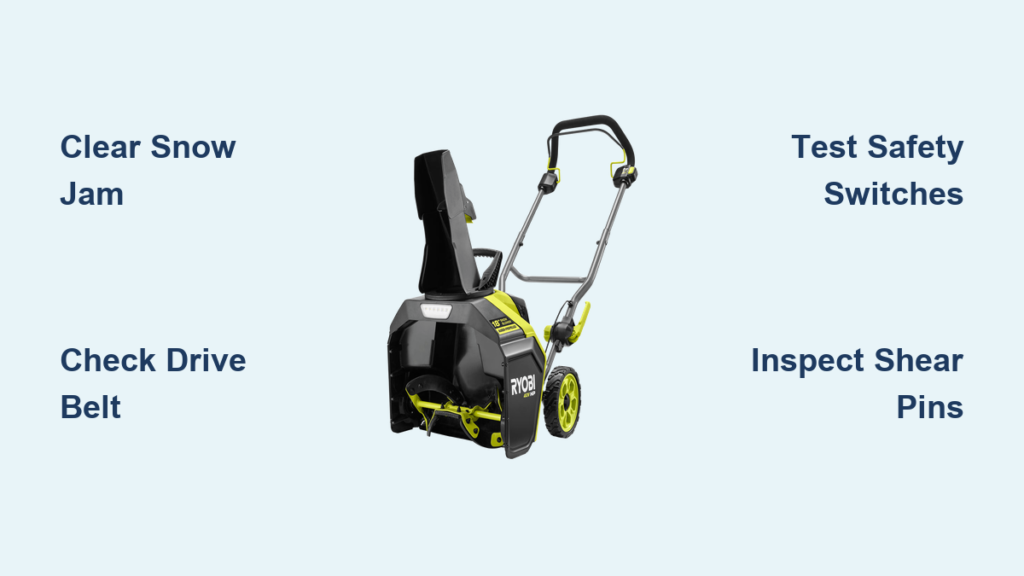
You just finished clearing your driveway with your Ryobi snow blower, and now the auger has stopped spinning. Worse, it might be a brand new unit, and you’re stuck outside in the cold. A non-rotating auger means snow isn’t reaching the impeller, so nothing gets thrown out the chute. The good news? Most causes of a Ryobi snow blower auger not turning are simple to find and even easier to fix. This guide walks you through every common reason and solution so you can get back to clearing snow quickly.
You’ll learn how to check for jams, inspect the drive belt, test safety switches, and know when it’s time to file a warranty claim. No technical jargon, no wasted time, just clear steps that work.
Clear Snow and Ice Jams First
Inspect the auger housing and chute
The most common reason a Ryobi snow blower auger stops spinning is packed snow or ice inside the housing. Even a small blockage can lock the entire mechanism. Before doing anything, turn off the machine and disconnect the spark plug wire or battery for safety.
Use a plastic shovel, broom handle, or stick to gently push debris out from the front opening and inside the discharge chute. Never use your hands, even if the machine is off, because sharp auger blades can cause injury.
Melt stubborn ice with warm water
If ice is frozen around the auger shaft or inside the housing, plain clearing won’t be enough. Apply warm (not boiling) water using a spray bottle or sponge. Wait three to five minutes for the ice to soften, then try rotating the auger by hand.
Once it spins freely, reconnect the power source and test the auger. If it turns, you’ve solved the problem in under 10 minutes.
⚠️ Pro Tip: Clear wet, heavy snow in shorter passes. Allowing snow to build up increases the chance of jams forming around the auger.
Examine the Drive Belt Condition

Locate and visually inspect the belt
The drive belt transfers power from the engine to the auger gearbox. If it’s loose, cracked, or has slipped off the pulley, the auger won’t turn at all. On most Ryobi models, you can find the belt under the front housing cover or near the auger control lever.
Look for these warning signs:
– Belt slipped off the pulley
– Visible cracks, fraying, or glazing (a smooth, polished surface)
– Loose tension
If it’s only slipped, carefully reposition it on the pulley. If you spot any damage, replace the belt before using the machine again.
Test belt tension and alignment
With the engine off, press the auger control lever and watch the belt. You should see it tighten as the clutch engages. If the belt stays loose or doesn’t move at all, the tensioner spring or pulley may be faulty.
Misalignment often happens after maintenance or improper reassembly. Make sure the belt sits properly in all pulley grooves before testing again.
✅ Quick Fix: Some Ryobi blowers ship with slightly loose belts. Retensioning during initial setup solves most first-use issues.
Verify Safety Interlock Switches

Test the auger control lever switch
Ryobi snow blowers include safety switches that stop the auger from spinning unless certain conditions are met. The most important is the auger control lever, which you must hold down to engage the auger. If this switch fails or the cable is frozen, the auger won’t respond.
Check that the lever moves smoothly without sticking. Spray silicone lubricant on the pivot point if it feels stiff. You should also hear or feel a small click when the lever is fully pressed.
Inspect chute position and handle switches
Some Ryobi models disable the auger when the discharge chute is rotated beyond a certain angle or when the handle isn’t fully locked. Make sure the chute sits within its normal operating range and the handle is completely down.
If ice is blocking handle movement, clear it with warm water. Then center the chute and re-engage the auger lever to reset the system.
🔧 Expert Note: On electronic or battery-powered models, a faulty microswitch can mimic a mechanical problem. If everything else checks out, test the switch with a multimeter or contact Ryobi support.
Inspect the Auger Gearbox and Shaft

Try rotating the auger by hand
With the machine off and disconnected from power, try spinning the auger blades manually. If they won’t budge, the gearbox or shaft may be frozen solid.
Watch for these signs of gearbox trouble:
– Grinding or crunching noises when turning
– Oil leaking from the gearbox housing
– One auger blade spins while the other stays still
If the shaft is frozen, apply warm water or de-icer spray to both ends of the auger shaft. Wait five to 10 minutes, then try rotating again. If it still won’t move, the gearbox may need professional service.
Check for broken shear pins or bolts
Some Ryobi snow blowers use shear pins or bolts designed to break during a jam. This protects the gearbox from serious damage. If the auger spins freely by hand but not under power, a broken shear pin could be the cause.
Inspect the auger ends for missing or snapped pins. Replace broken pins with Ryobi OEM parts only. Aftermarket hardware can lead to engine or gearbox damage.
⚠️ Never force a stuck auger. Forcing it can snap shear pins, break belts, or crack gearbox gears.
Confirm Engine and Power Transfer
Check that the engine drives other functions
If the engine runs but the auger stays still, the problem is isolated to the auger drive system, not the motor itself. However, low battery or fuel issues can still affect auger performance.
For battery-powered models:
– Confirm the battery is fully charged
– Clean the battery terminals with a dry cloth
– Try a different battery if one is available
For gas-powered models:
– Make sure the throttle is set to full
– Listen for belt slippage or weak clutch engagement
If the wheels turn normally but the auger doesn’t, focus your troubleshooting on the auger drive belt and gearbox.
Diagnose clutch or friction disc problems
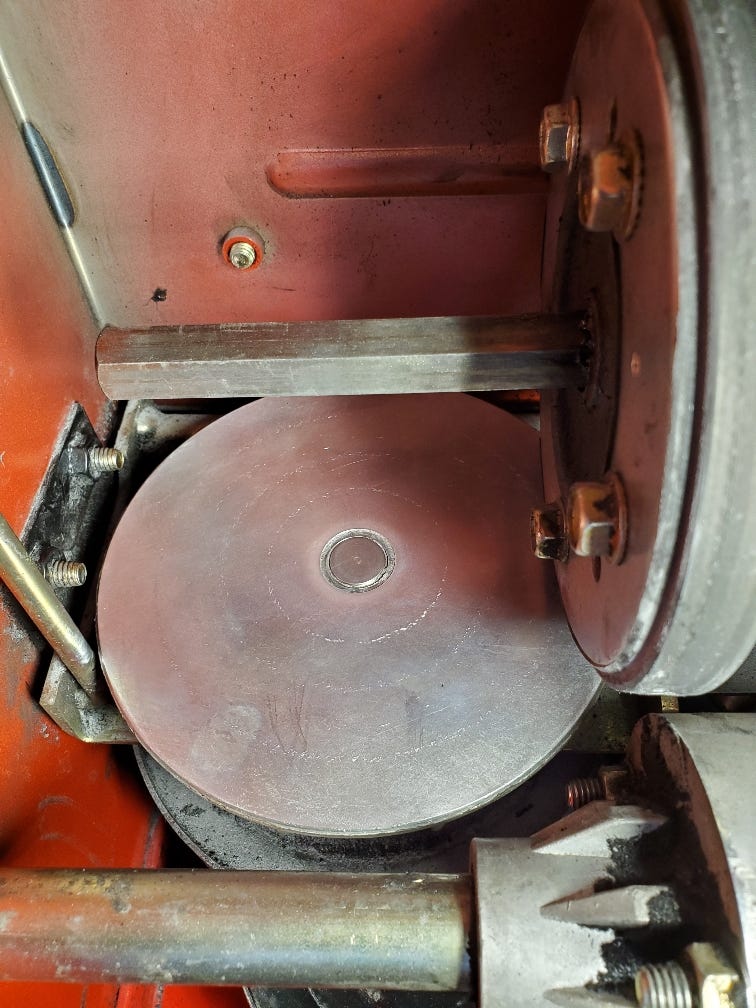
Some Ryobi snow blowers use a friction disc or clutch system to transfer power to the auger. When this disc wears out or becomes glazed, it can’t grip properly.
Common symptoms include:
– Auger engaging weakly or only intermittently
– Burning smell during use
– Auger control lever feeling soft or unresponsive
Inspect the friction disc under the drive plate. Replace it if you see cracks or heavy wear. Clean all contact surfaces with isopropyl alcohol before reassembling.
Review Assembly on New Units

Confirm initial assembly was completed correctly
If your Ryobi snow blower is brand new and the auger won’t turn, improper assembly is a likely cause. Many users miss critical steps during setup, especially involving cables, switches, and shipping hardware.
Double-check these items:
– Auger drive cable is routed and secured properly
– All gearbox and housing bolts are tightened
– Safety switches are connected and functional
– Shipping brackets, blocks, or plastic ties have been removed
Your owner’s manual includes temporary transport brackets designed to stabilize the auger during shipping. These must come off before first use.
📌 Common Mistake: Forgetting to remove the auger transport lock. This small pin or bracket keeps the auger from moving during shipping but will prevent operation if left in place.
When to File a Warranty Claim
Contact Ryobi for potential defects
If you’ve worked through every troubleshooting step and the auger still won’t turn, you may have a manufacturing defect. This is especially common on new units. Warranty-covered issues often include:
– Faulty gearbox from the factory
– Misaligned drive components
– Defective safety switch wiring
– Belt installed incorrectly during assembly
Do not attempt internal repairs on a new machine. This can void your warranty and make replacement harder to obtain.
How to start a warranty claim
- Find your model and serial number on the back of the unit or near the discharge chute.
- Visit the Ryobi support website or contact the retailer where you bought it.
- Provide your proof of purchase and a list of troubleshooting steps you’ve already tried.
- Request service, repair, or replacement based on their guidance.
Most Ryobi snow blowers include a two to three year warranty. Registering your product online after purchase speeds up any future claims.
✅ Pro Tip: Keep your receipt and register your snow blower as soon as you buy it. This makes warranty claims faster and smoother.
Prevent Future Auger Problems
Clean the machine after every use
Leftover snow melts and refreezes inside the housing, which causes the most common auger jams. After each session:
– Spray the auger housing with silicone lubricant
– Wipe down the chute and impeller
– Run the machine for 30 seconds to dry internal components
Store the snow blower properly
Keep your Ryobi snow blower in a dry, covered location like a garage or shed. If you must store it outside, use a breathable cover. Avoid plastic tarps that trap moisture and cause rust.
Follow a seasonal maintenance schedule
Before the first snowfall each year:
– Inspect the drive belt and replace it if worn
– Lubricate the auger shaft bearings
– Test all cables and safety switches
After the snow season ends:
– Drain the fuel tank on gas models
– Remove the battery and store it indoors
– Clean and lubricate all moving parts
Frequently Asked Questions About Ryobi Snow Blower Auger Problems
Why is my Ryobi snow blower auger not turning right after assembly?
The most common cause is a shipping bracket or transport lock that was left in place. Check your owner’s manual for any temporary hardware holding the auger, and remove it before testing. Also confirm the drive cable is properly connected to the auger control lever.
Can ice alone stop the auger from spinning?
Yes. Even a thin layer of ice around the auger shaft or inside the housing can lock the mechanism. Apply warm water to the frozen areas, wait a few minutes, then try rotating the auger by hand. Once it moves freely, the auger should work normally.
How do I know if the drive belt is the problem?
Look under the front housing cover and inspect the belt. If it’s loose, cracked, fraying, or slipped off the pulley, it needs adjustment or replacement. You can also press the auger lever with the engine off and watch whether the belt tightens as the clutch engages.
Do safety switches really stop the auger from working?
Yes. Ryobi snow blowers include multiple safety interlocks that prevent the auger from spinning under unsafe conditions. These include the auger control lever, the handle position switch, and sometimes the chute rotation switch. Any failed or stuck switch will keep the auger from turning.
Should I attempt repairs on a brand new Ryobi snow blower?
No. Internal repairs on a new unit can void your warranty. Work through basic troubleshooting like clearing jams and checking switches first. If the auger still won’t turn, contact Ryobi or your retailer for warranty service instead of forcing any repairs.
How long should a Ryobi snow blower auger last?
With proper maintenance, the auger and gearbox can last many years. The drive belt and shear pins are wear items that may need replacement over time. Cleaning after each use and storing the machine indoors will extend the life of all auger components.
Key Takeaways for Fixing Your Ryobi Snow Blower Auger
A Ryobi snow blower auger not turning is almost always caused by something simple. Start with the easiest fixes first: clear ice and snow from the housing, inspect the drive belt, and test the safety switches. Most problems resolve in under 20 minutes with no parts needed.
If your unit is brand new and nothing works, file a warranty claim instead of opening the gearbox. For ongoing reliability, clean the machine after every use and store it indoors during the off-season. These two habits prevent most auger issues before they start.
Your next step is to shut off the snow blower, disconnect the power source, and start with a visual inspection of the auger housing. Most likely, you’ll find the problem within minutes.