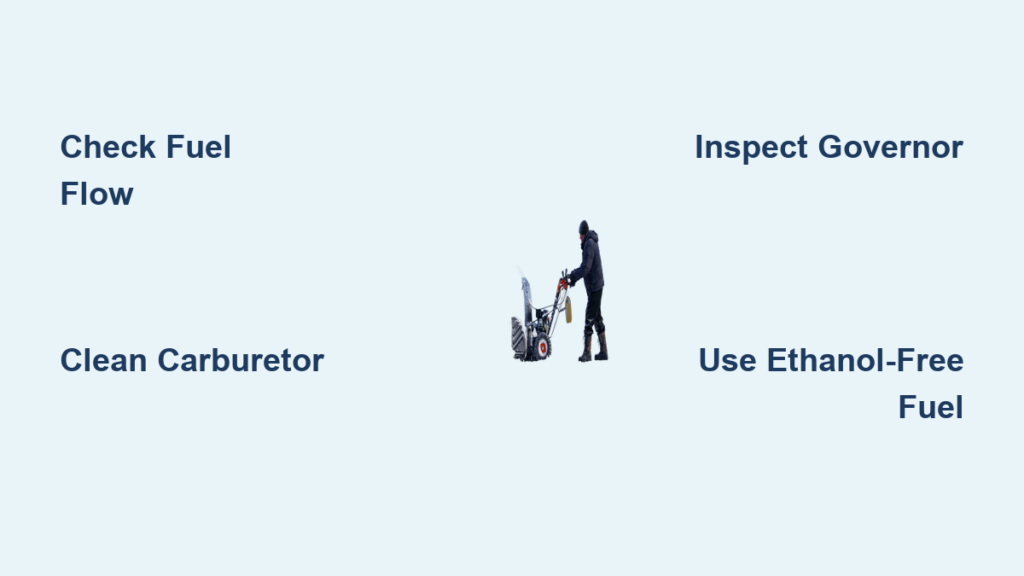
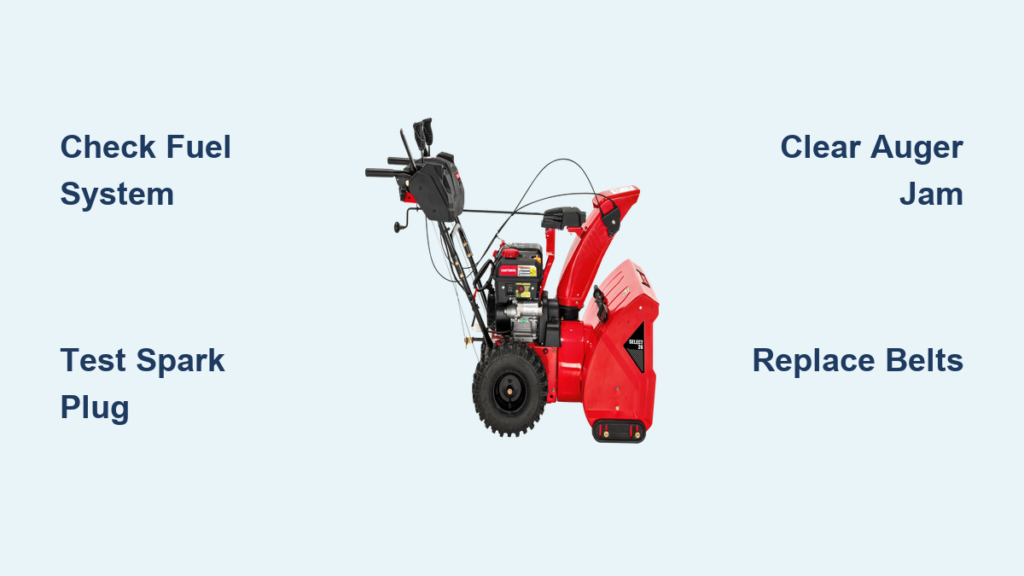
Your Craftsman snow blower starts strong on the first snowfall but refuses to turn over when you need it most. Nothing is more frustrating than facing a foot of fresh snow with a machine that sputters, stalls, or simply does not respond. The good news is that most Craftsman snow blower repair tasks can be handled at home with basic tools and a little patience. This guide walks you through the most common breakdowns, from fuel and spark issues to auger jams and belt failures, so you can get back to clearing your driveway fast.
Diagnose Why Your Craftsman Snow Blower Will Not Start

Starting problems trace back to three core systems: fuel, spark, and air. If any one of these fails, the engine cannot fire up. Run through them in order before assuming a major failure.
Inspect the Fuel System First
Old gas is the number one cause of no-start conditions. Gasoline begins breaking down after about 30 days, and ethanol-blended fuel attracts moisture that corrodes internal parts.
- Drain stale fuel and refill with fresh gasoline
- Add fuel stabilizer if the machine will sit for more than a month
- Check fuel lines for cracks, kinks, or loose clamps
- Replace the inline fuel filter if your model has one
If fuel checks out but the engine sputters and dies, the carburetor is likely gummed up. Remove it, spray all jets with carburetor cleaner, and blow passages clear with compressed air.
Test the Spark Plug for a Strong Arc
A fouled plug kills ignition instantly. Pull the plug wire, remove the plug with a spark plug wrench, and inspect the electrode.
- Look for oil fouling, carbon buildup, or rust
- Measure the gap with a feeler gauge (usually 0.025 to 0.030 inches)
- Swap in a new plug if the old one looks worn
Reattach the plug to the wire, ground the metal base against the engine block, and pull the starter cord. A bright blue spark confirms the ignition system works.
Clean or Replace the Air Filter
A clogged air filter chokes the engine and causes hard starting or stalling. Remove the cover and inspect the element.
- Foam filters: Wash with soapy water, air dry, and re-oil lightly
- Paper filters: Tap out debris or replace when dirty
Pro Tip: Never run the engine without an air filter installed. Dust and debris can score the cylinder walls and cause expensive damage.
Fix Auger Jauger Malfunctions Quickly
The auger collects snow and feeds it into the impeller. When it stops spinning or jams constantly, clearing performance drops to zero.
Replace Broken Shear Pins
Shear pins are designed to snap under heavy load to protect the gearbox. If the auger does not engage, these tiny fasteners are usually the culprit.
- Locate the auger shaft at the front of the housing
- Check for sheared, missing, or bent pins
- Install genuine replacement pins only (standard bolts will cause gearbox failure)
Clear Snow Jauger Jauger Blockages Safely
Ice, packed snow, or foreign debris can lock the auger solid. Always shut off the engine and disconnect the spark plug wire before reaching in.
- Use a long stick or plastic shovel handle to dislodge material
- Rotate the auger by hand once cleared
- Check the impeller for ice buildup inside the housing
Never put your hands near the auger, even with the engine off. Residual movement can cause serious injury.
Repair Drive System Failures

If the engine runs but the wheels do not turn, the drive system needs service. Belts and friction components wear out faster than other parts.
Adjust or Replace the Traction Belt
A slipping traction belt makes the wheels spin slowly or not at all.
- Remove the belt cover to access the drive system
- Press the belt midway between pulleys; it should deflect about half an inch
- Tighten the idler or replace the belt if cracked or glazed
Service the Friction Wheel and Drive Disc
The friction wheel presses against the drive disc to propel the machine. Both surfaces wear smooth over time.
- Remove the drive cover and slide out the friction wheel
- Check for flat spots, cracks, or a shiny glazed surface
- Clean with isopropyl alcohol and let dry fully
- Sand the disc to remove rust and restore grip
Replace the friction wheel if it has worn below the manufacturer’s minimum diameter. A worn wheel will not grip, no matter how clean it is.
Troubleshoot Electric Start Problems

Craftsman electric-start models rely on a battery, starter motor, and safety interlocks. When the starter just clicks or does nothing, work through the electrical chain.
- Confirm the battery reads at least 12 volts under load
- Tighten or clean any corroded terminal connections
- Test for voltage at the starter motor with a multimeter
- Check safety switches on the handle and auger engagement lever
Expert Note: Safety interlocks prevent the engine from starting unless you are holding the controls. Test these switches with a multimeter for continuity, and replace any that fail. Never bypass a safety switch as a permanent fix.
Rebuild or Replace the Carburetor
When cleaning does not restore smooth running, a full carburetor rebuild may be the answer. Most small engine carbs use a simple float design that responds well to fresh gaskets and needles.
Disassemble and Clean the Carburetor
- Label every linkage and hose before removal
- Remove the float bowl, float pin, and needle valve
- Soak metal parts in carburetor cleaner (avoid plastic or rubber components)
- Clear jets with thin wire and blow out passages with compressed air
Install a Rebuild Kit
Carburetor rebuild kits include fresh gaskets, a needle valve, and seals.
- Replace the float if it feels heavy or fuel-soaked
- Use new gaskets to prevent air leaks
- Reconnect linkages and refuel the system
Set the idle speed and fuel mixture screws per your owner’s manual. A properly tuned carburetor should idle smoothly without bogging under load.
Replace Worn Belts the Right Way
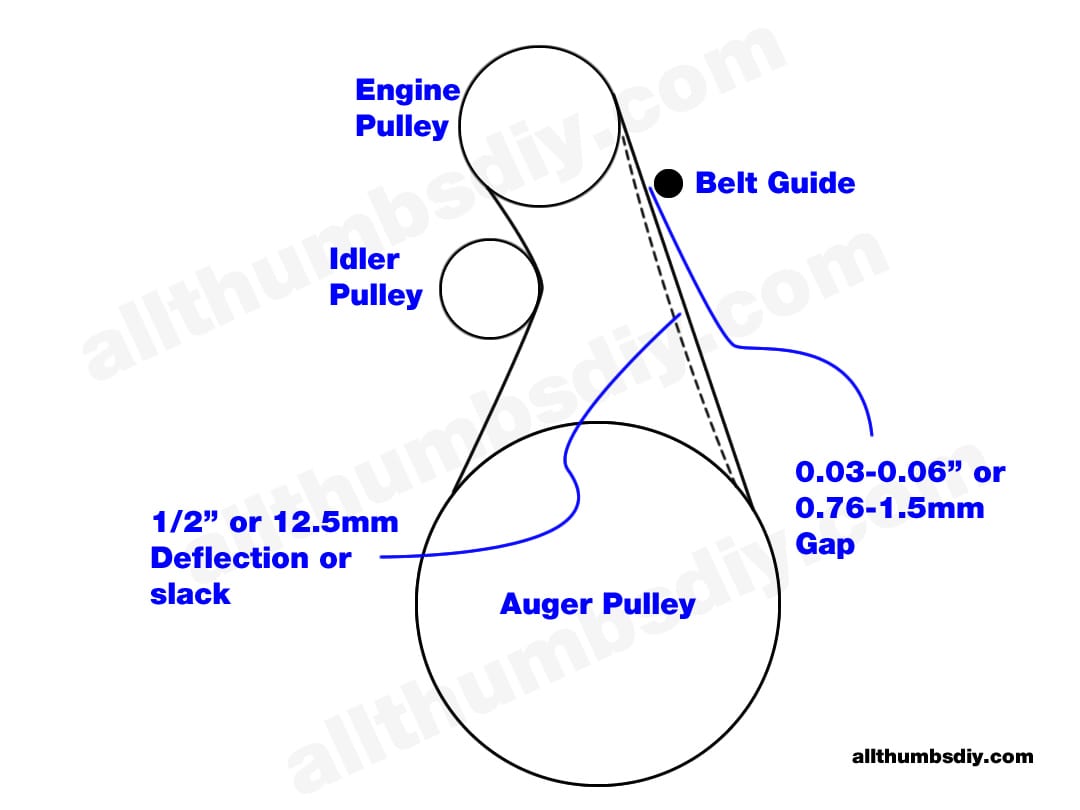
Belts stretch and crack with age. Most Craftsman snow blowers use two belts: one for the auger and one for traction drive.
- Disconnect the spark plug wire for safety
- Remove the belt covers to expose both belts
- Loosen the idler pulley to release belt
- Fit the replacement along the same pulley route
- Re-tension the idler and replace the cover
Always confirm belt paths against the diagram in the manual. A misrouted belt will burn out in minutes under load.
Keep Your Snow Blower Running All Season
Preventive maintenance cuts down on emergency repairs and extends the life of your machine.
Before the First Snowfall
- Change the oil on 4-cycle engines
- Install a fresh spark plug
- Inspect belts, controls, and scraper bar
- Lubricate the chute and auger shaft
After Every Use
- Brush off snow and ice from the housing
- Wipe down metal surfaces to prevent rust
- Store in a dry, covered location
- Run the engine dry or add fuel stabilizer
Do not leave fuel in the tank over the summer. Old gas turns to varnish and clogs the carburetor before the next season even starts.
Know When to Call a Professional
Some Craftsman snow blower repair jobs go beyond basic DIY. Internal engine damage, transmission rebuilds, and complex electrical diagnostics require specialized tools and training.
- Knocking sounds, blue smoke, or low compression signal internal engine wear
- Grinding gears or no drive engagement point to transmission failure
- Models with electronic chute control or reverse assist may need dealer-level diagnostics
Search for a certified small engine repair shop using your model number and zip code. Many offer seasonal tune-up packages that catch problems before they leave you stranded in a storm.
Frequently Asked Questions About Craftsman Snow Blower Repair
Why will my Craftsman snow blower start but then stall?
Stalling right after startup usually points to a clogged carburetor, stale fuel, or a dirty air filter. Clean all three and try again before replacing parts.
How do I know if my auger belt is broken?
If the engine runs but the auger does not spin when you engage the lever, the belt is either broken, loose, or off the pulley. Inspect the belt cover to confirm.
What causes the wheels not to turn on a Craftsman snow blower?
A worn friction wheel, loose traction belt, or damaged drive disc are the most common causes. Adjust the belt tension first, then inspect the friction components.
Can I use regular bolts instead of shear pins?
No. Shear pins are designed to break under overload to protect the gearbox. Standard bolts will not shear and can cause costly internal damage.
How often should I change the spark plug?
Replace the spark plug once per year or every 25 hours of use, whichever comes first. Fresh plugs make starting easier and improve combustion.
Is it worth repairing an old Craftsman snow blower?
If the engine and frame are solid, repairs are almost always cheaper than replacement. Common fixes like belts, plugs, and carburetor service cost a fraction of a new machine.
Final Thoughts on Craftsman Snow Blower Repair
Most Craftsman snow blower repair tasks come down to fuel, spark, air, and belts. By checking these systems first, you solve the majority of starting and performance issues without special tools. Keep fresh gas in the tank, replace the spark plug each season, and inspect belts before the snow flies. Your next step is to pull out your owner’s manual, find your model number, and order any replacement parts you need so you are ready before the next storm hits.