Fresh snow on your gravel driveway can feel like a double-edged sword. You need it cleared quickly, but you’re worried your snow blower will launch rocks, gouge the surface, or damage the machine itself. This is a common concern for homeowners with gravel surfaces, and for good reason. The wrong technique can scatter stones, break windows, or leave you with a costly repair.
The good news is that using a snow blower on a gravel driveway is completely safe when you choose the right machine and adjust it properly. Two-stage and three-stage snow blowers are specifically designed to float above uneven surfaces, unlike single-stage models that scrape the ground. With the correct skid shoe height, scraper bar setting, and steady operating pace, you can remove snow efficiently while keeping every piece of gravel right where it belongs.
This guide breaks down everything you need to know. You’ll learn which snow blowers work best, how to set them up, and how to clear your driveway without scattering stones or damaging equipment.
Pick the Best Snow Blower Type for Gravel

Choosing the right machine is the most important step. Not every snow blower can handle loose stone surfaces without causing problems.
Choose Two-Stage or Three-Stage Models
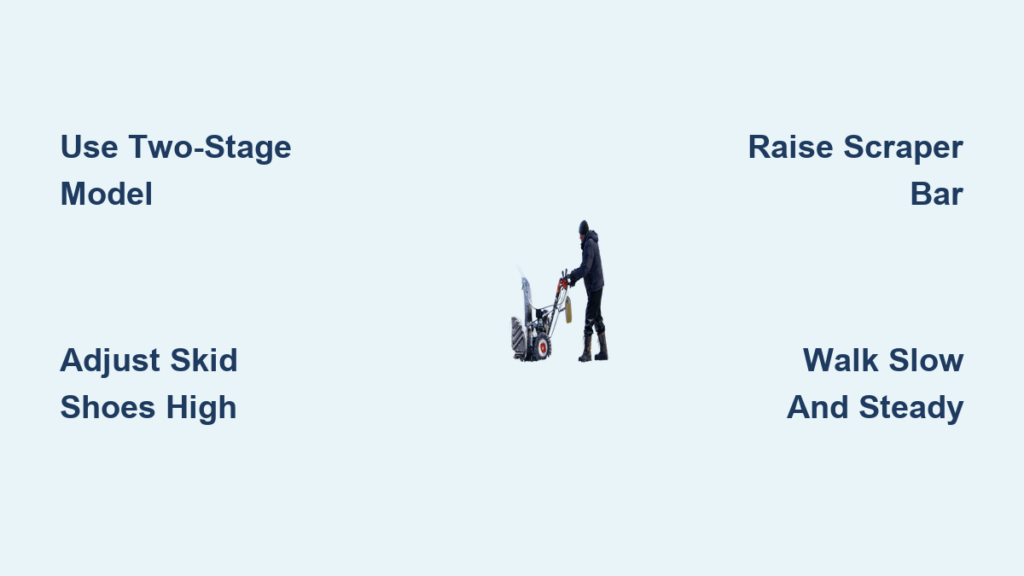
Two-stage and three-stage snow blowers are the top recommendation for gravel driveways. Their augers do not touch the ground. Instead, they gather snow and feed it into an impeller that throws it out through the chute. This design lets the machine glide over loose stones rather than scooping them up. Look for models that feature adjustable skid shoes so you can control how high the housing sits above the surface.
Stay Away From Single-Stage Designs
Single-stage snow blowers use rubber or plastic augers that make direct contact with the ground to gather snow. On a gravel driveway, this contact easily picks up small stones and flings them at high speed. These models can damage siding, crack windows, or injure bystanders. They are designed for smooth paved surfaces only and should be avoided on gravel.
Confirm You Have Adjustable Skid Shoes
Skid shoes are the metal or polymer pads located on the sides of the auger housing. They control how high the machine sits off the ground. Adjustable skid shoes allow you to raise the housing above the tallest gravel pieces in your driveway. Without this feature, you have no way to prevent the auger from scraping the surface.
Set Up Your Snow Blower for Gravel Surfaces
Even the best machine will cause damage if it is not configured correctly. These settings create the gap needed to clear snow without disturbing stones.
Set the Skid Shoe Clearance
Before you start the engine, take a look at your driveway and note the size of your gravel. Larger stones require more clearance under the housing. Use a wrench or the quick-adjust levers on newer models to raise them. A gap of one-half inch to one inch between the auger housing and the highest gravel is recommended. Always test the setting on a small section before clearing the whole driveway.
Raise the Scraper Bar
The scraper bar is the metal edge at the front of the housing that cleans residual snow off the ground. On gravel, it needs to sit slightly above the surface so it does not drag or dig in. Loosen the bolts and adjust it so it sits about one-quarter inch above the ground. This lets you remove snow without catching stones.
Adjust the Discharge Chute
Point the chute to discharge snow away from landscaping, walkways, and parked vehicles. A wide-angle chute setting helps spread snow evenly and avoids piling it back onto cleared areas. Be especially careful with high-velocity discharge near structures if your gravel contains smaller stones that could be caught in the airflow.
Operate the Snow Blower Safely on Gravel
With the right setup, your technique determines whether the driveway stays intact. Slow, steady movements work best.
Wait Until the Storm Ends
Start clearing after the snowfall stops so you only have to do the job once. Fresh, light snow is much easier to manage than heavy, wet snow. If it is wet or over eight inches deep, make a first pass at a higher setting, then lower the skid shoes slightly for a second cleanup pass.
Move at a Steady Walking Pace
Rushing is one of the biggest mistakes on gravel. Moving too fast increases the chance of the auger dipping and catching a rock. A steady walking pace gives the machine time to clear debris and maintain consistent clearance. Let the snow blower do the work and do not force it forward.
Overlap Each Pass
Overlap each pass by about six inches to ensure full coverage without leaving streaks. This also catches residual snow that might sit between gravel stones. Avoid making sharp turns on loose gravel, as this can cause the machine to slip sideways or dig into the surface.
Minimize Gravel Scatter and Surface Damage
Even with proper setup, gravel can shift. These habits keep stones in place and protect your driveway.
Blow Snow in One Direction
Always discharge snow in the same direction along the length of the driveway. Repeated passes over the same section wear down specific gravel areas and increase the chance of displacement. Choose a discharge side that avoids flower beds, septic tank lids, or delicate landscaping features.
Avoid Edges and Low Spots
Gravel tends to settle lower at the edges of the driveway, and these areas are more likely to cause the auger to scrape. Steer around potholes, ruts, or sunken spots when possible. If low areas become a recurring problem, add fresh gravel in the spring to keep the surface level.
Walk the Driveway First
Before each use, take two minutes to walk the length of the driveway. Remove any large or loose stones sitting on top of the surface, especially near tire tracks where gravel can become dislodged. This quick visual check prevents serious damage to your machine and your property.
Maintain Your Equipment After Every Use

Proper care keeps your snow blower ready for the next storm and extends its lifespan significantly.
Clear Snow and Ice From Under the Housing
After each use, turn off the engine and clear any packed snow or ice from under the auger housing. Moisture left overnight can freeze and cause corrosion or blockages. Use a plastic scraper or brush for this task. Never use metal tools, which can scratch or damage the housing surface.
Inspect the Skid Shoes for Wear
Check the skid shoes regularly for signs of wear. Worn skid shoes lower the auger housing and increase the risk of scraping gravel. Replace them as needed to maintain proper clearance. Most manufacturers offer inexpensive replacement kits that install easily with basic tools.
Store With a Cleared Chute
Before putting the snow blower away, make sure the discharge chute is completely free of snow and ice. Close the chute control to keep debris from entering the housing. Store the machine in a dry, covered area like a garage or shed to protect it from moisture and extreme temperature swings.
Troubleshoot Common Snow Blower Problems
Even with careful operation, issues can come up. Knowing how to respond prevents small problems from becoming expensive repairs.
What to Do If You Hear a Loud Clunk
A sudden clunk or grinding noise usually means the auger hit a rock or frozen debris. Stop the machine immediately, shut off the engine, and disconnect the spark plug wire on gas models. Inspect the auger and housing for damage, then remove any lodged stones or ice. Never reach into the chute or housing while the engine is connected to the spark plug.
How to Fix Uneven Snow Removal
If snow is left behind in patches, check your skid shoe height first. One side may be set lower than the other. Adjust both sides evenly to restore balance. Also, make sure the scraper bar is not dragging on one side, which can lift the auger and leave gaps in the cleared path.
Prevent Clogging in Wet, Heavy Snow
Wet snow sticks more easily and causes clogging. To prevent buildup, apply a silicone-based spray to the auger and chute before each use. Make multiple shallow passes instead of trying to clear deep snow in one go. Pause occasionally to check the chute for buildup and clear it before it becomes a full blockage.
Frequently Asked Questions About Using a Snow Blower on Gravel
Can you use a snow blower on a gravel driveway?
Yes, you can use a snow blower on a gravel driveway as long as you use a two-stage or three-stage model with adjustable skid shoes. Single-stage snow blowers should be avoided because their augers touch the ground and will pick up stones. Proper height adjustment keeps the auger housing above the gravel while still clearing snow effectively.
What is the best snow blower for a gravel driveway?
Two-stage and three-stage snow blowers are the best options for gravel driveways. Their design keeps the cutting components off the ground, and adjustable skid shoes let you set the clearance based on your gravel size. Models with larger engines and wider clearing paths also handle uneven surfaces more efficiently.
How high should skid shoes be set on gravel?
Skid shoes should raise the auger housing one-half inch to one inch above the tallest gravel pieces. More clearance is needed for larger stones, while finer gravel may allow slightly less. Always test the setting on a small section of the driveway before clearing the entire surface.
Will a snow blower pick up rocks from a gravel driveway?
A properly adjusted two-stage or three-stage snow blower will not pick up rocks from a gravel driveway because the auger does not touch the ground. However, a single-stage snow blower will scoop up stones and fling them. If the skid shoes are set too low on any model, rocks can also be caught, so correct adjustment is critical.
How do you prevent gravel from being thrown by a snow blower?
To prevent gravel from being thrown, use a two-stage or three-stage snow blower, set the skid shoes high enough to clear the gravel, raise the scraper bar off the ground, and walk the driveway first to remove loose stones. Operating at a steady, slow pace also reduces the chance of the auger dipping into the surface.
Can you use a single-stage snow blower on gravel?
Single-stage snow blowers are not recommended for gravel driveways. Their rubber or plastic augers make direct contact with the ground to scoop up snow, which easily picks up stones and flings them. This can damage property, break windows, or cause injury. They are designed for paved surfaces like concrete or asphalt only.
Key Takeaways for Clearing Snow on a Gravel Driveway
Using a snow blower on a gravel driveway comes down to three essential habits: choose the right machine, adjust it correctly, and operate it with care. Always use a two-stage or three-stage model with adjustable skid shoes, and set the clearance high enough to clear your largest gravel pieces. Move at a steady pace, blow snow in one direction, and remove loose stones before each session to prevent damage.
Before the next storm hits, take twenty minutes to walk your driveway, inspect your skid shoes, and confirm your scraper bar is set properly. This quick preparation makes every clearing job faster, safer, and easier on your equipment.