If your lawn has ragged edges, overgrown corners, or weeds sneaking through cracks, a lawn trimmer is your secret weapon. Knowing how to use a lawn trimmer correctly transforms a messy yard into a polished, professional-looking space. But without the right technique, even the best trimmer can leave uneven cuts, chewed grass, or worse cause avoidable damage or injury. This guide cuts through the confusion, giving you step-by-step instructions, safety must-dos, and pro-level trimming methods that deliver clean lines and crisp edges every time. Whether you are using a gas, electric, or battery-powered model, you will learn how to trim smarter, not harder, saving time, effort, and frustration.
Choose the Right Trimmer Type for Your Yard
Gas vs. Battery: Which Fits Your Needs
For most homeowners, battery-powered trimmers are the best choice. They start instantly, require zero fuel mixing, and run quietly with no emissions. Models like the EGO Power+ ST1520T or Ryobi 18V HP offer near-gas power with far less hassle. They are ideal if you trim once or twice a week and have a small to medium yard.
Gas-powered trimmers are built for heavy-duty, all-day use, perfect for landscapers or large, overgrown properties. They deliver unmatched power for thick weeds and tall grass but come with trade-offs: more noise, heavier weight, and regular maintenance like spark plug changes and fuel system cleaning.
Bottom line: Battery trimmers win for convenience and performance in typical home use. Reserve gas models for daily, professional landscaping.
Key Features That Matter Most
Do not get distracted by flashy specs. Focus on these practical features:
- Automatic line feed: Push-button or bump-feed systems save time and prevent tangles
- Adjustable handle: Ensures comfortable posture and better control
- Dual-line spool: Cuts faster and balances the head for smoother operation
- Straight vs. curved shaft: Straight shafts reach under decks and around trees; curved shafts are lighter and easier to maneuver in tight spaces
- Cutting width: 10 to 16 inches; wider blades cover more ground but require more power
Pro tip: Look for models with tool-free spool replacement. It makes reloading line fast and frustration-free.
Load the Trimmer Line Correctly
Speed-Feed Heads: Fast and Tool-Free
Most modern trimmers use Speed-Feed systems that let you reload line without removing the cap. Here is how to do it:
- Align the arrows on the spool and housing
- Insert the line through the eyelet, checking that light passes through
- Pull out about 10 centimeters (4 inches) of line
- Wind the line in the direction shown by the arrow, clockwise or counterclockwise
- Maintain even tension with your fingers or the included winding tool
Why it works: This method prevents tangles, ensures proper line length, and keeps the head balanced.
Manual Spool Replacement Step-by-Step
If your trimmer requires cap removal, follow these steps:
- Press the two tabs to release the cap
- Remove the spool and note its orientation
- Cut two lengths of line, usually 10 feet each
- Crimp one end and secure it in the notch
- Wind both sides evenly with no overlapping
- Insert the shorter end into the second notch, then wind the longer end
- Reinstall the spool, align the eyelets, and snap the cap back
Warning: Mismatched line thickness causes poor performance. Stick to the manufacturer is recommended size, typically 2.0 to 2.7 mm.
Wear Essential Safety Gear

Protect Your Eyes and Ears
Eye protection is non-negotiable. The spinning line throws rocks, sticks, and debris at high speed, enough to cause serious eye injury. Always wear safety glasses or goggles.
Hearing protection is required for gas models and recommended for prolonged electric use. Trimmers can exceed 90 decibels, and long-term exposure risks hearing damage.
Dress for Safety and Control
Proper clothing protects you from debris and improves control:
- Footwear: Wear sturdy boots or closed-toe shoes, never sandals
- Clothing: Long pants like denim protect your legs from debris and minor bumps
- Gloves: Improve grip and reduce hand fatigue from vibration
- Avoid loose clothing: It can snag on moving parts or get caught in the guard
Reality check: Minor welts from flying string or pebbles are common but rarely serious, especially with proper gear. But skipping safety increases risk unnecessarily.
Master Trimmer Spinning Direction
Know Where Debris Flies
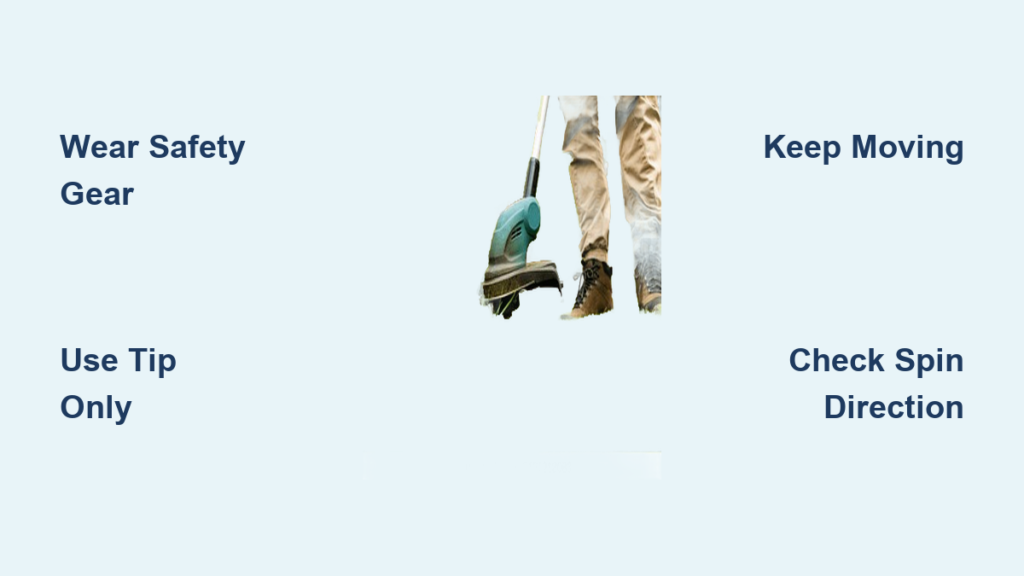
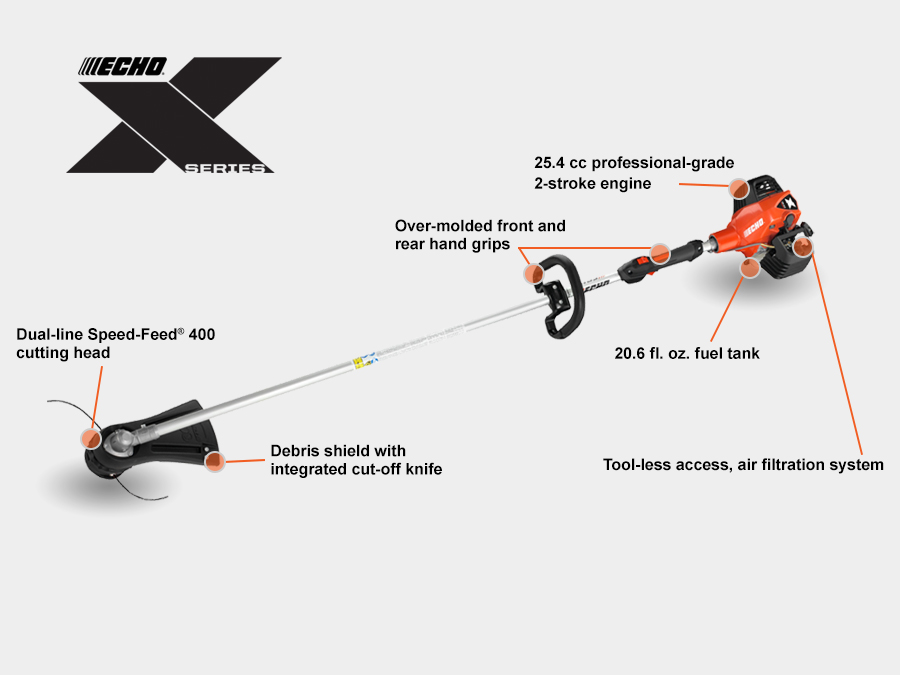
Most trimmers spin clockwise when viewed from above. That means debris gets thrown to the right. If yours spins counterclockwise, debris flies to the left.
Positioning rule:
– Clockwise trimmer: Stand to the left, cut with the left side of the head
– Counterclockwise trimmer: Stand to the right, cut with the right side
This keeps debris flying away from your body, people, windows, and vehicles.
Never cut directly toward obstacles. Always angle the trimmer so debris clears safely.
Use the Tip of the Line Only
Why Cutting Technique Matters
The last 1 to 2 inches of the line is your cutting zone, like the edge of a razor. Using the full length causes:
- Line to wrap around the head
- Motor strain and overheating
- Premature line breakage
Keep the trimmer moving. Stopping mid-cut creates jagged, uneven edges. Use small, controlled passes instead of trying to clear everything in one go.
Maintain Proper Height and Angle
Follow these guidelines for best results:
- Do not press the head into the ground: The line bends and loses cutting power
- Hold the trimmer just above the grass or edge
- Use centrifugal force: The faster the spin and the farther out the line tip, the cleaner the cut
Pro cue: If you hear the motor bogging down, you are pushing too hard. Let the tool do the work.
Trim Flat Areas Like a Pro
Achieve a Clean, Even Finish
For general trimming in spots your mower cannot reach:
- Hold the trimmer flat or slightly tilted over the grass
- Use only the tip of the line, not the full length
- Take small, overlapping passes for consistency
- Work in sections, 3 to 5 feet at a time
Avoid over-trimming: Cutting too low creates bald spots and invites weeds. Aim for a finish that matches your mowed lawn height.
Tip: Start conservatively. You can always trim more, but you cannot uncut grass.
Edge with Sharp, Crisp Lines
Create a 90-Degree Vertical Cut
For clean edges along sidewalks, driveways, or flower beds:
- Tilt the trimmer to a 90-degree angle, flip it onto its side
- Keep the line just touching the edge, do not dig in
- Move slowly and steadily for a straight line
- Rest your forearm on the base for stability, especially with straight-shaft models
Walking direction:
– Walk backward for better visibility and control
– Walk forward if it feels more natural in open areas
Clipping control:
– Cut from the left side (walking backward): Clippings fly into beds
– Cut from the right side (walking forward): Clippings land on the lawn
Taper for Smooth Transitions
Prevent Scalping and Uneven Patches
Instead of cutting flat along the entire yard, tilt the head slightly forward during general trimming. This creates a gentle taper from the mowed area to the edge.
Why it works: It avoids low spots and maintains consistent grass height, especially near walkways and curbs.
Reserve flat cuts for large, overgrown areas where you need maximum cutting power.
Cut Tall or Overgrown Weeds Safely
Two-Step Reduction Method
Tackling tall weeds? Do not rush it. Use a two-phase approach:
- Top-down reduction: Use vertical or side cuts to bring weeds down to 4 to 6 inches tall
- Final trim: Return with standard technique for a clean, even finish
Key tips:
– Use 2.4 to 2.7 mm thick line for durability
– Move slowly, rushing causes the line to fold and the motor to stall
– Let the trimmer work, do not force it into dense vegetation
Pro note: Thicker, twisted, or serrated line cuts faster through thick weeds but wears faster on hard surfaces.
Navigate Around Obstacles Carefully
Trim Near Trees, Posts, and Rocks
Obstacles increase the risk of line breakage and damage. Here is how to handle them:
- Slow down and approach with control
- Use the side of the head to gently clear grass around the object
- Never force the trimmer into tight spaces
- Use short, pulsing motions for precision
Assume hazards exist: Buried rocks, roots, or metal can sever the line instantly. Always wear safety gear.
Pro move: Use a poking motion, inch forward gently to test clearance before full engagement.
Use Bump Feed and Float Passes
Extend Line When Needed
Bump feed releases more line when it wears down:
- Rev the engine
- Tap the head lightly on the ground
- An internal cutter trims excess, listen for the click
Only bump when necessary. Overuse wastes line and can unbalance the spool.
Smooth Edges with a Float Pass
After vertical edging, make a light horizontal pass along the top of the edge:
- Keep the trimmer moving smoothly
- Use minimal pressure
- Goal: Remove jagged bits and create a clean, finished groove
Bonus: Blow out the groove afterward to remove debris. This gives a pro-level clean look.
Control Clipping Direction
Decide When to Trim: Before or After Mowing
- Trim before mowing if you bag clippings: Your mower will pick up the trimmer debris
- Trim after mowing if you leave clippings on the lawn: Prevents throwing grass into flower beds
Directional control: Adjust your stance and cutting side to steer clippings where you want them.
Pro tip: Use a blower or mower deck to sweep clippings off hardscapes and back onto the lawn for natural mulching.
Build Confidence with Practice
Start in Open Areas
If you are new to trimmers, practice first:
- Choose an open, obstacle-free zone
- Test the spinning direction and debris throw
- Get comfortable with the trigger response and weight
Speed pulsing: Use short trigger bursts to build control before going full throttle.
Reassurance: The tool will not fly out of your hands. Minor welts may happen, but serious injury is rare with proper gear.
Mindset: It is just grass, the damage is never permanent. Mistakes grow back.
Follow a Smart Workflow
Break the Job Into Zones
Do not try to trim the whole yard at once. Section it off:
- Focus on one area, for example, front walkway, then side yard
- Use a consistent technique in each zone
- Reassess and refine as needed
Walking rhythm:
– Backward for edging (better visibility)
– Forward for open trimming
Frequency: Trim every 2 to 3 weeks to prevent overgrowth. Regular maintenance makes future jobs faster and easier.
Avoid Common Mistakes
Top Errors and How to Fix Them
| Mistake | Consequence | Fix |
|---|---|---|
| Cutting too close to surfaces | Line breakage, turf damage | Use only the tip, keep clearance |
| Stopping mid-pass | Jagged, uneven edges | Keep trimmer in motion |
| Hitting concrete or poles | Rapid line wear, head damage | Avoid contact with hard objects |
| Using wrong line thickness | Poor cut, motor strain | Follow manufacturer specs |
| Skipping eye protection | Risk of injury | Always wear safety glasses |
| Forcing the tool | Motor overload, line wrap | Let the trimmer work at its pace |
Golden rule: Let the tool do the work. Rushing does not make it faster, it makes it worse.
Maintain Your Trimmer Regularly
After-Use Care Routine
Keep your trimmer in top condition with these steps:
- Wipe down the trimmer to remove grass and dirt
- Check line length: Replace if frayed or too short
- Clear debris from the guard and spool
- Inspect air vents (especially on gas models)
Long-Term Maintenance
Follow this schedule for longevity:
- Every 2 to 3 uses: Check for worn line and clean vents
- Annually: Replace spark plug (gas), lubricate moving parts
- Battery care: Store at 40 to 60 percent charge, avoid extreme heat or cold
Warranty: Most quality trimmers offer 2 to 5 year coverage. Proper care can extend life to 5 plus years.
Frequently Asked Questions About Using a Lawn Trimmer
What is the best type of trimmer for a small backyard?
Battery-powered trimmers are best for small to medium yards. They start instantly, require no fuel mixing, and are lightweight. Models like the Ryobi 18V HP or EGO Power+ deliver enough power for typical home trimming needs without the maintenance hassle of gas models.
How often should I replace the trimmer line?
Replace trimmer line when it becomes frayed, worn to less than 2 inches, or breaks frequently. For regular use, check the line before each trimming session. Most users replace line every few months, though heavy use may require more frequent changes.
Can I use a trimmer to cut tall grass?
Yes, but use a two-step method. First, cut tall grass or weeds from the top down to reduce height to 4 to 6 inches. Then, make a final pass for a clean finish. Use thicker line (2.4 to 2.7 mm) and move slowly to prevent the line from folding or stalling the motor.
Why does my trimmer line keep breaking?
Line breaks commonly occur from hitting hard surfaces like concrete or rocks, using incorrect line thickness, forcing the tool into dense vegetation, or worn motor brushes. Always use manufacturer-recommended line size and let the tool work at its own pace.
Should I trim before or after mowing?
Trim before mowing if you bag clippings, since the mower will collect the trimmer debris. Trim after mowing if you leave clippings on the lawn, as this prevents grass from being thrown into flower beds.
How do I prevent scalping my lawn while trimming?
Prevent scalping by using only the tip of the line, holding the trimmer just above the grass, and avoiding pressing the head into the ground. Taper the cut slightly forward rather than cutting completely flat. Start conservatively, you can always trim more later.
Key Takeaways for Mastering Your Lawn Trimmer
Knowing how to use a lawn trimmer effectively transforms your yard maintenance routine. The most critical points to remember are: always wear eye protection, use only the tip of the line for cutting, and keep the trimmer in constant motion to avoid jagged edges. Choose the right line thickness for your task, 2.0 mm for clean edging and 2.4 to 2.7 mm for thick weeds. Position yourself correctly based on your trimmer is spin direction to keep debris flying away from your body. Practice in open areas first, then tackle edges and obstacles. Trim every 2 to 3 weeks to maintain clean lines and make future jobs easier. With these techniques, even a budget trimmer delivers professional-looking results. Your lawn will look professionally maintained without the cost of hiring a pro.