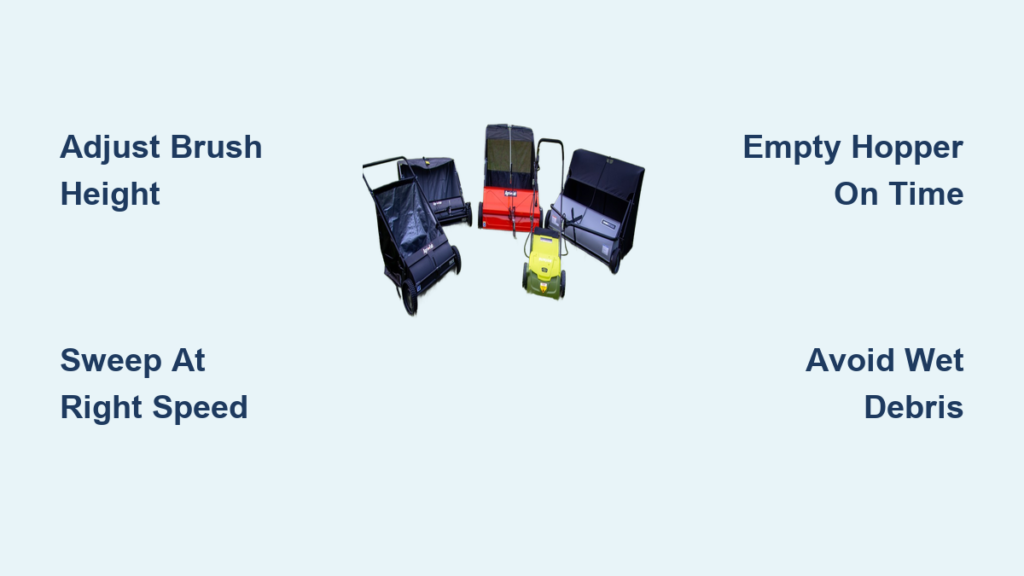
If you’re tired of raking leaves or hauling a leaf blower across your yard, a lawn sweeper might be the game-changing tool you’ve been missing. Designed to collect leaves, grass clippings, twigs, and other debris without noise, fumes, or physical strain, a lawn sweeper offers a quiet, eco-friendly way to keep your lawn clean. Whether you’re using a push model for a small backyard or a tow-behind version with a tractor, knowing how to use a lawn sweeper properly is key to maximizing efficiency and protecting your lawn. This guide walks you through every step, from setup and adjustment to operation and maintenance, so you can clean up your yard faster and with less effort.
Prepare Your Yard for Sweeping
Before rolling out your lawn sweeper, take a few minutes to prep your yard. Proper preparation prevents clogs, protects your equipment, and ensures a smooth cleanup.
Clear Large Debris First
Remove any large obstacles like sticks, rocks, or fallen branches. These can jam the internal brushes or damage the frame, especially on push models with smaller brush assemblies. A quick walk-through with a rake or by hand saves time and prevents mechanical strain.
Mow Grass to an Even Height
Tall grass can tangle in the brushes and reduce sweeping efficiency. Mow your lawn to a uniform height before using the sweeper. This allows the brushes to skim the surface without resistance, picking up debris more effectively.
Wait for Dry Conditions
Never use a lawn sweeper on wet grass or soggy leaves. Moisture makes debris clump together, increasing the risk of clogging the hopper and brushes. Dry conditions ensure lighter, fluffier material that flows easily into the collection bin. For best results, sweep in the late morning after dew has evaporated.
Adjust Brush Height Correctly
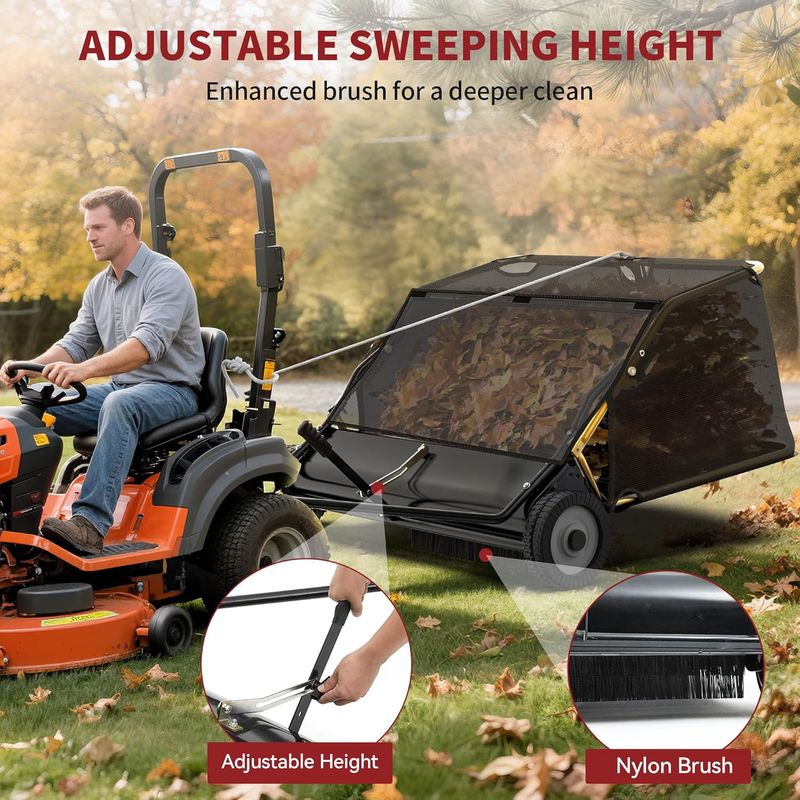
Proper brush height is the most critical setting for effective performance and lawn safety. Too low, and you risk damaging turf or overloading the machine. Too high, and the brushes won’t make contact with debris.
Set Brushes to Skim the Surface
Adjust the brushes so they extend about half an inch into the grass or just lightly touch the ground. Most models use a lever, knob, or Twist-Lock system to raise or lower the brush assembly. Test the setting on a small patch. Adjust until you hear light contact but no dragging.
Avoid Common Brush Mistakes
Setting brushes too low causes resistance, reduces rotation speed, and may tear grass. Setting them too high misses debris, especially fine clippings and pine needles. On uneven terrain, slightly raise the brush height to prevent binding. Some high-performance models feature a 5:1 brush-to-ground ratio, meaning the brushes spin five times faster than the wheels turn, enhancing pickup power during turns and on rough ground.
Choose the Right Sweeping Speed
Speed affects how well the brushes pick up debris. Since lawn sweepers rely on wheel motion to spin the brushes, moving too slowly or too quickly can reduce efficiency.
Push Sweeper: Maintain a Steady Pace
Walk at a consistent, moderate speed, roughly 2 to 3 miles per hour. Going too fast reduces contact time between brushes and debris. Too slow may cause clumping or overfilling. Let the sweeper do the work. Do not force it.
Tow-Behind Sweeper: Drive at 3 MPH
For pull-behind models, start at third gear on most tractors, which typically equals about 3 miles per hour. This speed optimizes brush rotation for maximum debris lift. Slow down for heavy leaf cover or damp conditions. Speed up slightly for light cleanup tasks like grass clippings. Never stop or reverse while the sweeper is engaged, as this can cause debris backup and clogging.
Start Sweeping with Proper Technique
Now that your sweeper is adjusted and your yard is ready, it is time to begin. Use the right technique to cover the area efficiently and avoid missed spots.
Use Overlapping Passes
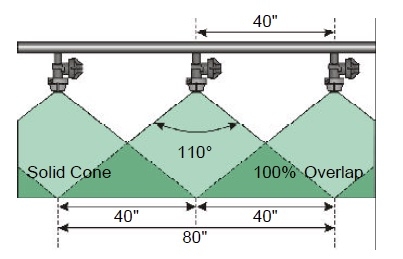
Whether pushing or towing, overlap each pass by 6 to 12 inches. This ensures full coverage and prevents strips of debris from being left behind. For large areas, work in straight, parallel lines, like mowing, to maintain consistency.
Navigate Turns Carefully
On pull-behind models, make wide, smooth turns to avoid scalping corners or losing brush contact. Some sweepers have independent brush systems that keep spinning during turns, improving debris pickup even when changing direction.
Handle Tall Grass with Caution
If you are sweeping an unmowed area, slightly raise the brush height to prevent binding. While the sweeper can still collect a surprising amount of debris, avoid extremely overgrown sections that could stall the brushes.
Monitor and Empty the Hopper
An overloaded hopper reduces performance and stresses the frame. Empty it regularly to maintain efficiency and prevent mechanical issues.
Empty at Two-Thirds Full
Do not wait until the hopper is completely full. Empty it when it reaches about two-thirds capacity to avoid strain on wheels and axles. Most modern sweepers have a rope- or lever-activated dump system that allows on-the-go emptying.
Use Drive-Through or Back-Up Dumping
Two efficient dumping methods exist. The drive-through method is ideal for open areas. Drive forward, release the dump lever, and let debris fall behind as you move. The hopper closes automatically. The back-up method is best for wooded or tight spaces. Dump first, then reverse out. You can even use the lowered hopper as a leaf plow to push debris deeper into natural areas. Just avoid neighboring properties. Never attach the dump rope to your body. Secure it only to the towing vehicle to prevent entanglement with wheels or moving parts.
Seasonal Uses for Maximum Benefit

A lawn sweeper is not just a fall tool. It is useful year-round. Knowing when and how to use it seasonally boosts its value.
Spring: Dethatch and Clean Up
Use your sweeper to remove winter debris like twigs, thatch, and dead grass. Some models double as dethatchers, pulling up matted organic material that blocks water and nutrients. This promotes healthier lawn growth in early spring.
Summer: Collect Grass Clippings
If your mower does not have a bagging system, use the sweeper after mowing to remove clippings. This prevents them from smothering the lawn, attracting pests, or contributing to thatch buildup.
Fall: Rapid Leaf Removal
This is the prime season for lawn sweepers. They handle large volumes of dry leaves far faster than raking or bagging. With a tractor-tow model, you can clear an entire yard in under an hour.
Winter: Light Snow and Storm Debris
While not a snowblower, some sweepers can clear up to half an inch of light, powdery snow from driveways and sidewalks. Use cautiously. Avoid icy or packed snow, which can damage brushes.
Know What Debris It Can and Cannot Handle
Understanding the sweeper’s limits prevents damage and ensures safety.
Safe to Collect
Lawn sweepers handle dry leaves, grass clippings, pine needles, small twigs under half an inch thick, acorns, seed pods, and light gravel or small stones effectively.
Avoid These Materials
Never attempt to collect wet or slimy debris, as this causes clumps and clogs. Large branches or logs, heavy rocks, mud, sludge, or standing water, and excessively thick thatch layers should also be avoided. Using the sweeper beyond its design limits can bend brushes, warp the frame, or cause wheel failure.
Why a Lawn Sweeper Beats Other Tools
Compared to traditional cleanup methods, lawn sweepers offer clear advantages that make them worth the investment.
Quieter Than Leaf Blowers
No noisy engine means you can work early or late without disturbing neighbors. This makes lawn sweepers ideal in areas with noise restrictions on powered tools.
Eco-Friendly and Fuel-Free
Since they are powered by movement, sweepers produce zero emissions and require no gas or electricity. They are perfect for eco-conscious homeowners looking to reduce their environmental footprint.
Less Physical Effort
Push models reduce strain compared to raking. Tow-behind versions let you clean up from the comfort of your tractor seat, ideal for large properties or those with mobility concerns.
Protects Your Mower
Removing leaves and debris before mowing prevents clogs, blade dulling, and potential damage to your mower’s engine or deck. This extends the life of your mowing equipment.
Compost-Ready Collection
Debris is gathered in one central hopper, making it easy to dump into a compost bin or garden pile with no scattering or multiple trips required.
Follow Safety Best Practices
Operating a lawn sweeper safely protects you, your equipment, and others nearby.
Wear Protective Gear
Always wear sturdy shoes and safety glasses. Flying twigs or stones can cause injury, especially at higher speeds with tow-behind models.
Secure the Dump Rope Properly
Attach the dump rope only to your tractor or mower. Never attach it to your clothing or body. Keep hands and feet away from wheels and brushes during operation.
Watch for Heat and Fire Risk
Dry leaves in the hopper can ignite if exposed to heat sources like exhaust pipes or open flames. Avoid parking near grills, heaters, or smoking areas.
Check Hitch and Frame
Ensure the sweeper is securely attached to your tractor. Inspect the hitch, frame, and fasteners regularly to prevent accidental detachment during use.
Maintain Your Sweeper for Long Life
Regular maintenance keeps your lawn sweeper running smoothly for years.
Clean After Every Use
Remove trapped debris from brushes, wheels, and the hopper. Leftover grass or leaves can rot, attract pests, or cause corrosion.
Lubricate Moving Parts
Apply light oil or grease to axles, bearings, and hinges. This reduces friction, prevents rust, and makes the unit easier to push or tow. Avoid thick grease that attracts dirt.
Inspect for Wear
Check brushes for fraying, and replace them when bristles become worn. Examine wheels, frame, and hopper for cracks or damage. A bent axle or torn bag reduces efficiency and safety.
Tighten Fasteners
Vibration from use can loosen bolts and screws. Periodically check and tighten all connections, especially the hitch and brush adjustment system.
Store Properly
Keep the sweeper in a dry, covered area like a garage or shed. Empty the hopper before storage to prevent mold and odors. Some models feature upright storage to save space.
Choose the Right Sweeper for Your Needs
Not all lawn sweepers are the same. Your yard size and cleanup needs determine the best type.
Push Sweepers: Ideal for Small Yards
Push sweepers work best for lawns under half an acre with light to moderate debris. They are compact and easy to store, perfect for homeowners who want a quiet, low-effort alternative to raking.
Tow-Behind Sweepers: Built for Large Properties
Pull-behind sweepers attach to tractors or zero-turn mowers. They cover more ground quickly and handle heavy leaf loads with ease, ideal for farmers, landscapers, or estate owners with half an acre or more.
| Feature | Push Sweeper | Tow-Behind Sweeper |
|---|---|---|
| Sweep Width | 24 to 30 inches | 36 to 42 inches |
| Hopper Size | 15 to 18 cubic feet | 18 to 20+ cubic feet |
| Speed | Walking pace | 3+ mph |
| Effort | Manual | Tractor-powered |
Brands like Brinly-Hardy and VEVOR are known for durability, smooth operation, and reliable dump systems.
Maximize Performance with Pro Tips
Get the most from your lawn sweeper with these expert-backed strategies.
Sweep in the Same Direction as Grass Growth
Grass blades naturally lean in one direction. Sweeping with the grain improves pickup and reduces resistance.
Combine with Mowing for Faster Cleanup
Mow first to chop leaves into smaller pieces, then sweep. This prevents clogs and makes debris easier to collect.
Use on Driveways and Sidewalks
Lawn sweepers are not just for grass. Use them to clean hard surfaces without water or manual sweeping, great for removing gravel, pine needles, or pollen buildup.
Replace Brushes Every 3 to 5 Years
Even with care, brushes wear out. Replace them when pickup declines noticeably, usually every few seasons with heavy use.
Final Thoughts: A Smart Investment for Any Yard
A lawn sweeper is more than a seasonal tool. It is a long-term solution for cleaner, healthier lawns with less effort. By preparing your yard, adjusting the brush height, maintaining proper speed, and emptying the hopper regularly, you will see dramatic improvements in cleanup time and efficiency.
With minimal maintenance and smart use, a high-quality sweeper can last 5 to 10 years, saving you hours each season. Whether you are tackling fall leaves, spring thatch, or summer clippings, a lawn sweeper delivers quiet, eco-friendly, and effective results. Once you try it, you will wonder how you ever managed without one.
Frequently Asked Questions About Using a Lawn Sweeper
What is the best time of day to use a lawn sweeper?
The best time is late morning after dew has evaporated. Dry conditions ensure lighter, fluffier debris that flows easily into the hopper without clumping or clogging the brushes.
Can a lawn sweeper pick up wet leaves?
No, you should avoid using a lawn sweeper on wet leaves or soggy grass. Moisture causes debris to clump together, increasing the risk of clogging the hopper and brushes. Always wait for dry conditions.
How often should I empty the hopper while sweeping?
Empty the hopper when it reaches about two-thirds full. Waiting until completely full adds unnecessary strain to the wheels, axles, and frame, reducing the sweeper’s lifespan and performance.
Can I use a lawn sweeper on gravel or uneven terrain?
Lawn sweepers can handle light gravel and slightly uneven ground, but proceed with caution. Large rocks, heavy gravel, and extremely rough terrain can damage the brushes or frame. Raise the brush height slightly on bumpy surfaces.
How do I know when to replace the brush bristles?
Replace brush bristles when you notice significantly reduced pickup performance, even after adjusting the height. Worn brushes appear frayed or shorter than the original bristles. With regular use, plan to replace brushes every 3 to 5 years.
Is a push or tow-behind lawn sweeper better for a half-acre yard?
For a half-acre or larger property, a tow-behind sweeper is more efficient. It attaches to your tractor or mower, covers more ground quickly, and handles heavier debris loads with less effort than pushing a manual model.