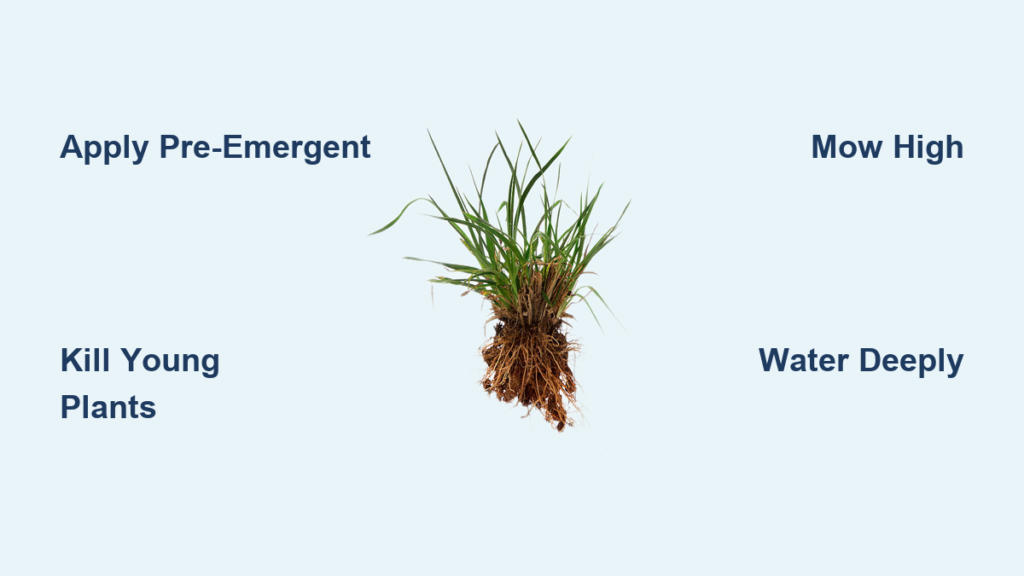
Crabgrass is one of the most persistent and frustrating lawn weeds, overtaking otherwise healthy turf with its fast-spreading, low-growing clumps. The problem starts small, but a single plant can explode into a dense mat and set up to 150,000 seeds for next year’s invasion. The key to winning the battle is stopping new plants before they sprout and strengthening your lawn to resist future attacks.
The good news is you can eliminate crabgrass and keep it from coming back. This guide delivers a complete, science-backed plan to get rid of crabgrass in lawn using both chemical and natural methods, tailored to your grass type and region. You’ll learn when to apply pre-emergent herbicides, how to kill existing plants effectively, and what cultural habits stop crabgrass before it starts.
Prevent Germination with Pre-Emergent Herbicides

Stopping crabgrass before it emerges is the most effective control strategy. Once it sprouts, management becomes harder and often requires multiple treatments. Pre-emergent herbicides create a chemical barrier in the soil that prevents crabgrass seeds from developing roots after germination.
Apply at the Right Time
Timing is everything. Crabgrass seeds germinate when soil temperatures reach 55°F for four to five consecutive days, typically in early to mid-spring. Apply pre-emergent herbicides before this threshold. Use natural indicators like when forsythia blossoms begin to drop or redbud trees start blooming, as these signs often align with the 55°F soil temperature.
Choose the Right Active Ingredient
Not all pre-emergents are equal. Select based on your lawn’s needs and whether you plan to overseed.
- Prodiamine provides season-long control and is most effective for long-term suppression
- Dithiopyr controls both pre-emergent and early post-emergent crabgrass up to the 2-3 leaf stage
- Pendimethalin is reliable and widely used but must be applied before germination
- Siduron (Tupersan) is the only pre-emergent safe for spring seeding
Avoid products like corn gluten meal if you need immediate, high-efficacy control. While organic, it works best after 2-3 years of consistent use.
Activate with Water
Pre-emergent herbicides must be watered into the soil to form an effective barrier. Within 3-5 days of application, apply ½ inch of irrigation or rainfall. Without activation, the product remains on the surface and degrades in sunlight. Important: do not overseed for at least 60 days after application.
Kill Existing Crabgrass with Post-Emergent Herbicides
Once crabgrass has emerged, pre-emergents are useless. You need post-emergent herbicides to kill actively growing plants, but timing and selection are critical for success.
Target Young Plants Early
Post-emergent herbicides work best on crabgrass in the 3-5 leaf stage. Mature plants with multiple tillers are much harder to kill and may survive treatment. Scout your lawn weekly in late spring and early summer to catch crabgrass early.
Use the Most Effective Herbicides
Quinclorac offers the best overall control for most lawns. It is highly effective on young crabgrass and safe for Kentucky bluegrass, tall fescue, Bermuda grass, and zoysia grass. Avoid using it on centipede grass, St. Augustine, bentgrass, and seashore paspalum.
Mesotrione is effective on crabgrass and safe for new seedings of Kentucky bluegrass, tall fescue, and perennial ryegrass. Do not use it on fine fescue.
Fenoxaprop-p-ethyl provides selective control for sensitive lawns. Celsius is a professional-grade product containing this ingredient, ideal for centipede and St. Augustine grasses.
2,4-D plus dicamba, found in Ortho Weed B Gon Max, controls crabgrass and broadleaf weeds but is best for established lawns only.
Apply Correctly for Maximum Kill
Apply post-emergent herbicides between 45°F and 90°F. For safety, treat in the evening when temperatures are below 90°F to reduce turf stress. Always add a methylated seed oil (MSO) surfactant because crabgrass has a waxy leaf surface that repels water. Most post-emergents become rainfast within 1 hour, so you don’t need to wait long before expected rain. Water the lawn lightly the morning after application to rinse herbicide off blades and into the soil, reducing UV breakdown. Heavily infested lawns may require a second application 2-3 weeks later.
Use Natural Methods to Suppress Crabgrass

If you prefer to avoid synthetic chemicals, several non-toxic strategies can reduce or eliminate crabgrass, especially when combined with strong cultural practices.
Maintain a Thick, Healthy Lawn
A dense turf is the best natural defense. Crabgrass thrives in thin, weak lawns where sunlight reaches the soil.
Mow high and keep grass at 3-4 inches tall. Taller grass shades the soil, blocking light needed for crabgrass germination. Never cut below 2.5 inches, which opens space for weeds.
Water deeply and infrequently, providing 1-1.5 inches of water per week. This encourages deep root growth in desirable grasses. Avoid daily light watering, which promotes shallow roots and crabgrass.
Fertilize in fall to strengthen turf. Avoid heavy spring nitrogen applications, which can favor crabgrass in some lawns.
Aerate and overseed in fall. Core aerate to relieve compaction and improve soil health, then overseed bare or thin spots from mid-August to mid-September.
Pull Crabgrass by Hand
Manual removal works well for small infestations. Pull crabgrass when soil is moist, after rain or irrigation. Use a trowel or weeding fork to remove the entire root system. Do this before seed set, typically mid- to late summer, to prevent next year’s crop.
Smother with Mulch or Cardboard
For garden beds or weedy patches, lay 6-8 layers of newspaper or one sheet of cardboard over the area. Cover with 3 inches of compost or mulch. This blocks light and kills crabgrass in 2-4 weeks. This method is great for non-turf areas like landscape beds or along driveways.
Try Organic Herbicides
Household vinegar (5% or higher) burns crabgrass on contact. It is non-selective and will damage nearby plants, so apply on sunny, warm days for best results. You may need repeat applications.
Corn gluten meal is a natural pre-emergent that inhibits root development in germinating seeds. It also acts as a 10% nitrogen fertilizer. Apply in early spring, same timing as chemical pre-emergents. It is most effective after 2-3 years of consistent use.
Pour boiling water directly on crabgrass in cracks of sidewalks, driveways, or patios. It kills foliage and damages roots. Use caution, as it can scald skin and damage concrete over time.
Follow an Annual Crabgrass Control Plan
Success requires a year-round strategy. Here’s a step-by-step plan to get rid of crabgrass in lawn and prevent its return.
Spring: Stop Germination
Apply pre-emergent herbicide before soil hits 55°F. Use prodiamine, dithiopyr, or pendimethalin for best results. Or use corn gluten meal for organic lawns. Water in with ½ inch of irrigation within 3-5 days. Do not overseed for at least 60 days.
Summer: Eliminate Survivors
Monitor weekly for emerging crabgrass. Treat young plants (3-5 leaves) with quinclorac or fenoxaprop. Add MSO surfactant for better penetration. Apply in evening when temps are below 90°F. Water lightly the next morning. Avoid non-selective herbicides unless renovating the entire lawn.
Fall: Strengthen Your Lawn
Fertilize to build root reserves. Core aerate to reduce compaction. Overseed thin or bare areas. This is the ideal time to repair damage from summer crabgrass.
Winter: Prepare for Next Year
Rake and remove dead crabgrass debris to reduce seed bank. Plan your spring strategy by buying herbicides and checking equipment. Consider soil testing to improve lawn health.
Choose the Right Treatment for Your Grass Type
Using the wrong herbicide can damage or kill your lawn. Always check product labels and match them to your grass species.
Safe for Cool-Season Grasses
Kentucky bluegrass tolerates quinclorac, mesotrione, and 2,4-D plus dicamba. Avoid fenoxaprop during heat.
Tall fescue tolerates quinclorac, mesotrione, and fenoxaprop with no major issues.
Fine fescue tolerates quinclorac and 2,4-D plus dicamba but avoid mesotrione.
Safe for Warm-Season Grasses
Bermuda grass tolerates quinclorac and dithiopyr.
Zoysia grass tolerates quinclorac.
Centipede grass tolerates Celsius (fenoxaprop) but avoid quinclorac and mesotrione.
St. Augustine grass tolerates Celsius (fenoxaprop) but avoid quinclorac.
Bentgrass and seashore paspalum are highly sensitive. Avoid quinclorac and most post-emergents on these grass types.
Control Crabgrass in Garden Beds and Hardscapes
Crabgrass doesn’t just invade lawns. It spreads into flower beds, driveways, and sidewalks. Use targeted methods to stop it in non-turf areas.
Garden Beds
Hand-pull or hoe regularly. Apply 2-3 inches of organic mulch (wood chips, straw) to block light. Use pre-emergent herbicides labeled for ornamentals. Avoid deep tilling, which brings buried seeds to the surface.
Driveways and Sidewalks
Boiling water kills plants in cracks. Vinegar spray (5%+ acetic acid) works on contact. Flame weeding is effective for organic control. Spot-treat with glyphosate using a sponge or shielded sprayer to avoid drift.
Frequently Asked Questions About Crabgrass Control
When is the best time to apply pre-emergent crabgrass herbicide?
Apply pre-emergent herbicides before soil temperatures reach 55°F, typically in early to mid-spring. Use natural indicators like forsythia blossoms dropping or redbud trees blooming as timing guides. Southern zones should apply in late March to early April, mid-latitude areas in mid-April to May 1, and northern regions in late April to early May.
Does crabgrass die in the winter?
Crabgrass is a warm-season annual that dies with the first frost. However, each plant produces up to 150,000 seeds that remain viable in the soil for several years. This is why prevention in spring is so critical, even though the current year’s plants will die naturally.
Can I use quinclorac on St. Augustine grass?
No, quinclorac is not safe for St. Augustine grass. For centipede and St. Augustine lawns, use Celsius (fenoxaprop) instead, which is specifically formulated for these sensitive grass types.
How long after applying pre-emergent can I overseed?
Do not overseed for at least 60 days after applying pre-emergent herbicides. Pre-emergents prevent all seed germination, including desirable turfgrass. Wait until after two full mowings before planting new grass.
Does mowing crabgrass prevent it from spreading?
Mowing alone will not prevent crabgrass from spreading. Even when cut low, crabgrass can set seed. However, maintaining your lawn at 3-4 inches tall helps prevent crabgrass by shading the soil and blocking the light that crabgrass seeds need to germinate.
What is the most effective post-emergent crabgrass killer?
Quinclorac is the most effective post-emergent herbicide for crabgrass control. It works best on young plants in the 3-5 leaf stage. Always add a methylated seed oil (MSO) surfactant to improve penetration through crabgrass’s waxy leaf surface.
Key Takeaways for Getting Rid of Crabgrass
Getting rid of crabgrass in lawn starts with prevention. Apply pre-emergent herbicides in early spring before soil reaches 55°F, using prodiamine, dithiopyr, or pendimethalin for best results. Water in with ½ inch of irrigation within 3-5 days of application.
Once crabgrass appears, treat young plants quickly with quinclorac or fenoxaprop. Always add a surfactant (MSO) for better penetration. Apply in the evening when temperatures are below 90°F to reduce turf stress.
Combine chemical control with cultural practices for lasting results. Mow high at 3-4 inches, water deeply (1-1.5 inches per week), fertilize in fall, and overseed bare spots in late summer. A dense, healthy lawn is your best defense against future crabgrass invasions.
Avoid summer lawn renovations with non-selective herbicides unless you intend to completely reseed the area. With consistent effort and the right timing, you can eliminate crabgrass and enjoy a lush, weed-free yard year after year.