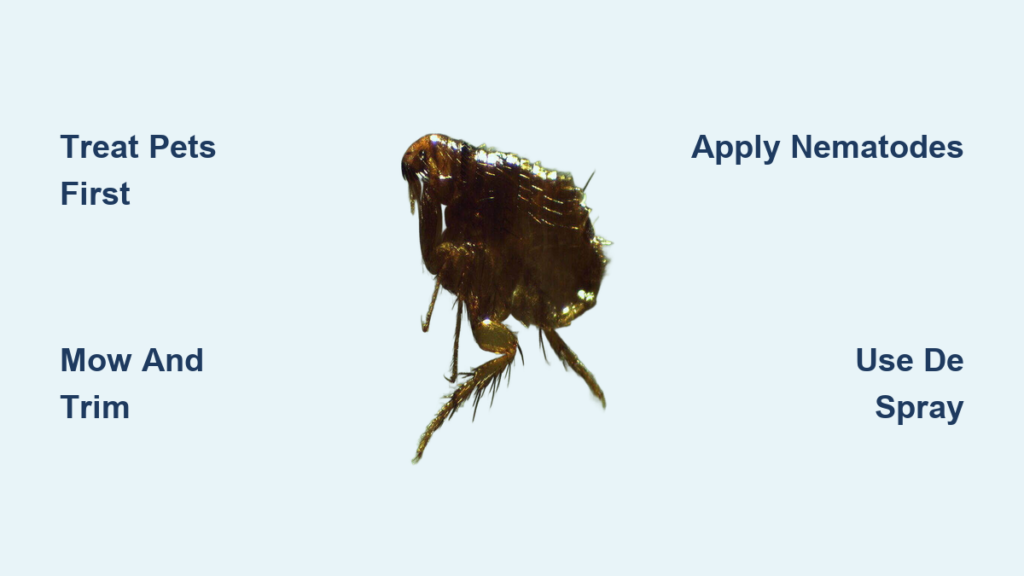
Fleas in your lawn aren’t just a nuisance—they’re a stealthy infestation waiting to invade your home and pets. If you’ve noticed your dog scratching after playtime, felt bites around your ankles while mowing, or seen tiny black specks on your socks, you’re likely dealing with the cat flea, the most common culprit in U.S. lawns. These pests thrive in shaded, moist areas of your yard, especially under decks, in mulch beds, and around pet resting zones. Left untreated, fleas can complete their life cycle in as little as two weeks, with pupae lying dormant for months, ready to reinfest at the first sign of a host.
Killing fleas on grass requires more than spot treatments—it demands a full-scale, coordinated strategy that targets eggs, larvae, pupae, and adults, while also treating pets and preventing wildlife reinfestation. This guide delivers a step-by-step action plan backed by science and real-world success, so you can reclaim your yard safely and effectively.
Start by Treating Your Pets for Fleas
Before touching your lawn, secure your pets. Fleas live on animals and use them as transport into your yard. An untreated pet will reseed your lawn with fleas within days.
Use Fast-Acting Flea Medications
Begin with oral treatments like Bravecto or Capstar, which kill adult fleas within hours. These are more reliable than spot-ons during active infestations. Pair with topical preventatives such as Revolution or Advantage to stop reinfestation. Avoid flea collars containing Tetrachlorvinphos, which the EPA has flagged for potential harm to pets and children.
Bathe and Comb Pets Weekly
Use flea shampoos with pyrethrin (derived from chrysanthemums) to kill fleas on contact. After bathing, comb your pet with a fine-toothed flea comb dipped in soapy water. This captures stragglers and lets you monitor progress. Focus on the neck, tail, and underbelly—flea hotspots.
Pro tip: Wash all pet bedding in hot water weekly. Vacuum carpets and upholstery thoroughly, then empty the vacuum outside to prevent reinfestation.
Prepare Your Yard Before Treating for Fleas
A clean yard absorbs treatments better and removes flea hideouts. This prep phase is non-negotiable.
Mow and Trim for Sun Exposure
Cut grass short and trim bushes, shrubs, and tree limbs to let sunlight penetrate. Fleas die within hours in direct sun—UV light and dry heat are natural killers. Focus on shaded zones where fleas gather: under decks, near fences, and around pet houses.
Remove Debris and Organic Matter
Rake up leaves, twigs, mulch, and grass clippings—these provide shelter for flea eggs and larvae. Bag and dispose of them; don’t compost, as compost piles are flea nurseries. Clear out stacked wood, old furniture, and clutter near the house.
Clean Pet Zones Thoroughly
Remove outdoor beds, toys, and cushions. Wash or discard them. Spray or steam-clean hard surfaces. If you have a doghouse, power-wash it and leave it in the sun to dry.
Deter Wildlife Entry
Raccoons, opossums, stray cats, and rodents carry fleas. Stop them from visiting by using motion-activated sprinklers, hanging vinegar-soaked rags or citrus peels near entry points, sealing trash cans, and installing low fencing or gravel barriers.
Expert note: Fleas often enter via wildlife at night. Disrupting their access is critical to long-term control.
Apply Natural Flea Killers to Your Lawn
For pet-safe, eco-friendly control, start with biological and natural solutions that target flea life stages without harming your family or the environment.
Use Beneficial Nematodes

These microscopic worms are flea killers you can spray. They enter flea larvae, release bacteria, and destroy them from within.
Application steps:
• Mix nematodes with water and apply using a pump or hose-end sprayer
• Target shaded, moist areas: under decks, along fence lines, pet zones
• Apply 10 million nematodes per 2,000 to 3,000 square feet
• Apply at dusk to avoid UV light, then water after application
• Repeat every 4 to 6 weeks during warm months
Pro tip: Nematodes are living organisms. Use them immediately after purchase and store in a cool, dark place until application.
Spread Food-Grade Diatomaceous Earth
DE is a fine powder made from fossilized algae. It slices through flea exoskeletons, causing dehydration.
Application steps:
• Use only food-grade DE (never pool-grade)
• Sprinkle lightly over grass, under decks, around pet areas
• Reapply after rain or every 5 to 7 days
• Wear a mask during application to avoid inhaling the powder
Limitation: DE works best in dry conditions and won’t kill eggs, but it effectively controls larvae and adults.
Spray Cedarwood Oil Solutions
Cedarwood oil disrupts flea nervous systems and dehydrates eggs and larvae. It’s a proven repellent and killer.
Application steps:
• Use commercial sprays like Lawnbrite, EcoLogic, or Wonderside (12 to 15 percent cedarwood oil)
• For DIY: mix 10 to 15 drops cedarwood oil with 1 cup water and 1 tablespoon white vinegar
• Apply weekly with a hose-end sprayer to shaded zones
• Keep the solution off pets, especially cats who may ingest it while grooming
Note: Reapply after rain. The scent fades fast, so consistency is key for effectiveness.
Use Targeted Chemical Treatments for Severe Infestations

When natural methods aren’t enough, especially in severe infestations, use selective insecticides that kill fleas but minimize harm.
Choose Pyrethroid-Based Sprays
Bifenthrin, permethrin, and cypermethrin are fast-acting neurotoxins.
Application steps:
• Kill adults and larvae on contact
• Use a hose-end sprayer for full-yard coverage
• Focus on under decks, garden beds, base of shrubs
• Keep pets and kids off until dry (4 to 6 hours)
• Apply weekly for 4 weeks, then monthly in flea season
Caution: These products are toxic to cats, fish, and bees. Avoid flowering plants and water sources.
Try Fipronil-Based Yard Sprays
Fipronil is safer than pyrethroids for homes with cats or reptiles. It disrupts flea nervous systems and is available in some yard formulations. Follow label instructions for dilution and safety, and note that it’s less harmful to beneficial insects.
Add Insect Growth Regulators
IGRs like methoprene (Precor) and pyriproxyfen stop fleas from maturing.
Benefits:
• Break the reproductive cycle—eggs hatch, but larvae cannot become adults
• Often combined with insecticides in sprays
• Provide long-lasting residual effect
• Safe for mammals and pets
Expert note: Use IGRs in rotation with other treatments to prevent flea resistance.
Use Physical Control Methods to Kill Fleas
Sometimes, the simplest tactics are the most effective, especially when combined with other strategies.
Flood Flea Hotspots
Fleas cannot survive underwater. Soak infested areas with a hose.
Best for: Small, flat lawns or under-deck zones
Application steps:
• Mow and rake first to expose hidden fleas
• Water heavily for 2 to 3 days to drown eggs and larvae
• Avoid overwatering elsewhere, as excess moisture helps fleas
Limitation: Not practical for large or sloped yards, but highly effective in targeted zones.
Maximize Sunlight Exposure
Prune trees and shrubs to open up shaded areas. Fleas avoid UV light and dry out quickly in sun.
Best for: North-facing yards and dense foliage zones
Combine with: Mulch removal to eliminate flea cover
Plant Flea-Repelling Plants Around Your Yard
Add a living barrier of natural repellents around pet zones, patios, and garden edges.
Best Flea-Repelling Plants
Strongest options:
• Mint (plant in pots—it spreads aggressively)
• Catnip (repels fleas more effectively than DEET in some studies)
• Chrysanthemums (source of natural pyrethrin)
• Lavender (fragrant and pet-safe)
• Citronella (familiar mosquito and flea deterrent)
• Marigolds (release limonene, which fleas hate)
• Neem (disrupts insect growth cycles)
Pro tip: Plant in clusters around doors, pet beds, and yard borders. These are not standalone fixes but add a powerful preventive layer.
Avoid These Harmful or Ineffective Flea Treatments
Some popular remedies do more harm than good. Steer clear of these.
Skip Borax and Sevin (Carbaryl)
Borax kills fleas but also bees, earthworms, and pets if ingested. It’s not recommended. Sevin (carbaryl) is a broad-spectrum insecticide classified by the EPA as a likely carcinogen. It harms pollinators and aquatic life.
Avoid Pool-Grade DE and TCVP Collars
Pool-grade DE contains crystalline silica, which is dangerous if inhaled. TCVP flea collars have been linked to neurological issues in pets and children.
Vinegar Sprays: Deterrent Only
A 1:1 mix of vinegar and water may repel stray cats but won’t kill fleas. Use it only as a perimeter deterrent.
When to Call a Professional Pest Control Service
DIY methods work for most cases, but pros have stronger tools for stubborn infestations.
Call a Professional If
• Fleas jump on you daily despite treatment
• You have a large or heavily landscaped yard
• Pets are anemic, hairless, or have tapeworms
• DIY efforts fail after 4 to 6 weeks
What Professionals Offer
• Fogging or misting systems for deep penetration
• Commercial-grade insecticides not sold to consumers
• Integrated plans covering home, pets, and yard
• Follow-up visits to break the life cycle
Note: Some companies offer seasonal lawn treatments that include flea control—worth considering for long-term prevention.
Prevent Future Flea Infestations in Your Lawn
Eradication is only half the battle. Fleas return fast without ongoing defense.
Maintain a Flea-Proof Yard
• Mow weekly and keep grass short
• Rake frequently to remove organic debris
• Avoid overwatering—fleas love humidity
• Store firewood and furniture off the ground
• Install gravel or stone borders to block entry
Protect Pets Year-Round
• Use monthly flea preventatives—don’t stop in winter
• Wash bedding weekly in hot water
• Vacuum and steam clean home regularly
• Check pets daily during peak season (spring through fall)
Deter Wildlife Consistently
• Remove outdoor pet food at night
• Use motion lights or sprinklers
• Seal crawl spaces under decks
Follow a Seasonal Treatment Schedule
• Spring: Start weekly treatments for 3 to 4 weeks
• Summer: Apply every 3 to 4 weeks
• Fall: Final treatment before dormancy
• Winter: Monitor; treat sheltered areas if needed
Pro tip: Apply nematodes twice a year (spring and fall) for lasting biological control.
Frequently Asked Questions About Getting Rid of Fleas on Lawn
How long does it take to get rid of fleas on my lawn?
Complete elimination takes 2 to 6 weeks, depending on infestation severity. The flea life cycle spans 2 to 3 weeks, but pupae can remain dormant for months. Consistent treatment for at least 4 weeks is necessary to break the cycle.
Can I get rid of fleas on my lawn without chemicals?
Yes. Beneficial nematodes, food-grade diatomaceous earth, and cedarwood oil are effective natural options. These methods target different life stages and are safe for pets and children when applied correctly.
Will mowing the lawn help with fleas?
Mowing helps by exposing shaded areas to sunlight. Fleas die within hours in direct UV light. Keep grass short and trim shrubs to reduce flea-friendly hiding spots.
What is the white sock test for fleas?
Wear white socks and walk through shaded areas of your lawn. Fleas will be visible against the white background, confirming their presence.
How do I prevent fleas from coming back after treatment?
Maintain year-round flea prevention on pets, mow regularly, remove debris, and apply seasonal treatments. Deter wildlife with motion sprinklers and seal entry points around your home.
Key Takeaways for Getting Rid of Fleas on Your Lawn
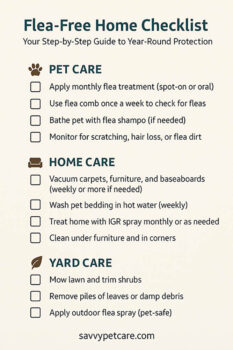
Getting rid of fleas on your lawn isn’t about one magic solution—it’s about consistent, layered action. Start by treating pets, then clean and expose your yard to sunlight. Apply nematodes, cedar oil, or food-grade diatomaceous earth as your primary treatments. Use chemical insecticides only when needed, and always prioritize safety for your family and pets. With this strategy, you won’t just eliminate fleas—you’ll build a yard that resists them for good. No luck required.