You step outside, proud of your lawn, only to spot patches of white flowers dotting the grass. It’s clover. While some homeowners appreciate its low-maintenance nature, most want a uniform green lawn without the bee-attracting, patchy invader. The good news: you can get rid of clover and keep it gone.
Clover thrives not because it’s aggressive, but because your lawn is struggling. Low nitrogen, compacted soil, thin turf, and poor mowing habits create the perfect environment for clover to take over. This guide gives you proven strategies to eliminate clover using chemical, organic, and cultural methods. You’ll learn which herbicides work fastest, how to fix the root causes, and what to do after removal to prevent return.
Why Clover Takes Over Your Lawn
Clover is a symptom of weak lawn health, not the root problem. Understanding why it appears helps you treat the cause, not just the symptoms.
Clover invades lawns for specific reasons. Low nitrogen levels in soil allow clover to thrive because it fixes its own nitrogen through symbiotic bacteria in its roots. Grass struggles in these conditions, but clover doesn’t. Compacted soil blocks water, air, and nutrients, creating an ideal environment for clover. Thin or bare spots give clover room to establish. Improper mowing, especially cutting grass too short, lets clover access sunlight.
A soil test reveals pH, nutrient levels, and compaction. The ideal pH range is 6.0 to 7.0. If pH is low, apply lime to raise it. If nitrogen is low, fertilize with quick-release and slow-release nitrogen. Compacted soil requires core aeration to relieve pressure.
Identify the Clover Type
Correct identification helps you choose the best treatment method. Not all clover is the same.
White Clover
White clover features three rounded leaflets with a white V mark and small white or pinkish flowers. It spreads via stolons and forms dense mats. This type attracts bees heavily during bloom season.
Red Clover
Red clover has larger leaves and reddish-purple flower heads. It grows more upright and less creeping than white clover. It dies back in winter but reseeds readily.
Microclover
Microclover leaves are about half the size of white clover. It produces minimal flowers, attracting fewer bees. Some homeowners intentionally plant it in eco-lawns for its drought tolerance.
Manual Removal for Small Patches
For minor infestations covering under 10% of your lawn, hand-pulling works if done correctly.
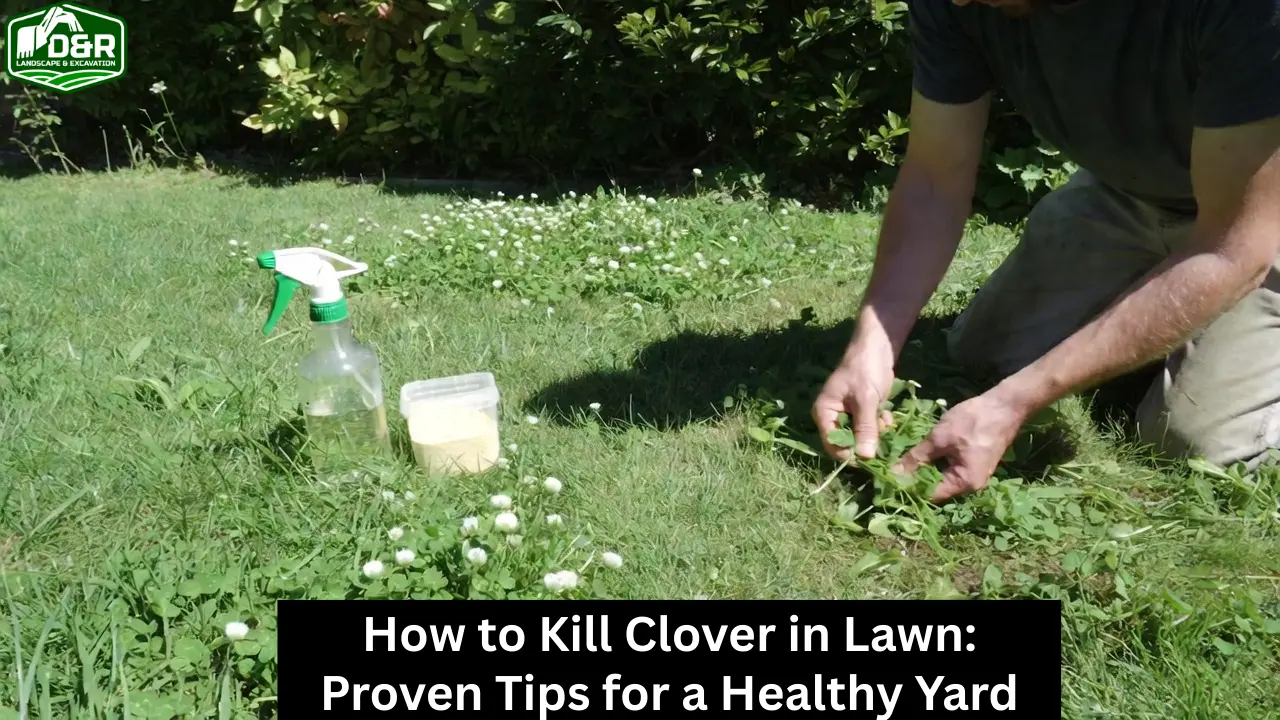
Pull clover by hand after rain or watering when soil is soft. Use a hand trowel or weed fork to loosen soil around the base. Pull slowly to extract the taproot and all stolons. Remove every plant fragment because leftover pieces will regrow. Follow up by overseeding the spot with grass seed to fill the gap.
Warning: skipping root removal leads to rapid regrowth. Be thorough.
Chemical Herbicides That Work Fast

When clover covers more than 20% of your lawn, selective herbicides deliver the fastest results.
Top Professional-Grade Herbicides
Change Up contains sulfentrazone plus metolachlor and delivers the fastest kill in real-world tests. It causes severe discoloration in 3 days and full die-off in 7 to 10 days. Apply 1 ounce per gallon for spot-treat or broadcast application.
Lontrel contains clopyralid and is highly selective, working effectively on tough clover. It’s best for fescue and bluegrass lawns and becomes rainfast in 4 hours.
SpeedZone contains 2,4-D, MCPP, dicamba, and carfentrazone for quick burn-down. Visible damage appears in 5 days. Use caution near trees and ornamentals.
T-Zone SE contains triclopyr and is more effective than 2,4-D alone. It’s best for lawns with mixed broadleaf weeds.
Top pick: Change Up delivers the fastest, most complete kill for serious infestations.
Homeowner-Friendly Options
Ortho Weed-B-Gon Chickweed, Clover and Oxalis Killer contains dicamba plus 2,4-D and works on small to moderate patches. Spectracide Lawn Weed Killer is 2,4-D based and offers a budget option with moderate results. Jonathan Green Weed and Feed combines herbicide and nitrogen to kill clover while feeding grass.
Reality check: homeowner products require two applications 10 to 14 days apart for full control.
Organic Solutions for Pet-Safe Control
If you avoid synthetic chemicals, iron-based herbicides offer a fast, nontoxic alternative.
Fiesta Chelated Iron
Fiesta disrupts photosynthesis in clover. It’s non-toxic to pets, children, and grass. The product becomes rainfast in 3 hours. Results show yellowing at 24 hours, browning at 48 hours, and death at 72 hours ready for raking.
Iron X and Natria
These products offer similar efficacy to Fiesta. They’re OMRI-listed organic options. Apply in early morning or late afternoon for best results.
Pro tip: add a drop of dish soap per gallon to help the solution stick to waxy clover leaves.
How to Apply Herbicides Correctly
Even the best product fails if applied incorrectly. Follow these protocols for maximum effectiveness.
Best Time to Spray
Apply herbicides in spring when clover is actively growing or in fall before dormancy. Ideal temperature is 70 to 80 degrees Fahrenheit. Avoid temperatures over 85 degrees and drought-stressed lawns. Never apply to newly seeded lawns.
Preparation Steps
Mow your lawn 2 to 3 days before application. Do not bag the clippings. Do not mow 48 hours before or after application. Water lightly the night before to dampen foliage without soaking it.
Application Tips
Use a fan-nozzle sprayer for even coverage. Add a surfactant such as 1 drop of Dawn dish soap per gallon to improve adhesion. Mark treated areas with blue turf dye to avoid missing spots. Spot-treat when possible to reduce chemical use. Apply on calm days to prevent drift to gardens and hardscapes.
Rain and Reapplication
Wait 24 to 48 hours before rain for most herbicides. Chelated iron needs only 3 hours to be rainfast. Reapply after 10 to 14 days for full control. Severe cases may need up to three treatments.
Expert note: one application kills about 60%. A second round catches survivors.
Fix Your Soil to Prevent Return
Killing clover is step one. Preventing its return is the real win.
Fertilize with Nitrogen
Clover thrives in low-nitrogen soil while grass thrives with high nitrogen. Apply 1 pound of nitrogen per 1,000 square feet. Use quick-release such as ammonium sulfate for immediate greening. Use slow-release such as Milorganite for long-term feeding. Weed and feed products combine herbicide and fertilizer for ideal post-treatment.
UC research shows fertilizing alone won’t kill clover, but it helps grass outcompete it.
Aerate to Reduce Compaction
Compacted soil blocks water, air, and nutrients, creating perfect conditions for clover. Core aeration removes soil plugs 0.5 to 0.75 inches in diameter. Perform aeration in fall for cool-season grasses or late spring for warm-season grasses. Do this once per year. Grass roots grow deeper and crowd out weeds.
Overseed for Density
Bare spots are clover’s entry point. Thick turf keeps it out. Overseed in fall when temperatures are cooler and moisture is consistent. Choose high-quality, climate-appropriate seed with less than 0.1% weed content. Apply seed at a rate of 4 parts Milorganite to 1 part seed by weight. Cover lightly with straw or compost to retain moisture.
Pro tip: overseeding after aeration boosts germination and coverage.
Long-Term Lawn Maintenance
Prevention beats treatment every time. Build habits that keep clover away.
Mow High and Sharp
Maintain grass at 3 to 4 inches tall. Taller grass shades clover seedlings, preventing establishment. Mow weekly during the growing season. Keep blades sharp to avoid tearing grass.
Follow the one-third rule: never cut more than one-third of the blade in a single mow.
Water Deeply and Infrequently
Water to a depth of 6 to 8 inches to encourage deep roots. Water 1 to 2 times per week rather than daily. Apply water in early morning to reduce evaporation and disease risk.
Avoid frequent shallow watering because it favors shallow-rooted weeds.
Use Pre-Emergent Weed Control
Apply pre-emergent in early spring and early fall to stop clover before it starts. Corn gluten meal works for organic control. Commercial pre-emergents offer stronger prevention.
Note: pre-emergent does not kill existing clover. It only prevents new seeds from germinating.
When to Call a Professional
For large or recurring infestations, professional help saves time and delivers better results.
Benefits of Hiring a Lawn Care Service
Professional services provide custom plans based on soil test, grass type, and climate. They offer multiple treatments including pre-emergent, fertilizer, and herbicides in one program. Many companies such as NaturaLawn of America offer organic options. Commercial equipment ensures even, accurate application.
Recommended services include Lawn Doctor and NaturaLawn of America.
Expert advice: speak with your local NaturaLawn technician to find out how aeration, seeding, or weed control can transform your lawn.
Should You Keep Clover
Before you kill every last plant, consider the pros and cons.
Pros of Keeping Clover
Clover provides nitrogen fixation, reducing the need for fertilizer. It’s drought tolerant and requires less water. It supports pollinators by feeding bees and beneficial insects. It demands low maintenance with no frequent mowing or feeding. Its dense mat helps control erosion.
Cons of Keeping Clover
Clover attracts bees, creating sting risk for children and pets. It has poor durability and dies in winter. It breaks lawn uniformity and creates aesthetic issues. It can spread to gardens and flower beds.
Verdict: a few clover flowers won’t hurt. But if it’s spreading or you have allergy concerns, removal is wise.
Final Action Plan: Step-by-Step
Follow this sequence for a clover-free lawn.
Test your soil to check pH and nitrogen levels. Mow twice, 10 days apart, to stimulate clover growth. Apply herbicide using Change Up, Lontrel, or Fiesta. Wait 10 to 14 days and reapply if needed. Aerate and overseed, especially in thin areas. Fertilize by applying 1 pound nitrogen per 1,000 square feet. Maintain by mowing high, watering deeply, and using pre-emergent in spring and fall.
Frequently Asked Questions About Getting Rid of Clover
Does clover mean my lawn is unhealthy
Yes, clover indicates underlying lawn problems. It thrives in nitrogen-poor soil, compacted ground, and thin turf areas. Fixing these conditions helps grass outcompete clover long-term.
What is the fastest way to kill clover
Change Up herbicide delivers the fastest results, causing severe discoloration in 3 days and full die-off in 7 to 10 days. For organic options, chelated iron products kill clover in 72 hours.
Will mowing kill clover
Mowing alone won’t kill clover, but raising your mower height to 3 to 4 inches helps shade out clover seedlings. Combine mowing with herbicide and soil improvements for best results.
Is clover bad for bees
Clover produces abundant flowers that attract bees. While bees are beneficial pollinators, their presence poses sting risk for children, pets, and allergy sufferers. Consider removal if this is a concern.
Can I use vinegar to kill clover
Vinegar burns clover foliage but often fails to kill the roots. It also damages surrounding grass. For small patches, hand-pulling or herbicide application works better than vinegar.
How long does it take to get rid of clover completely
With herbicide application, expect 7 to 14 days for initial kill. Full eradication may require 2 to 3 applications over 4 to 6 weeks. Preventing return through soil improvement and proper maintenance takes longer but delivers lasting results.
Key Takeaways for Eliminating Clover
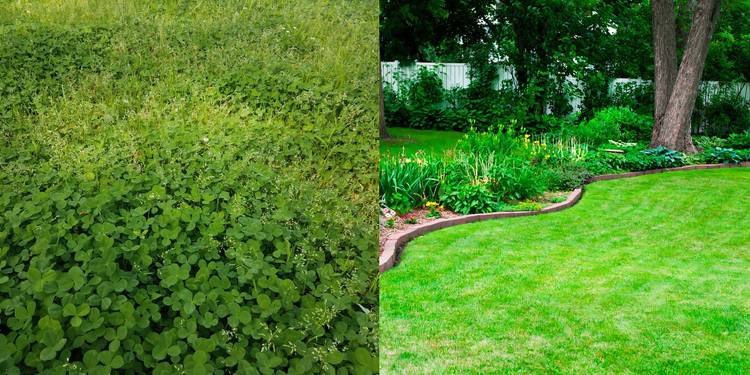
Clover is a symptom of weak lawn health, not the root problem. Killing it fast with the right herbicide is only half the battle. The real victory comes from fixing your soil through proper fertilization, aeration, and overseeding to build a dense, thriving turf that naturally resists clover.
Use Change Up or Lontrel for fastest results if you prefer chemical solutions. Choose Fiesta or other iron-based herbicides if you need pet-safe options. Apply herbicides correctly with proper timing, surfactants, and reapplication. Then maintain your lawn by mowing high, watering deeply, and using pre-emergent preventively.
With consistent care, your lawn won’t just look better. It will stay that way.