Is your Troy Bilt snow blower slow to start, losing throwing power, or making strange noises in the auger housing? These are early warning signs that routine maintenance is overdue. Skipping basic care shortens the life of your machine and leads to expensive mid-storm breakdowns.
This complete Troy Bilt snow blower maintenance guide walks you through every essential task, from pre-season inspection to off-season storage. You will learn how to service the engine, lubricate moving parts, clear clogs safely, and follow a proven maintenance schedule that keeps your blower running strong for over a decade.
Pre-Season Inspection Steps for Your Troy Bilt Snow Blower

A 20-minute checkup before the first snowfall catches small issues before they leave you stranded. Focus on the four areas below to confirm your machine is storm-ready.
Check Tires, Auger, and Control Cables
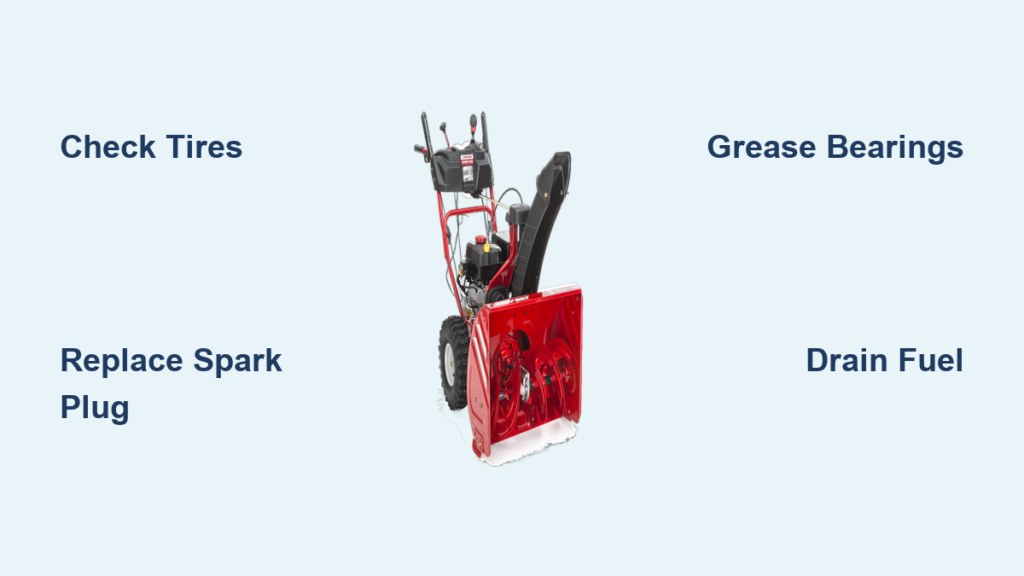
Spin each tire by hand to verify smooth rotation. Look for cracks, dry rot, or low pressure, and inflate to the PSI listed in your manual. Manually rotate the auger to confirm it spins freely. If it feels stiff, clear any debris or ice lodged in the housing. Finally, squeeze and release the auger control lever to confirm the cable moves smoothly without sticking.
Examine Skid Shoes and Scraper Bar
Skid shoes control how high the auger sits above the ground. If they are worn down to less than 1/4 inch thick, replace them. The scraper bar should sit level beneath the housing. A bent or uneven scraper reduces clearance and forces the engine to work harder. Adjust or replace it before the first use.
Inspect Belts and the Drive System
Examine the auger belt and drive belt for fraying, cracking, or glazing. A slipping belt cuts throwing distance and makes the unit harder to push. Make sure both belts are properly tensioned and seated on their pulleys. If either shows visible wear, swap it out before the season starts.
Engine Care and Fuel Management
Fuel problems cause more snow blower failures than any other issue. Follow these steps to keep the engine starting easily and running smoothly.
Replace Old Gas with Fresh Fuel
Never run fuel older than 30 days. Stale gas leaves varnish in the carburetor and prevents proper ignition. At the end of every season, drain the tank or add fuel stabilizer. For pre-season startup, refill with fresh unleaded gasoline rated at 87 octane or higher.
Install a New Spark Plug
A fouled spark plug causes hard starting and misfires. Remove the old plug with a socket wrench and inspect the electrode. Carbon buildup, oil residue, or a wide gap means it is time for a replacement. Reinstall a compatible plug and tighten it about 1/8 to 1/4 turn past hand-tight.
Change or Clean the Air Filter
A clogged air filter chokes the engine and reduces power. Locate the filter housing near the top of the engine. Foam filters can be washed in warm soapy water, dried, and lightly oiled. Paper filters should be replaced annually or more often in dusty conditions.
Lubrication Points Every Troy Bilt Snow Blower Needs

Proper lubrication stops friction, prevents rust, and keeps cables from freezing in cold weather. These three areas need attention each season.
Grease the Auger Bearings
Locate the grease fittings on each side of the auger housing. Use a hand grease gun to apply lithium-based grease until fresh grease emerges from the seals. Three to five pumps per side is usually enough. Over-greasing can push grease past the seals and attract dirt.
Oil the Cables and Chute Mechanism
Spray silicone lubricant on the auger control cable and drive cable housings. Work the levers back and forth to distribute the lube. Rotate the discharge chute while spraying the pivot point with dry lubricant to prevent freezing during use.
Lubricate the Gear Box on Two-Stage Models
Two-stage blowers use a gear box to drive the auger. Check the oil level with the dipstick or fill plug. If it is low, top off with SAE 80W-90 gear oil. Replace the gear oil every two years, or sooner if it looks milky, which signals water contamination.
Clearing Clogs and Post-Storm Care
Snow blowers jam when handling wet, heavy snow. Safe clog removal protects both you and the machine.
Always Stop the Engine First
Never reach into the auger or chute while the engine is running. Shut off the engine and disconnect the spark plug wire before clearing any jam. Use a clean-out tool or sturdy stick to push snow backward through the chute.
Clear Residual Snow After Each Use
Let the blower run for 30 seconds after you finish clearing to blow out trapped moisture. Then use a plastic scraper or brush to remove packed snow from the auger housing, chute, and undercarriage. Wet snow left on the machine will freeze solid and cause rust.
Break Up Ice in the Discharge Chute
If snow stops throwing efficiently, ice may be blocking the chute. Tap the outside of the chute with a rubber mallet to dislodge the blockage. Avoid metal tools, which can crack or dent the plastic housing.
Off-Season Storage Best Practices
How you store your Troy Bilt snow blower in the off-season determines how easily it starts next winter. Follow these steps to prevent corrosion, fuel issues, and battery damage.
Drain Fuel or Add Stabilizer
If the blower will sit unused for more than 30 days, drain the tank and carburetor completely. Alternatively, add fuel stabilizer and run the engine for 5 minutes to circulate the treated fuel through the system. Stabilized fuel resists varnish buildup and protects the carburetor.
Remove and Store the Battery on Electric Start Models
Batteries left attached can deep-discharge and lose capacity. Remove the battery and store it in a cool, dry location. Charge it to roughly 50 to 70 percent before storage and top it off monthly if voltage drops.
Elevate the Unit and Use a Breathable Cover
Park the blower in a dry garage or shed. Place it on a tarp or wooden pallet to keep ground moisture away. Cover with a breathable, waterproof cover rather than a plastic tarp, which traps humidity and promotes rust.
Common Troy Bilt Snow Blower Problems and Quick Fixes

Even well-maintained machines can develop issues. These three problems are the most common and easiest to solve at home.
Why Won’t My Troy Bilt Snow Blower Start?
Always check three things first: fuel, spark, and air. Confirm fresh gas is in the tank. Remove the spark plug and test for a strong blue spark when pulling the cord. Inspect the air filter and clean or replace it if dirty. If all three check out, the carburetor likely needs cleaning or the engine needs priming.
Auger Not Turning? Check the Belt and Shear Pins
When the engine runs but the auger does not spin, start with the auger belt. A broken or slipped belt is the most common cause. Next, check the shear pins that connect the auger to the drive shaft. If a pin is broken, replace it with the correct OEM part. Never substitute a standard bolt, since shear pins are designed to break under overload and protect the gear box.
Wheels Not Turning? Inspect the Drive Belt
If the auger spins but the machine will not move, the drive belt may be loose, worn, or off the pulley. Engage the drive lever and watch for proper tension. Adjust the cable or replace the belt if it is cracked or glazed. On models with a friction wheel, confirm it is not worn down or coated in ice.
Troy Bilt Snow Blower Maintenance Schedule by Usage
Stay ahead of wear and tear by following this simple maintenance timeline.
After Every 5 Hours of Use
• Clear debris from the auger and housing
• Check tire pressure and tread condition
• Inspect belts for wear or misalignment
• Lubricate the chute pivot and control cables
End of Season (Annual Tasks)
• Change engine oil on four-cycle models
• Replace the spark plug
• Replace the air filter
• Drain or stabilize the fuel
• Grease the auger bearings
• Inspect shear pins and replace if needed
• Clean the entire machine before storage
Every Two Years
• Replace cracked or brittle fuel lines
• Change gear box oil on two-stage models
• Inspect the electrical system on electric start units
• Check the auger and impeller for balance or damage
Where to Find Genuine Troy Bilt Replacement Parts
Using original equipment manufacturer parts keeps your machine running like new and protects your warranty.
Use the Official Find Parts Tool
Visit the Troy Bilt website and enter your model number into the “Find Parts” tool. The model tag is usually located near the engine or on the housing. The parts diagram shows every component available for your specific machine, including belts, shear pins, scraper bars, skid shoes, and auger paddles.
Avoid Cheap Aftermarket Alternatives
Generic parts may save a few dollars up front, but they often fit poorly and wear out faster. For high-stress components like belts and bearings, OEM parts are the better investment. Poor-fit parts increase engine strain and reduce throwing performance.
Frequently Asked Questions About Troy Bilt Snow Blower Maintenance
How often should I change the oil in my Troy Bilt snow blower?
Change the engine oil annually at the end of each season on four-cycle models. If you use the machine heavily or in extreme conditions, check the owner’s manual for shorter intervals. Fresh oil protects the engine from wear and helps it start easier in cold weather.
What type of fuel should I use in a Troy Bilt snow blower?
Use fresh unleaded gasoline with an octane rating of 87 or higher. Avoid fuel older than 30 days, and never use E85 or diesel. If storing the blower for more than 30 days, add fuel stabilizer to prevent varnish and gumming in the carburetor.
How do I prevent my snow blower chute from clogging?
Keep the chute clear by using a rubber mallet to break up ice during use. Run the auger for a few seconds after each pass to clear loose snow. Applying dry lubricant to the chute pivot and avoiding wet, heavy snow whenever possible also reduces clogs.
Where are the shear pins on a Troy Bilt snow blower?
Shear pins are located on the auger shaft, connecting the auger to the drive shaft. They sit just behind the auger housing on each side. The pins are designed to break under heavy load to protect the gear box, so always keep spares on hand during the winter season.
Can I leave my snow blower outside in the winter?
Storing the blower outside is not recommended, even with a cover. Moisture and temperature swings cause rust, frozen cables, and fuel issues. Always store it in a dry garage, shed, or covered area for best results.
Key Takeaways for Troy Bilt Snow Blower Maintenance

Troy Bilt snow blower maintenance is straightforward when broken into seasonal tasks. A quick pre-season inspection catches worn belts, bad fuel, and clogged filters before the first storm. Routine lubrication of the auger bearings, cables, and chute pivot keeps the machine operating smoothly in freezing temperatures. End-of-season fuel care, battery removal, and proper storage prevent the most common causes of failure. Follow the schedule outlined above, use genuine OEM parts, and your snow blower will deliver reliable service for many winters to come. For model-specific details, always consult your owner’s manual or visit the Troy Bilt product support page.