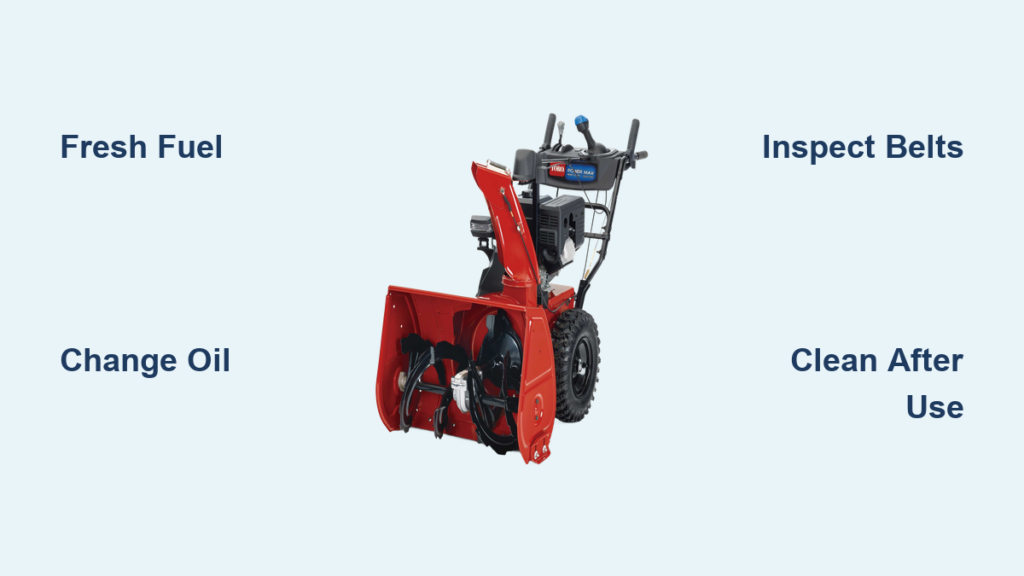
Winter is right around the corner, and if you depend on your Toro gas snow blower to clear driveways and walkways, the time to prepare is now. A well-tuned machine starts faster, runs smoother, and lasts far longer than one left to sit untouched. Without proper Toro gas snow blower maintenance, even the most reliable models can fail at the worst possible moment.
Most snow blower problems trace back to neglect rather than mechanical defects. Hard starts, weak performance, and unexpected breakdowns almost always point to old fuel, dirty oil, or worn components. This guide walks you through the essential service steps before, during, and after the snow season, all based on Toro’s official recommendations.
By the end, you will know exactly how to inspect, service, and store your single-stage or two-stage Toro gas snow blower for maximum reliability and lifespan.
Pre-Season Fuel Prep
Use Fresh, Ethanol-Free Gasoline
Old or ethanol-heavy fuel is the leading cause of starting problems in small engines. For best results with Toro gas snow blower maintenance, always use fresh gasoline with no more than 10% ethanol. Ethanol attracts moisture, which leads to gummed-up carburetors and clogged fuel lines.
Pro Tip: Buy only what you will use within 30 days. For fuel kept longer, add a stabilizer.
Add Fuel Stabilizer Before Storage
Even brief storage causes fuel to break down. To prevent varnish buildup in the carburetor, add a quality stabilizer like Toro Fuel Stabilizer or STA-BIL to every tank. Run the engine for 5 minutes to circulate the treated fuel through the system.
❗ Never store your snow blower with untreated gas. This leads to clogged carburetors and hard starts next season.
Inspect Fuel Lines and the Tank
Check the fuel line for cracks, brittleness, or leaks. Replace any damaged sections right away. Confirm the cap vents properly, since clogged vents cause fuel starvation. Clear debris from the tank opening and ensure the cap seals tightly.
Change Engine Oil Annually
Why Oil Changes Matter
Clean oil lubricates engine parts, reduces wear, and supports cold-weather starting. Over time, oil absorbs moisture and combustion byproducts that damage internal components. Changing it yearly keeps the engine running smoothly and extends its life.
How to Change Oil on a Single-Stage Model
- Run the engine for 2 to 3 minutes to warm the oil.
- Shut off and let it cool for safety.
- Tip the snow blower forward with the chute side up to access the drain plug.
- Place a pan under the plug, remove it, and let oil drain completely.
- Reinstall the plug and refill with SAE 5W-30 engine oil (check your manual for capacity).
- Confirm with the dipstick and avoid overfilling.
✅ Tip: Use a funnel with a long spout to prevent spills.
Oil Change Steps for Two-Stage Models
Two-stage blowers typically have a drain plug or dipstick near the base of the engine.
- Warm the engine briefly.
- Shut off and wait 2 minutes.
- Remove the dipstick and tip the machine to drain oil through the dipstick tube, or use a suction pump.
- Refill through the oil fill tube with SAE 5W-30 detergent oil.
- Return the unit upright and recheck the level.
⚠️ Never operate with low or no oil. Even a few minutes can destroy the engine.
Inspect and Replace the Drive Belt

Signs of Belt Wear
A slipping or worn drive belt reduces traction and throwing distance. Check annually for these warning signs:
- Cracks or fraying along the surface
- Glazing or a shiny, hardened appearance
- Loose tension during operation
- Missing pieces from the belt body
Replace the belt if any of these appear.
Replace the Belt on Single-Stage Blowers
- Disconnect the spark plug wire for safety.
- Remove the belt cover.
- Slide the old belt off the pulleys.
- Install the new belt following the original routing path.
- Reassemble the housing and confirm drive function.
🔧 Use OEM Toro belts. Aftermarket versions may not fit correctly or last as long.
Auger and Impeller Care

Check for Damage or Obstructions
Before each use, inspect both the auger and impeller. Look for:
- Bent or warped blades
- Cracks or dents in the housing
- Ice or debris buildup inside
Clear packed snow with a wooden stick. Never use your hands.
Why Two-Stage Models Skip Shear Pins
Toro two-stage snow blowers use a commercial-grade gear case that does not require shear pins. The transmission protects itself by disengaging under overload. If the auger jams:
- The engine may stall
- Clear the obstruction with a stick
- Restart and resume work
There are no parts to replace. Just clear the jam and keep going.
Winter-Ready Checklist
Pre-Storm Inspection Routine
Run through this quick check before the first snowfall:
- ✅ Oil level is correct
- ✅ Fuel is fresh and stabilized
- ✅ Spark plug is clean and properly gapped
- ✅ Belts are intact and tight
- ✅ Tires are inflated
- ✅ Chute and scraper are in good condition
Test the Machine Early
Do not wait for a blizzard to find out your snow blower will not start. Fire it up in late fall to catch issues early. If it struggles to start, address fuel or spark plug problems now while the weather is still mild.
Spark Plug Maintenance

Check and Clean Annually
A fouled or worn plug causes misfires and hard starts. Remove the plug with a socket wrench and inspect for:
- Correct electrode gap (0.030 inches)
- Carbon buildup on the electrode
- Cracked porcelain insulator
Clean with a wire brush or replace the plug every 2 to 3 seasons.
Install the Correct Plug Type
Use the spark plug listed in your manual. Common Toro plug types include:
- Champion RJ19LM
- NGK BPR6ES
Always hand-tighten first, then use a wrench for one-half to two-thirds of a turn.
❗ Over-tightening can damage the cylinder head.
Clear Snow Like a Pro
Operating Tips for Best Results
Even a perfectly maintained machine performs poorly with bad technique. Follow these habits:
- Start slowly on deep snow
- Use multiple passes rather than trying to chew through deep drifts
- Adjust the chute height to avoid ground contact
- Move at a steady pace and let the machine do the work
Avoid Common Mistakes
- ❌ Plowing gravel or rough surfaces aggressively (wears the scraper)
- ❌ Spraying salt or de-icer directly on the machine
- ❌ Running the engine at half-throttle for long periods
✅ Run at full throttle when clearing snow. This keeps the auger spinning fast and prevents clogs.
Mid-Season Maintenance
Clean After Every Use
Snow melts into slush, which leads to rust. After each storm:
- Wipe down the housing and chute
- Scrape ice from the auger housing
- Lightly lubricate the chute control cables
Lubricate Moving Parts
Keep the chute crank and chute control rod greased with white lithium grease. Proper lubrication prevents freezing and ensures smooth rotation.
🛠️ Do this monthly during heavy use.
End-of-Season Storage Steps
Drain or Stabilize the Fuel System
You have two options for fuel storage:
Option 1: Drain Fuel
– Run the engine until it stops
– Siphon out leftover fuel
– Run the engine briefly to clear the carburetor
Option 2: Stabilize Fuel
– Fill the tank with fresh gas and stabilizer
– Run for 5 minutes to circulate
– Shut off and store
✅ Stabilizing is safer and more reliable. Draining can leave residue that clogs the carburetor.
Remove and Store the Battery (If Equipped)
Some models feature electric start. Remove the battery, clean the terminals, charge it fully, and store it indoors in a cool, dry location.
Lubricate and Cover
- Apply light oil to metal surfaces to prevent rust
- Cover with a breathable tarp or Toro cover
- Store in a dry, elevated area off concrete floors
❌ Never use plastic sheeting. It traps moisture and encourages rust.
Troubleshooting Common Issues
Snow Blower Will Not Start
Work through this checklist:
- Is the fuel fresh and stabilized?
- Is the spark plug clean and properly gapped?
- Is the choke in the fully on position for a cold start?
- Is the fuel valve open?
🔍 If it cranks but will not fire, suspect stale fuel or a bad spark plug.
Loss of Power or Throwing Distance
Common causes include:
- A worn drive belt
- Ice packed inside the auger housing
- Running at low engine speed
- Damaged impeller blades
Inspect and clear as needed.
Wheels Will Not Turn
- Check drive belt tension
- Inspect transmission fluid (on select models)
- Look for broken gears or disconnected cables
Refer to your owner’s manual for model-specific diagnostics.
Maximize Lifespan with Routine Care
Service Schedule at a Glance
| Task | Frequency |
|---|---|
| Change oil | Annually or every 50 hours |
| Replace spark plug | Every 2 to 3 seasons |
| Inspect belts | Pre-season and mid-season |
| Clean exterior | After each use |
| Stabilize fuel | Before storage |
| Lubricate controls | Monthly during use |
Store Indoors When Possible
Garage storage beats outdoor sheds every time. Less moisture means less rust and fewer starting issues when winter returns.
Frequently Asked Questions About Toro Gas Snow Blower Maintenance
How often should I change the oil in my Toro gas snow blower?
Change it at least once per year or every 50 hours of operation. Fresh oil keeps the engine lubricated and helps with cold-weather starting.
What type of fuel should I use in my Toro snow blower?
Use fresh gasoline with no more than 10% ethanol. Avoid fuel older than 30 days unless you have added a stabilizer like Toro Fuel Stabilizer or STA-BIL.
Do Toro two-stage snow blowers use shear pins?
No. Toro two-stage models use a commercial-grade gear case that protects itself by disengaging under overload. There are no shear pins to replace.
When should I replace the spark plug?
Inspect it annually and replace every 2 to 3 seasons. Common replacements include the Champion RJ19LM and NGK BPR6ES, depending on your model.
Can I store my snow blower outside over the summer?
Outdoor storage is not recommended. Store indoors in a dry area off concrete floors, and cover with a breathable tarp or Toro cover to prevent rust.
Why will my snow blower not throw snow far anymore?
Loss of throwing distance usually means a slipping drive belt, packed ice in the auger housing, or low engine speed. Inspect the belt and clear any ice buildup first.
Final Thoughts on Toro Gas Snow Blower Maintenance
Toro gas snow blower maintenance does not require a mechanic’s certification, but it does require consistency. A 30-minute tune-up each fall saves hours of frustration during a storm. Focus on fresh fuel, clean oil, a healthy spark plug, and proper storage, and your machine will deliver reliable performance year after year.
Mark your calendar for pre-season service, run through the winter checklist before the first flake falls, and keep this guide handy for quick reference. Stay ahead of winter, and your driveway will never catch you off guard.