You pull your snow blower out of storage, fire it up, and a thick cloud of white smoke billows out. It looks alarming, but in most cases, the cause is simple. Snow blower white smoke almost always means oil is burning inside the combustion chamber. The fix is often as straightforward as correcting the oil level, leveling the machine, or replacing old fuel.
The good news is that you do not need to be a mechanic to solve this problem. With basic tools and a few minutes of work, you can usually restore clean operation. This guide walks you through how to diagnose the cause, apply the right fix, and prevent the issue from returning next season.
Diagnose Why Your Snow Blower Is Blowing White Smoke

Check for an Overfilled Crankcase
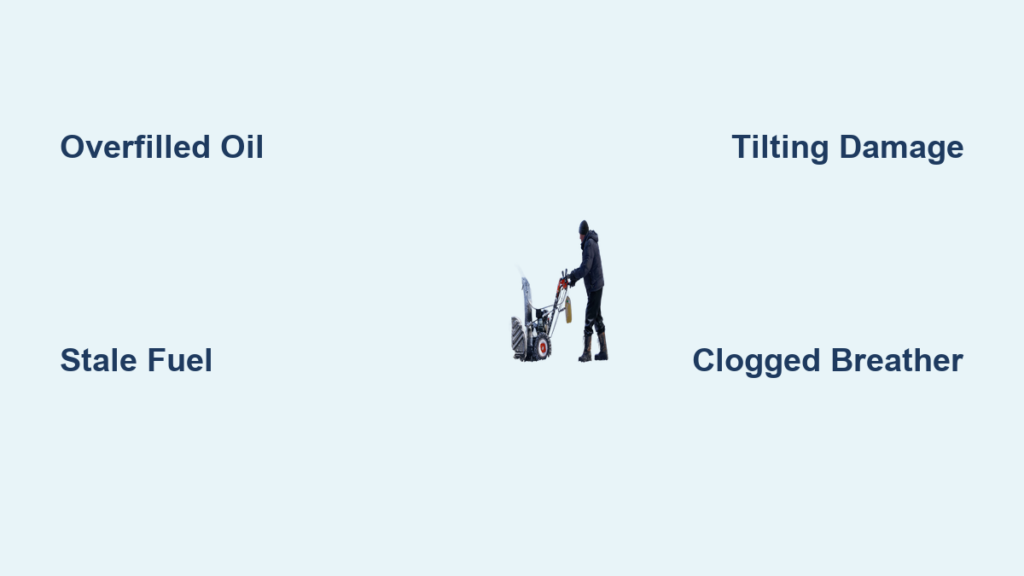
Overfilling the crankcase is the most common cause of white smoke from a snow blower. Excess oil increases internal pressure, which forces oil past the piston rings and into the combustion chamber. Once there, the oil burns and produces thick white exhaust.
This often happens when you top off oil without checking the dipstick first. Even a small amount over the MAX mark can cause smoking. Always check oil on a flat surface with the dipstick fully inserted. Never guess based on appearance alone.
Confirm the Storage Angle
Storing your snow blower on its side or tilted more than 15 degrees allows oil to seep into the cylinder. Over months of storage, oil migrates through piston ring gaps and pools in the combustion chamber. When you start the engine, that pooled oil burns off in a visible burst of smoke.
If you stored the machine in a cramped garage, tipped it to clean under the auger, or transported it in a truck bed at an angle, this is likely your culprit. Level the machine immediately and let the excess oil burn off at idle.
Verify the Oil Grade and Condition
Using the wrong oil viscosity can contribute to smoking. Most small engines require SAE 5W-30, though some older models call for different weights. Non-detergent automotive oils or incorrect grades may lead to incomplete combustion and increased oil consumption.
Check your owner’s manual for the correct specification. Also look at the oil itself. If it appears milky, water contamination may be present. Milky oil requires immediate replacement.
Inspect the Breather Tube for Blockages
Located behind the air filter, the breather tube regulates crankcase pressure. When debris, sludge, or a deteriorated hose clogs this tube, pressure builds and pushes oil into the combustion chamber. This produces the same smoking effect as overfilling.
Remove the air filter cover, locate the rubber tube, and inspect it. Blow through it or use compressed air to clear blockages. Replace the tube if it appears cracked or brittle.
Burn Off Excess Oil at Idle
Run the Engine on Level Ground
If the smoke appeared after storage or tilting, burning off excess oil is the fastest solution. This safely clears pooled oil without any disassembly.
Place the snow blower on a flat, stable surface. Start the engine with the choke partially closed. Let it run at idle speed for 5 to 10 minutes. Avoid revving the engine, since high RPMs can force more oil into the chamber.
As the engine heats up, the pooled oil burns off and smoke should gradually disappear. If it clears within 10 minutes, the problem is resolved.
Know How Long Smoke Should Last
Timing tells you a lot about the cause. Smoke lasting 1 to 3 minutes is normal after storage. Smoke lasting 5 to 10 minutes indicates excess oil burning off. Smoke continuing past 10 minutes points to overfilling, wrong oil, or a deeper mechanical issue.
If smoke persists beyond 10 minutes, move on to draining the oil.
Drain Excess Engine Oil
Gather Your Tools
You will need a 10mm socket wrench, an oil drain pan, work gloves, rags, and a small container to hold bolts. Work in a well-ventilated area and have rags ready for spills.
Remove the Drain Plug
Position the snow blower on level ground. Tilt it slightly backward, just enough to access the plug, but never exceed 15 degrees. Find the oil drain plug, usually a small hex bolt on the side or bottom of the crankcase.
Place the drain pan directly underneath. Use the 10mm socket to loosen and remove the plug. Let the oil drain completely, which usually takes 2 to 5 minutes. Catch any drips with rags.
Warning: Do not tilt the engine excessively. Oil can leak into the air filter or carburetor.
Reinstall the Plug and Refill Correctly
Clean the plug and reinstall it snugly. Add oil slowly, checking the dipstick frequently. Fill only to the MAX mark, never above it. Run the engine briefly, then recheck the dipstick once the oil settles. Oil expands when hot, so a final check after running ensures accuracy.
Replace Old or Contaminated Fuel

Drain Degraded Gasoline
Old fuel is a silent killer of small engines. Gas left in the tank for months degrades, forming varnish and gum that clog the carburetor. In humid climates, water can also accumulate in the fuel. While bad fuel alone rarely causes white smoke, it compounds oil-related issues and makes starting harder.
To drain, remove the front shroud to access the fuel line. Use needle-nose pliers to disconnect the line from the carburetor and route it into an empty fuel container. Then drain the carburetor bowl by removing the drain screw at the bottom. Let all residue flow into a container, then reinstall the screw securely.
Pro tip: Use a small funnel to catch the drain bolt if it slips. It saves time and prevents loss.
Refill with Fresh Fuel and Stabilizer
Fill the tank with fresh gasoline, ideally without ethanol. Pour in fuel stabilizer at a ratio of 1 ounce per 2.5 gallons (such as STA-BIL). Start the engine and let it run for 30 to 60 seconds to circulate the stabilized fuel through the system. This flushes old deposits and protects the carburetor.
Prevent White Smoke From Returning
Store the Snow Blower Level
Always store your machine on a flat surface. If you must tilt it for cleaning, keep the spark plug facing upward to minimize oil migration into the cylinder. Store upright on a tarp or mat in a dry, temperature-stable area. Never lean it against a wall where it can shift.
Use the Correct Oil and Capacity
Never assume the oil level. Always check on a level surface with the dipstick fully inserted. Add oil in small increments and recheck after running the engine briefly. Oil capacity varies by model, so consult it before refilling. For example, the Craftsman SB410 holds about 20 ounces, while the Cub Cadet 2X 24 holds about 24 ounces.
Add Fuel Stabilizer Before Every Storage
Before storing your snow blower for the summer, add stabilizer to fresh gas. Run the engine for 30 to 60 seconds to circulate it. If your machine has a fuel valve, shut it off and let the engine run until it stalls. This keeps the carburetor clean and prevents gum buildup, which is the leading cause of spring starting problems.
Perform Pre-Season Maintenance
Do your maintenance before winter arrives, not during a storm. Tasks include:
- Changing the oil
- Replacing the spark plug
- Cleaning the air filter
- Inspecting belts and the auger
- Checking tire pressure
A 30-minute tune-up prevents hours of frustration later.
When to Seek Professional Help

Persistent Smoke After All Fixes
If white smoke continues beyond 10 minutes after draining excess oil, using the correct oil grade, replacing fuel, and clearing the breather tube, deeper mechanical damage is likely.
Suspect Internal Engine Wear
Common culprits include:
- Worn piston rings that let oil pass into the combustion chamber
- Damaged valve guides that allow oil to seep down the valves
- Cylinder scoring that creates oil migration paths
- Failed gaskets or seals that cause internal leaks
These issues require partial disassembly and specialized tools, making professional service the best option.
Warranty and Service Options
If your snow blower is under warranty, contact an authorized service center. Avoid DIY repairs that could void coverage. For Briggs and Stratton engines, visit a Briggs dealer for diagnostics. Professional service ensures proper tools, parts, and expertise, especially for internal engine work.
Frequently Asked Questions About Snow Blower White Smoke
Is white smoke from a snow blower dangerous?
White smoke itself is not dangerous, but it signals that oil is burning in the combustion chamber. Continuing to run the engine with this issue can cause carbon buildup, reduced performance, and eventual engine damage. Address the cause promptly to avoid costly repairs.
How long is it normal for a snow blower to smoke after storage?
Smoke lasting 1 to 3 minutes after storage is normal as residual oil burns off. Smoke lasting 5 to 10 minutes suggests excess oil that should clear on its own at idle. Smoke persisting beyond 10 minutes indicates overfilling, wrong oil, or mechanical issues that need attention.
Can old gas cause white smoke?
Old gas is not a direct cause of white smoke, but it contributes to hard starting, rough running, and carburetor clogs. These problems can mask or worsen oil-related smoking. Always drain old fuel and refill with fresh gasoline mixed with stabilizer.
What oil should I use in my snow blower?
Most small engines require SAE 5W-30, including the Craftsman SB410. Check your owner’s manual for the exact specification. Using the wrong viscosity can increase oil consumption and cause smoking, especially in cold weather.
Why does my snow blower smoke more when stored tilted?
Tilted storage allows oil to migrate from the crankcase into the cylinder through piston ring gaps. Tilt angles greater than 15 degrees significantly increase this risk. Always store the machine level, or with the spark plug facing upward if tilting is unavoidable.
When should I take my snow blower to a professional?
Seek professional service if smoke persists after correcting the oil level, oil grade, storage angle, and fuel. Internal issues like worn piston rings, damaged valve guides, or cylinder wear cannot be fixed with basic tools. If your machine is under warranty, authorized service protects your coverage.
Key Takeaways for Fixing Snow Blower White Smoke
White smoke from your snow blower is almost always fixable at home with basic tools and a clear diagnosis. In most cases, the cause is overfilled oil, improper storage angle, or degraded fuel. These issues take only minutes to correct once you have performed the right diagnosis.
Start by checking the oil level and storage angle. If those check out, drain and refill with the correct oil grade. Replace old fuel and add stabilizer. If smoke still persists beyond that point, internal mechanical damage is likely, and professional service is your best next step.
The most important habit you can build is proactive maintenance. Check oil before each season, use fuel stabilizer before storage, and keep the machine level. These simple steps prevent 80% of storage-related smoking and keep your snow blower ready for the next storm.