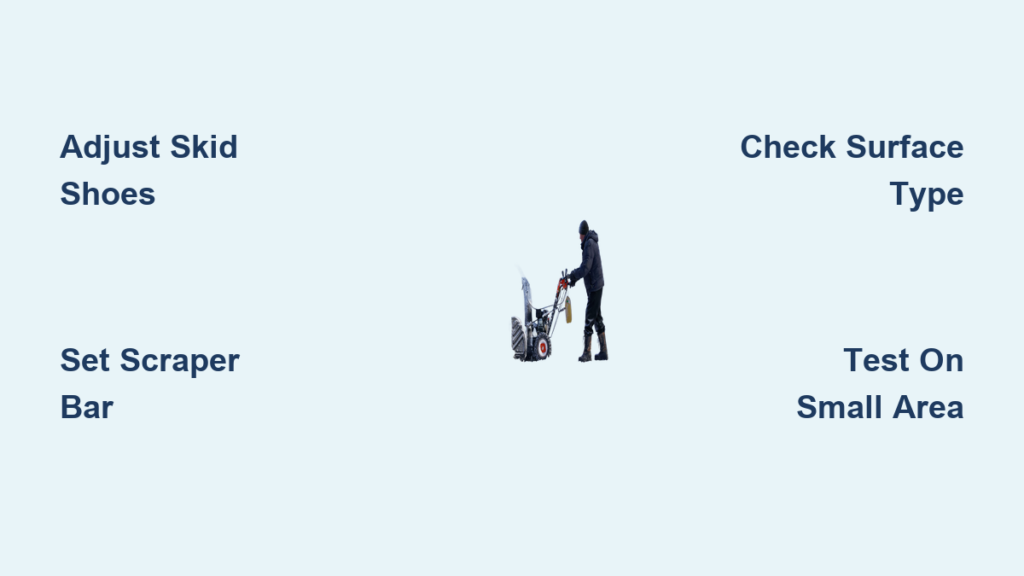
You’ve just finished clearing a fresh layer of snow, only to spot leftover patches or—worse—scratches along your driveway. The likely cause is a snow blower set too low or too high. Learning how to set snow blower height correctly is key to clearing snow efficiently without damaging your surface or straining the machine. Whether you operate a single-stage, two-stage, or three-stage unit, adjusting the skid shoes or scraper bar properly ensures clean results and longer equipment life.
Many owners treat snow blowers as “set and forget” tools, but terrain and surfaces vary. Even small dips or uneven pavement can lead to scraping, missed snow, or premature wear. Finding the right height balances ground clearance with snow removal performance. This guide walks you through adjusting your machine, avoiding common mistakes, and maintaining proper height across different surfaces and conditions.
Adjust Skid Shoes on Two-Stage Models
Two-stage snow blowers use augers to collect snow and an impeller to throw it. The height of the auger housing is controlled by skid shoes mounted on each side. Adjusting these shoes correctly protects your surface and improves performance.
Locate the Skid Shoes
Skid shoes are metal or polymer pads located on both sides of the auger housing. They support the front of the machine and define how close the auger comes to the ground. Most models secure them with bolts or pins that allow vertical movement.
Begin by parking the snow blower on a flat, snow-free surface. Turn off the engine and disconnect the spark plug wire for protection against accidental starts. Visually check the two skid shoes for wear because uneven wear changes scraping accuracy.
Loosen and Reposition the Shoes
Use a socket wrench or adjustable wrench to loosen the mounting bolts on each skid shoe. Do not remove the bolts completely; loosen them enough so the shoe slides up or down along the bracket.
For paved surfaces, set the skid shoes 1/4 to 1/2 inch above the ground. This setting allows the auger to clear snow without touching the surface. For gravel or uneven ground, raise the shoes slightly more—up to 3/4 inch—to avoid picking up stones.
Slide the shoe to your chosen position, then tighten the bolts securely. Repeat on the opposite side to keep both shoes even.
Check for Levelness
After adjustment, roll the snow blower forward and back to confirm the housing does not drag. Use a ruler or feeler gauge to verify both skid shoes sit at the same height.
If one side sits lower, the auger tilts and creates uneven clearing. Re-adjust as needed until both sides match.
Pro Tip: Add thin washers between the skid shoe and housing for finer adjustments, especially on models without micro-adjustment slots.
Set Scraper Bar on Single-Stage Units

Single-stage snow blowers use rubber paddles that contact the ground directly, so height adjustment works differently. These models use a replaceable scraper bar at the front of the housing instead of skid shoes.
Inspect the Scraper Bar
The scraper bar is a rubber or polyurethane strip attached to the front edge of the auger housing. It glides over the surface while the paddles sweep snow into the auger.
Check for wear before adjusting. If the bar is flush with the housing or worn down, replace it. A worn bar scrapes the surface even when properly mounted.
Adjust the Mounting Position
Some models allow vertical adjustment by moving the scraper bar between bolt holes. Loosen the mounting bolts, shift the bar up or down, then retighten.
For smooth concrete or asphalt, set the scraper bar so it just touches the ground when the unit sits on a level surface. For rougher surfaces like stamped concrete or gravel, raise it slightly—about 1/8 inch—to reduce drag.
If your model lacks adjustment holes, trim the bottom edge of the scraper bar at an angle. This reduces contact while keeping the cleaning performance intact.
Warning: Never let the auger paddles hit the ground directly. Contact throws debris and damages the paddles.
Modify Cutting Height by Surface Type

Different surfaces require different clearance levels. Matching your snow blower height to the surface prevents damage and improves efficiency.
Concrete and Asphalt Driveways
These hard, smooth surfaces allow lower settings. Aim for 1/4 inch clearance with skid shoes, or let a scraper bar lightly touch the ground.
This height removes most snow without scratching. If ice patches are present, raise the height slightly to prevent gouging.
Gravel and Stone Paths
Gravel surfaces require higher clearance—at least 1/2 to 3/4 inch—to stop the auger from digging in and throwing stones.
Make sure skid shoes are in good condition and set evenly. Worn shoes sink into loose gravel and increase the risk of contact.
Expert Note: Some owners add skid floats to prevent sinking on loose surfaces.
Wooden Decks and Pavers
Wood and interlocking pavers damage easily. Set skid shoes or scraper bars to 1/2 inch or higher, especially on uneven surfaces.
Avoid using single-stage blowers on wood because direct contact increases the risk of gouging. If you must clear a deck, use a two-stage model with adjustable skids and wide rubber pads.
Troubleshoot Common Height Issues

Even with proper setup, problems can appear. Recognizing the symptoms helps you fix height-related issues quickly.
Auger Scraping the Ground
If you hear metal scraping pavement, the skid shoes or scraper bar are too low or worn down.
- Check skid shoe wear and replace any shoe thinner than 1/2 inch.
- Verify bolt tightness because loose bolts shift during use.
- Inspect the housing because a bent auger housing causes uneven clearance.
Snow Left Behind After a Pass
A thick layer of leftover snow usually means the unit sits too high.
- Lower skid shoes incrementally by 1/8 inch until performance improves.
- Clean undercarriage buildup because packed ice raises effective height.
Quick Fix: Drive the snow blower over a 2×4 board placed flat on the ground. If it rides over smoothly without scraping, the height is likely correct.
Prevent Damage With Seasonal Checks
Setting snow blower height is not a one-time task. Regular checks keep performance steady and prevent unexpected damage.
Before Each Storm
- Clear ice and debris from under the housing.
- Inspect skid shoes and scraper bar for wear or misalignment.
- Test on a small area before clearing the full surface.
End-of-Season Maintenance
At season’s end, inspect and store components carefully.
- Replace worn skid shoes or scraper bars.
- Tighten all mounting hardware.
- Lubricate adjustment bolts to prevent rust.
Store the unit elevated or on a mat to prevent moisture damage and warping.
Upgrade for Better Height Control

Some snow blowers offer enhanced features for more precise height adjustment.
Aftermarket Skid Shoes
Wider or polymer-coated skid shoes reduce surface pressure and resist wear. They work well on delicate surfaces or for frequent use.
Adjustable Scraper Kits
Some models accept kits that allow micro-adjustments without replacing the entire bar. Look for threaded lifters or cam-style adjusters.
Height Gauge Wheels
Add-on wheels provide consistent clearance and reduce drag on uneven ground. They help on long driveways with subtle slopes.
Frequently Asked Questions About Snow Blower Height
How often should I adjust snow blower height?
Adjust the height whenever you change surfaces or notice scraping or leftover snow. Check it at the start of each season and after any heavy use.
What is the correct snow blower height for a concrete driveway?
For smooth concrete, set skid shoes to about 1/4 inch above the ground. On a single-stage unit, let the scraper bar lightly touch the surface.
Can I use a snow blower on gravel without picking up stones?
Yes. Raise the skid shoes to at least 1/2 to 3/4 inch above the ground. A two-stage model with properly adjusted skids works best on gravel.
How do I know if my skid shoes are worn out?
Inspect the pads for thinning or uneven surfaces. Replace any shoe worn below 1/2 inch thick or showing deep grooves.
Is it safe to leave the snow blower height set year-round?
You can leave it set, but check it before each storm. Snow buildup and wear can shift the effective height over time.
Key Takeaways for Setting Snow Blower Height
Setting the correct snow blower height protects your driveway, improves clearing performance, and extends the life of your machine. Match the height to your surface type, check both sides for evenness, and inspect components before each use. For the best results, test your settings on a small section before tackling the full area. Make height adjustment a regular part of your winter routine to keep every pass clean and safe.