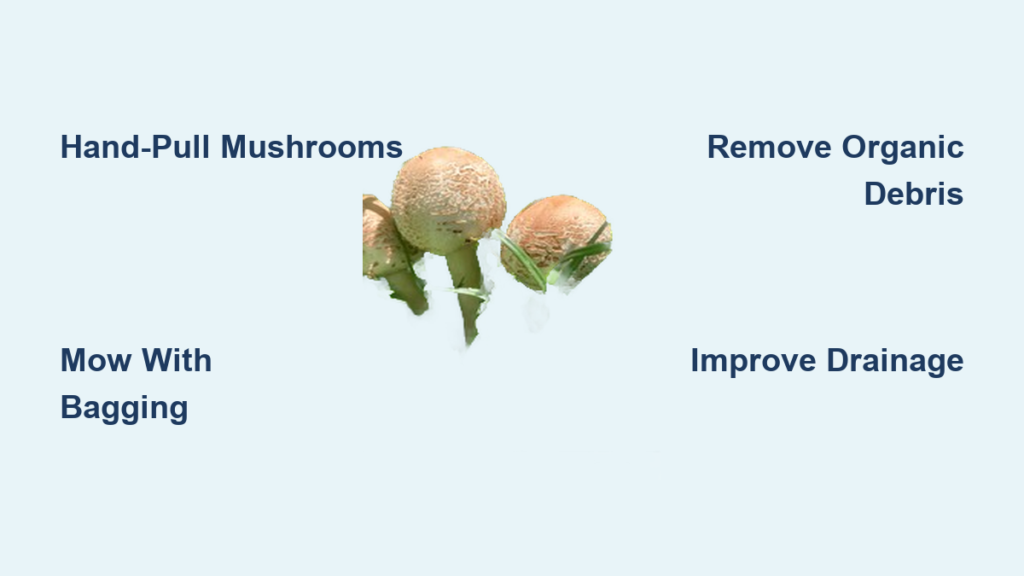
You step outside after a rainy week and notice clusters of mushrooms sprouting across your lawn. They weren’t there a few days ago, suddenly they’re everywhere. If you’re wondering how to remove mushrooms growing in lawn, you’re not alone. Mushrooms appear when underground fungi send up fruiting bodies, often following wet weather or due to buried organic matter like old tree roots or wood. While they don’t harm your grass, many experts say they actually signal healthy soil, they can be a concern if you have curious pets or young children who might ingest toxic varieties.
The good news? You don’t need to destroy your lawn’s ecosystem to manage them. This guide walks you through safe removal methods, proven prevention strategies, and long-term solutions that respect your soil’s health while keeping your yard family-friendly. You’ll learn why mushrooms grow, which ones pose real risks, how to stop their spread without chemicals, and what to do if they keep coming back. Let’s get started.
Identify the Mushroom Type First
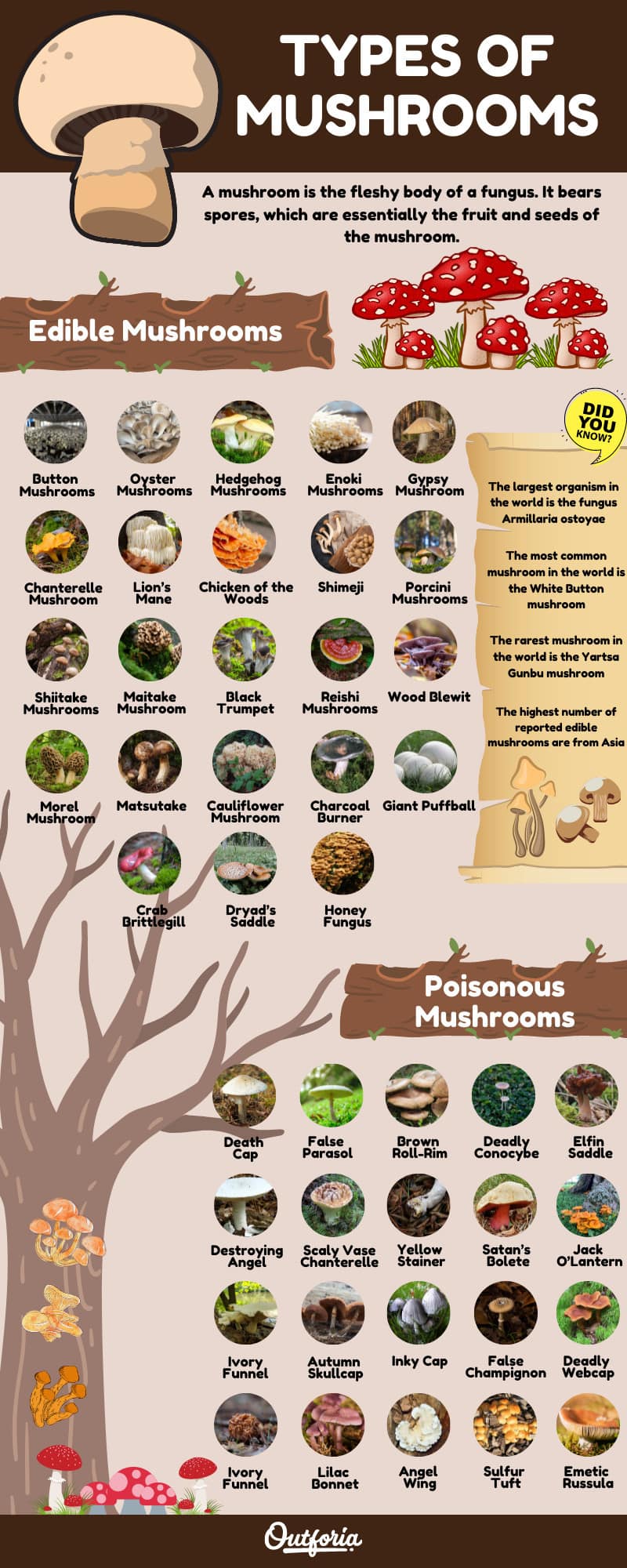
Before taking action, knowing what you’re dealing with helps determine risk and response. Taking clear photos of the cap, gills, stem, and base allows you to post to mycology communities for accurate identification.
Know the Common Lawn Species
Not all mushrooms are dangerous. Some are harmless, others can be deadly. Key types include:
- Destroying angel (Amanita bisporigera): Pure white, no ring on stem, grows solo not in rings. Deadly if eaten.
- False parasol (Chlorophyllum molybdites): Large, umbrella-shaped, grows in fairy rings, has green spores. Causes severe vomiting.
- Jack-o’-lantern (Omphalotus olearius): Bright orange, clusters on decaying wood, glows faintly at night. Toxic.
- Dog vomit slime mold (Fuligo septica): Yellow, slimy blob. Looks alarming but harmless.
- Ringless honey mushroom (Armillaria tabescens): Clusters at tree bases. Edible for humans, safe to leave.
Use Visual Clues for Safety
White gills plus white stem plus white cap means possible Amanita, treat as high-risk. Green spore print likely indicates Chlorophyllum, a gastrointestinal irritant. Perfect circle growth pattern means fairy ring, common in lawns with buried roots. Growing on mulch or wood indicates a decomposer, not harmful to grass. If unsure, assume it’s toxic and remove it.
Remove Mushrooms Safely and Effectively
Killing the underground fungus isn’t practical or necessary. Focus on removing visible mushrooms to reduce risk and spore spread. You cannot eliminate mycelium without destroying your lawn’s ecosystem.
Mow With Bagging Attachment
Mowing works best for large infestations. It cuts off mushrooms at the base before spores fully mature. Use a mower with a bagging attachment to collect debris and prevent spore dispersal. Do this early in the day before spores mature. Repeat every few days during active growth periods.
Hand-Pull Mushrooms Properly
Hand-pulling is ideal for high-risk zones near play areas or pet runs. Grasp at the base of the stem, twist gently, and pull upward to remove as much of the structure as possible. Wear gloves, touching is safe but hygiene matters. Dispose in trash, not compost. Composting spreads spores.
Rake and Collect Residue
After mowing or rain, rake up leftover fragments. This prevents regrowth triggers and keeps the yard tidy. Use a leaf rake or lawn sweeper for efficiency.
Avoid Harmful Removal Methods
Some popular solutions do more harm than good. Skip these approaches entirely.
Skip Fungicides
Most fungicides don’t reach deep enough to kill mycelium. They can damage beneficial microbes, grass roots, and soil structure. Risk to pets and children outweighs minimal benefit. Anything you put down to kill mushrooms is likely worse for your puppy than the mushrooms themselves.
Don’t Use Vinegar or Bleach
Vinegar burns grass and alters soil pH. Bleach kills all soil life, good and bad, and contaminates groundwater. Neither eliminates mycelium, mushrooms return quickly. The damage to your lawn isn’t worth it.
Leave Slime Molds Alone
Dog vomit slime mold looks gross but is harmless. Avoid kicking or mowing it, it spreads spores. Let it dry naturally, it disappears in a few days.
Fix the Conditions That Cause Mushrooms

Mushrooms thrive in moist, shady lawns with decaying matter. Change these conditions to reduce future growth. The goal should be risk reduction, not eradication.
Reduce Soil Moisture
Fungi need dampness. Dry conditions stop fruiting.
Water Smartly
Water deeply but infrequently, once or twice a week. Avoid evening watering, wet grass overnight encourages fungi. Switch to morning irrigation so surfaces dry by afternoon.
Improve Drainage
Fix low spots where water pools. Install French drains or dry wells in soggy zones. Aerate compacted soil to improve water penetration.
Increase Sunlight Exposure
More sun means faster drying, fewer mushrooms. Trim tree branches and thin dense canopies. Prune shrubs blocking airflow and light. Consider removing low-hanging limbs shading lawn sections.
Remove Organic Debris
Fungi feed on dead material. Starve them. Rake leaves, twigs, and clippings regularly. Keep mulch away from grass edges, don’t let it pile up. Don’t bury wood chips, logs, or stumps during landscaping.
Improve Lawn Health to Prevent Recurrence
A strong, well-maintained lawn resists mushroom-friendly conditions. Most mushrooms appear because of decaying wood under the ground.
Aerate the Soil
Core aeration removes small soil plugs, reducing compaction. It allows air, water, and nutrients to penetrate deeper. This disrupts fungal microenvironments and improves drainage. Perform once per year in early spring or fall.
Dethatch the Lawn
Thatch is a layer of dead grass and roots that traps moisture. Thick thatch over one-half inch shelters fungi and slows drying. Power dethatch in spring or fall, then rake and remove debris.
Apply Nitrogen-Rich Fertilizer
Nitrogen speeds up breakdown of buried wood and roots. This reduces food supply for fungi. Use quick-release nitrogen at one-half to three-quarters pound per one thousand square feet. Best timing is spring or early fall. Avoid slow-release formulas, they won’t accelerate decomposition.
Manage Fairy Rings and Persistent Clusters

Circular mushroom patterns are called fairy rings, a sign of radial mycelium growth.
What Causes Fairy Rings
Fungi grow outward from a central point like an old stump. As they expand, they create rings of mushrooms. They may also cause dark green grass from nitrogen release or dead patches from hydrophobic soil.
How to Minimize Their Impact
Remove mushrooms regularly by mowing or hand-picking. Aerate the ring area to break up compacted zones. Apply nitrogen fertilizer to mask uneven grass color. Water deeply to help soil absorb moisture in hydrophobic spots. You won’t eliminate them completely, just manage appearance.
Protect Children and Pets
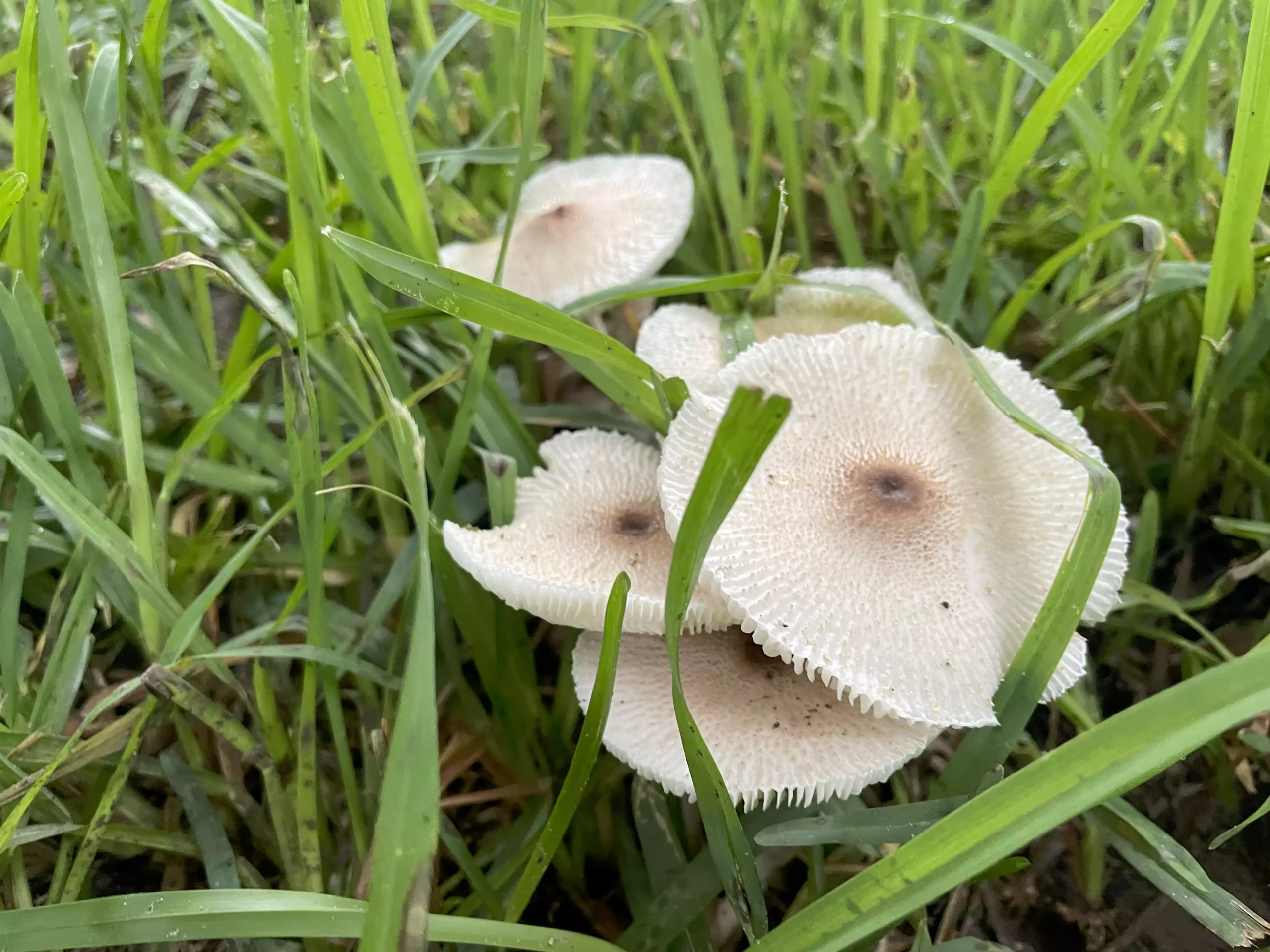
Even if most mushrooms are harmless, one toxic bite can be fatal. We almost lost our dog to mushrooms, now we pick them before he goes out.
Supervise Outdoor Time
Never let kids or pets roam unsupervised in mushroom-prone areas. Check the yard daily during wet seasons.
Train Dogs to Avoid Mushrooms
Teach leave it and drop it commands using positive reinforcement. Practice in controlled settings before trusting off-leash. Simply be cautious and teach the dog to stop picking things up off the ground.
Use Bitter-Tasting Deterrents
Spray pet-safe bitter solutions on mushrooms. This makes them unpalatable without harming pets or plants. It won’t kill anything but deters grazing.
Block Access Temporarily
Use portable fencing or turkey wire to cordon off infested zones. Redirect play to sunny, dry areas of the yard.
Consider Muzzle Training
For dogs with a history of eating random things, muzzle training allows safe outdoor time during mushroom season.
Long-Term Expectations and Natural Decline
Mushrooms aren’t permanent but they may return seasonally.
Mushrooms Are Seasonal
Most appear in spring and fall after rain. They disappear with drier weather or frost. Bloom cycles last days to weeks. Frost does the job.
They’ll Stop When Food Runs Out
Mushrooms feed on buried organic matter. Once wood, roots, or stumps decompose fully, mushrooms stop appearing. This can take two to five years depending on the size of the material. The mushrooms will disappear permanently when the organic matter they are decomposing has been exhausted.
Dig Out Stubborn Sources (Optional)
For persistent problems, excavate old stumps, roots, or buried wood. Use a stump grinder or shovel, remove debris completely. Replant grass in the area. This is labor-intensive and may damage lawn, only worth it for severe cases.
Frequently Asked Questions About Removing Lawn Mushrooms
Will fungicides kill mushrooms in my lawn?
Most fungicides fail to penetrate deep enough to kill the underground mycelium. They can harm beneficial soil organisms, grass roots, and pets. Chemical treatments aren’t recommended for lawn mushrooms.
Are mushrooms bad for my grass?
No, mushrooms do not harm grass, turf, or lawn health. Their presence indicates active decomposition and nutrient cycling, which supports healthy soil biology. Mushrooms are actually good guys in the ecosystem of your yard.
How long will mushrooms keep appearing in my lawn?
Mushrooms typically appear seasonally, especially in spring and fall after rain. They’ll continue as long as there’s decaying organic matter beneath the surface, which can take two to five years to fully decompose.
Can I compost mushrooms I pull from my lawn?
No, never compost mushrooms. Dispose of them in the trash instead. Composting can spread spores and create new mushroom growth elsewhere in your yard.
Why do mushrooms keep growing in the same spot?
The same spot keeps producing mushrooms because there’s a food source beneath that area, usually buried wood, old tree roots, or decaying organic matter. The fungus is actively breaking down this material.
Is it safe to touch mushrooms with bare hands?
Yes, touching mushrooms is safe. No species causes harm through skin contact. Poisoning occurs only through ingestion. Still, wearing gloves during removal is good hygiene practice.
Key Takeaways for Managing Lawn Mushrooms
Mushrooms in your lawn are not a failure, they’re a sign your soil is alive and working. The fungi breaking down old roots are enriching your earth, helping grass grow stronger. Instead of waging war, manage smartly: remove visible mushrooms, adjust lawn care habits, and protect vulnerable family members.
With consistent effort, aerating, reducing moisture, and cleaning up debris, you’ll see fewer mushrooms each season. And when they do pop up, you’ll know exactly how to handle them safely. In time, as buried wood vanishes, they’ll stop coming back for good.
So the next time you spot a cluster after the rain, take a breath. Pick them, mow them, or just enjoy their weird beauty. Your lawn is healthy. And now, so are your solutions.