Mowing your lawn might seem straightforward, but doing it correctly is the difference between a patchy, stressed yard and a lush, healthy green carpet. How to mow a lawn correctly involves more than pushing a mower across grass; it requires proper height settings, sharp blades, smart timing, and consistent technique. A poorly maintained lawn invites weeds, disease, and thinning turf, while proper mowing strengthens root systems, shades out invaders, and enhances drought resistance. This guide delivers actionable, science-backed steps to achieve a professional-quality cut every time.
Set the Right Mowing Height
Choosing the correct cutting height is the foundation of a healthy lawn. Cutting too short risks scalping, weed invasion, and moisture loss. Cutting too high allows grass to mat or harbor pests. The ideal height depends on your grass type and the season.
Know Your Grass Type
Different grasses thrive at different heights. Matching your mower setting to your specific turf ensures strong growth and resilience.
- Kentucky Bluegrass: 2.5 to 3.5 inches
- Perennial Ryegrass: 2 to 3 inches
- Fine Fescue: 2.5 to 3.5 inches
- Bermuda Grass: 0.5 to 1.5 inches
- Zoysia Grass: 1 to 2 inches
For most northern lawns with cool-season grasses, maintain at least 3 inches. Taller grass shades the soil, reduces evaporation, and chokes out weeds naturally.
Adjust for Seasons
Your lawn’s needs change with weather conditions. Adapt your mowing height to protect grass during stress periods.
- Spring and fall: Mow at standard height around 3 inches
- Summer heat: Raise the deck by half to one inch to reduce stress and retain moisture
- Late fall: Lower slightly to about 2 inches to prevent winter matting and fungal issues under snow
Pro Tip: Never cut below 2 inches when preparing for winter. This balances protection without encouraging disease.
Follow the One-Third Rule
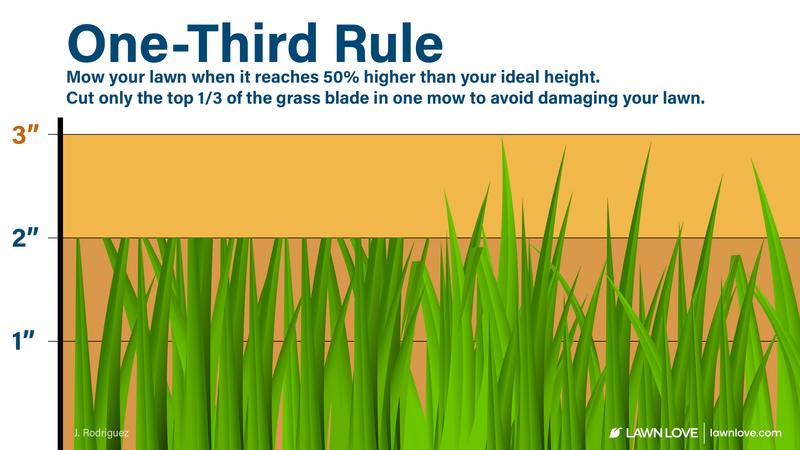
Cutting too much grass at once is one of the most damaging lawn care mistakes. The one-third rule prevents shock and keeps your grass strong and healthy.
Why the One-Third Rule Matters
Removing more than one-third of the blade at a single mowing:
- Weakens root development significantly
- Increases drought sensitivity
- Leaves ragged edges that are vulnerable to disease
Mow when grass reaches 1.5 times your target height. For example, if you mow at 3 inches, cut when it reaches 4.5 inches.
Handle Overgrown Lawns Safely
If grass has grown too long, avoid a single drastic cut.
Use the double-cut method:
- First pass: Cut down to half the current height
- Wait 3 to 5 days for recovery
- Second pass: Trim to your desired height
For severely overgrown lawns, a third pass may be needed. This gradual approach prevents shock and browning.
Expert Note: Frequent weekly mowing eliminates the need for corrective cutting. Stay ahead of growth rather than playing catch-up.
Mow at the Best Time
Timing affects grass health, mower efficiency, and disease risk. Choosing the right moment to mow makes a measurable difference.
Ideal Time of Day
- Best: Late afternoon or early evening when grass is dry and temperatures are cooler, giving the lawn overnight to recover
- Acceptable: Late morning after dew has dried completely
- Avoid: Midday mowing when intense sun increases stress and water loss
Never mow frost-covered grass. Frozen grass tears easily and sustains lasting damage that can take weeks to recover.
Mow When Grass Is Dry
Wet grass causes clumping, uneven cuts, and mower clogs. It also spreads fungal diseases like powdery mildew and rust.
- Wait at least 3 to 4 hours after rain or until dew evaporates
- Test by walking across the lawn. If your shoes get wet, the grass is still too damp
Visual Cue: Grass stands upright when dry. If blades lie flat from moisture, hold off on mowing.
Use a Sharp Mower Blade

A dull blade shreds grass instead of slicing it cleanly. This is the single most overlooked factor in lawn health.
Why Sharpness Is Critical
- Sharp blade: Makes a clean cut that seals quickly and resists disease
- Dull blade: Tears grass, causes browning, invites pests, and gives a frosted or unhealthy appearance
Torn grass is often mistaken for fungal disease but is actually a mowing issue caused by dull blades.
Sharpen Blades Regularly
- Sharpen 2 to 4 times per season
- Holiday schedule works well: Memorial Day, July 4th, Labor Day, and Thanksgiving
- Inspect monthly for nicks, warping, or dullness
Warning: Even a slightly dull blade reduces cut quality significantly. Replace the blade if it is bent or cracked.
Vary Mowing Direction and Pattern
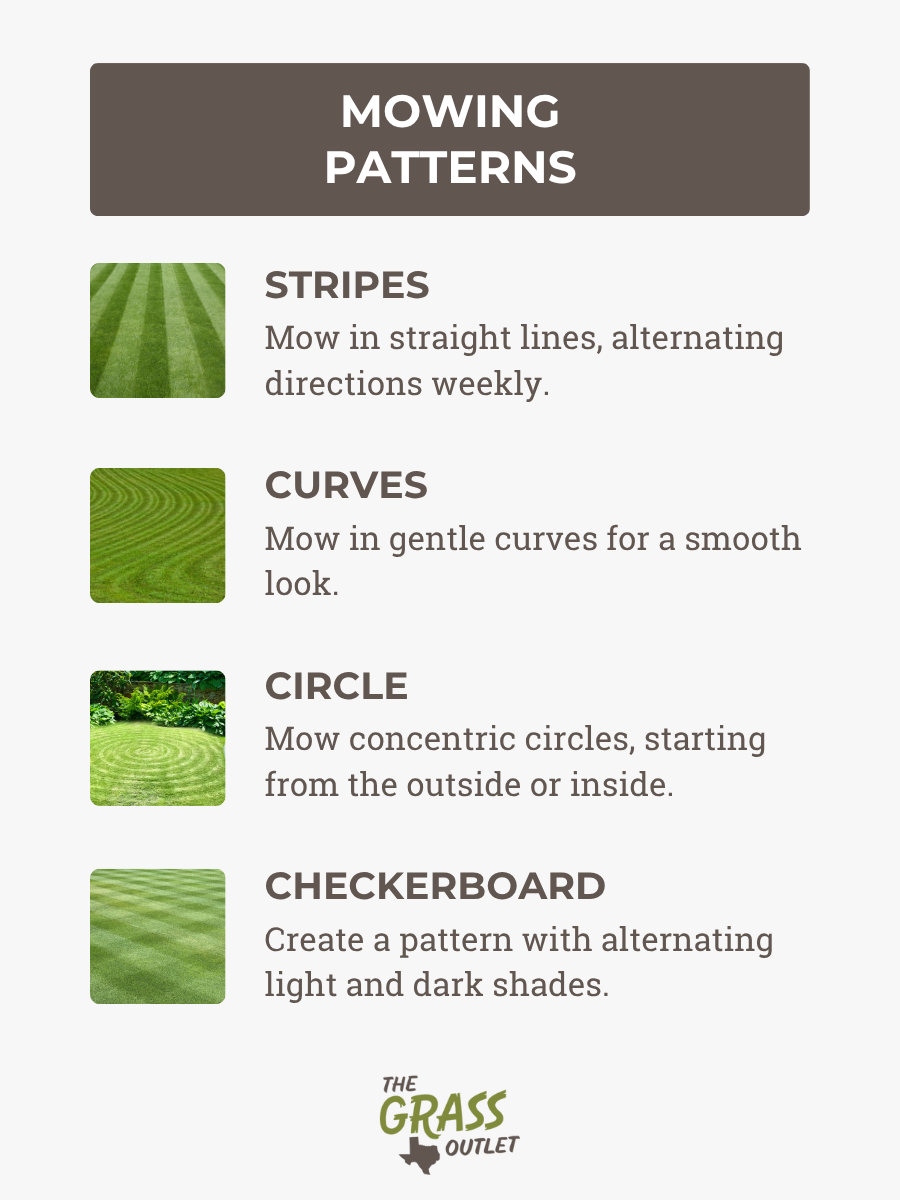
Mowing the same way every time causes ruts, soil compaction, and grass that leans in one direction.
Prevent Soil Compaction
Repeated wheel paths compress soil, reducing oxygen and water flow to roots. Changing direction spreads the impact across different areas.
Promote Upright Growth
Grass naturally leans in the mowing direction. Alternating patterns helps grass stand tall and grow evenly.
Recommended rotation:
- Week 1: North to South
- Week 2: East to West
- Week 3: Diagonal at 45 degrees
- Week 4: Spiral pattern for small yards
University of Minnesota Extension recommends mowing at right angles every other time to prevent scalping and encourage vertical growth.
Prepare the Lawn and Mower
Proper setup prevents damage, ensures a clean cut, and keeps you safe throughout the mowing process.
Clear the Area
Remove these items before starting:
- Toys
- Rocks
- Garden hoses
- Sticks
These can damage the mower or become dangerous projectiles.
Safety First: Survey the lawn before starting. Wear closed-toe shoes, eye protection, and hearing protection.
Mark Hidden Hazards
Identify and mark these items to prevent costly damage:
- Sprinkler heads
- Tree roots
- Underground stakes or pipes
Adjust Mower Settings
Before starting your mower:
- Set the correct cutting height for your grass type
- Check blade sharpness
- Ensure fuel or oil levels are adequate for gas mowers, or battery is charged for electric mowers
- Attach the mulching plug or collection bag as needed
Never refuel a hot engine. Let it cool completely before adding fuel.
Mow with Proper Technique
How you move the mower affects cut quality, efficiency, and overall lawn appearance.
Choose the Right Pattern
Back-and-forth striping is the most common and efficient pattern. It creates clean, professional-looking lines.
Diagonal or spiral patterns prevent ruts on uneven lawns and add visual interest. These work especially well for small, symmetrical yards.
Pro Tip: Pick a distant target like a tree or bush to aim for while mowing. This keeps you walking straight without looking down at your feet.
Overlap for Even Coverage
Missed strips ruin the look of an otherwise well-mowed lawn.
- Overlap each pass by one-quarter to one-third of the mower width
- Align your front wheel on the inside edge of the previous pass
- Use the half-pass trick for smoother turns and fewer gaps
Visual Cue: No green strips should be visible between rows. Uniform color means even coverage.
Leave Clippings on the Lawn
Grasscycling, or leaving clippings in place, returns valuable nutrients to your soil and saves you cleanup time.
Benefits of Mulching Clippings
- Returns nitrogen, phosphorus, and potassium to the soil
- Acts like one free fertilizer application per year
- Improves soil structure and moisture retention
- Reduces landfill waste
Clippings decompose completely within 1 to 2 weeks and do not contribute to thatch buildup.
When to Bag Clippings
Bag only in these situations:
- Grass is overgrown and causing thick clumps
- Lawn has active disease that could spread through clippings
- You have applied herbicides and the label recommends bagging
- You prefer a perfectly manicured look without any debris
Solution: For tall grass, make multiple passes with the mulching setting or use a dedicated mulching mower.
Edge and Trim After Mowing
A sharp border defines a professional lawn. Never use the mower deck as an edger.
Use a String Trimmer
Clean edges along sidewalks, driveways, and flower beds with a string trimmer.
**Two-pass method:
- Horizontal pass: Cut down tall grass along edges
- Vertical pass: Refine the edge for a crisp, clean line
Pro Tip: Turn the trimmer upside down to control debris direction and avoid blowing clippings into landscape beds.
Match Trimmer Direction to Head Spin
- Counterclockwise spinning head: Walk inside out
- Clockwise spinning head: Walk outside in
This directs clippings away from landscape beds and keeps edges clean.
Post-Mow Maintenance
A few minutes after mowing keeps your equipment in top shape and your lawn looking sharp.
Clean Hard Surfaces
Use a leaf blower to remove clippings from driveways, walkways, and patios.
- On pavement: Use side-to-side motion
- Near beds: Use gentle circular motion to avoid disturbing mulch
Avoid overblowing. Excessive force can damage plants and erode soil.
Maintain the Mower
After each use:
- Let the engine cool before cleaning
- Scrape grass buildup from under the deck monthly to prevent rust and clogs
- Empty the clippings bag regularly during mowing
Monthly Task: Clean under the deck with a putty knife or hose (with spark plug disconnected for safety).
Handle Special Situations
Adjust your approach for new lawns, winter prep, or recovery from neglect.
First Mow on New Grass
Wait until new grass reaches 2 inches tall. Use the highest mower setting for the first cut, and mow only when the lawn is well-established, typically 3 to 4 weeks after germination. Avoid heavy foot traffic on new grass.
Winter Mowing Strategy
Give your lawn one final cut before dormancy:
- Set mower to approximately 2 inches
- This prevents matting under snow
- Reduces risk of mold, moss, and vole activity
University of Minnesota Extension notes that long winter grass invites vole tunnels and disease.
Overgrown Lawn Recovery
Never scalp an overgrown lawn in one pass. Use the double-cut method:
- Cut to 50 percent of current height
- Wait 3 to 5 days
- Cut to your target height
A third cut may be needed for severely overgrown lawns. Remember, stress reduction beats speed for healthy recovery.
Choose the Right Equipment
The best mower is not necessarily the most expensive. It is the one that is well-maintained and properly used.
Mower Type Myths
Gas, electric, push, and self-propelled mowers can all deliver excellent cuts if blades are sharp. A budget electric mower performs as well as a premium model with proper blade maintenance.
Best Mowers for Specific Needs
| Need | Best Mower Type |
|---|---|
| Even cuts on slopes | Self-propelled keeps wheels grounded |
| Nutrient recycling | Mulching mower |
| Formal, fine lawns | Cylinder mower |
| Hands-off maintenance | Robot mower |
Robot mowers cut small amounts daily, promoting health and eliminating clumping entirely.
Avoid Common Mowing Mistakes
Even experienced homeowners make these errors. Here is how to avoid them.
Scalping the Lawn
Mistake: Cutting too short. Consequence: Weak roots, browning, and weed invasion. Fix: Follow the one-third rule and never cut below 2 inches.
Using Dull Blades
Mistake: Letting blades go unsharpened. Consequence: Torn grass, disease, and poor appearance. Fix: Sharpen 2 to 4 times per year.
Mowing Wet Grass
Mistake: Cutting damp lawns. Consequence: Clumping, clogs, ruts, and disease spread. Fix: Wait until grass is completely dry.
Same Direction Every Time
Mistake: Always mowing the same way. Consequence: Ruts, leaning grass, and scalping. Fix: Alternate patterns weekly.
Bagging Clippings Unnecessarily
Mistake: Removing clippings every time. Consequence: Lost nutrients and extra work. Fix: Mulch unless clumping or disease is present.
Using Mower as Edger
Mistake: Rolling mower wheels on sidewalks to edge. Consequence: Scalping and blade damage. Fix: Use a string trimmer instead.
Achieve Lawn Striping and Patterns
A striped lawn is not just for golf courses. You can create this look easily at home.
Create Classic Stripes
Mow one row in a straight line, then mow the next row in the opposite direction. Grass bends differently when mowed in opposite directions, reflecting light to create visual contrast.
Pro Tip: Use a lawn roller attachment or mow when grass is slightly damp for stronger bending and more pronounced stripes.
Try Diagonal or Checkerboard Patterns
- Diagonal: Start from one corner at a 45-degree angle
- Checkerboard: Mow in one direction, then cross at 90 degrees
These patterns prevent ruts and add visual drama to your yard.
Key Point: Sharp turns and consistent overlap make patterns crisp and professional.
Frequently Asked Questions About How to Mow a Lawn Correctly
What is the one-third rule in lawn mowing?
The one-third rule states that you should never remove more than one-third of the grass blade height in a single mowing. This prevents stress, maintains the grass’s ability to photosynthesize, and reduces susceptibility to disease and pests. If your target height is 3 inches, mow when the grass reaches 4.5 inches.
How often should I mow my lawn?
Mow once per week during active growing seasons like spring and early fall. During peak growth periods after rain, you may need to mow every 4 to 5 days. During drought or extreme heat, reduce frequency and mow only when grass exceeds 1.5 times your target height.
Should I leave grass clippings on my lawn?
Yes, in most cases you should leave clippings on the lawn. Grasscycling returns essential nutrients like nitrogen, phosphorus, and potassium to the soil. This is equivalent to one free fertilizer application per year. Only bag clippings when grass is overgrown and clumping, when disease is present, or when you have applied herbicides.
When is the best time of day to mow?
The best time is late afternoon or early evening when grass is dry and temperatures are cooler. This gives the lawn overnight to recover before the next day’s heat. Avoid midday mowing when the sun is strongest, as it stresses the grass and increases water loss.
How do I know if my mower blade is sharp enough?
A sharp blade makes a clean cut with no tearing. A dull blade shreds grass, leaving ragged edges that turn brown within days. Inspect your blade monthly and sharpen it 2 to 4 times per season. If grass looks frosted or browns quickly after mowing, your blade is likely dull.
Key Takeaways for Mowing Your Lawn Correctly
Mowing correctly is not complicated, but it requires intentional attention to several key factors. Setting the right height for your grass type, typically 3 inches or higher for cool-season grasses, forms the foundation of lawn health. Following the one-third rule prevents shock and stress. Using sharp blades makes the single biggest difference in cut quality and disease resistance. Varying your mowing direction weekly prevents ruts, compaction, and grass that leans in one direction. Mow when grass is dry, preferably in the late afternoon or evening, and leave clippings on the lawn to return nutrients to the soil.
Take five minutes to inspect your lawn before mowing. Clear debris, check blade sharpness, and set your height correctly. These small steps transform mowing from a mundane chore into a powerful tool for building a healthier, greener yard all season long.