Knowing how to measure lawn size is essential for smart lawn care. Whether you’re buying grass seed, installing artificial turf, applying fertilizer, or hiring a landscaping service, an accurate measurement ensures you purchase the right amount of materials, avoid waste, and get fair quotes from contractors. This guide walks you through every method, from quick digital tools to precise manual techniques, so you can confidently calculate your lawn’s square footage with ease.
Use Satellite-Based Online Tools

Digital tools powered by satellite imagery offer the fastest way to measure lawn size without stepping outside. These platforms let you trace your yard directly on a map and instantly calculate the area in square feet or acres.
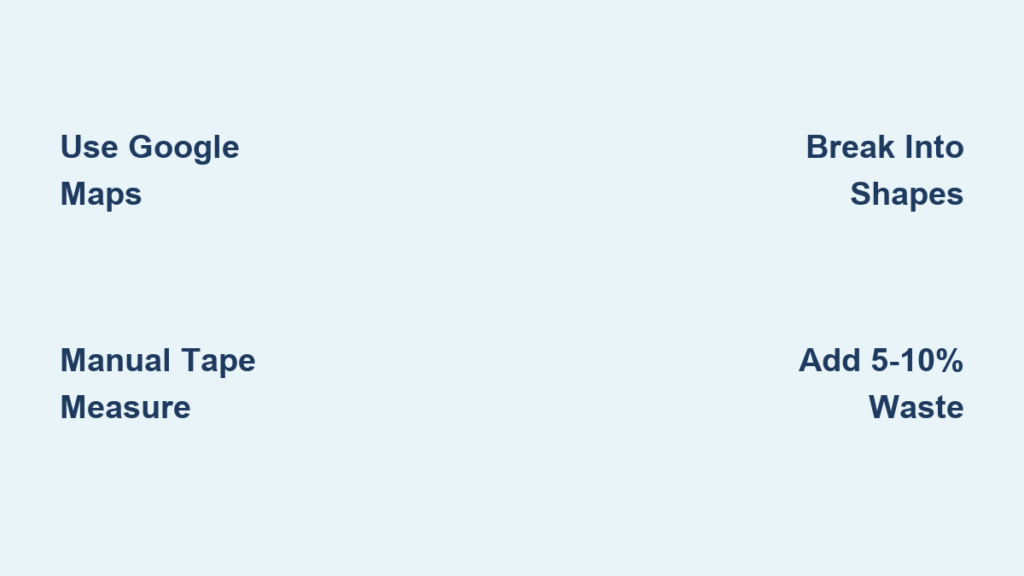
Measure Lawn Size with Google Maps
Google Maps provides a built-in measurement tool that is free and accessible from any device. It works well for both small and large yards.
- Go to maps.google.com and enter your address
- Switch to Satellite view using the toggle in the bottom-left corner
- Right-click the starting point of your lawn and select “Measure distance”
- Click each corner or curve along the perimeter
- When you close the shape, Google displays the total area and perimeter
Tip: Zoom in fully to distinguish grass from driveways, patios, and garden beds. Trace only the actual lawn areas for accuracy.
Try Specialized Lawn Calculators
Several lawn care companies offer user-friendly calculators designed specifically for homeowners.
Recommended tools include:
• MeasureMyLawn.com: Simple interface, uses Google Maps, delivers instant results
• SodSolutions.com/area-calculator: Built for sod buyers, clean layout
• NexGenLawns.com/lawn-calculator: Includes artificial turf cost estimator
• Super-Sod.com/yardsize: Direct integration with sod ordering
These tools often include additional features like material cost estimates and product recommendations based on your measured area.
Consider Mobile App Options
Apps like Scott’s My Lawn allow you to map your yard from your phone. While convenient, smaller screens can reduce tracing precision. For better accuracy, use the desktop version when possible.
Pro tip: Always double-check that the app distinguishes between lawn and non-lawn surfaces. Many default to measuring entire property footprints.
Get Precise Results with Manual Measurement
For the highest accuracy, especially in complex or heavily landscaped yards, manual measurement is the gold standard. While it takes more time, it eliminates guesswork from outdated satellite images.
Gather the Right Tools
You will need:
• A 100-foot retractable tape measure or measuring wheel for large lawns
• Paper and pencil or a notepad app
• Markers like cones or flags to track points
• A basic calculator
Warning: Using a 25-foot tape for large areas leads to cumulative errors. A 100-foot tape or measuring wheel improves efficiency and precision.
Break Lawn Into Geometric Zones
Start by sketching your yard from an aerial view. Use Google Maps as a reference and divide the lawn into simple shapes.
Zone types to identify:
• Rectangles
• Squares
• Triangles
• Trapezoids
Label each section such as Front Yard, Side Strip, or Back Lawn to stay organized.
Apply Area Formulas to Each Zone
Use these standard formulas for calculation:
| Shape | Formula |
|---|---|
| Rectangle/Square | Length × Width |
| Triangle | (Base × Height) ÷ 2 |
| Trapezoid | ((Side A + Side B) ÷ 2) × Height |
Example: A long parkway 135 feet long and 9 feet wide has an area of 1,215 sq ft. Round to 1,200 sq ft for material estimates.
Record and Sum All Sections
Create a simple table to track each zone and add the areas together. This method often reveals 7-10% more area than digital tools, especially when narrow strips and curves are included.
Estimate with Step Counting (Stride Method)
When no tools are available, use your stride to estimate lawn size. This method is less accurate but useful for preliminary planning.
Calibrate Your Stride
- Walk 10 steps on flat ground
- Measure the total distance such as 25 feet
- Divide by 10 to get your stride length
Repeat to confirm consistency.
Measure Length and Width
Walk the longest and widest parts of your lawn, counting steps. Multiply stride length by step count for each dimension.
Accuracy: Within 10-15% of actual size. This method works best for rough estimates before purchasing supplies.
Verify with Public Property Records
County and municipal records can provide official lot dimensions to cross-check your measurements.
Access County GIS or Parcel Viewer
Search your county name plus “parcel viewer” or “GIS map.” These tools show total lot size, building footprint, and property lines.
Tip: A 10,000 sq ft lot does not mean 10,000 sq ft of lawn. Subtract house, driveway, patio, and garden areas to get true grass coverage.
Check Property Tax Assessor Websites
Most local governments offer free access to property cards online. Look for lot dimensions, land use classification, and site plans when available.
Plan for Artificial Turf Installation
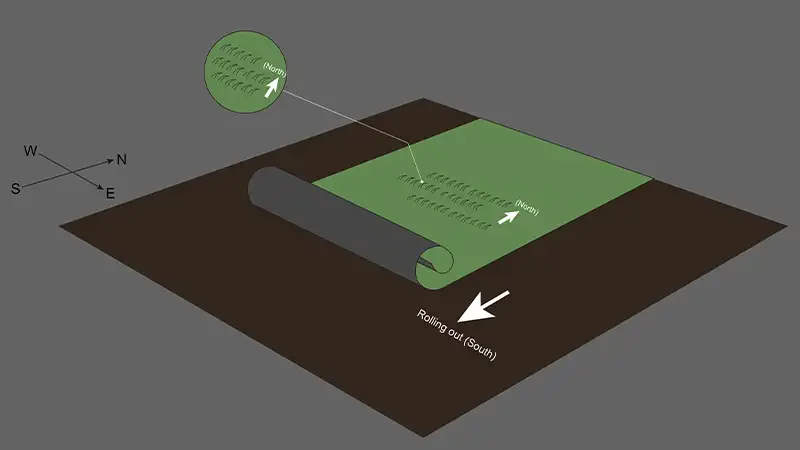
Measuring for synthetic grass requires extra care due to roll widths and directional pile.
Understand Roll Dimensions
Artificial turf typically comes in 15-foot-wide rolls. You will need to plan cuts so all pieces run in the same direction to avoid visible seams or color shifts.
Calculate Linear Feet Needed
- Divide your lawn into 15-foot-wide sections
- Measure the longest length of each section
- Add lengths together
Example: One section is 20 ft long, another is 30 ft. Need 50 linear feet of 15-ft-wide roll equals 750 sq ft.
Add Waste Allowance
Cutting around curves, trees, and edging wastes material. Always add 5-10% extra. For a measured area of 750 sq ft with 10% waste, order 825 sq ft to ensure full coverage.
Choose the Right Mower by Lawn Size

Your lawn’s square footage determines the best mower type for efficiency and performance.
Match Mower to Yard Size
| Lawn Area (sq ft) | Recommended Mower | Deck Width |
|---|---|---|
| Up to 5,000 | Push mower | 20-22 in |
| 5,000 – 10,000 | Self-propelled push mower | 24-28 in |
| 10,000 – 20,000 | Riding or zero-turn mower | 30-32 in |
| Over 20,000 | Zero-turn or robotic mower | 36+ in |
Pro tip: For lawns over 1 acre, consider a robotic mower with GPS mapping. Many models use lawn size data to optimize mowing routes.
Avoid Common Measurement Mistakes
Even small errors can lead to wasted money or incomplete projects. Watch for these pitfalls.
Do Not Include Non-Lawn Areas
Many digital tools trace property lines, not grass. Always exclude house footprint, driveways, sidewalks, decks, patios, and garden beds.
Visual cue: Look for sharp color and texture differences in satellite images. Grass is green and textured while concrete is gray and smooth.
Do Not Skip Narrow Strips
Thin areas like parkways, side lots, or strips between fences are easy to overlook but can add hundreds of square feet.
Example: A 3-ft-wide strip that is 100 ft long equals 300 sq ft, enough to require extra fertilizer or seed.
Do Not Rely Solely on Outdated Imagery
Satellite photos may be months or years old. If you have recently installed a patio or removed a tree, manual verification is essential.
Compare All Methods Side by Side

Choose the best method based on your needs for speed, accuracy, and project type.
| Method | Accuracy | Time | Best For |
|---|---|---|---|
| Google Maps | Moderate | 2-5 min | Quick estimates |
| Google Earth Pro | High | 5-10 min | Detailed planning |
| Online Calculators | Moderate | 3-7 min | Sod or seed buying |
| Manual Measurement | Highest | 30-90 min | Renovations, artificial turf |
| Stride Method | Low | 10-15 min | Initial planning |
| Public Records | Varies | 10-20 min | Verification |
Best practice: Combine digital and manual methods. Use Google Maps for layout, then verify key dimensions with a tape measure.
Frequently Asked Questions About Measuring Lawn Size
What is the most accurate way to measure lawn size?
Manual measurement with a 100-foot tape measure provides the highest accuracy. This method works especially well for complex yards with curves, narrow strips, and landscaping features. Digital tools can miss details that are visible on-site.
How do I measure an irregularly shaped lawn?
Break the lawn into geometric sections such as rectangles, triangles, and trapezoids. Measure each section separately using basic area formulas, then add all sections together. This approach handles L-shaped yards, curved edges, and other non-standard layouts.
Should I include my driveway in lawn measurements?
No. Only measure actual grass areas. Include the house footprint, driveways, sidewalks, decks, patios, garden beds, and other hard surfaces in your exclusion list. Measuring only grass ensures you buy the correct amount of seed, fertilizer, or sod.
How much extra material should I order for lawn projects?
Round up your total area when purchasing supplies. For seed and fertilizer, buy slightly more than calculated. For sod and artificial turf, add 5-10% extra to account for cutting waste and uneven terrain.
Can I use my phone to measure my lawn accurately?
Yes, but with limitations. Google Maps and lawn care apps work on mobile devices. However, smaller screens make tracing precision more difficult. For best results, use the desktop version of Google Maps or verify phone measurements with manual checking.
How often should I remeasure my lawn?
Re-measure only after major landscaping changes such as installing a pool, adding hardscaping, removing trees, or expanding living space. Under normal conditions, your documented lawn size remains valid for years.
Key Takeaways for Measuring Your Lawn Size
Accurately measuring lawn size is one of the most valuable steps for smarter lawn care. Whether you use a fast online tool or take precise manual measurements, the effort pays off in cost savings, better results, and professional-quality maintenance.
For everyday planning, digital tools like Google Maps and online calculators are fast and effective. They provide quick estimates suitable for general lawn care and initial project planning. For sod installation, artificial turf projects, or major renovations, nothing beats a tape measure and some careful manual work.
Always round up when purchasing materials, keep a permanent record of your measurements, and remeasure only after significant landscaping changes. With your lawn size documented, you are ready to buy, build, and maintain with confidence.