Is your lawn struggling despite regular mowing, watering, and fertilizing? If grass is thin, yellowing, or overrun by moss and weeds, the real culprit might be low soil pH. Acidic soil locks away essential nutrients, making them unavailable to grass roots even if you are feeding your lawn. The good news: you can fix it.
Raising your lawn’s pH is a proven way to unlock better nutrient uptake, encourage greener growth, and reduce weed pressure. Most turfgrasses thrive between pH 6.0 and 7.0, with 6.5 being ideal. This guide walks you through the exact steps to safely and effectively raise lawn pH, from testing to selecting the right lime product, applying it correctly, and monitoring long-term results.
Why Soil pH Matters for Your Lawn
Soil pH measures the concentration of hydrogen ions on a scale from 0 to 14. A pH of 7 is neutral, below 7 is acidic, and above 7 is alkaline. The logarithmic scale means each whole number change represents a tenfold shift in acidity.
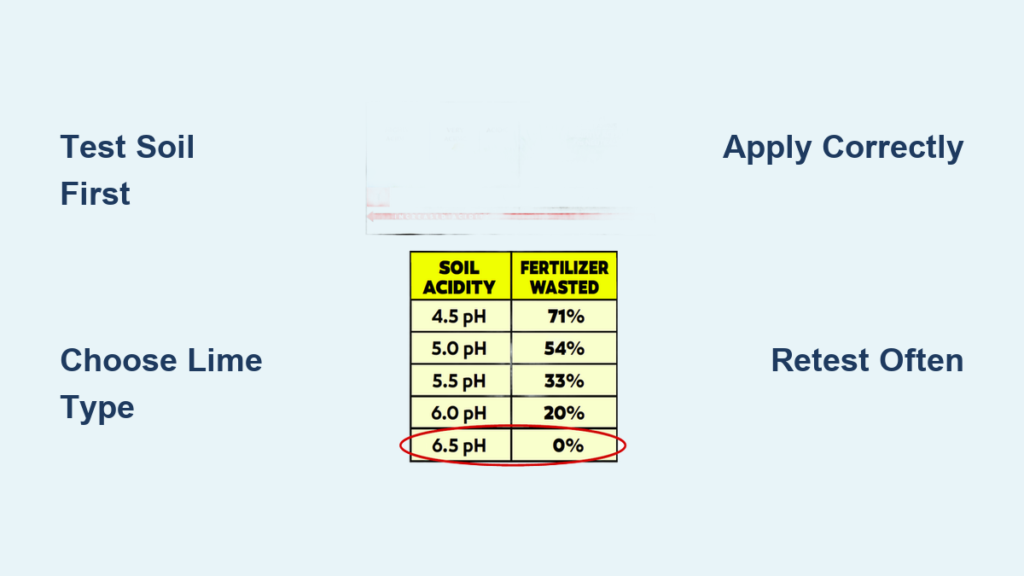
When soil pH falls below 6.0, several problems occur. Essential macronutrients like nitrogen, phosphorus, and potassium bind with iron and aluminum, becoming insoluble and unabsorbable by grass roots. Aluminum and manganese can reach toxic levels in highly acidic soils, damaging root systems. Beneficial soil bacteria become less active, reducing nitrogen fixation and organic matter decomposition. Acidic conditions also favor moss, clover, and dandelions that outcompete grass.
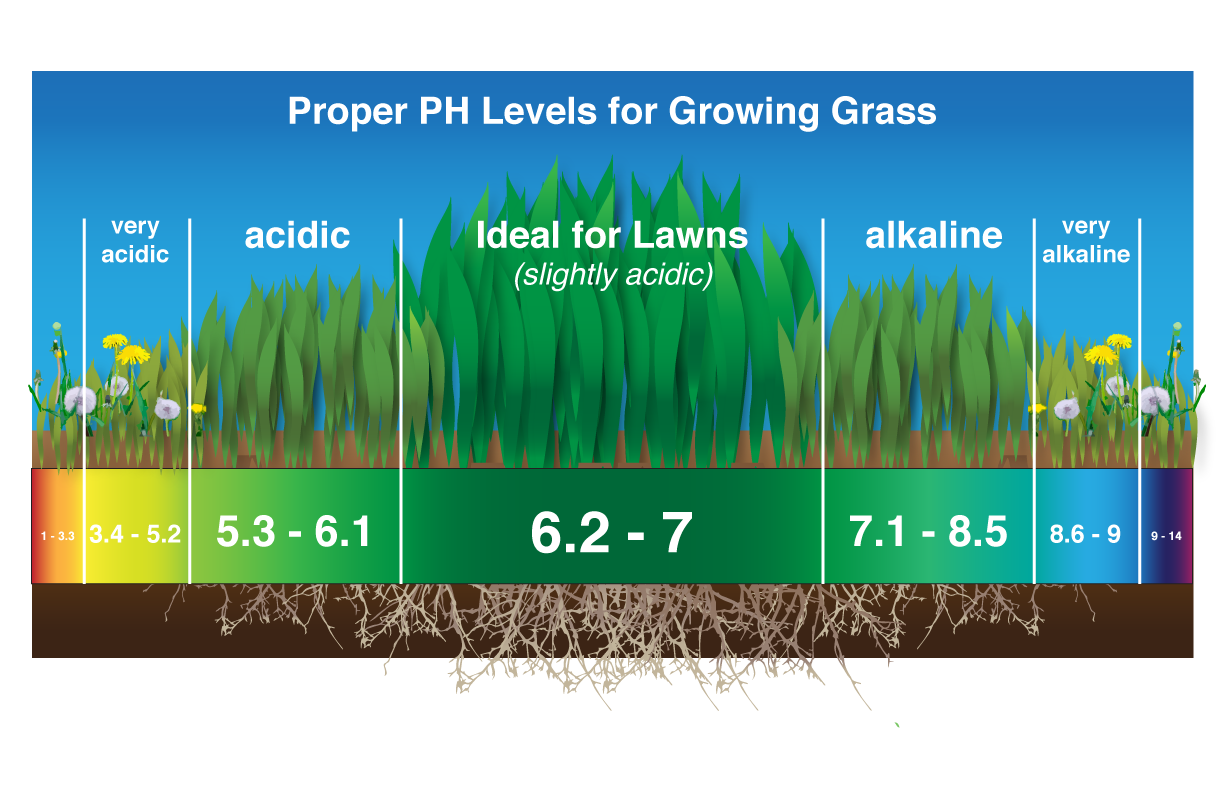
Cool-season grasses like fescue and Kentucky bluegrass prefer pH 6.0 to 7.0. Warm-season grasses like bermudagrass and zoysia tolerate a slightly wider range of 5.5 to 7.3. A pH of 6.5 is ideal for most lawn grasses.
Test Your Soil Before Making Changes
Before adding any amendment, test your soil. Guessing pH leads to over-liming, which can harm grass just as much as acidity. A proper test reveals current pH, nutrient levels, and buffer capacity, which is the key to calculating accurate lime needs.
Why Lab Testing Beats DIY Kits
While home kits and digital meters give instant readings, they lack precision. For reliable results, send a sample to a university extension lab or certified soil testing service. These labs measure current pH level, buffer pH which determines how much lime is needed, soil texture including sand, silt, and clay, and calcium, magnesium, and potassium levels. With this data, you will get tailored recommendations, not estimates.
How to Collect a Soil Sample
Use a clean trowel or soil probe. Take 6 to 8 cores from different areas at 2 to 4 inches deep. Mix samples in a clean bucket. Let dry, then send 1 to 2 cups to the lab. Test in early spring or fall when pH is most stable. Retest every 6 months after treatment to track progress.
Choose the Right Lime Product for Your Lawn
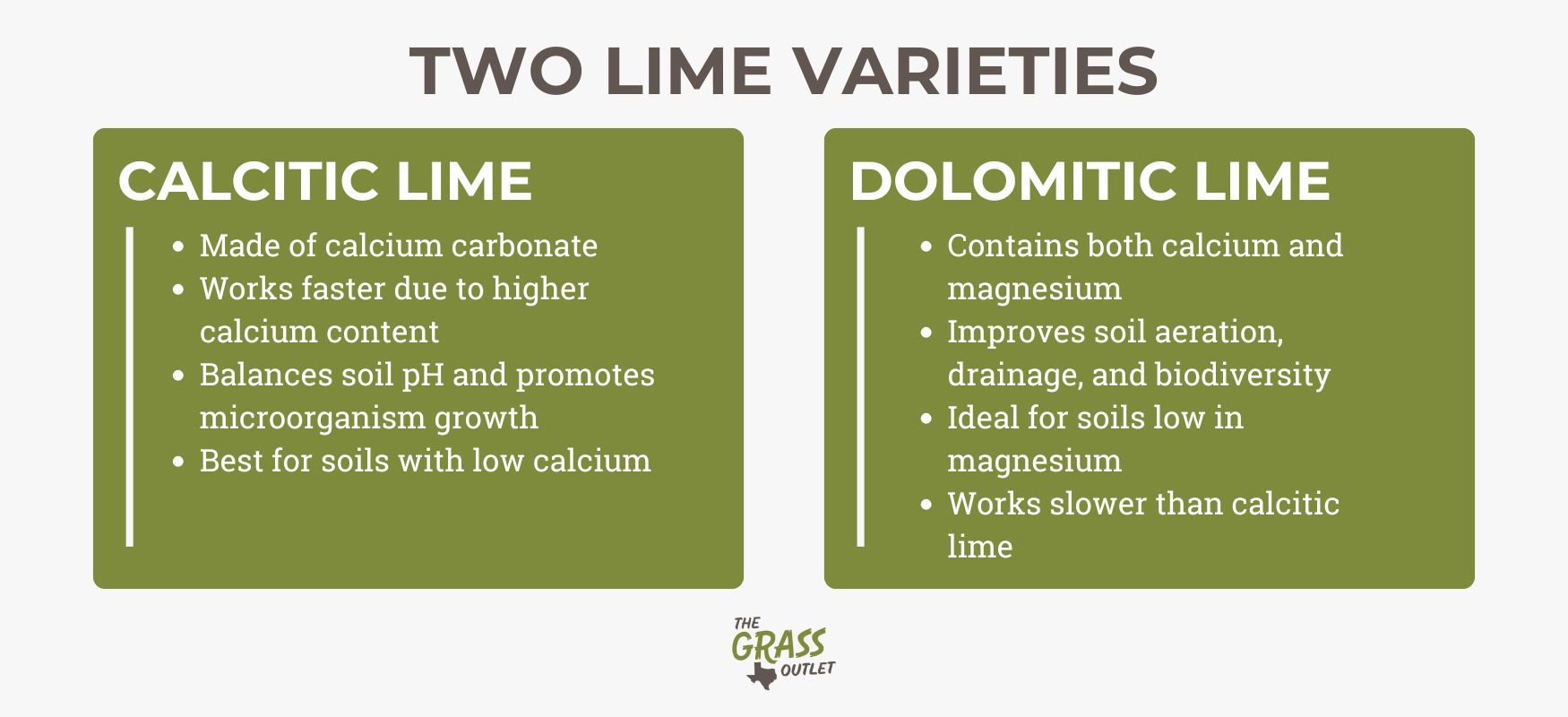
Not all lime is equal. The best choice depends on speed, soil needs, and ease of use. Limestone-based products are the standard for raising pH, but newer fast-acting formulas deliver results in weeks, not months.
Dolomitic vs. Calcitic Lime
Dolomitic lime contains calcium magnesium carbonate and is best for most lawns. It raises pH and replenishes magnesium, which is often low in acidic soils. Calcitic lime contains calcium carbonate and raises pH while adding calcium but does not address magnesium deficiency. Use dolomitic lime unless a soil test shows high magnesium.
Fast-Acting Lime Options
Traditional powdered or pelletized lime can take 3 to 6 months to react. Fast-acting water-soluble lime products dissolve quickly and start working in days. They are ideal for homeowners who want visible results without waiting.
Top fast-acting options include Earth Science Fast Acting Lime with calcium carbonate and Nutri-Bond technology, Jonathan Green Mag-I-Cal with 35 percent water-soluble calcium carbonate covering 5,000 square feet per bag, and Jonathan Green Mag-I-Cal Plus or Magic Cal Plus with dolomitic lime and calcium sulfate covering 15,000 square feet per bag. These products use advanced binding technology to prevent nutrient leaching and improve calcium retention. One bag can replace 10 to 15 bags of traditional lime, saving time, labor, and storage space.
Calculate How Much Lime to Apply
Applying too little will not fix pH. Too much can make soil overly alkaline, locking out iron and manganese. The right amount depends on current pH, target pH, and soil texture.
Lime Needs by Soil Type
Sandy soil requires 5 to 10 pounds of limestone per 100 square feet. Loamy soil needs 10 to 15 pounds. Clay soil requires 15 to 20 pounds because clay holds more hydrogen ions and resists pH change.
Product-Specific Application Rates
For Jonathan Green Magic Cal Plus, apply 3.6 pounds per 1,000 square feet. For Mag-I-Cal, one 18-pound bag covers 5,000 square feet. For Fast Acting Lime, follow spreader settings and apply up to twice per season. For precise dosing, rely on buffer pH from lab tests. Many extension offices offer free lime calculation tools online.
Apply Lime Correctly for Best Results
Even the best product fails if applied wrong. Proper timing, equipment, and watering ensure lime reaches the root zone and reacts efficiently.
Best Time to Apply Lime
Apply lime in spring before peak growth or in fall after summer stress. Avoid application during drought, extreme heat, or freezing conditions. Grass should be actively growing to benefit from improved nutrient availability.
Step-by-Step Application Process
Mow and rake to expose the soil surface. Calibrate your spreader using product instructions. Apply lime in two passes using a crisscross pattern for even coverage. Water deeply, at least 6 inches, to move lime into the root zone. Wait 2 to 4 weeks before fertilizing, especially with acidifying nitrogen sources.
Can You Apply Lime and Fertilizer Together
Yes, if products are compatible. Some prefer to apply lime first, then fertilize later. Avoid combining lime with ammonium sulfate or other acid-forming fertilizers unless potassium levels are high as advised in some soil reports.
Common Mistakes to Avoid When Raising pH
Even well-intentioned efforts fail when basic errors are made. Avoid these pitfalls to ensure success.
Skipping the soil test leads to over-correction. A lawn with pH 6.8 does not need lime, and adding it could push pH above 7.5, causing iron deficiency and yellowing. Overapplying lime raises pH too high, leading to nutrient lockout and poor grass color. Stick to recommended rates and retest before reapplying.
Sandy soils need less lime than clay. Applying the same rate everywhere leads to under-treated clay and over-treated sand. Traditional lime takes 3 to 6 months to fully react, and fast-acting lime works in weeks but still requires moisture and time. Do not reapply too soon.
Lime must dissolve and move into the soil. Without watering after application, it sits on the surface and does little.
Monitor Progress and Retest Your Soil
Improvement starts within weeks, greener grass and less moss, but full pH adjustment takes time. Track changes to avoid guesswork.
When to Retest
Retest 3 months after application for fast-acting lime and 6 months for traditional lime. Test annually for maintenance. Small incremental applications are safer than one large dose. If pH was 5.0, aim for 5.5 first, then 6.0. Do not try to jump to 6.5 in one season.
Real-World Results
A homeowner with a 10,000 square foot lawn at pH 5.0 applied Jonathan Green Magic Cal Plus at 3.6 pounds per 1,000 square feet three times in one season. After 12 months, pH rose to 5.3, a measurable step toward 6.0. Continued applications are planned for the next year.
Maintain Optimal pH Long-Term
Soil pH does not stay fixed. Natural processes gradually re-acidify it. Prevent backsliding with smart cultural practices.
Test Twice a Year
Check pH in spring and fall to catch drift early. Factors that lower pH over time include nitrogen-rich fertilizers like urea and ammonium phosphate, rainfall and irrigation, decomposing leaves and grass clippings, and dog urine which causes localized acidity.
Aerate Annually
Core aeration reduces compaction, improves water movement, and helps lime penetrate deeper. Do it in spring or fall, the same time as liming.
Add Organic Matter
Compost, grass clippings, and mulch buffer pH swings and feed beneficial microbes. They do not raise pH much on their own but support long-term stability.
Mow High and Fertilize Wisely
Tall grass shades soil, reduces moisture loss, and promotes deep roots. Avoid over-fertilizing with nitrogen, especially acid-forming types like ammonium sulfate.
Alternative Methods for Raising Lawn pH
For small areas or organic approaches, consider these options, but know their limits.
Wood Ash
Wood ash contains calcium carbonate and potassium, raising pH quickly. Apply no more than 1/4 inch of dry untreated ash and water in immediately. Retest often because ash can push pH too high fast. Never use chemically treated wood or coal ash. Keep away from acid-loving plants like azaleas and blueberries.
Baking Soda
Mix 1 tablespoon per gallon of water and drench small areas. It works fast but is short-lived. Sodium buildup harms soil structure over time. It is not suitable for large lawns.
Crushed Eggshells or Bone Meal
These add trace calcium but work too slowly to correct acidic soil. Use them as supplements, not solutions.
Frequently Asked Questions About Increasing Lawn pH
How long does it take for lime to raise soil pH?
Traditional lime takes 3 to 6 months to fully react and raise pH. Fast-acting water-soluble lime products begin working within days to weeks, depending on soil moisture and temperature.
What is the ideal pH for a lawn?
Most turfgrasses thrive between pH 6.0 and 7.0, with 6.5 being ideal. Cool-season grasses prefer 6.0 to 7.0, while warm-season grasses tolerate 5.5 to 7.3.
Can I apply too much lime to my lawn?
Yes, overapplying lime raises pH too high, causing nutrient lockout. Iron, zinc, and manganese become unavailable, leading to yellowing grass. Always test first and stick to recommended rates.
Should I apply lime and fertilizer at the same time?
You can apply them together if products are compatible, but some gardeners prefer to apply lime first and wait a few weeks before fertilizing. Avoid combining lime with acid-forming fertilizers like ammonium sulfate unless specifically advised by a soil test.
What happens if soil pH is too low?
Low pH below 6.0 reduces nutrient availability, causes aluminum toxicity, slows beneficial microbial activity, and encourages moss and weeds. Grass becomes thin, yellow, and unresponsive to fertilizer.
How often should I test my lawn soil?
Test at least once per year, ideally in early spring or fall. After applying lime, retest in 3 to 6 months to monitor progress. Twice-yearly testing helps catch pH drift early.
Final Thoughts on Increasing Lawn pH
Raising lawn pH is a gradual process, not a one-time fix. The key to success lies in testing first, applying precisely, and monitoring over time. With consistent care, even severely acidic soils at pH 5.0 can be gradually corrected to support a thick, green, weed-resistant lawn.
Start with a professional soil test to know your baseline. Choose dolomitic lime or fast-acting soluble lime for the best results. Apply based on soil type and product specifications, water deeply after application, and retest every few months. Maintain progress with annual aeration, organic matter, and smart fertilization practices.
Skip the guesswork. Test first, apply precisely, and monitor over time. Your grass will respond with healthier growth, better nutrient uptake, and improved resistance to weeds and stress.