A lush, green lawn doesn’t happen by accident—it starts with the right fertilizer. If you’re wondering how to choose lawn fertilizer, the answer lies not in guessing, but in understanding your soil, grass type, and seasonal needs. Without proper fertilization, even the healthiest-looking turf can become thin, patchy, and vulnerable to weeds, disease, and drought. The key is applying the right nutrients at the right time, in the right form. This guide breaks down every critical factor, from NPK ratios to soil tests, release types to local regulations, so you can make informed decisions that deliver long-term results.
You don’t need the most expensive product. You need the right one. Whether you’re maintaining a low-maintenance backyard or aiming for golf-course perfection, this step-by-step approach ensures your lawn gets exactly what it needs, no more, no less.
Test Your Soil Before Buying Fertilizer
Why Soil Testing Is Essential
Before buying any fertilizer, test your soil. A soil test removes guesswork and prevents over-application of nutrients like phosphorus, which can harm the environment and even damage your lawn. More importantly, it reveals what your soil actually lacks, whether it’s nitrogen, potassium, iron, or an imbalanced pH. Without this data, you risk feeding your lawn unnecessarily or correcting the wrong deficiency.
Professional lab tests from your local Extension Office provide the most accurate analysis, including tailored fertilizer recommendations. Home kits offer quicker results but are less precise. For advanced insight, some services measure available nutrients, the fraction plants can actually absorb, giving a truer picture of soil health.
How Often to Test and What to Look For
Test your soil every 2–3 years under normal conditions. If you’re fixing nutrient imbalances or adjusting pH, test annually to track progress. After major amendments like lime or sulfur, retest to confirm effectiveness.
Key results to evaluate include pH level (ideal: 6.0–7.0 for most grasses), nitrogen, phosphorus, and potassium levels, calcium and magnesium availability, and micronutrient status. If your soil already has high phosphorus, use a phosphorus-free fertilizer like 32-0-10. In sandy soils, watch for deficiencies in potassium, magnesium, and sulfur.
Match Fertilizer to Your Grass Type and Climate
Cool-Season vs. Warm-Season Grasses
Your choice of fertilizer depends heavily on your grass species and regional climate. Grasses fall into two main categories, cool-season and warm-season, each with distinct nutrient demands.
Cool-season grasses include Kentucky Bluegrass, Tall Fescue, and Perennial Ryegrass. They grow actively in spring and fall, so focus on fall applications when grass stores energy for winter. Apply high-nitrogen fertilizers in early fall and potassium-rich blends in late fall. Caution: Avoid excess nitrogen in spring for tall fescue, as it increases susceptibility to brown patch disease.
Warm-season grasses include Bermuda, Zoysia, St. Augustine, and Centipedegrass. They grow actively from late spring through summer, so feed during peak growing months (May–August). Stop nitrogen by mid-September to prevent cold injury. Use potassium-only or iron-based fertilizers in fall to maintain color without stimulating growth.
Special note: Centipedegrass is sensitive to high phosphorus, which can cause iron chlorosis (yellowing between veins). Use low-P or phosphorus-free formulas.
Decode the NPK Ratio on Fertilizer Labels
What the Three Numbers Mean
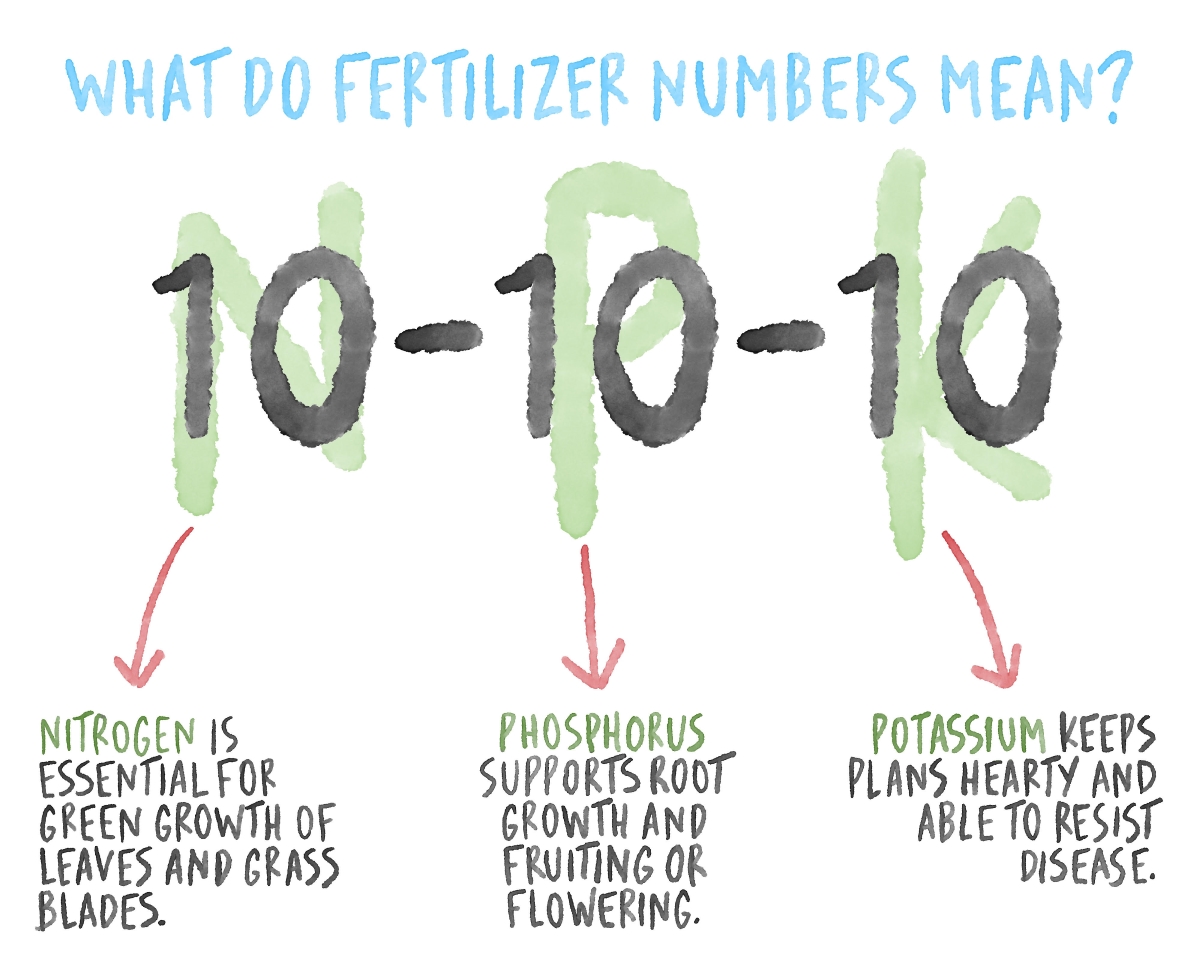
Every fertilizer label displays three numbers, NPK, representing the percentage by weight of nitrogen, phosphate, and potash. For example, a 20-4-8 fertilizer contains 20% nitrogen, 4% phosphate, and 8% potash. These nutrients serve distinct roles.
Nitrogen drives leaf growth and deep green color. Phosphorus supports root development and seedling establishment. Potassium boosts stress tolerance, disease resistance, and winter hardiness. Your lawn likely needs nitrogen most frequently, while phosphorus and potassium should be applied only when soil tests confirm a need.
Calculating Nutrient Delivery
To determine how much nutrient you’re applying per 1,000 square feet, use this formula: Nutrient applied equals bag weight times percentage nutrient divided by 100. For example, a 50-pound bag of 32-0-10 contains 16 pounds nitrogen (50 × 0.32) and 5 pounds potash (50 × 0.10). If your lawn needs 1 pound of nitrogen per 1,000 square feet, you’d apply 3.125 pounds of this fertilizer per 1,000 square feet (1 ÷ 0.32). This precision prevents over-fertilizing and saves money.
Choose Between Organic and Synthetic Fertilizer
Organic vs. Synthetic: Key Differences
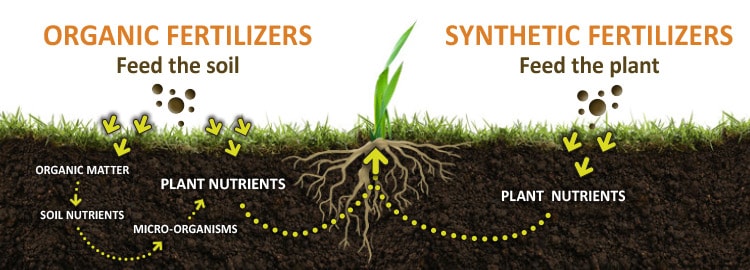
Organic fertilizers come from natural sources like manure, compost, bone meal, and fish emulsion. They release nutrients slowly, relying on microbial breakdown, and they improve soil structure and biology over time. They have low burn risk but require soil temperatures above 60°F to break down effectively.
Synthetic fertilizers are chemically manufactured and deliver rapid results with precise nutrient control. They work quickly but carry higher burn risk if misapplied. They also have minimal impact on soil health compared to organic options.
Choose organic for long-term soil improvement and eco-conscious lawn care. Choose synthetic for quick greening and targeted correction.
Fast-Release vs. Slow-Release Formulas
Fast-release fertilizers green up grass in 3–7 days, making them ideal for quick correction. They require reapplication every 4–6 weeks and carry higher risk of fertilizer burn. Use them for spot treatments or immediate color boost before an event.
Slow-release fertilizers provide gradual nutrient release over 8–12 weeks, lowering burn risk and requiring fewer applications. They include polymer-coated urea, sulfur-coated urea, and natural organics. Best for routine maintenance and large lawns.
Pro tip: Leaving grass clippings after mowing returns nitrogen to the soil, extending the effectiveness of slow-release fertilizers by 2–4 weeks.
Pick Granular or Liquid Fertilizer Formulation
Granular Fertilizers: Best for Long-Term Feeding
Granular fertilizers are the go-to choice for most homeowners, especially on lawns larger than 1/4 acre. They’re applied with a broadcast or drop spreader, last up to 5 months, and require fewer applications.
Advantages include long residual effect, cost-effectiveness for large areas, and easy storage and handling. Disadvantages include the need for even spreading to avoid streaks or hotspots and the requirement to water in within 24–48 hours. Always calibrate your spreader using the product label.
Liquid Fertilizers: Fast Action, Short Duration
Liquid fertilizers are mixed with water and applied via hose-end sprayer or backpack sprayer. They’re absorbed quickly through leaves and roots.
Advantages include immediate greening within days, excellent for foliar feeding and micronutrient delivery, and ideal for correcting iron deficiency. Disadvantages include short-lived results (2–4 weeks), need for frequent reapplication, and higher risk of runoff.
Best use cases: Quick green-up before an event, iron or micronutrient supplementation, and spot-treating yellow patches.
Apply Fertilizer Based on Seasonal Growth Cycles
Spring Fertilization: Support Early Growth
Apply fertilizer after the first mow when grass is actively growing. For cool-season lawns, use a slow-release nitrogen formula with an NPK ratio of 3-1-2 or 4-1-2 (e.g., 16-4-8). This promotes steady growth without risking burn. Avoid early nitrogen on tall fescue to reduce disease pressure. Warm-season lawns should not be fertilized until soil temperatures exceed 65°F, usually late April through May.
Summer Feeding: Match Grass Type
Warm-season grasses are in peak feeding time. Use high-nitrogen fertilizers (e.g., 20-0-10) every 6–8 weeks. Cool-season grasses are generally dormant. Do not fertilize unless irrigated. If watering, use a low-nitrogen, high-potassium blend (e.g., 10-0-20) to reduce stress. Sandy soils are prone to leaching, so use slow-release forms to maintain consistent nutrient levels.
Fall: The Most Important Fertilizing Window
Fall is prime time for lawn feeding because grass stores nutrients for winter and next spring’s growth. In early fall (late August–September), apply high-nitrogen fertilizer with at least 50% slow-release N plus potassium. In late fall (6–8 weeks before dormancy), use fast-release nitrogen plus high potassium to boost cold tolerance. For warm-season grasses, apply no nitrogen after mid-September; use iron or potassium-only instead.
Winter: Do Not Fertilize
Grass is dormant and cannot absorb nutrients. Applying fertilizer in winter leads to nutrient runoff and pollution.
Address Micronutrients When Deficiencies Appear
Key Micronutrients and Warning Signs
While NPK are primary nutrients, several micronutrients play vital roles in lawn health.
Iron is critical for deep green color. Deficiency causes interveinal chlorosis (yellow leaves with green veins). Fix with chelated iron or iron-rich fertilizers applied as foliar spray for fastest results.
Magnesium is essential for chlorophyll production. Deficiency shows as yellowing between leaf veins, especially in acidic or sandy soils. Correct with Epsom salt (magnesium sulfate) or dolomitic lime.
Sulfur aids protein synthesis and lowers pH in alkaline soils. Calcium supports cell walls and root development. Both deficiencies are common in sandy, low-organic-matter soils.
Expert tip: Iron and manganese deficiencies often occur together in alkaline soils. Use a balanced micronutrient product containing both.
Follow Local Regulations and Environmental Best Practices
Know Phosphorus and Seasonal Restrictions
At least 11 U.S. states restrict or ban phosphorus fertilizers to protect waterways, including Maine, Maryland, Michigan, Minnesota, New Jersey, New York, Washington, and Wisconsin. Exceptions are allowed for establishing new lawns, repairing bare spots, or when soil test confirms deficiency.
Seasonal bans also exist. Winter prohibits fertilizing on frozen ground. Florida prohibits fertilization from June–September in some counties during rainy seasons. Always check local ordinances before applying.
Reduce Runoff and Protect the Environment
Never apply fertilizer before heavy rain. Keep product off driveways, sidewalks, and streets, sweeping granules back onto the lawn. Use slow-release and organic options to minimize leaching. Fertilize only during active growth periods.
Use the Right Tools for Even Application
Essential Equipment
A broadcast spreader works best for large, uneven lawns. Overlap passes slightly for full coverage. A drop spreader suits small, flat areas. Follow a grid pattern for precision. A hose-end sprayer works for liquid fertilizers. Set the dial according to product instructions. A backpack sprayer handles spot treatments and micronutrients. Clean immediately after use.
Best practices include mowing and watering 1–2 days before fertilizing, calibrating your spreader using the product label, applying perimeter first then filling in with parallel passes, closing the spreader when turning to avoid clumping, watering in granular fertilizer within 24–48 hours, and waiting until dust settles before allowing pets or kids on the lawn.
Why Avoid Weed and Feed Products
Weed and feed combines fertilizer with herbicides. While convenient, it has major drawbacks. Herbicides are applied to the entire lawn, increasing risk of grass damage. It prevents seed germination, so don’t use when overseeding. Timing mismatch occurs because fertilizer and weed killer often need different application windows. Higher runoff risk exists due to chemical load.
Expert consensus: Avoid weed and feed. Instead, apply fertilizer when grass needs nutrients and use targeted herbicides only where weeds appear. Spot-spray broadleaf weeds with 2,4-D or use corn gluten meal as a natural pre-emergent.
Calculate Cost Per Pound of Nitrogen
Compare Value, Not Price
A cheaper bag isn’t always a better deal. To compare fertilizers fairly, calculate the cost per pound of nitrogen using this formula: Cost per lb N equals total bag price divided by bag weight times percentage nitrogen.
For example, a $40 for a 42.18-lb bag of 32-0-10 contains 13.5 lbs nitrogen (42.18 × 0.32). The cost per lb N is $40 ÷ 13.5, or $2.96 per lb N. Use online calculators or spreadsheets to compare brands. Slow-release and organic products may cost more per pound, but fewer applications can balance long-term costs.
Frequently Asked Questions About Choosing Lawn Fertilizer
What is the best fertilizer ratio for most lawns?
The ideal NPK ratio depends on your soil test results. Most established lawns need more nitrogen than phosphorus or potassium. A common general-purpose ratio is 3-1-2 (e.g., 16-4-8) for cool-season grasses. If your soil test shows no phosphorus deficiency, use a phosphorus-free formula like 32-0-10.
How do I know if my lawn needs fertilizer?
A soil test is the most reliable method. Visual signs include yellow-green color indicating nitrogen deficiency, poor root growth suggesting phosphorus deficiency, and increased disease susceptibility pointing to potassium deficiency. A healthy lawn primarily needs nitrogen to maintain top growth.
Can I use the same fertilizer for all seasons?
No. Grass nutrient needs change with seasons. Spring calls for nitrogen to support green-up. Summer demands vary by grass type. Fall requires high potassium for winter hardiness. Winter is a dormant period where no fertilization is needed. Using the wrong seasonal formula can harm your lawn.
Is organic fertilizer better than synthetic?
Neither is universally better. Organic fertilizers improve soil biology over time but work slowly and require warm soil. Synthetic fertilizers offer rapid results and precise nutrient control. Choose based on your goals, timeline, and values rather than assuming one is superior.
What happens if I over-fertilize my lawn?
Over-fertilizing causes fertilizer burn, creating brown or yellow patches. Excess nitrogen leaches into groundwater, harming the environment. It also promotes excessive top growth at the expense of root development. Always follow soil test recommendations and product label rates.
Key Takeaways for Choosing Lawn Fertilizer
The best lawn fertilizer isn’t the most expensive or the fastest-acting. It’s the one that matches your soil, grass type, and goals. Start with a soil test from your local Extension Office to know exactly what nutrients your lawn needs. Identify whether you have cool-season or warm-season grass, then choose NPK ratios and application timing accordingly.
Pick slow-release granular fertilizers for large lawns and routine maintenance. Use liquid fertilizers for quick fixes and micronutrient supplementation. Avoid weed and feed products in favor of separate fertilizer and herbicide applications. Check local regulations regarding phosphorus bans and seasonal restrictions.
Apply fertilizer during active growth periods only, with fall being the most important window for cool-season grasses. Supplement with iron if you see interveinal chlorosis. Calculate cost per pound of nitrogen to compare true value across brands.
By following this science-backed approach, you’ll build a lawn that’s not just green, but dense, resilient, and sustainable. Every application will count toward the lush, healthy turf you want.