Leaving old gasoline sitting in your snow blower through the off-season is a recipe for frustrating breakdowns. Even with fuel stabilizer, gas degrades over time, forming sticky gum and varnish that clog carburetors and ruin fuel lines. The result? Hard starts, rough idling, and expensive repairs right when you need the machine most.
Knowing how to drain gas from a snow blower protects your investment and guarantees reliable starts. This guide covers safety steps, two proven drainage methods (tank bolt and carburetor float bowl), and expert tips for reusing old fuel and storing your equipment properly. By the end, you will know exactly how to empty every drop and keep your snow blower running strong for years.
Why Draining Fuel Matters
Prevent Carburetor Damage
Old gasoline breaks down within 30 to 90 days, especially ethanol-blended fuel. As it degrades, it leaves sticky residue that clogs carburetor jets and passages. This leads to poor fuel flow, hard starts, or complete engine failure. Draining fuel eliminates this risk entirely.
Avoid Hard Starts in Winter
Stale fuel is the most common reason a snow blower refuses to start in fall or winter. Even with stabilizer, residual fuel can still leave deposits. A fully drained system means clean, fresh fuel at startup with no priming or sputtering required.
Stop Fuel System Corrosion
Ethanol attracts moisture, which causes phase separation where water sinks to the bottom of the tank and triggers corrosion. This rust attacks metal parts in the tank, fuel lines, and carburetor. Draining removes both ethanol-laden gas and trapped moisture, protecting sensitive components.
Essential Safety Preparations
Work on a Cool Engine
Never drain fuel while the engine is hot. Residual heat can ignite fumes and create a serious fire hazard. Always shut off the machine and let it cool completely, waiting at least 30 minutes after the last use.
Remove the Ignition Key
For electric-start models, remove the key or disconnect the spark plug wire before starting work. This prevents accidental starts and keeps you safe throughout the process.
Use Proper Ventilation and Containers
Work in a well-ventilated area, away from open flames, heaters, or sparks. Use only fuel-safe containers, never repurpose food or drink bottles. Approved gas cans with child-resistant caps are ideal for catching and storing drained fuel.
Locate Your Drain Method

Not all snow blowers drain fuel the same way. The right approach depends on your model. Two common designs use either a tank drain bolt or a carburetor float bowl drain.
Tank Drain Bolt (Ariens Method)
Some models, like the Ariens Deluxe 24, feature a 10 mm drain bolt on the bottom of the fuel tank. This allows full tank drainage without disassembling any parts.
Carburetor Float Bowl Drain (Toro Method)
Other models, such as the Toro Power Max 824 E, use a drain bolt on the carburetor’s float bowl. This removes fuel pooled in the carburetor, which is the most common spot for varnish buildup.
Pro Tip: Check your owner’s manual if you are unsure which method applies. If no drain exists, you may need to siphon fuel from the tank instead.
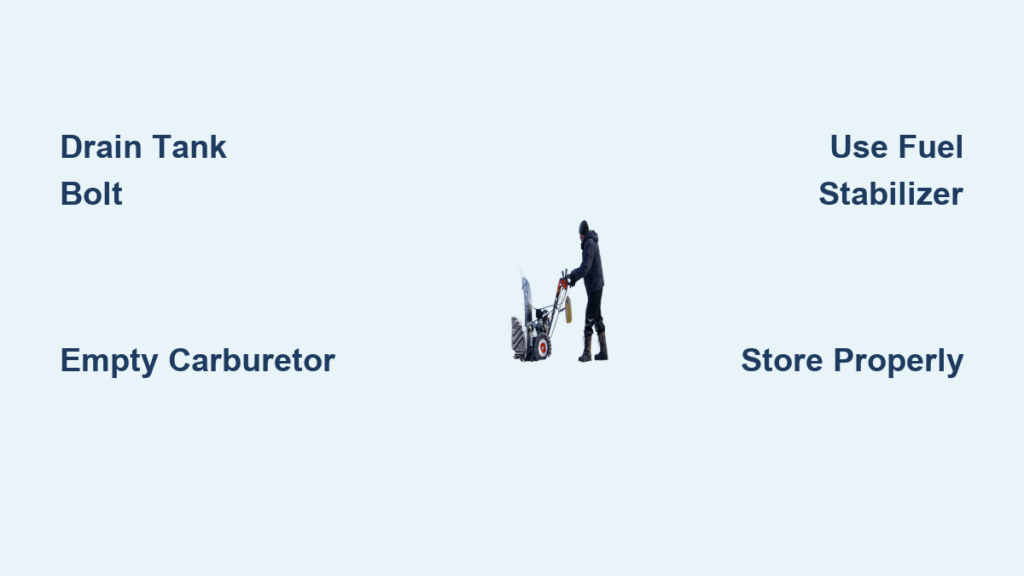
Drain Fuel via Tank Bolt (Ariens Method)
Turn the Fuel Valve to “On”
Before loosening the drain bolt, set the fuel valve to the “On” position. This opens the fuel line and allows complete drainage from both the tank and the connected system.
Loosen the 10 mm Drain Bolt
Position a fuel-safe container beneath the bolt. Using a 10 mm wrench, carefully loosen the bolt. Fuel will begin to drip slowly, so do not force it.
Warning: Do not strip the bolt. Use the correct size wrench and turn gently to avoid damaging the threads.
Speed Up Drainage with Airflow
Fuel drains slowly due to vacuum lock. To speed things up, slightly crack open the fuel cap. This lets air into the tank, equalizing pressure and increasing flow rate significantly.
Wait for Complete Drain
Let the fuel drain fully, which can take up to an hour. Once dripping stops, tighten the bolt securely. Over-tightening can damage threads, so snug is sufficient.
Drain Fuel via Carburetor (Toro Method)
Find the Float Bowl Drain Bolt
Locate the drain bolt at the base of the carburetor. It is usually a small hex bolt or screw. Place a container underneath to catch the fuel.
Remove the Bolt Carefully
Using the appropriate tool (often a socket or nut driver), loosen the bolt slowly. Fuel will flow immediately, so be ready to catch it.
Drain Until Drip Stops
Allow fuel to drain until only a slow drip remains. This ensures the float bowl is empty. Reinstall the bolt tightly, but avoid over-torquing.
Refill with Fresh Fuel and Stabilizer
After draining, refill the tank with fresh gasoline. Add a fuel stabilizer like Sea Foam before running the engine for a few minutes. This circulates treated fuel through the system and protects internal seals during storage.
Reuse or Dispose of Old Gas Safely
Reuse in Lawn Equipment
If the drained fuel is clear, odor-free, and not cloudy, it can be reused in summer equipment like lawn mowers or trimmers. Use a funnel with a filter to prevent debris from entering the new tank.
Discard Degraded Fuel Properly
If gas smells sour, looks dark, or appears milky, do not reuse it. Degraded fuel can damage engines. Dispose of it at a hazardous waste collection site per local regulations.
Note: Many municipalities offer seasonal disposal events. Check local guidelines for drop-off locations and dates.
Choose the Right Fuel After Draining
Use Ethanol-Free Gas When Possible
Ethanol absorbs moisture and accelerates fuel breakdown. Ethanol-free fuel (E0) is ideal for small engines. It burns cleaner, resists degradation, and reduces corrosion risk.
Always Add Fuel Stabilizer
Even with fresh gas, add stabilizer before storage. Run the engine for 5 to 10 minutes after refueling to circulate treated fuel through the carburetor.
Important: Stabilizer does not revive old gas. It only preserves new fuel, so always start with fresh gasoline.
Complete Winterization Checklist

Change or Top Off Engine Oil
Old oil contains contaminants that can corrode engine parts. Change the oil before storage for maximum protection. If not changing, at least check the level and top off as needed.
Inflate Tires to Proper PSI
Underinflated tires develop flat spots when stored for months. Check tire pressure and inflate to the manufacturer recommendation (usually 12 to 15 PSI). This extends tire life and ensures smooth operation next season.
Elevate Snow Blower Off Concrete
Concrete floors draw moisture, promoting rust on metal parts. Place wood blocks under the frame to lift the machine off the ground. This prevents corrosion and protects auger components.
Store in a Dry, Covered Area
Keep your snow blower in a garage, shed, or under a breathable cover. Avoid damp areas that encourage rust. A breathable cover allows airflow while blocking dust and debris.
Common Mistakes to Avoid
Forgetting to Open the Fuel Valve
On models with a shut-off valve, failing to turn it “On” prevents full drainage. Always verify the valve position before loosening any bolts.
Leaving the Drain Bolt Loose
A poorly tightened bolt can leak fuel during storage, creating a fire hazard and a mess. Double-check that all bolts are snug after drainage.
Draining Only the Tank, Not the Carburetor
Some users drain the tank but skip the carburetor. However, fuel left in the float bowl is the most likely to cause spring starting issues. Always drain both if your model allows.
Using Stabilizer Instead of Draining
While stabilizer helps, it is not a substitute for draining. Long-term storage (over 3 months) still risks varnish buildup, even with additives.
How to Tell If Fuel Has Degraded

Smell the Gas
Fresh gasoline has a sharp, clean odor. Sour or varnish-like smells mean the fuel has oxidized and should be replaced.
Check the Color
Pour a sample into a clear container. Dark brown or amber fuel has degraded. Fresh gas should be light amber or clear.
Look for Cloudiness
Cloudy or hazy fuel indicates water contamination or phase separation. This can clog filters and damage the engine, so drain and replace immediately.
When to Drain Gas: Timing Matters
Drain Before Long-Term Storage
The best time to drain fuel is before storing your snow blower for spring and summer. Do not wait until fall, because damage may already be done by then.
Drain Immediately If Fuel Is Old
If you discover old gas in the tank from last season, drain it right away. Do not try to dilute it with fresh fuel, because degraded gas can still clog the system.
After Extended Inactivity
Even mid-season, if your snow blower sits unused for over 30 days, consider draining or adding stabilizer to keep the fuel fresh.
Final Steps After Draining
Reinstall All Bolts Securely
Ensure both the tank drain bolt and float bowl bolt are tightened properly. Use thread sealant if recommended by the manufacturer.
Run Engine Until It Stops
After draining the carburetor, start the engine and let it run until it stalls. This burns off any remaining fuel in the lines and ensures a dry system.
Label Stored Fuel
If reusing drained gas, clearly label the container with the date and equipment type. Use within 30 days for best results.
Expert Tips for Long-Term Reliability
Combine Draining with Full Maintenance
Draining gas is just one part of winterization. Pair it with an oil change, spark plug inspection, auger lubrication, and belt tension check. This comprehensive approach doubles your snow blower’s lifespan.
Keep a Maintenance Log
Track when you drained fuel, changed oil, or replaced parts. A simple notebook or app reminder helps you stay on schedule year after year.
Invest in a Fuel Stabilizer Routine
Make stabilizer part of your refueling habit, even during the season. It extends fuel life and protects the engine between uses.
Frequently Asked Questions About Draining Gas from a Snow Blower
How long can gas sit in a snow blower before it goes bad?
Gasoline typically starts degrading within 30 to 90 days, especially ethanol-blended fuel. Old gas forms gum and varnish that clog carburetors and fuel lines. Drain the tank before any storage period longer than one month for best results.
Can I use fuel stabilizer instead of draining the gas?
Stabilizer helps preserve fresh fuel but is not a substitute for draining. Over long storage periods (3 months or more), even stabilized fuel can degrade and leave deposits. For maximum protection, drain the system completely.
Where is the drain plug on a snow blower?
The drain plug location varies by model. Many Ariens models have a 10 mm drain bolt on the bottom of the fuel tank. Many Toro models have a drain bolt on the carburetor float bowl. Check your owner’s manual for the exact location.
What happens if you leave gas in a snow blower over the summer?
Old fuel can clog the carburetor, corrode fuel lines, and cause hard starting in fall. Ethanol-blended gas absorbs moisture and causes phase separation, which leads to rust and engine damage. Draining prevents these costly issues.
Is it better to drain gas or run the tank dry?
Running the tank dry works for small amounts of residual fuel, but it does not remove fuel trapped in the carburetor or fuel lines. Draining via the drain bolt or float bowl is more thorough and recommended for long-term storage.
Can I put old gas from my snow blower in my lawn mower?
Yes, if the fuel is clear, odor-free, and not cloudy. Use a funnel with a filter to transfer it cleanly. If the gas smells sour, looks dark, or appears milky, dispose of it at a hazardous waste facility instead.
Key Takeaways for Draining Snow Blower Gas
Draining gas from your snow blower is a quick, low-cost task that prevents expensive repairs and ensures dependable performance. The two main methods (tank drain bolt and carburetor float bowl) cover most models, including Ariens and Toro. Always work on a cool engine, use fuel-safe containers, and check for signs of degradation before reusing old gas.
Your next step: gather your tools, locate the drain bolt on your model, and complete the drainage before storing your snow blower for the season. Combine fuel drainage with proper storage and routine maintenance, and your machine will start strong for many winters to come.