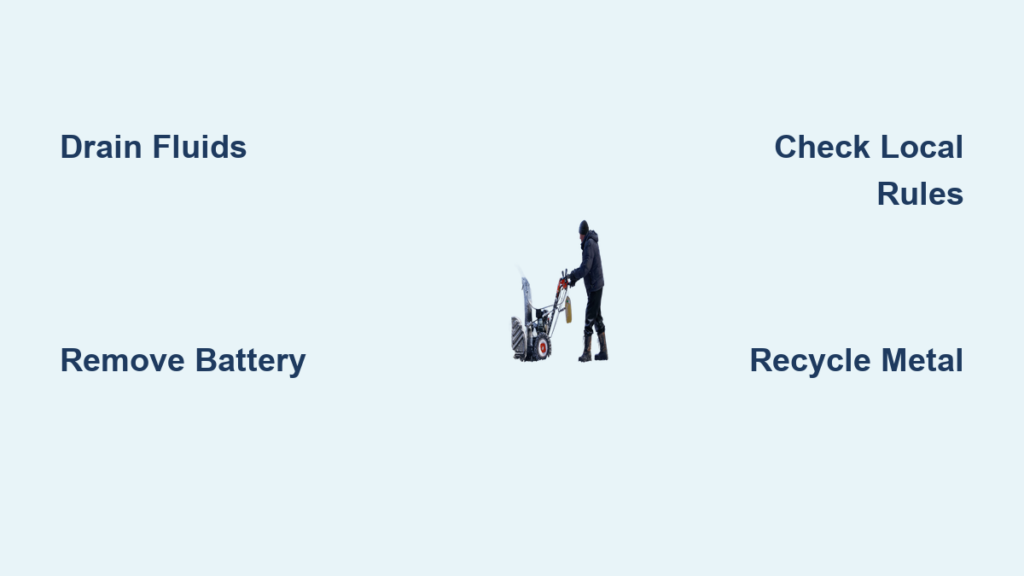
Your trusty snow blower spent the winter battling drifts and ice, but now warmer days have arrived. The machine sits covered in grime, possibly leaking fluids, and maybe refusing to start. You want it gone, but figuring out how to dispose of a snow blower responsibly feels confusing. Tossing it curbside might seem quick, yet snow blowers hold gasoline, oil, and batteries that can damage the environment and violate local laws.
Doing it wrong can also cost you. Leaking fluids in landfills trigger fines in many municipalities, and certain components require special handling. The upside is that you have several safe, legal, and eco-conscious routes, whether your machine still runs, needs minor repairs, or is completely dead. Some options even put money back in your pocket.
This guide walks you through every responsible disposal method step by step. You will learn how to prepare the machine, understand local regulations, and choose between recycling, donation, or resale.
Prepare the Snow Blower for Disposal Safely
Before moving your snow blower anywhere, you must remove hazardous materials. These machines contain flammable and toxic substances that create fire, health, and environmental risks if mishandled.
Drain All Fluids Completely
Gasoline and engine oil are the two most dangerous components inside your snow blower. Leaving them in place during disposal breaks landfill rules in most regions.
Start by turning off the engine and letting it cool completely. Siphon remaining gasoline with a hand pump into an approved fuel container. Store that container in a well-ventilated area away from sparks or heat sources.
Next, drain engine oil by tilting it carefully or removing the drain plug. Collect the oil in a sealed container for recycling. Take both fluids to a local hazardous waste facility rather than pouring them down drains or onto the ground.
Pro Tip: Run the engine outdoors until it stalls to burn off leftover fuel. Only do this with proper ventilation and away from flammable objects.
Remove the Battery When Present
Electric and dual-power snow blowers often contain removable batteries. Lithium-ion and lead-acid batteries are recyclable and should never enter household garbage.
– Disconnect the battery carefully.
– Place it in a non-flammable container like a plastic bin.
– Drop it off at a battery recycling location, commonly found at hardware stores or auto parts retailers.
Clean and Inspect the Unit
A clean snow blower is easier to sell, donate, or recycle. Wipe down the exterior with a damp cloth to clear salt, slush, and rust. Check for attachments such as chutes, augers, and shear pins. Keep any usable parts if you plan to resell or reuse them. Note any damage or missing components for accurate listings or drop-off communications.
Review Local Waste Disposal Regulations
Municipal rules for large equipment vary widely. Some cities ban snow blowers from curbside trash, while others schedule seasonal bulk pickups.
Contact Your Waste Management Provider
Call your local trash hauler or visit their website and ask:
– Are snow blowers allowed in regular garbage?
– Is there a bulk item pickup program?
– Do they host appliance or scrap metal collection days?
Many towns run annual bulky waste collection events where residents can set out large items for free removal.
Locate Household Hazardous Waste Programs
Because your snow blower once held gas and oil, it may qualify as hazardous waste. Use your city or county website to find a household hazardous waste drop-off center. Some facilities accept whole machines if fluids are drained beforehand. Appointments are often required, so book early.
Recycle Through Scrap Metal Facilities

Snow blowers contain steel, aluminum, and plastic, all valuable recyclable materials. Scrap yards pay for metal and ensure safe processing.
Find a Local Scrap Yard
Search online for “scrap metal near me” or “recycling center” plus your city. Call ahead to confirm:
– Do they accept whole snow blowers?
– Is there a drop-off fee or payment?
– Must fluids be drained first?
Most yards require proof of drained fuel and oil before accepting the unit.
Earn Money From Metal Weight
Scrap value depends on current market prices and machine size. Average snow blowers weigh 100 to 200 pounds. Steel pays around $0.05 to $0.10 per pound. Aluminum in engines or housings pays more, sometimes up to $0.50 per pound. You could earn between $10 and $40 depending on composition and condition.
Pro Tip: Remove the engine yourself to separate aluminum parts and boost your payout.
Donate a Working Snow Blower

If your machine still runs or only needs minor repairs, donating extends its life and helps your community.
Give to Charities or Community Groups
Organizations like Habitat for Humanity ReStore, select Goodwill locations, and local tool libraries sometimes accept working outdoor equipment. Call first to confirm policies. Provide details such as brand, model, condition, and whether it starts. Some groups even offer pickup for large donations.
Offer the Machine Locally for Free
Post your snow blower on Craigslist, Facebook Marketplace, Buy Nothing groups, or Nextdoor. Use clear titles like “Free Working Snow Blower – Ready to Use” or “Needs Repair – Free to Fix.” Someone may take it for parts, saving you disposal effort entirely.
Sell for Cash or Trade-In
Even non-working snow blowers hold value. Selling puts money back in your pocket and keeps the machine out of a landfill.
List Online for Maximum Reach
Take clear photos from multiple angles and write an honest description. Include brand, model, engine size, and running condition such as starts easily, runs rough, or will not start. Mention any repairs needed and include accessories. Price fairly based on condition. A working unit typically sells for $50 to $200, while a non-working project machine may fetch $20 to $75. Use platforms like Facebook Marketplace, OfferUp, Craigslist, or eBay for best exposure.
Explore Trade-In Options
Some retailers and manufacturers run seasonal trade-in events. You can exchange old equipment for discounts on new models. Toro and Honda dealers sometimes offer spring promotions. Check manufacturer websites or call local outdoor power equipment stores to learn about current programs.
Break Down the Snow Blower for Parts and Recycling

If the machine is beyond repair, disassembly lets you recycle more and reduce waste.
Identify Reusable Components
Common salvageable parts include the engine with aluminum block and carburetor, electric starter or recoil assembly, auger blades or impeller, tires and wheels, and chute control cables. Keep useful parts for future repairs or sell them individually.
Separate Materials for Recycling
Sort components by material type:
– Metal: Engine, frame, auger housing go to a scrap yard
– Plastic: Hopper, shroud, and chute should follow local plastic recycling rules
– Rubber: Tires may be accepted at certain tire retailers
– Batteries, oil, fuel: Drop off at a hazardous waste facility
Expert Note: Basic tools like wrenches, screwdrivers, and pliers are enough. Label parts as you remove them to stay organized.
Prevent Future Disposal Headaches
Planning ahead makes next disposal easier and extends equipment life.
Maintain Your Next Snow Blower
Proper care prevents early failure. Drain fuel before storage, change oil annually, and store the machine in a dry, covered space. Sharpen auger blades and check belts regularly for wear.
Choose Recyclable Models
When buying a replacement, look for brands with take-back programs. Simpler mechanical designs with fewer plastics are easier to disassemble. Electric or battery-powered options eliminate gas and oil, which simplifies long-term disposal.
Frequently Asked Questions About Snow Blower Disposal
Can I throw a snow blower in the regular trash?
No. Most municipalities prohibit large gas-powered equipment in curbside garbage because they contain hazardous fluids and metal components. Always check local rules first.
Do scrap yards actually pay for old snow blowers?
Yes. Most scrap yards accept snow blowers after fluids are drained. Payouts depend on weight and metal prices, typically ranging from $10 to $40.
Where can I recycle a snow blower battery?
Hardware stores, auto parts retailers, and household hazardous waste centers accept lithium-ion and lead-acid batteries. Many offer free drop-off services.
Is it worth repairing an old snow blower before selling?
It depends on the machine’s age and repair cost. Minor fixes like replacing a spark plug or carburetor cleaning often boost resale value. Major engine rebuilds rarely pay off.
Can I donate a non-working snow blower?
Sometimes. Charities and repair-focused community groups may accept broken machines for parts or restoration projects. Always call ahead to confirm.
What happens if I dump a snow blower illegally?
Illegal dumping can result in fines, environmental cleanup fees, or even criminal charges depending on local laws. Fluids leaking into soil or water create serious contamination issues.
Key Takeaways for Disposing of Your Snow Blower Responsibly
Disposing of a snow blower does not have to feel overwhelming. Start by draining all fluids and removing batteries to eliminate safety hazards. Then check your local waste rules to confirm which disposal methods are allowed. From there, choose the path that fits your situation: recycle through a scrap yard for quick cash, donate a working unit to charity, sell online for maximum profit, or disassemble for parts and material recovery.
Your next step is simple. Pick up the phone or open your laptop right now. Drain the fluids, snap a few photos, and choose one of the responsible options above. You will protect the environment, stay within the law, and maybe even earn a little extra cash in the process.