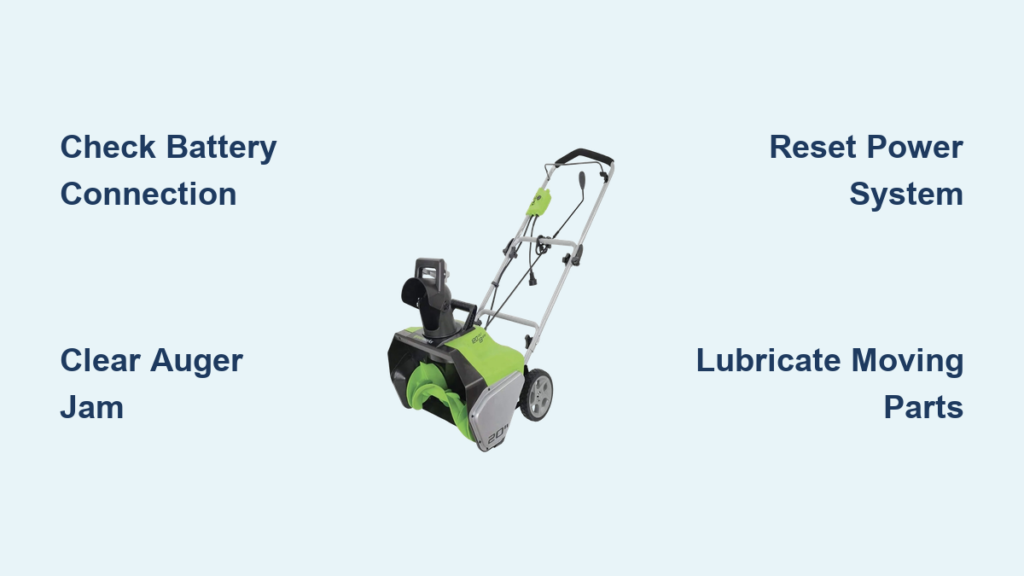
When your Greenworks snow blower refuses to start or loses power mid-storm, frustration sets in fast. Heavy winter weather demands reliable equipment, and even well-built electric models occasionally need maintenance. The good news, you can handle most Greenworks snow blower repair tasks yourself without paying service fees. This guide walks you through the most frequent failures, provides clear step-by-step fixes, and explains when professional help makes more sense. Whether you use a 40V, 60V, or 80V model, you’ll gain the confidence to troubleshoot and restore full performance.
Diagnose Common Performance Problems
Greenworks electric snow blowers offer convenient cordless operation, yet real winter conditions can expose weaknesses in motors, augers, and battery systems. The most reported complaints include sudden shutdowns, reduced throwing distance, and frequent auger jams. These symptoms often have simple causes like debris buildup or worn components, not permanent damage. Identifying issues early prevents additional wear and saves you from unnecessary repair costs.
Snow Blower Won’t Start
When pressing the trigger produces no response, focus on three areas first:
- Battery Connection – Confirm the battery is fully seated and adequately charged. A loose or depleted battery causes the majority of startup failures.
- Safety Switch – Most models require both the safety lock and trigger to engage simultaneously. Test whether the safety lever clicks properly.
- Power Reset – Disconnect the battery for 60 seconds, then reconnect. This resets internal circuitry that may have tripped due to overload.
Pro Tip: If the unit clicks but doesn’t start, the motor brushes may be worn. These replaceable wear parts fit many 40V and 60V models.
Loss of Power During Operation
If your snow blower starts but slows down or stops after a few minutes, consider these causes:
- Battery Voltage Drop: Dense snow drains batteries quickly. Use only matched Greenworks batteries, such as two 40V packs for dual-volt models.
- Overheating Protection: Motors shut off automatically when overheated. Let the unit rest for 15 to 20 minutes before resuming.
- Auger Resistance: Packed snow or ice in the chute increases load. Clear the discharge chute before each use.
Perform Essential Cleaning and Maintenance
Regular cleaning prevents most mechanical failures. Built-up ice and slush corrode metal parts and strain motors. Complete this routine after every 3 to 5 uses.
Clear Ice from Auger Housing
Frozen debris jams the auger and stresses the drive system. Follow these steps to remove ice safely:
- Turn off the unit and remove the battery.
- Tilt the snow blower forward to access the auger.
- Use a plastic scraper or wooden stick to break up ice. Never use metal tools that can damage blades.
- Rotate the auger by hand to verify smooth movement.
Visual Cue: Look for white frost or ice rings around the auger shaft, which indicate moisture ingress.
Lubricate Moving Parts
Dry gears and bearings increase friction and wear. Apply silicone-based lubricant to these components:
- Auger gearbox (external fittings)
- Drive wheels on self-propelled models
- Chute rotation mechanism
Avoid oil-based lubricants since they attract dirt and degrade plastic components.
Replace Worn Auger Skins

The auger skin (front scraper bar) wears down over time, reducing ground clearance and throwing efficiency. If snow piles under the unit or the auger scrapes pavement, replacement is needed.
How to Install New Auger Skins
- Lay the snow blower on its side.
- Remove four bolts securing the auger housing cover.
- Slide out the old skin and insert the new one (part # GWX-AS-01 for most 60V models).
- Reattach the cover and test clearance, which should sit 1/8″ to 1/4″ above flat ground.
Difficulty: Easy (10 minutes with a basic wrench)
Clear Jammed Auger or Impeller
A sudden stop during operation usually signals a jam. Never attempt to clear the jam while the unit is powered.
Safe Jam Clearance Steps
- Remove the battery immediately.
- Wait 30 seconds for the motor brake to engage.
- Use the included clearing tool or a broom handle to push debris backward from the discharge chute.
- Rotate the auger manually to confirm freedom of movement.
- Reconnect the battery and restart.
Common Mistake: Forcing the auger to turn by hand before clearing all ice can strip gears.
Prevent Future Jams
Follow these practices to reduce jam frequency:
- Clear deep snow in layers, no more than 6 to 8 inches per pass.
- Avoid rocks, gravel, or hidden obstacles.
- Apply anti-icing spray to chute surfaces before each storm.
Troubleshoot Motor and Electrical Faults
Electrical issues often mimic mechanical failure. Use this decision tree to isolate the cause.
No Power, LED Lights Off
- Test Battery: Insert the battery into another Greenworks tool. If it doesn’t power on, the battery is faulty.
- Check Charger: Greenworks chargers flash red when charging and show solid green when full. No light means a dead charger.
- Inspect Battery Contacts: Clean corrosion with a dry cloth and isopropyl alcohol.
Intermittent Power Cuts
This pattern suggests a loose connection or failing component.
- Examine the wiring harness near the motor housing for fraying.
- Confirm the battery latch clicks securely.
- Listen for arcing sounds, which indicate internal switch failure.
Expert Note: On older models, the trigger switch wears out. Replacement part # GWS-SW-02 is user-installable and requires Phillips #2 and Torx T20 tools.
Solve Battery and Charging Issues

Battery health directly impacts snow blower performance. Unlike gas models, electric blowers depend entirely on consistent voltage delivery.
Revive Weak Battery Performance
- Store Properly: Keep batteries at 30–80% charge in temperatures above 32°F (0°C).
- Cycle Monthly: Run down and recharge every 30 days during the off-season.
- Use Correct Charger: 40V tools require 40V chargers. Never interchange with 80V models.
When to Replace the Battery
Replace your battery if you notice any of these signs:
- Runtime drops below 50% of original capacity
- Charger shows full but the tool shuts off instantly
- Battery swells or gets excessively hot
OEM vs. Aftermarket: Greenworks OEM batteries include thermal protection and voltage regulation. Aftermarket packs may lack critical safety circuits.
Fix Drive System Components

Self-propelled models rely on a drive belt and gear assembly. Loss of traction or slipping wheels signals wear.
Check Drive Belt Tension
- Remove the drive cover (typically 6 screws).
- Inspect the belt for cracks or glazing.
- Press the center of the belt. It should deflect 1/2″ to 3/4″.
- Adjust the tensioner or replace the belt if loose.
Time Estimate: 20 minutes
Upgrade to All-Terrain Tires
Stock tires perform adequately on packed snow but struggle on ice. Aftermarket studded tires improve grip and reduce motor strain.
When to Contact Authorized Service
Some repairs require factory tools or calibration. Seek professional help in these situations:
- Motor housing is cracked
- Internal gears are stripped
- Circuit board shows burn marks
- Warranty is still active
Locate a Repair Center
Visit the Greenworks Service Center Locator and enter your zip code. Filter by 25, 50, or 100-mile radius to find the nearest authorized technician.
Customer Support: 1-888-909-6757
Available Monday through Friday, 8 AM to 5 PM CST
Bring your proof of purchase and battery for warranty evaluation.
Follow a Preventive Maintenance Schedule
Avoid breakdowns with this seasonal checklist.
Before Winter
- Charge and test all batteries
- Inspect auger blades and replace if chipped
- Lubricate drive and chute mechanisms
- Tighten all bolts and fasteners
After Each Use
- Clear snow and ice from housing
- Wipe down exterior with a dry cloth
- Store in a dry, frost-free area
Off-Season Storage
- Remove the battery and store separately
- Clean auger housing thoroughly
- Cover the unit to prevent dust buildup
Pro Tip: Register your product online to receive maintenance reminders and recall alerts.
Frequently Asked Questions About Greenworks Snow Blower Repair
Why won’t my Greenworks snow blower start even with a fully charged battery?
A fully charged battery does not guarantee startup if the safety switch fails or internal circuitry needs a reset. Try disconnecting the battery for 60 seconds to reset the system. Also verify the safety lock and trigger engage simultaneously. Worn motor brushes can also prevent startup on older units.
How do I know if my Greenworks snow blower battery needs replacement?
Replace your battery when runtime drops below 50% of original capacity, when the charger indicates full but the tool shuts off immediately, or when the battery physically swells or overheats. These signs indicate the cells can no longer hold adequate charge for reliable operation.
What should I do if my snow blower auger keeps jamming?
Jams usually result from packed snow exceeding the auger’s capacity or from ice buildup inside the housing. Clear deep snow in layers of 6 to 8 inches maximum. Remove all ice from the auger housing before each use and avoid hidden obstacles like rocks or gravel.
Can I use aftermarket batteries with my Greenworks snow blower?
Aftermarket batteries may work but often lack thermal protection and voltage regulation found in OEM packs. Using non-OEM batteries can void your warranty and poses safety risks including overheating or sudden power loss during operation.
How often should I perform maintenance on my Greenworks snow blower?
Perform light cleaning after every 3 to 5 uses during the season. Complete a full inspection and lubrication routine before winter storage and again at the start of each season. Monthly battery cycling during the off-season preserves battery health.
Where can I find an authorized Greenworks repair center near me?
Use the Service Center Locator on the Greenworks website and enter your zip code. You can filter results by 25, 50, or 100-mile radius. For additional help, contact customer support at 1-888-909-6757, available Monday through Friday from 8 AM to 5 PM CST.
Key Takeaways for Successful Greenworks Snow Blower Repair
Most Greenworks snow blower repair needs come down to preventable wear or simple electrical faults you can address at home. Start by checking the battery connection and performing a power reset before assuming major component failure. Keep the auger housing clear of ice and lubricate moving parts regularly to prevent the jams and power loss that plague electric models. When problems exceed basic troubleshooting, or when your unit remains under warranty, contact an authorized service center through the Greenworks website locator for professional diagnosis and repair.