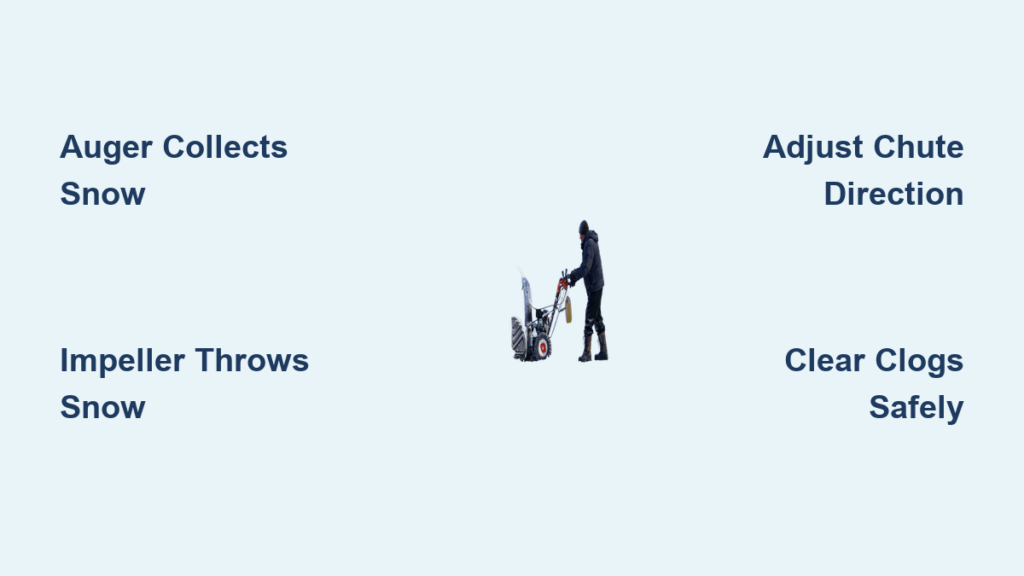
Waking up to a snow-covered driveway is a familiar winter struggle for many homeowners. Shoveling is exhausting, time-consuming, and hard on your back. A snow blower transforms this chore into a quick, efficient task, but how does a snow blower work behind the scenes? The answer involves rotating augers, high-velocity impellers, and a smart discharge system working together to collect, process, and eject snow in a single smooth pass.
In this guide, you will learn the function of every major snow blower component, the differences between single-, two-, and three-stage models, and how to match the right machine to your climate. Whether you live in a light-snow region or face heavy lake-effect storms, understanding these mechanics helps you operate your equipment with confidence.
Single-Stage Snow Blower Mechanics
Single-stage snow blowers are the simplest design, built for light snowfall on paved surfaces like short driveways, sidewalks, and patios. They rely on a single rotating part to do all the work.
The Auger Handles Both Intake and Discharge
In a single-stage model, the auger touches the ground and performs both snow collection and ejection. As it spins, it scoops up snow and flings it directly into the discharge chute. There is no separate impeller, which keeps the design lightweight and easy to maneuver.
The auger is typically made of rubber or plastic to avoid damaging concrete or asphalt.
It works best on snow up to 8 inches deep.
It performs well on flat, paved surfaces where scraping the ground is safe.
Self-Propelled or Push Models
Many single-stage units are self-propelled, meaning the auger powers both snow removal and forward motion. Others require you to push manually. Manual models are more affordable and lighter, though they demand more physical effort on your part.
Pro Tip: Avoid using single-stage blowers on gravel driveways. The auger can pick up rocks, causing wear or throwing dangerous debris.
Two-Stage Snow Blower Operation

When snow piles up deeper than 8 inches or becomes wet and heavy, a two-stage snow blower offers more power and efficiency. These models split the workload between two components.
Auger Collects, Impeller Throws
The two-stage design uses two distinct parts to process snow:
- Auger – Rotates to gather snow and break it up before sending it to the center of the housing.
- Impeller – A high-speed fan located behind the auger that uses centrifugal force to launch snow out the chute.
This division of labor allows the machine to clear wider paths, typically 24 to 30 inches per pass, and handle heavier, wetter snow.
Independent Drive System
Unlike simpler models, two-stage snow blowers include a separate drive system powered by the engine. The wheels move the machine forward independently of the auger, which reduces operator fatigue.
Drive wheels are often adjustable for traction on slippery surfaces.
Ideal for deep snow, sloped driveways, and large areas.
Some units include electric start for easier cold-weather ignition.
Fine-Tuning for Snow Conditions
You can adjust performance based on snow type:
Wet snow requires a lower ground speed and a wider chute opening.
Powder performs best at higher speed with a narrow chute for longer throw distance.
Packed snow benefits from a lower scraper bar to lift compacted material before the auger engages.
Three-Stage Snow Blower Power
For extreme winter conditions, three-stage snow blowers deliver the highest performance. They add a third processing component that dramatically increases speed and capability.
Accelerator Breaks Up Snow Before the Auger
The key innovation is the accelerator, a serrated, high-speed rotor positioned between the auger and the impeller. It chops up ice and compacted snow before sending the material to the impeller, which then ejects it with greater force.
Clears snow up to 50 percent faster than two-stage models.
Handles deep drifts and heavy, icy buildup with ease.
Best suited for rural properties or areas with frequent blizzard conditions.
Enhanced Traction and Control Features
Three-stage models often include premium features for easier handling:
All-wheel drive for superior grip on icy surfaces.
Power steering for tight turns around obstacles.
Electric chute control for adjusting discharge direction from the handlebar.
Expert Note: While three-stage blowers cost more upfront, they significantly reduce clearing time on long driveways, making them worthwhile for serious winter zones.
Key Components of Every Snow Blower
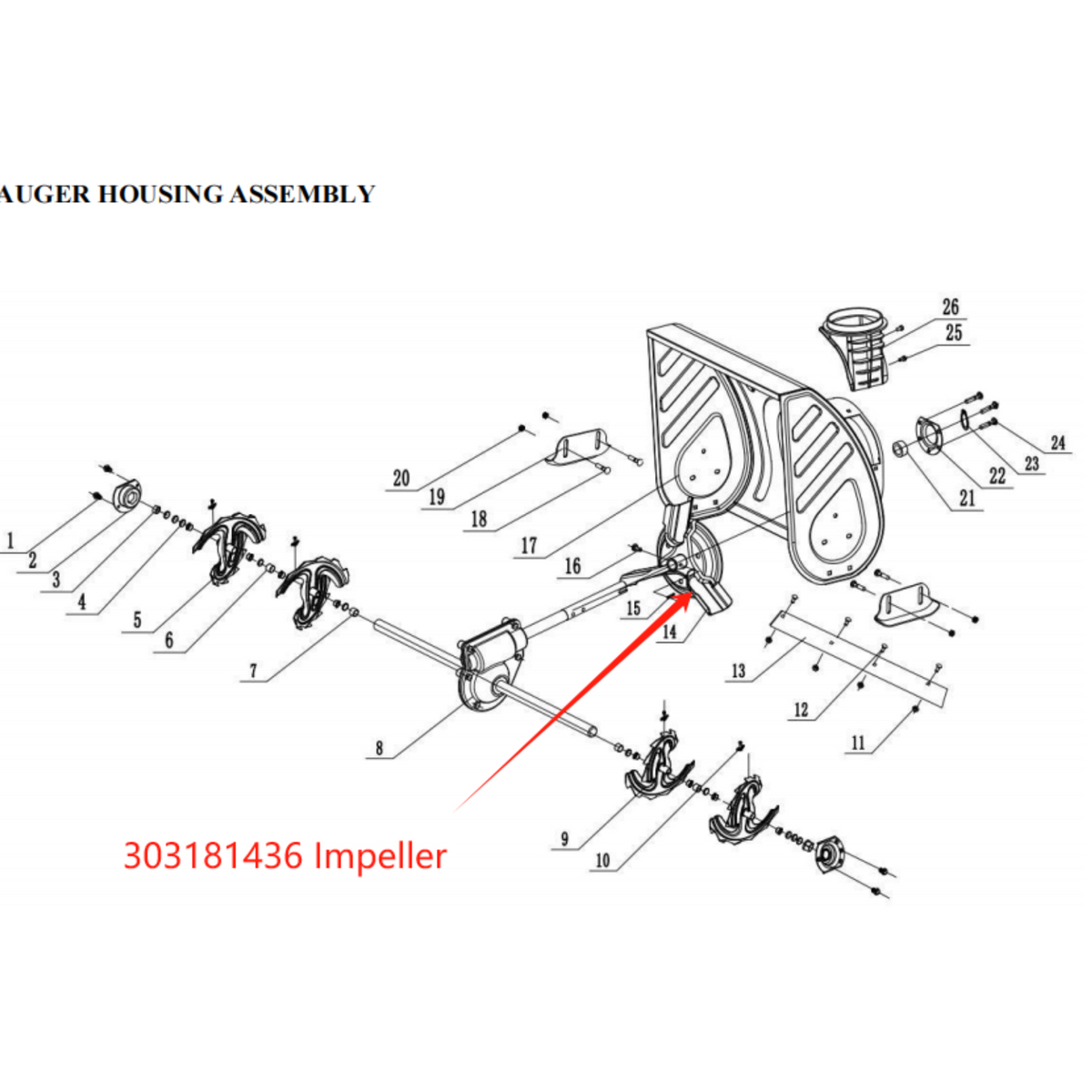
Every snow blower, regardless of stage, relies on core parts working together. Understanding each component helps with operation, troubleshooting, and routine maintenance.
The Auger: Snow Intake Center
The auger is the first point of contact with the snow. It rotates inward, pulling snow into the center of the machine.
Material: Rubber paddles on a metal core for single-stage; all-metal for two- and three-stage models.
Rotation Direction: Always turns toward the center to feed the impeller.
Tip: Check for ice buildup or damaged paddles before each use to maintain performance.
The Impeller: High-Speed Discharge
Located inside the housing behind the auger, the impeller spins rapidly to throw snow out the chute.
Found only in two- and three-stage models.
Never touches the ground because it is protected inside the housing.
Warning: Never insert hands or tools into the housing while the engine is running. Always shut off the engine and wait for all parts to stop completely.
The Discharge Chute: Directing the Snow
The chute controls where snow lands after leaving the impeller. Most models allow adjustment from the operator’s position.
Manual adjustment: Uses a lever or crank to change direction.
Electric adjustment: Uses handlebar buttons for remote control.
Deflector: Adjusts the angle to control throw distance and height.
Safety Note: Always clear a clogged chute from the side using a clean-out tool, never from the front with your hands.
Engine Types and Power Sources

The power source affects runtime, torque, and maintenance requirements.
Gas-Powered Snow Blowers
Gas engines dominate the market for heavy-duty models.
Pros: High torque, long runtime, and ideal for deep or wet snow.
Cons: Heavier, noisier, and requires fuel and oil maintenance.
Best for: Two- and three-stage models on large properties.
Maintenance Must: Add fuel stabilizer before long-term storage to prevent carburetor issues.
Electric Snow Blowers
Available in corded and battery-powered versions.
Corded: Unlimited runtime, though limited by cord length (typically up to 100 feet).
Battery: Portable and quiet, but runtime varies between 30 and 60 minutes per charge.
Best for: Small driveways, light snow, and eco-conscious users.
Pro Tip: Keep spare batteries fully charged for extended clearing sessions.
How Snow Blower Stages Compare

Choosing the right snow blower depends on snow depth, area size, and how often you clear snow.
| Feature | Single-Stage | Two-Stage | Three-Stage |
|---|---|---|---|
| Snow Depth | Up to 8 inches | 8 to 16 inches | 16 inches or more |
| Clearing Width | 18 to 22 inches | 24 to 30 inches | 28 to 30 inches |
| Best For | Light snow, small areas | Moderate to heavy snow | Heavy drifts, long driveways |
| Drive System | Auger-driven or manual | Self-propelled | All-wheel drive |
| Price Range | $200 to $500 | $500 to $1,200 | $1,200 to $2,000+ |
Tips for Clearing Snow Efficiently
Even the best snow blower performs poorly without proper technique. These tips help you clear snow faster and avoid unnecessary strain on the machine.
Start with the Right Settings
Chute direction: Always throw snow to the side, away from people, vehicles, and windows.
Speed control: Slow down in deep or wet snow and speed up in light powder.
Auger height: Adjust the scraper bar to avoid scraping pavement unnecessarily while still collecting all snow.
Prevent Clogs and Jams
Clogs happen when wet snow compacts inside the chute or housing.
Prevention: Run the engine at full throttle before engaging the auger.
Clearing a clog: Shut off the engine, wait for all moving parts to stop, then use a clean-out tool.
Never use your hands to clear a clog. Serious injury can result.
Quick Fix: Spray the chute with non-stick silicone spray before use to reduce sticking.
Snow Blower Maintenance for Long Life
A well-maintained snow blower lasts for many winters. Perform these checks regularly to keep your machine running smoothly.
End-of-Season Care
Drain the fuel tank or add stabilizer.
Remove and inspect the spark plug, replacing it if worn.
Store the machine in a dry, covered area.
Lubricate auger bearings, cables, and drive components.
Pre-Use Inspection
Check oil levels on gas models before each storm.
Inspect the auger and impeller for cracks or missing parts.
Test belts for wear, fraying, or looseness.
Confirm the chute moves freely in all directions.
Choosing the Right Snow Blower for Your Needs
Not every snow blower fits every situation. Match your choice to your climate, property size, and physical preferences.
Single-Stage: Best for Light Snow
You get less than 8 inches of snow at a time.
Your driveway is short, flat, and paved.
You prefer a lightweight machine that is easy to store.
Two-Stage: The All-Around Performer
Snow regularly exceeds 8 inches.
Your driveway is long, sloped, or has uneven surfaces.
You want self-propelled power without top-tier pricing.
Three-Stage: Built for Serious Winter Zones
Frequent blizzards or lake-effect snowstorms are common.
Your driveway is long and winding.
You value speed, power, and reduced physical effort.
Frequently Asked Questions About Snow Blowers
What is the difference between a snow blower and a snow thrower?
These terms are often used interchangeably, but technically a single-stage machine is a snow thrower, while two- and three-stage machines are snow blowers. The distinction comes from the internal components and processing power.
How does a snow blower not damage pavement?
Single-stage blowers feature rubber or plastic auger paddles that scrape along the ground without harming concrete or asphalt. Two- and three-stage models use a metal auger with adjustable skid shoes that prevent the blades from touching the surface directly.
Can a snow blower handle wet, heavy snow?
Two-stage and three-stage models handle wet, heavy snow best because the impeller provides the extra force needed to throw dense material. Single-stage models often clog in wet conditions.
How long do snow blowers typically last?
With proper maintenance, a quality snow blower lasts 10 to 20 years. End-of-season care, regular oil changes, and timely part replacement all extend machine life.
Is it safe to leave a snow blower outside?
No. Always store your snow blower in a dry, covered area like a garage or shed. Exposure to moisture causes rust on metal components and damage to electrical parts.
What should I do if my snow blower keeps stalling?
Common causes include stale fuel, a clogged carburetor, a damaged spark plug, or a clogged chute. Check these components in order, and always shut off the engine before inspecting any moving parts.
Final Thoughts on Understanding Snow Blower Operation
Learning how a snow blower works gives you a major advantage as a homeowner. The auger gathers snow, the impeller accelerates it, and the discharge chute directs it away. Single-stage models offer simplicity for light snow, while two- and three-stage blowers deliver the power needed for deeper accumulations and tougher winter conditions.
Match your machine to your climate, follow a consistent maintenance schedule, and use proper clearing techniques. Your next step is to evaluate your typical snowfall depth, driveway size, and budget, then choose a snow blower that fits your specific winter conditions.