Is your lawn looking thin, patchy, or worn out from summer stress? You do not need to rip out your entire yard to restore its lush green beauty. Overseeding a lawn is the most budget-friendly way to fill bare spots, thicken existing turf, and build a denser yard that naturally resists weeds, drought, and heavy foot traffic.
This guide covers everything you need to know about how to overseed a lawn successfully. You will learn the ideal timing for your grass type, essential preparation steps like aeration and dethatching, how to choose the right seed, and exactly how to water and care for new seedlings. Whether you manage cool-season grass in the North or warm-season turf in the South, these steps will help you achieve a thicker, healthier lawn.
When to Overseed Your Lawn Based on Grass Type
Timing determines whether your new grass thrives or fails. The best window depends entirely on whether you have cool-season or warm-season turf.
Best Timing for Cool-Season Grasses
If you live in the North, Midwest, or Northeast and your lawn features Kentucky bluegrass, tall fescue, or perennial ryegrass, the ideal overseeding window is late August through mid-September.
- Soil temperature ranges from 50 to 65°F at a 4-inch depth, perfect for germination
- Cool air temperatures reduce stress on young seedlings
- Weed competition drops significantly compared to spring
- Natural rainfall and dew help keep soil moist
- Trees lose their leaves, allowing more sunlight to reach the grass
A secondary window exists in early spring after the last frost, but spring-seeded lawns often struggle through summer heat and face heavy weed pressure, lowering success rates.
Best Timing for Warm-Season Grasses
If your lawn turns brown in winter and greens up in summer, you likely have Bermudagrass, Zoysiagrass, or St. Augustine. Overseed these lawns in late spring through early summer when soil temperatures exceed 65 to 70°F.
Most warm-season lawns do not respond well to traditional overseeding. However, some specialty products allow overseeding in southern regions during peak growing season. Avoid fall overseeding since new seedlings will not survive winter dormancy.
Assessing Whether Your Lawn Needs Overseeding
Before buying seed, determine if your lawn is a good candidate for overseeding.
Signs Your Lawn Is Ready for Overseeding
The ideal lawn for overseeding has at least 50% healthy grass with scattered thin spots or minor bare patches. Lawns dominated by weeds, severely compacted soil, or large bare areas may need additional work like herbicide treatment, topdressing, or slit seeding instead.
Check your grass type to confirm compatibility. Cool-season grasses stay green through winter while warm-season grasses turn brown and go dormant in cold months.
Testing Your Soil First
A soil test helps you address pH and nutrient issues before seeding. The ideal pH range for most lawns is 6.0 to 7.0. Adjust acidic soil with lime or alkaline soil with sulfur. Address any nitrogen, phosphorus, or potassium deficiencies before overseeding to give new seedlings the best start.
Preparing Your Lawn Before Seeding
Proper preparation dramatically improves overseeding success. Skip these steps and your seeds will struggle to germinate.
Mow Low for Better Seed Contact
Cut your existing lawn shorter than normal to reduce shading and competition. Set your mower to 1.5 to 2 inches, which is 1 to 2 notches below your normal height. Bag the clippings to remove thatch and debris. Avoid scalping, which exposes soil and damages existing grass crowns.
Remove Thatch and Debris
Thatch is the spongy layer of dead grass and organic matter between live turf and soil. A thatch layer thicker than half an inch prevents water, air, and seeds from reaching the soil. Test by digging a small plug and measuring the brown fibrous layer.
For small lawns, use a heavy-duty metal rake. For larger yards, rent a power dethatcher or verticutter. Even light raking helps loosen surface debris and improve seed-to-soil contact.
Aerate for Maximum Seed Contact
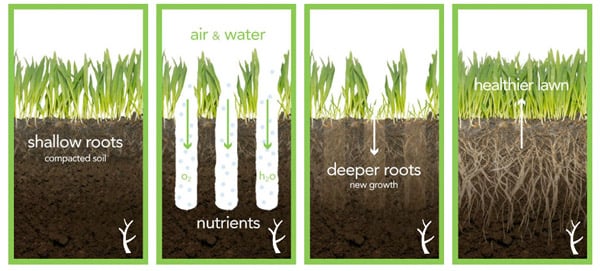
Core aeration ranks as the single most effective preparation step for overseeding success. Aeration relieves soil compaction, improves water and air flow, and creates perfect seed pockets in the holes left behind.
Aerate right before overseeding when soil is slightly moist but not soggy. Test compaction by pushing a screwdriver into the ground. If it goes in easily, you can skip aeration. If it takes effort, aerate.
Rent a core aerator from a home improvement store and make two passes at right angles for full coverage. Leave the soil plugs on the lawn—they break down naturally and add beneficial organic matter.
Choosing the Right Grass Seed for Your Region

Your seed choice must match your existing lawn, climate, and growing conditions.
Grass Types and Their Ideal Conditions
Perennial ryegrass works best in northern regions with high traffic. It germinates quickly in 7 to 10 days but struggles in hot summer climates. Tall fescue suits the South, shade areas, and drought-prone regions. It germinates in 10 to 14 days and develops deep roots for heat tolerance.
Kentucky bluegrass thrives in northern zones with full sun. It takes 21 to 30 days to germinate but spreads horizontally to fill gaps. Fine fescues excel in shaded areas and germinate in 14 to 21 days. Bermudagrass suits the South and requires late spring or summer overseeding.
Selecting Quality Seed Blends
Use high-quality seed blends designed for your specific conditions. Sun and shade mixes combine fescues and bluegrass for versatility. Shade mixes contain fine fescues for low-light areas. High-traffic mixes include ryegrass or wear-tolerant fescue for yards with heavy foot traffic.
All-in-one products like Scotts Turf Builder Thick’R Lawn combine seed, fertilizer, and soil improver—ideal for thin lawns.
Always read the label before buying. Look for low weed seed percentage below 0.5%, low inert matter, and high germination rates.
Spreading Seed Evenly for Uniform Growth
Even distribution prevents patchy growth and ensures every area fills in properly.
Use the Right Spreader
Broadcast or rotary spreaders work best for large lawns because they throw seed in wide arcs. Drop spreaders offer more precision, making them ideal for small or bordered yards. Hand spreaders work for tiny areas.
Apply Seed in Two Directions
Divide your seed in half. Apply the first half walking in one direction across your lawn. Apply the second half walking perpendicular to your first pass. This crosshatch pattern ensures even coverage.
Adjust your spreader setting according to seed bag instructions. For bare spots, apply extra seed by hand to ensure complete coverage.
Rake Seed Into the Soil
Do not leave seed sitting on the surface where birds can eat it or rain can wash it away. Use a metal rake, Garden Weasel, or harrow to gently scratch the top quarter-inch of soil. Lightly cover the seeds without burying them deep.
If you aerated before seeding, most seeds will already fall into the aeration holes. Raking adds extra security and improves contact.
Watering Techniques for Successful Germination
Watering is the most critical step after overseeding. Dry seeds will not germinate no matter how perfect your preparation.
Keep Soil Moist for the First Two Weeks
Water 2 to 3 times daily, ideally in the morning and mid-afternoon. Each session should last 5 to 10 minutes depending on sun and wind conditions. The goal is keeping the top inch of soil damp but never soggy.
Germination times vary by grass type. Ryegrass sprouts in 7 to 10 days. Fine fescue takes 14 to 21 days. Bluegrass needs 21 to 30 days. If you do not see germination within these windows, increase your watering frequency.
Transition to Deep Watering After Germination
Once seeds sprout, reduce watering frequency but increase the amount applied per session. Switch to applying a quarter to half inch of water per session to encourage deep root growth rather than shallow surface roots.
Continue frequent watering for 15 to 20 days for ryegrass, 30 to 40 days for fine fescue, and 40 to 45 days for bluegrass.
Caring for New Grass After Seeding
New seedlings need proper care to establish strong roots and survive winter.
When to Mow New Grass
Wait until new grass reaches 2 to 4 inches tall before mowing. This typically occurs 10 to 14 days after germination. Use a sharp blade and mow when grass is dry. Never cut more than one-third of the blade height at once. Maintain your lawn at 3 inches unless your grass type specifies otherwise.
Limit foot traffic and avoid sharp mower turns during the establishment phase to protect tender roots.
Fertilize Again at Four Weeks
Apply a second round of starter fertilizer four weeks after seeding to support continued root development. Use the same rate as your initial application. This booster feeding improves cold tolerance, disease resistance, and wear tolerance heading into winter.
Apply Late-Fall Winter Root Builder
For an extra edge, apply a winter root builder product in late October through December before the ground freezes. These fertilizers contain elevated phosphorus and potassium to stimulate root growth during dormancy, improve winter color, and speed spring green-up.
Common Overseeding Mistakes to Avoid
Even small errors can ruin your overseeding results. Watch for these pitfalls.
- Overseeding at the wrong time leads to poor germination
- Skipping aeration or dethatching reduces seed-to-soil contact
- Using pre-emergent herbicides kills new grass along with weeds
- Underwatering causes seeds to dry out and fail
- Overwatering leads to rot and disease
- Mowing too soon damages young seedlings
- Using low-quality seed results in poor growth and weed contamination
- Not adjusting spreader settings causes uneven coverage
Frequently Asked Questions About Overseeding
What is the best month to overseed a lawn in the North?
For cool-season grasses in northern regions, late August through mid-September offers the best conditions. Soil remains warm enough for germination while air temperatures cool, reducing stress on new seedlings.
Can I overseed my lawn in the spring?
Yes, but spring overseeding faces challenges. Summer heat arrives quickly, stressing young seedlings. Weed competition is also higher in spring. Fall remains the optimal window for cool-season grasses.
How long does it take for overseeded grass to grow?
Most grass types germinate within 7 to 30 days depending on species. Ryegrass sprouts fastest at 7 to 10 days. Fine fescue takes 14 to 21 days. Kentucky bluegrass is slowest at 21 to 30 days.
Do I need to aerate before overseeding?
Aeration is highly recommended. Core aeration creates holes where seeds fall and are protected from birds, wind, and runoff. It also relieves compaction and improves water and nutrient penetration. While you can overseed without aeration, results will be less dramatic.
Can I walk on my lawn after overseeding?
Limit foot traffic for the first 2 to 3 weeks while seedlings establish. Avoid heavy traffic and sharp mower turns until grass reaches 2 to 4 inches tall and you have mowed at least once.
Should I use starter fertilizer when overseeding?
Yes, starter fertilizer with high phosphorus supports strong root development. Apply 3 to 5 days after seeding or immediately before or after seeding. Avoid high-nitrogen fertilizers that promote top growth before roots establish.
Key Takeaways for Successfully Overseeding Your Lawn

Overseeding works when you focus on timing, preparation, and consistent care. The ideal window for cool-season grasses is early fall while warm-season lawns need late spring through summer. Mow low, remove thatch, and core aerate before spreading seed to maximize seed-to-soil contact.
Choose high-quality seed matching your grass type and climate. Apply in two perpendicular passes for even coverage, then rake seeds gently into the soil. Water 2 to 3 times daily to keep the top inch moist until germination, then transition to deeper, less frequent watering.
Wait to mow until grass reaches 2 to 4 inches tall. Apply a second fertilizer feeding at four weeks and consider a late-fall root builder for better winter survival. Skip pre-emergent herbicides until new grass is established.
With attention to these details, your lawn will transform from thin and patchy to thick, lush, and weed-resistant without the cost or effort of starting over. Overseed this season and enjoy a healthier yard next year.