Your lawn does not need a complete renovation to look lush and healthy. If your grass has thinned out, developed bare patches, or lost its vibrant color, planting grass seed directly on your existing lawn—called overseeding—can restore your turf without the expense and effort of starting over. This method thickens your lawn, fills gaps, and creates a denser carpet that naturally resists weeds, drought, and heavy foot traffic. This guide walks you through every step so you can achieve a greener, healthier lawn without guesswork.
Best Time to Overseed Your Lawn
Timing determines whether your new grass thrives or fails. Planting too early or too late exposes seedlings to harsh conditions that can wipe out your investment before it even begins.
Fall Overseeding for Cool-Season Grasses
Cool-season grasses like tall fescue, Kentucky bluegrass, and perennial ryegrass thrive when overseeded in early fall, typically between September and early October. Warm soil temperatures from summer accelerate root development while cooler air reduces heat stress on emerging seedlings. Weeds are less active during this period, giving your new grass a competitive advantage. Trees begin dropping their leaves, allowing more sunlight to reach the soil.
Spring alternative: Early spring works as a second choice once soil temperatures reach 50°F (10°C), though crabgrass and other weeds emerge quickly and compete with new seedlings.
Summer Overseeding for Warm-Season Grasses
Warm-season grasses including Bermuda, Zoysia, and St. Augustine should be overseeded in late spring through midsummer when soil temperatures reach 65–75°F (18–24°C). Warm soil speeds germination, and new grass has ample time to establish strong roots before winter dormancy arrives.
Avoid fall overseeding for warm-season lawns. Seedlings will not survive cold temperatures and will die when frost hits.
Dormant Seeding for Cold Climates
In northern regions, you can scatter grass seed in late fall after the lawn goes dormant but before the ground freezes. Seeds remain inactive until spring warmth triggers germination. This method requires no daily watering since snowmelt and rain provide moisture. The risks include birds eating exposed seed and heavy rain washing seeds away.
Choosing the Right Grass Seed
Using the wrong seed leads to mismatched texture, color, and poor growth. Your seed choice must match your existing lawn and yard conditions.
Match Seed to Your Existing Grass
Select a grass type that complements what you already have. Tall fescue lawns should receive tall fescue seed, while Kentucky bluegrass benefits from a bluegrass blend. Mixing incompatible types creates a patchy, uneven appearance unless intentionally blended for variety.
Select Grass Based on Growing Conditions
Consider your specific yard conditions when selecting seed.
• Perennial Ryegrass works best for fast cover in full sun to part shade, germinating in 5–7 days
• Tall Fescue handles heat, drought, and high traffic with germination in 7–14 days
• Fine Fescue thrives in shady, dry areas under trees, germinating in 7–14 days
• Kentucky Bluegrass offers self-repairing capability for northern lawns, taking 14–21 days to germinate
• Bermudagrass suits hot climates with full sun, germinating in 10–21 days
• Zoysia handles drought-prone southern lawns but starts slowly over 14–21 days
Specialty blends like Scotts Turf Builder Thick’R Lawn or Jonathan Green Dense Shade combine seed, fertilizer, and soil enhancers in one product, simplifying the overseeding process for beginners.
Preparing Your Lawn for Success

Skipping preparation is the number one reason overseeding fails. Grass seed needs direct contact with soil to sprout, and thick thatch, tall grass, and compacted soil block that critical connection.
Mow Low and Bag Clippings
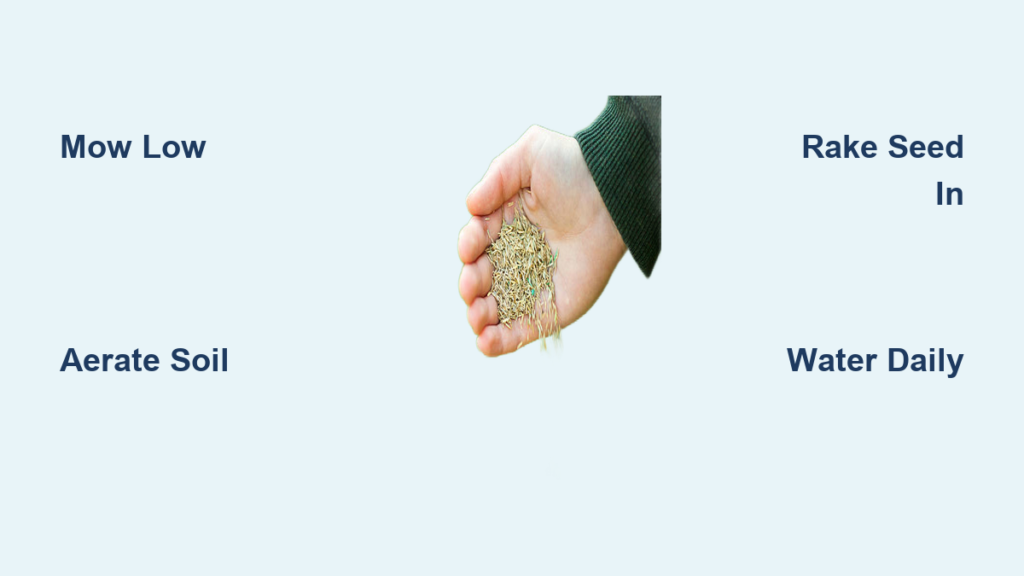
Cut your lawn shorter than normal, aiming for 1–1.5 inches tall. This exposes soil so seeds can settle between the blades and reduces competition from mature grass. Bag all clippings to prevent them from smothering new seed.
Important: Never remove more than one-third of the blade in a single cut to avoid stressing the existing lawn.
Dethatch if Necessary
Thatch is a spongy layer of dead grass and roots that accumulates over time. If thatch exceeds one-half inch thick, it blocks water, air, and seed from reaching the soil. Use a dethatching rake for small areas or rent a power dethatcher for large lawns. Rake up all debris after dethatching to open the soil surface.
Aerate Compacted Soil
Compacted soil prevents roots from growing deep and blocks seed from contacting soil. Core aeration pulls small plugs, creating channels for air, water, and seeds. Rent a core aerator from a home improvement store and run it over the lawn two to three times in different directions. Leave soil plugs to break down naturally.
For small spots, simply poke holes with a garden fork or wear aerating sandals.
Loosen the Soil Surface
Use a metal rake or garden weasel to lightly scratch bare or compacted areas. This creates tiny grooves where seeds can nestle, improving seed-to-soil contact without deep tilling.
Spreading Seed Evenly and Accurately
Uneven seeding leads to patchy results. Using the right tool and technique ensures full coverage and consistent growth.
Calculate the Correct Seeding Rate
Apply 2-5 pounds of seed per 1,000 square feet, depending on the seed type and product instructions. This is less than the 4-8 pounds needed for starting a new lawn. Always follow the seed bag recommendations.
Pro tip: Split the application by spreading half the seed walking north-south and the other half east-west. This prevents gaps and ensures even distribution.
Choose the Right Spreader
Select a spreading method based on your lawn size.
• Handheld spreaders work well for small to medium lawns, offering good control
• Drop or broadcast spreaders are most efficient for large lawns but require calibration
• Hydroseeding suits slopes and erosion-prone areas, using a professional slurry of seed, mulch, and fertilizer
• Hand spreading works only for tiny patches and produces inaccurate results
Ensuring Proper Seed-to-Soil Contact
This step is the most critical factor in overseeding success. Grass seed will not grow without touching soil. Simply tossing seed on top yields less than 1% germination.
Rake and Press Seed Into Soil
After spreading seed, lightly rake with a metal rake to bury seeds one-fourth inch deep. Walk over the area or use a lawn roller to press seeds down. Avoid deep burial since grass seed needs light to germinate.
Apply a Thin Topdressing (Optional)
A light layer helps retain moisture and protect seedlings. Spread peat moss or compost no thicker than one-fourth inch. This holds water, prevents soil crusting, and adds nutrients. Never cover seed with thick soil, which blocks light and suffocates seeds.
Fertilizing Without Killing New Grass
Fertilizer fuels root growth, but timing and product choice matter. Apply the wrong type too soon, and you will harm delicate seedlings.
Apply Starter Fertilizer After Seeding
Use a phosphorus-rich starter fertilizer like 10-20-10 or 16-4-8 and apply it 3-5 days after seeding, not before. Phosphorus builds strong roots while nitrogen supports top growth.
Critical warning: Never apply pre-emergent herbicides immediately after seeding. These products prevent all seeds from sprouting, including your new grass. Wait until new grass has been mowed 3-4 times before using any weed killers.
Use Combined Products for Simplicity
Products like Scotts Turf Builder Thick’R Lawn include grass seed, fertilizer, and soil improver in one application. This simplifies the process for beginners and ensures proper nutrient balance.
Apply a Second Feeding at Four Weeks
Apply another round of starter or balanced fertilizer four weeks after seeding. This supports continued root development and helps young grass survive winter dormancy if you overseeded in fall.
Watering Daily for Germination

New grass seedlings dry out within hours. Consistent moisture is absolutely essential for germination and early growth.
Water Multiple Times Per Day
Water 2-3 times daily, focusing on morning and mid-afternoon sessions. Keep the top 1-2 inches of soil damp but not soggy. Each session should last 5-10 minutes, enough to moisten the soil without causing runoff.
Continue this schedule for 10-14 days or until seedlings are visible and established.
Adjust Watering as Grass Grows
Once seedlings emerge, keep watering daily. After 2-3 weeks, reduce frequency but water longer and deeper to encourage root growth. After the first mow, water 2-3 times per week, applying one-half inch per session.
Use oscillating sprinklers or soaker hoses for even coverage across the lawn.
Understanding Germination Timelines
Patience is essential. Different grass types sprout at different rates, and expecting immediate results leads to disappointment.
• Perennial Ryegrass germinates in 5-7 days with first visible growth at about 1 week
• Tall Fescue and Fine Fescue take 7-14 days, showing growth in 10-14 days
• Kentucky Bluegrass requires 14-21 days, with visible growth in 2-3 weeks
• Bermudagrass germinates in 10-21 days with visible growth around 2 weeks
• Zoysia is the slowest, taking 14-21 days with first growth appearing at 3 weeks
Full coverage typically takes 4-8 weeks depending on care and weather conditions.
Caring for New Grass Properly
Protect your investment until new grass is strong enough to handle regular use and traffic.
Keep Foot Traffic Off the Lawn
Avoid all foot traffic and pet activity on the lawn until grass reaches 2-3 inches tall. Trampling can uproot fragile seedlings and damage developing roots.
Mow at the Right Time and Height
Wait until grass is 2-3 inches tall or 10-14 days after germination before mowing for the first time. Set your mower to its highest setting with sharp blades. Never cut more than one-third of the blade length at once.
Mow every 3-4 days during fall to encourage lateral growth and increase lawn density.
Handle Weeds Strategically
Do not treat weeds early in the establishment process. Focus on grass growth first. Wait until you have mowed 3-4 times before applying any weed control. Use spot treatments with selective herbicides for broadleaf weeds like dandelions. Avoid pre-emergent herbicides until new grass is fully rooted.
Avoiding Common Overseeding Mistakes
Small errors can ruin your overseeding effort. Learn from these common pitfalls.
• Skipping aeration leads to poor seed contact and low growth rates
• Mowing too high before seeding shades the seed and prevents sprouting
• Underwatering causes seed to dry out and die
• Overwatering washes away seed and causes rot
• Burying seed too deep blocks light and prevents germination
• Using pre-emergent too soon kills new grass
• Choosing the wrong grass type results in poor growth and patchiness
Adapting Your Approach for Specific Conditions
Your lawn’s environment affects how you should overseed.
Shade vs. Sun Areas
Shady areas benefit from fine fescue blends or specialty shade mixtures like Jonathan Green Dense Shade. Full sun areas perform better with tall fescue, Kentucky bluegrass, or Bermuda grass. Spring offers an advantage for shade areas since leafless trees allow more light to reach the soil.
Sloped or Erosion-Prone Areas
Steep slopes and areas prone to erosion require extra protection. Hydroseeding applies a slurry that sticks to slopes, or use seed starter mats that hold moisture and prevent washout.
Regional Considerations
Northern U.S. lawns should focus on cool-season grasses overseeded in fall. Southern U.S. lawns need warm-season grasses overseeded in late spring. Transition zones can support both types—choose based on your specific sun exposure and maintenance preferences.
Can You Just Throw Seed on the Lawn?
Yes, some grass may grow if you simply toss seed on an existing lawn, especially during fall with regular rainfall. However, results are spotty and unreliable.
Without proper preparation, seed-to-soil contact is poor, leading to very low germination rates. With minimal effort like raking and watering, results improve significantly. With full preparation including mowing, dethatching, aerating, proper seeding, and consistent watering, success is highly reliable and your lawn becomes dense and weed-resistant.
If you want a thick, healthy lawn that lasts, invest the time in proper preparation. The extra effort pays off in weeks with visible results.
Step-by-Step Overseeding Checklist
Use this checklist to ensure you complete every step for overseeding success.
• Mow lawn to 1-1.5 inches and bag clippings before seeding
• Dethatch if the layer exceeds one-half inch before seeding
• Core aerate the entire lawn before seeding
• Rake to loosen soil and remove debris before seeding
• Spread seed evenly using a split application method after prep
• Lightly rake or press seed into soil after seeding
• Apply starter fertilizer 3-5 days after seeding
• Water 2-3 times daily for 10-14 days
• Keep people and pets off the lawn for the first 2-3 weeks
• Mow when grass reaches 2-3 inches tall for the first mow
• Apply second fertilizer 4 weeks after seeding
• Spot-treat weeds after 3-4 mowings, waiting at least 6 weeks
Frequently Asked Questions About Planting Grass Seed on Existing Lawn
When is the best time to overseed my lawn?
The best time depends on your grass type. Cool-season grasses should be overseeded in early fall (September to early October) for optimal results. Warm-season grasses perform best when overseeded in late spring through midsummer. Fall provides warm soil and cool air, while spring offers a secondary window once soil reaches 50°F.
Can I plant grass seed directly on my existing lawn without preparation?
You can scatter seed directly on your lawn, but results will be poor. Without proper preparation including mowing short, aerating, and ensuring seed-to-soil contact, germination rates stay below 1%. Minimal preparation like raking and watering improves results significantly. Full preparation delivers the best outcomes.
How often should I water new grass seed?
Water new grass seed 2-3 times daily, keeping the top 1-2 inches of soil consistently damp. Continue this schedule for 10-14 days until seedlings are established. After that, reduce frequency but water deeper to encourage root growth.
What happens if I use the wrong type of grass seed?
Using the wrong grass type leads to poor growth, mismatched color and texture, and an uneven lawn appearance. The new grass may also fail to thrive because it is unsuited to your climate, sun exposure, or soil conditions. Always match seed to your existing grass type and growing conditions.
How long does it take for grass seed to germinate?
Germination time varies by grass type. Perennial ryegrass germinates in 5-7 days. Tall fescue and fine fescue take 7-14 days. Kentucky bluegrass requires 14-21 days. Bermudagrass germinates in 10-21 days. Zoysia is the slowest at 14-21 days. Full coverage typically develops within 4-8 weeks with proper care.
Should I apply fertilizer when overseeding?
Yes, apply starter fertilizer 3-5 days after seeding. Use a phosphorus-rich formula like 10-20-10 to promote strong root development. Avoid applying fertilizer before seeding, and never use pre-emergent herbicides immediately after overseeding as they will kill the new grass.
Key Takeaways for Planting Grass Seed on Existing Lawn
Successful overseeding requires proper timing matched to your grass type, thorough lawn preparation including mowing, dethatching, and aeration, and careful attention to seed-to-soil contact through raking and pressing. Water consistently 2-3 times daily until seedlings establish, and avoid foot traffic until grass reaches 2-3 inches tall. Using the right grass seed for your conditions and applying starter fertilizer at the correct time fuels strong root development. With these steps completed, your thin, patchy lawn can transform into a thick, lush, and resilient turf without the cost of full renovation. Start this fall, and next spring you will enjoy the results of your efforts.