Standing water in your lawn after every rain isn’t just unsightly. It’s a serious threat to grass health, soil structure, and even your home’s foundation. Poor drainage leads to root rot, moss overgrowth, compacted soil, and increased mosquito activity. The good news is you can fix it. Whether you’re dealing with a small soggy patch or a yard that turns into a swamp, there are proven ways to increase drainage in lawn areas, many of which you can do yourself. This guide walks you through every effective method, from simple aeration to engineered solutions like French drains.
You’ll learn how to diagnose your soil, choose the right materials, and implement long-term fixes that work. Each section provides actionable steps so you can start improving your lawn today.
Identify Drainage Problem Areas
Before fixing your lawn, you need to know what you’re working with. Spotting trouble early prevents bigger issues down the road.
Look for These Warning Signs
Walk your lawn after a heavy rain and check for these common indicators of drainage problems:
Puddles that last more than 48 hours after rain
Mushy, squelchy ground underfoot
Moss, algae, or rushes thriving where grass should grow
Bare patches or thinning turf
Water flowing toward your house foundation
Erosion trails forming during storms
Pro Tip: Mark pooling zones with flags or stakes after a rainstorm. These are your priority zones for treatment.
Test Soil Drainage at Home
You can perform a simple percolation test to measure how fast water soaks into your soil. Dig a hole 12 inches deep and 6 to 8 inches wide. Fill it with water and let it drain completely. Refill and time how long it takes to drain.
Less than 1 hour means excellent drainage. One to 4 hours indicates good drainage. Four to 8 hours is fair. More than 8 hours signals poor drainage that needs intervention. If water sits for hours, your soil likely has compaction or clay content blocking flow.
Aerate Compacted Soil
Soil compaction is the number one cause of poor lawn drainage. Aeration opens pathways for water and air to reach grass roots.
Choose the Right Aeration Method
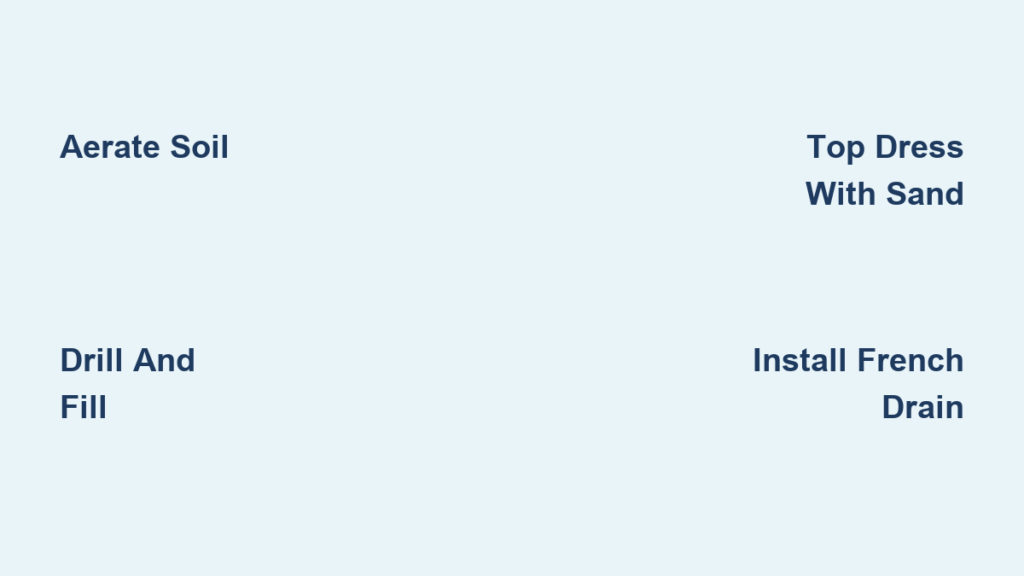
Select the tool that matches your lawn size and condition. A garden fork works for manual spiking on small areas, reaching 4 to 6 inches deep. A core or plug aerator removes soil plugs and works best for larger lawns. A powered aerator is ideal for large or severely compacted areas, and you can rent one from a hardware store.
Avoid spike aerators because they push soil downward, which can worsen compaction.
Best Time to Aerate
Timing matters for effective aeration. Cool-season grasses like fescue and bluegrass benefit from aeration in early fall or spring. Warm-season grasses like zoysia and Bermuda respond best in late spring to early summer. Water your lawn 1 to 2 days prior to aeration to soften soil for deeper tine penetration.
How to Aerate Properly
Follow these steps for maximum benefit. First, mow the lawn short and bag the clippings. Second, make two passes in perpendicular directions for full coverage. Third, leave soil plugs on the surface because they break down within 2 to 3 weeks. Fourth, immediately top dress with sand or compost after aerating.
Aerate clay soils once every year. Aerate healthy lawns every 1 to 2 years.
Drill and Fill for Deep Drainage
When standard aeration doesn’t reach deep compaction or hardpan layers, drill and fill creates permanent channels for water to escape.
Why It Works
This method reaches 12 inches or more deep, far beyond core aeration. It breaks through impermeable clay or hardpan layers and creates instant drainage pathways. Golf courses and athletic fields use this technique, also known as vertical mulching.
What You Need
Gather these materials before starting. You’ll need a hammer drill, preferably corded. A 3/4-inch by 3-foot SDS plus masonry bit costs about $29. You’ll also need USGA-spec sand, mason sand, or coarse sand. Optional additions include compost for added organic matter.
Step-by-Step Process
Mark your problem areas where chronic puddles form. Drill holes 12 to 18 inches apart. Fill each hole with sand using a funnel or tube. Tamp lightly to settle the material.
User Result: One homeowner drilled into a foot-deep puddle and reported it drained like a toilet within seconds.
Note: Some areas may drain too quickly after treatment. Monitor and adjust as needed.
Top Dress with Sand and Compost
Top dressing improves soil structure, fills micro-depressions, and boosts water infiltration.
Best Mix by Soil Type
Match your top dressing to your soil type for best results.
For clay soil, use a 70/30 mix of coarse sand and compost. For sandy soil, use compost only to retain moisture. For loam, apply a light compost layer for maintenance.
Never use play sand because it compacts and worsens drainage.
Apply Correctly
Mow low and remove clippings. Spread 1/4 to 1/2 inch of mix evenly with a drop spreader or rake. Work it into the canopy using a leveling rake. Water lightly to settle the material. Wait 1 to 2 weeks before mowing again.
Apply top dressing 1 to 2 times per year for problem soils. Apply once annually for maintenance.
Fix Low Spots and Re-grade
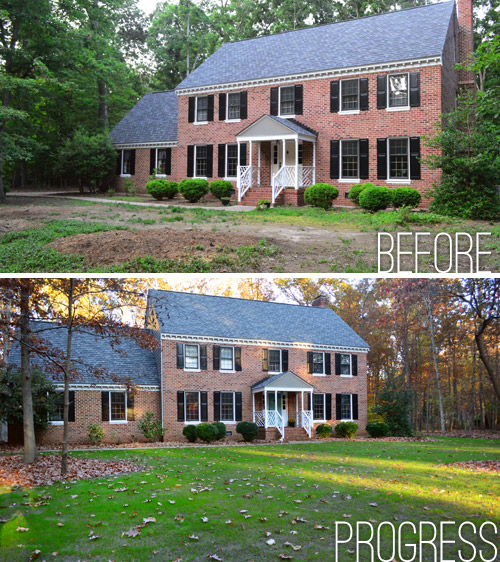
Depressions trap water. Raising them slightly redirects flow and stops pooling.
How to Fill Low Spots
Identify dips using a string line or water test. Add a topsoil-compost blend to create a slight rise. Avoid using pure clay or heavy fill. Compact lightly and allow settling, repeating if needed. Overseed and cover with straw.
Key Rule: Ensure grade slopes 6 inches down over 10 feet away from foundation.
Re-grade Larger Areas
For major regrading, use a laser level or string line for accuracy. Do not raise soil near the foundation because this risks water intrusion. Use excess soil from trenches or French drain dig-outs to fill low spots cost-effectively.
Install a French Drain
For chronic wet zones, a French drain is the most reliable long-term solution.
How It Works
A French drain captures subsurface and surface water. It channels water away via a perforated pipe in a gravel trench. The water discharges to a dry well, rain garden, or storm drain.
Expert Verdict: Professionals call this a magic bullet for guaranteed results.
Design Requirements
The trench should be 12 to 24 inches deep and 6 to 12 inches wide. Maintain a minimum slope of 1%, which is 1 inch drop per 10 feet of run. The outlet must flow to a permeable area, not your neighbor’s yard.
Installation Steps
Excavate the trench along the water path. Line it with landscape fabric. Add 2 to 4 inches of 3/4-inch angular gravel. Lay a 4-inch perforated pipe with holes facing down. Cover the pipe with more gravel. Wrap fabric over the top. Backfill with soil and reseed.
Budget Hack: Use rigid PVC or recycled materials to cut costs.
Build a Rain Garden
Turn a problem zone into a functional, beautiful feature that handles excess water.
How It Helps Drainage
A rain garden catches runoff from roofs, driveways, or lawns. It holds water temporarily, allowing infiltration within 48 hours. It filters pollutants naturally before water reaches groundwater.
Myth Busting: A rain garden isn’t just planting in a wet spot. It’s engineered to drain properly.
Plant Smart
Use native, water-tolerant species for best results. Good perennial choices include cardinal flower, swamp milkweed, and bee balm. Suitable shrubs include buttonbush and summersweet. Good tree options include river birch and red maple.
Create a Dry Creek Bed
A dry creek bed is an aesthetic and functional solution for stormwater runoff.
Why It Works
This feature mimics a natural stream. It slows water flow and prevents erosion while adding landscape character.
Build It Right
Trace the natural water path through your yard. Dig a trench 6 to 12 inches deep and 18 to 36 inches wide with 1 inch of slope per 10 feet. Line it with landscape fabric. Add a 2 to 3-inch base of river rock, then top with decorative stones. Edge with boulders and plant moisture-tolerant species on the sides.
Improve Soil with Organic Matter
Healthy soil drains better. Organic matter is the key ingredient for improving soil structure.
How Organic Matter Fixes Drainage
When you add organic matter, clay particles clump together through a process called flocculation. This creates macropores for water and air to move through. It also feeds beneficial microbes that further improve soil structure.
Add Compost the Right Way
Apply a 1/4-inch layer of compost. Aerate first to mix it into the soil profile. Repeat this annually for best results.
Warning: Don’t over-apply organic matter because too much can create a barrier layer that traps water.
Use Drainage Products for Clay Soil
Several commercial products help clay soils drain faster without chemicals.
How These Products Work
Many drainage products contain calcium, which carries a positive charge. This attracts negatively charged clay particles, causing them to clump and form drainage channels.
Application Steps
Mow the lawn short. Use a rotary mower to clear debris. Set your spreader to a slow release setting. Apply evenly, adding extra product to the wettest zones. Let rain activate the material.
Results: Puddles disappear faster, moss reduces, and roots grow deeper.
Limitation: These products won’t work over concrete or rubble.
Manage Gutters and Downspouts
Roof runoff can dump hundreds of gallons onto your lawn, contributing to saturation and drainage problems.
Effective Solutions
Clean gutters twice yearly in spring and fall. Extend downspouts 6 to 10 feet from the house. Bury extensions to route water underground. Install rain barrels to capture and reuse water. Connect downspouts to French drains for overflow control.
Budget Fix: Vinyl extenders cost under $20 and install in minutes.
Choose Wet-Tolerant Grass and Plants
Not all grasses survive in soggy soil. Picking the right variety makes a major difference.
Best Grasses for Wet Lawns
Tall fescue works well in cool-season climates with clay soil and shade. It has deep roots and handles both drought and flooding. Zoysia is ideal for warm-season areas with heavy traffic. It creates dense growth and handles short-term flooding. Centipedegrass thrives in humid, acidic soils with low maintenance. Perennial ryegrass provides fast germination for quick cover and erosion control.
Overseed for Better Drainage
Mow low and bag clippings. Aerate the area. Spread seed evenly. Top dress with a compost-sand mix. Water daily until established.
Try Budget-Friendly Alternatives
You don’t need major excavation to improve drainage. Several simple fixes work well.
Simple Fixes That Work
Build raised garden beds to elevate planting above soggy soil. Replace concrete with permeable pavers that let water through. Avoid overwatering by adjusting irrigation to actual soil needs. Combine methods like aeration plus top dressing plus French drain for lasting results.
Maintain Drainage Long-Term
Drainage isn’t a one-time fix. Keep it working with regular maintenance.
Annual Maintenance Checklist
In fall, aerate, overseed, top dress, and apply fall fertilizer. In spring, rake moss, feed the lawn, and inspect drains. In winter, avoid walking on saturated areas and apply protective treatments.
Monitor and Adjust
Recheck percolation every 2 to 3 years. Clean French drains and swales annually. Re-grade if new dips form.
When to Call a Pro
DIY works for most cases, but some issues need expert help.
Call a Landscape Pro If You Have
Chronic standing water despite trying multiple fixes. Need for subsurface drainage systems. Foundation or basement water concerns. Local regulations on water discharge. Large-scale regrading or excavation requirements.
Free Resource: Contact your local Soil and Water Conservation office for advice and assessments.
Frequently Asked Questions About Increasing Lawn Drainage
How long does it take to improve lawn drainage?
Most methods show results within weeks to months. Aeration and top dressing work within one growing season. French drains and subsurface systems provide immediate results once installed. Organic matter improvements build over 1 to 3 years.
Can I fix drainage problems myself or do I need a professional?
Most drainage problems can be addressed with DIY methods like aeration, top dressing, and French drain installation. Call a professional for foundation water issues, large-scale grading, or complex subsurface systems.
What is the cheapest way to improve lawn drainage?
Aeration combined with top dressing using compost costs the least. Using a garden fork for manual aeration is free if you already own one. Combining methods like aeration plus top dressing provides the best results for minimal investment.
Will adding sand alone fix drainage problems?
Adding sand alone often makes clay drainage worse. Clay and sand mix to form a concrete-like material. Always mix sand with compost or use coarse sand specifically formulated for drainage applications.
How often should I aerate my lawn for drainage?
Aerate clay soils once per year. Aerate sandy or loamy soils every 1 to 2 years. Increase frequency if you have heavy foot traffic or compaction from construction.
Key Takeaways for Improving Lawn Drainage
Improving lawn drainage takes planning and persistence, but the results are worth the effort. Start by identifying problem areas through a percolation test and by marking where water pools after rain. Combine multiple methods for best results. Aeration paired with top dressing addresses surface compaction. French drains handle chronic wet zones. Organic matter builds long-term soil health.
Choose the right approach for your specific situation. Clay soil benefits from drill and fill plus calcium-based drainage products. Low spots need filling and re-grading. Roof runoff requires gutter management. Pick grass varieties suited for wet conditions if drainage remains challenging.
Invest in soil health rather than just quick fixes. The long-term payoff is a lush, dry, functional lawn that stays healthy through heavy rains and dry spells alike.