You’ve torn out the old, patchy turf or moved into a new build with bare dirt. Now comes the satisfying part: growing a lush, green lawn from scratch. How to grow a new grass lawn successfully starts long before you spread the first seed. Most failures come not from bad seeds, but from poor preparation. Skipping soil tests, planting at the wrong time, or letting the soil dry out during germination can ruin your chances before roots ever form.
This guide walks you through every science-backed step professionals use. You’ll learn when to plant, how to choose the right grass type, and what most DIYers miss. By the end, you’ll have a clear, actionable plan to transform bare ground into a durable, weed-resistant lawn without wasting money on repeat fixes.
Plan Your Lawn’s Purpose and Choose Grass Type
Match Grass to Climate and Use
Choosing the right grass starts with knowing your region and how you’ll use the lawn. Cool-season grasses thrive in northern states and grow best in fall and spring. Warm-season types dominate the South, flourishing in summer heat.
Cool-season options for northern regions include Kentucky bluegrass, tall fescue, fine fescues, and perennial ryegrass. Warm-season options for southern regions include Bermudagrass, zoysia, and centipedegrass.
Pick based on sun exposure (full sun, partial shade, or deep shade), foot traffic (kids, pets, or mostly ornamental), and maintenance level (high-input lawns requiring frequent mowing and fertilizing versus low-care options).
In transition zones like Virginia or Missouri, consider turf-type tall fescue, which handles both heat and cold.
Seed vs. Sod: Choose Wisely
Decide between seed and sod based on speed, budget, and effort. Seed costs $0.10 to $0.20 per square foot and takes 6 to 12 weeks before your first mow. Sod costs $0.80 to $2.00 per square foot but lets you mow within 2 to 3 weeks. Seed provides poor erosion control without mulch, while sod offers excellent erosion control. Seed allows wide variety choices, while sod has limited blends.
Use seed for large, flat areas. Opt for sod on slopes, rental properties, or when you need quick cover.
Test and Adjust Your Soil pH
Perform a Lab Soil Test
A soil test is non-negotiable. Guessing pH or nutrients leads to weak growth and wasted money. Test in fall (ideal) or at least 4 to 6 weeks before seeding. Collect samples from 4 to 6 inches deep across the yard, mix them together, and send to a local extension lab.
The test reveals pH level (target 6.0 to 7.0), nutrient levels (N-P-K), organic matter content, and soil texture (clay, sand, or loam). Skip home test kits because they are less accurate than certified labs.
Apply Lime to Raise pH
If your soil is acidic (below 6.0), apply limestone to raise the pH. Ground dolomitic lime is long-lasting and contains calcium and magnesium. Pelleted lime is easier to spread and faster-acting but less durable.
Apply before tilling so it mixes into the root zone. Never apply lime and fertilizer at the same time unless the product label says it’s safe. Typical rates range from 20 to 50 pounds per 1,000 square feet depending on soil type and current pH.
Prepare the Soil for Seeding
Till the Ground Deeply
Tilling breaks up compacted soil and creates a soft seedbed. Till 4 to 6 inches deep using a roto-tiller (rentable) for medium yards or a Mantis Tiller for small areas. Avoid tilling wet soil because it destroys soil structure and causes compaction.
Work in sections, especially on large lawns. Let the soil settle for a few days after tilling. If the site was recently built, assume compaction exists. Core aeration before tilling helps in these situations.
Add Organic Matter for Better Soil

Amend with compost or peat moss to improve water retention and drainage. Use sphagnum peat moss at 4 bales (6 cubic feet each) per 1,000 square feet. Alternatively, use well-aged leaf compost at 2 to 3 cubic yards per 1,000 square feet.
Till the organic matter fully into the top 6 inches. This builds a resilient root zone that supports long-term health. Avoid unverified topsoil because it may contain weed seeds or have poor texture. Use Scotts Turf Builder Lawn Soil if bringing in new material, as it’s screened and weed-free.
Grade and Level the Surface
Smooth the Seedbed
Uneven ground leads to puddles, thin spots, and mowing issues. Use a bow rake to level high and low areas. Fill depressions with soil or sand and knock down ridges. Maintain a 1 to 2 percent slope away from foundations for drainage.
Work when soil is slightly moist, not wet or dusty dry. Fine soil settles over time, so level flush with sidewalks and driveways.
Avoid Soil Layering Issues
Never dump new topsoil directly over existing soil. This creates a barrier that blocks water movement, and roots struggle to penetrate the interface. Mix half the new soil with native soil, then add the rest and till again for the best results.
Choose the Right Grass Seed Mix
Select Grass Based on Sun and Shade
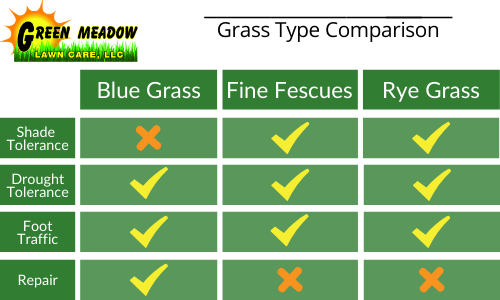
Use tailored blends for your conditions. For full sun, use 50 to 60 percent Kentucky bluegrass, 20 to 30 percent fine fescue, and 15 to 25 percent perennial ryegrass. For partial shade, use 60 percent fine fescue, 20 percent Kentucky bluegrass, and 20 percent perennial ryegrass. For heavy shade, use 80 to 100 percent fine fescue and avoid bluegrass. For high traffic areas, use 100 percent turf-type tall fescue or 40 percent ryegrass plus 60 percent bluegrass.
Improved perennial ryegrass germinates fastest (7 to 10 days) and stabilizes soil quickly.
Know the Seeding Rates
Over- or under-seeding causes problems. Apply Kentucky bluegrass at 2 to 3 pounds per 1,000 square feet. Apply perennial ryegrass at 6 to 8 pounds per 1,000 square feet. Apply tall fescue at 7 to 10 pounds per 1,000 square feet. Apply fine fescue at 4 to 5 pounds per 1,000 square feet.
Use 7 pounds of elite perennial ryegrass per 1,000 square feet for dense early coverage.
Spread Seed Evenly and Accurately
Pick the Best Planting Time
Timing affects survival more than any other factor. For cool-season grasses, the ideal window is August 15 to September 15 (fall) or early spring. For warm-season grasses, plant in early summer after the last frost when soil temperature exceeds 65°F.
Planting cool-season grass in summer often fails due to heat and drought stress. In Connecticut, August 15 to September 15 is the peak window. Adjust regionally.
Use the Right Spreader and Technique
A broadcast spreader works best for medium to large lawns. Calibrate it to the correct rate per the seed label. Apply half the seed walking north-south and the other half east-west for even coverage.
Use edging shields to keep seed off hardscapes. For slopes or erosion-prone areas, consider hydroseeding, which uses a slurry with seed, mulch, and fertilizer.
Fertilize at Seeding for Strong Roots
Apply Starter Fertilizer
Root development depends on phosphorus. Use an NPK ratio of 5-10-10, 5-10-15, or similar. Apply 20 pounds of 5-10-10 per 1,000 square feet. Apply after seeding or on the same day.
Never use high-nitrogen fertilizers at this stage because they burn seedlings. Apply seed first, then fertilizer. Recommended products include Scotts Turf Builder Starter Food for New Grass and Scott’s Triple Action (starter plus pre-emergent herbicide).
Cover and Mulch to Lock in Moisture
Rake Seed Into Soil Lightly
Ensure seed-to-soil contact, which is critical for germination. Use the back of a rake or push broom. Cover seeds with 1/8 to 1/4 inch of soil. Do not bury seeds deeply because light is needed for some grasses.
Too much soil cover reduces germination and slows emergence.
Apply Mulch to Protect Seed
Mulch prevents drying, erosion, and bird damage. The best option is clean, seed-free straw (not hay). Apply at 1 inch thickness, loosely shaken out. Benefits include shading seedlings, holding moisture, and decomposing naturally.
Alternative mulches include peat moss and compost mix at 1/4-inch layer, straw blankets (ideal for slopes), hydro mulch (part of hydroseeding), and Scotts Turf Builder Lawn Soil at less than 1/4 inch.
Straw suspended overhead provides shade, and this can mean the difference between life and death for new grass plants.
Water Daily Until Grass Establishes
Keep Soil Consistently Moist
This is the number one rule for success. Water 2 to 3 times daily (morning, evening, and midday if hot). Use mist setting and avoid strong jets that wash seeds away. Target the top 1 inch of soil and keep it damp, not soggy.
Continue until grass reaches 3 to 4 inches tall. Drying out just once can kill emerging seedlings.
Know Germination Timelines
Be patient because some grasses take weeks. Perennial ryegrass germinates in 5 to 10 days. Tall fescue takes 7 to 12 days. Fine fescue takes 7 to 14 days. Kentucky bluegrass takes 14 to 21 days (up to 30). Bermudagrass takes 10 to 30 days. Zoysia takes 14 to 21 days.
Most cool-season grasses emerge within 7 to 21 days.
Transition to Deep Watering
After first mowing, reduce frequency to 2 to 3 times per week. Water deeply (6 to 8 inches) to encourage root growth. Early morning is best because it reduces evaporation and disease risk.
Press Seed Into Soil for Contact
Lightly Roll or Walk Over Area
Improving moisture absorption and stability matters. Use a lawn roller filled halfway with water. Roll after seeding and mulching. Avoid heavy rolling because it compacts the soft seedbed.
For small areas, simply walk over the lawn or use a push broom. Pressing seed into soil helps it absorb moisture more efficiently.
Prevent Weeds From the Start
Use Pre-Emergent Herbicide Safely
Stop crabgrass and weeds before they sprout. Apply with starter fertilizer. Choose products safe for new grass when labeled for seeding. Examples include Scott’s Triple Action and Prodiamine-based products.
Do not use post-emergent herbicides until after 3 to 4 mowings.
Natural Weed Control Options
If avoiding chemicals, hand-pull weeds early. Overseed thin areas to crowd out invaders. Maintain proper mowing height (3 or more inches) to shade weeds.
Weeds were a major surprise for some DIYers, requiring manual management.
Mow Correctly for First-Time Grass
Wait Until 3-4 Inches Tall
Mowing too soon damages young plants. First mow at 3 to 4 inches tall. Cut no more than 1/3 of blade length. Use a sharp mower blade to avoid tearing.
Set mower to highest setting. Cutting too short weakens grass and opens space for weeds.
Mow Weekly in First Season
Fast-growing grass may need weekly cuts. Follow the one-third rule every time. Remove clippings if thick because it prevents smothering.
Limit Foot Traffic for 6-8 Weeks
Keep People and Pets Off
New roots are fragile. Avoid walking, playing, or allowing pets on the new lawn. Use temporary barriers or signs if needed.
Wait 6 to 8 weeks before light use. Early compaction creates weak spots and bare patches.
Fertilize After Establishment
Feed Again at 3-4 Weeks
Support continued growth by applying a second round of starter fertilizer. Alternatively, switch to balanced lawn food such as 10-10-10.
Prepare for Winter
In late fall, apply ammonium sulfate (21-0-0) to build root reserves. Avoid high-phosphorus fertilizers after establishment. After 6 to 8 weeks, begin regular seasonal fertilization (4 times per year).
Avoid Common Mistakes
Do Not Over-Seed
Too much seed causes overcrowding and disease. It leads to weak, spindly grass and increases competition for water and nutrients. Stick to labeled rates.
Do Not Plant at Wrong Time
Summer seeding of cool-season grass often fails. Heat stress kills seedlings, and frequent watering is hard to maintain. Wait for early fall or early spring.
Do Not Skip Soil Prep
Bare dirt is not a seedbed. Without testing, amending, and leveling, you are gambling. The foundation determines long-term success.
Troubleshoot Germination Problems
Patchy Growth
Poor seed-to-soil contact causes patchy growth. Fix by overseeding, raking lightly, mulching, and watering.
No Germination
Dry soil, planting too deep, or wrong season causes failed germination. Fix by reseeding in the proper season and maintaining moisture.
Birds Eating Seed
Use straw mulch, install bird netting temporarily, or choose coated seeds (which deter predators) to prevent birds from eating your seed.
Erosion on Slopes
Use straw blankets, hydroseeding, or erosion control mats on slopes. Avoid bare soil on inclines.
Frequently Asked Questions About Growing a New Grass Lawn
When is the best time to plant grass seed?
The best time depends on your grass type. For cool-season grasses, plant in early fall (August 15 to September 15) or early spring. For warm-season grasses, plant in early summer when soil temperature reaches 65°F or higher.
How often should I water new grass seed?
Water new grass seed 2 to 3 times daily to keep the top 1 inch of soil consistently moist. Use a gentle mist setting to avoid washing away seeds. Continue this schedule until grass reaches 3 to 4 inches tall.
Can I put grass seed on top of existing grass?
You can overseed existing grass, but results are better when you mow low, aerate, and rake to expose soil first. Simply scattering seed on thick existing grass often leads to poor germination because seeds cannot reach the soil.
How long does it take for grass to grow?
Germination time varies by grass type. Perennial ryegrass germinates in 5 to 10 days. Tall fescue and fine fescue take 7 to 14 days. Kentucky bluegrass takes 14 to 21 days, sometimes up to 30 days.
Should I use straw mulch on new grass seed?
Yes, straw mulch helps retain moisture, protects seeds from birds, and prevents erosion. Use clean, seed-free straw applied at about 1 inch thickness. The mulch decomposes naturally and adds organic matter to the soil.
When can I mow my new lawn for the first time?
Wait until grass reaches 3 to 4 inches tall before the first mow. Cut no more than 1/3 of the blade height and use a sharp blade. Set your mower to the highest setting to avoid stressing young plants.
Key Takeaways for Growing a New Grass Lawn
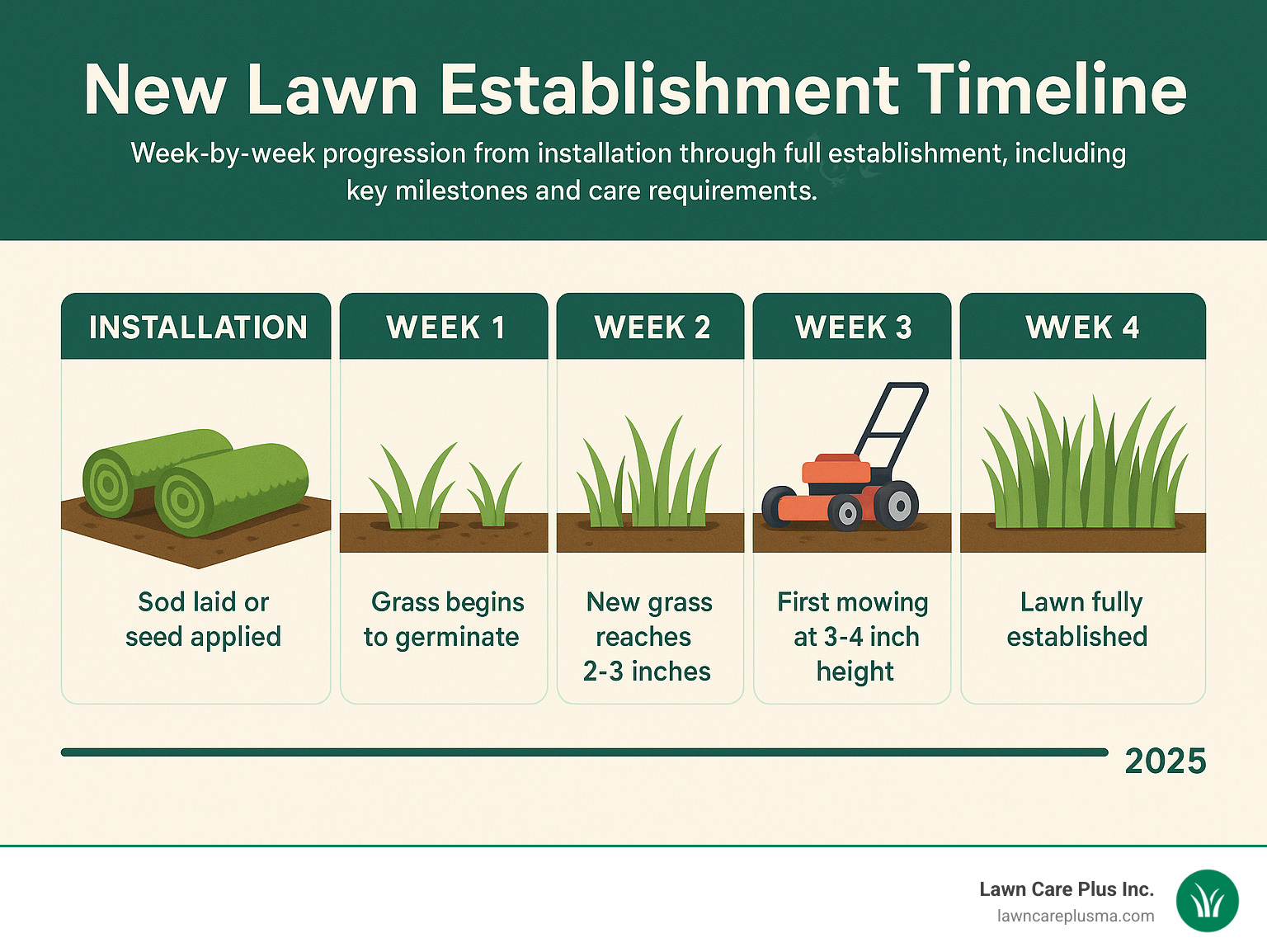
Growing a new grass lawn requires meticulous preparation, correct timing, and consistent maintenance. Success hinges on testing your soil and adjusting pH before planting, choosing the right grass type for your climate and sun exposure, and preparing a proper seedbed through tilling, amending, and leveling.
Apply starter fertilizer with phosphorus for strong root development. Cover seeds with straw mulch to retain moisture and prevent erosion. Water 2 to 3 times daily until germination, then transition to deep, less frequent watering.
Avoid common mistakes like planting at the wrong time, skipping soil preparation, or over-seeding. With patience and attention to these steps, your bare yard can become a lush, functional lawn that lasts for years.