Yellow patches appearing on your lawn after your dog pees is one of the most common frustrations for pet owners. Despite what many believe, the culprit isn’t acidic urine or your dog’s breed. The real cause is high nitrogen concentration in dog urine, primarily from urea, a natural by-product of protein digestion. When this nitrogen hits the grass in one spot, it acts like an overdose of fertilizer, burning the roots and killing the turf.
The good news: you don’t have to choose between a healthy dog and a lush lawn. With the right combination of immediate action, smart lawn care, behavioral training, and dietary tweaks, you can stop dog pee from killing your grass permanently.
Flush Urine Spots Immediately
The single most effective way to prevent lawn burn is dilution with water, right after your dog pees.
Water Down the Spot Right Away
As soon as your dog finishes urinating, pour ½ to 2 gallons of water over the area. This rapidly dilutes the nitrogen and salts before they can penetrate deeply into the soil and damage grass roots. Think of it like rinsing a chemical spill.
Use a watering can or hose kept near high-traffic potty zones. Spend 30 to 60 seconds gently soaking the spot. This method works best for small yards or supervised dogs who pee on command.
If you miss the moment, deep water the area later that day. While not as effective, it still helps reduce residual nitrogen buildup.
Train Your Dog to Use a Designated Potty Zone
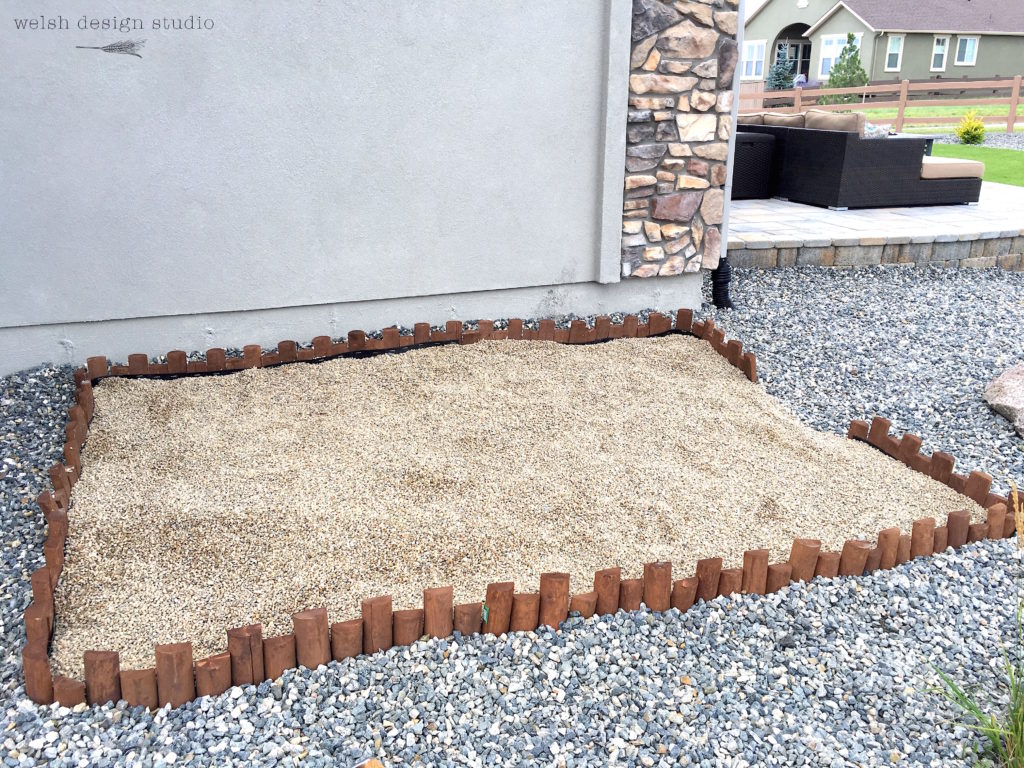
Confining all bathroom activity to a non-grass area protects the rest of your lawn completely.
Set Up a Dog Potty Area
Choose a part of your yard away from grass, like a side patch or near a fence. Turn it into a dedicated bathroom zone with one of these surfaces.
Gravel or stone is durable, drains well, and is easy to clean. Pine straw or mulch offers a natural look but breaks down over time. Artificial turf is low maintenance, though you should hose it down weekly. Astroturf mats (3×3 ft) are portable and ideal for small spaces.
Include a vertical post or small tree for male dogs to mark. Place a shovel nearby for poop cleanup and consider pee posts with pheromones or coyote urine to attract your dog.
Follow a Consistent Training Routine
Leash your dog every time they go outside. Walk them directly to the potty zone with no free roaming. Wait until they pee before letting them wander off. Praise and treat immediately after they go, using high-value rewards. Repeat this daily because consistency builds habit.
Even older dogs can learn this with patience. Once trained, your lawn stays green and your dog knows exactly where to go.
Boost Your Dog’s Water Intake
The more water your dog drinks, the more diluted their urine becomes, which means less nitrogen damage to your lawn.
Encourage Hydration Daily
Use a pet water fountain because many dogs prefer moving water. Place multiple bowls indoors and outdoors for constant access. Add water to meals by mixing dry food with warm water to make soup.
Offer safe flavor boosters in 50:50 diluted amounts. Chicken or beef broth (no onions), tuna water, lactose-free milk, Pedialyte or Gatorade for electrolytes, and apple juice in small amounts all work well.
Try Ice Cubes and Meat Broths
Some dogs love chewing ice cubes, especially in summer. You can freeze low-sodium broth into cubes for extra appeal. Homemade chicken broth (boil breast, strain, cool) is a healthy, tasty way to increase fluid intake.
Adjust Your Dog’s Diet Safely
What your dog eats directly affects urine concentration, but changes must be vet-approved.
Choose High-Quality, Low-Nitrogen Diets
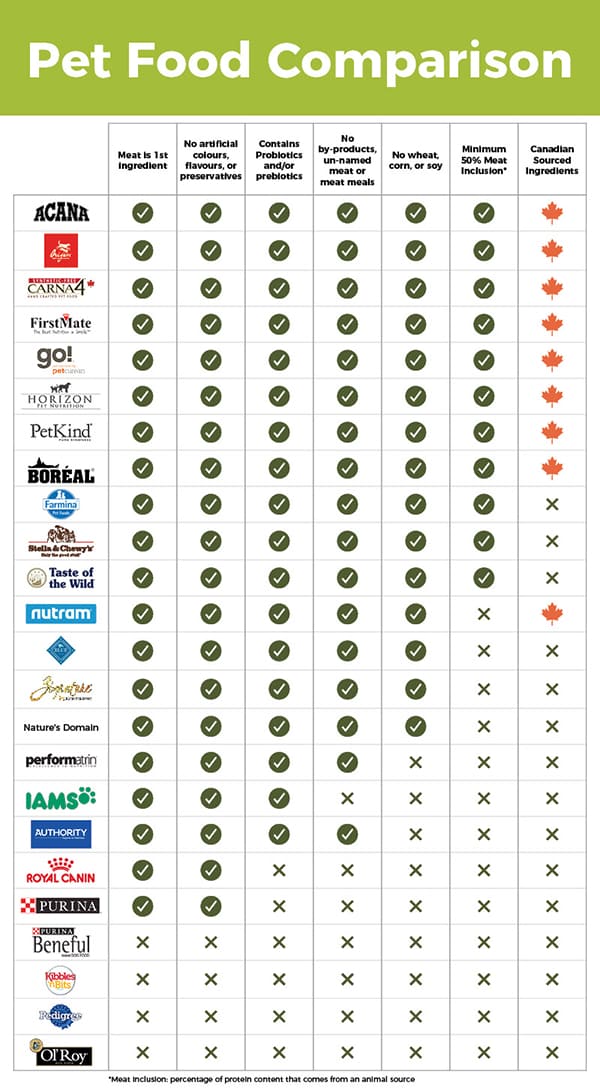
Cheap kibble with fillers and low-grade protein creates more urea waste. Better options include fresh or raw diets (under vet guidance), wet food or high-moisture meals, real meat-based formulas with moderate protein, and diets lower in protein only if your vet recommends them.
Avoid high-protein diets unless medically necessary. While protein is essential, excess leads to more nitrogen in urine.
Never switch diets suddenly. Work with your vet to ensure your dog gets balanced nutrition.
Plant Urine-Resistant Grass
Not all grass is equally vulnerable. Choose varieties that can withstand dog traffic and nitrogen spikes.
Best Grass Types for Dog Owners
Tall fescue offers the most resistance and stays green while tolerating drought. Perennial ryegrass is fast-establishing and hardy. Zoysia grass is a warm-season option with thick turf that recovers well. Bermuda grass is tough but less shade-tolerant. Kentucky bluegrass is sensitive and prone to burn.
Mix tall fescue with ryegrass for a resilient blend. Look for pet-friendly seed mixes from brands like Boston Seeds.
Optimize Your Lawn Care Routine
Your lawn’s health affects how well it survives dog pee. Strengthen it with smart maintenance.
Mow Higher for Stronger Grass
Keep your lawn 5 to 7 cm (2 to 3 inches) tall. Taller grass has deeper roots, holds moisture better, and recovers faster from stress. Never cut more than one-third of the blade at a time.
Fertilize Less, But More Often
Avoid heavy nitrogen fertilizers because they make urine damage worse. Instead, use slow-release or low-nitrogen formulas. Apply light doses frequently instead of large feeds. Skip fertilizing in high-traffic dog zones.
Aerate and Topdress Soil
Core aerate once or twice per year to reduce soil compaction, improve water flow, and help break down urea. Then topdress with ¼ inch compost to feed soil microbes, sand-compost mix to improve drainage, gypsum to leach salts and improve structure, or biochar to hold nitrogen and prevent spikes in chronic spots.
Repair Burned Lawn Patches
Already have dead spots? Fix them fast with this simple process.
Remove Dead Grass
Use a spring tine rake or your hands to pull out all brown, dead material. Expose the bare soil underneath so new seed can take root.
Aerate the Damaged Area
Poke holes 4 to 6 inches deep with a garden fork or aerator. This opens the soil, allowing air, water, and nutrients to reach the roots.
Apply Wetting Agent
Mix a few drops of dish soap (like Fairy Liquid) in a gallon of water. Spray it on the spot. The soap reduces surface tension, helping water penetrate and flush out leftover salts and nitrogen.
Reseed with Tough Grass
In a bucket, mix pet-safe grass seed (tall fescue or ryegrass) with peat-free compost. Sprinkle the blend over the area. Gently press it down with your foot or a lawn leveler to ensure contact with soil.
Water Daily Until Established
Keep the patch moist but not soggy. Water once or twice a day, especially in dry weather. Avoid walking on it until the grass is 2 to 3 inches tall.
Try Alternative Landscaping
If mowing and reseeding feel endless, consider dog-friendly alternatives to grass.
Plant Micro Clover
Micro clover is a game-changer. It tolerates dog urine, fixes nitrogen in soil (reducing the need for fertilizer), stays green in drought, attracts pollinators, and blends naturally with grass. Overseed your lawn with it to fill in thin spots and recover fast after pee exposure.
Build a No-Mow or Food Forest
Replace part of your lawn with wood chip mulch zones where urine doesn’t harm anything. You can also plant native plants or pollinator gardens, or add fruit trees or berry bushes.
Install Artificial Surfaces
Create dog runs or potty pads using artificial turf (hose down daily), gravel or pavers, or rubber mulch. These surfaces are durable, low maintenance, and urine-resistant.
Do Dog Rocks and Supplements Work?
Most products promise miracles, but few deliver. Here’s what the evidence says.
Dog Rocks: Mixed Results
These volcanic stones claim to filter nitrates from drinking water. But there’s no scientific proof they reduce urine nitrogen. Many users report no change. If water caused lawn burn, regular watering would too.
Enzyme Treatments: Limited Use
Products like Nature’s Miracle or See Spot Run break down urine chemicals after the fact. They’re better for cleanup than prevention. Use them after flushing with water for best results.
Avoid pH-Altering Supplements
Never give your dog tomato juice, ketchup, or apple cider vinegar to change urine pH. These can cause urinary tract infections, lead to bladder stones, and contain harmful salt and sugar.
Always consult your vet before trying supplements.
Rule Out Health Issues
Frequent, strong-smelling, or discolored urine could signal medical problems.
Watch for Warning Signs
Peeing more often than usual, straining or crying while urinating, blood in urine, and cloudy or foul-smelling pee could indicate UTIs, kidney disease, diabetes, or bladder stones.
Schedule Annual Vet Checkups
Even healthy dogs need yearly exams. A simple urinalysis can detect early issues and ensure your dog’s urine isn’t abnormally concentrated.
Key Takeaways for Protecting Lawn from Dog Pee
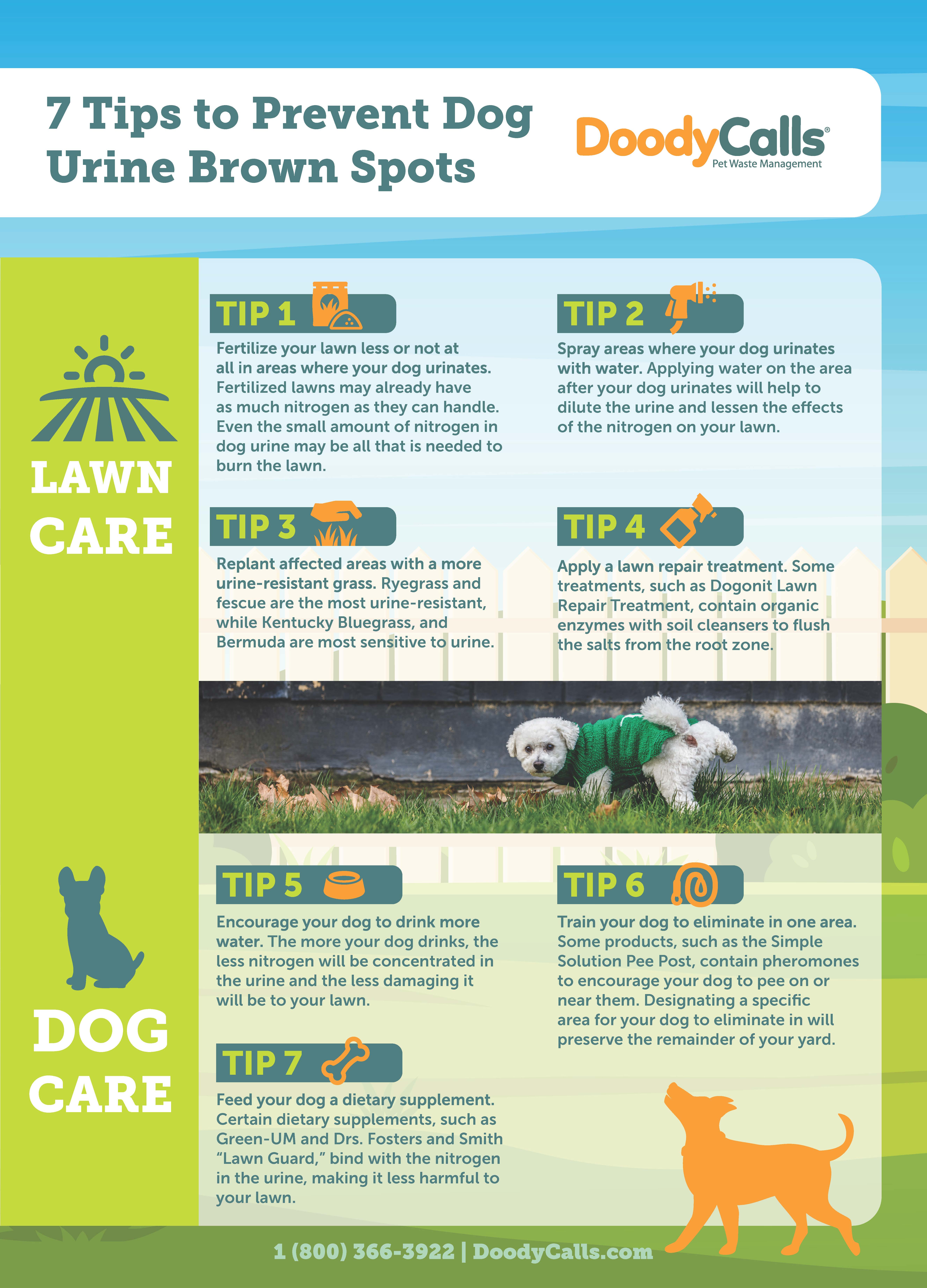
Dog pee doesn’t have to ruin your lawn. With consistent action, smart training, and resilient landscaping, you can enjoy both a green yard and a happy dog.
Start with watering urine spots immediately with ½ to 2 gallons of water. Then build a full prevention system that includes training your dog to use a designated potty zone, boosting water intake, adjusting diet under vet guidance, mowing higher, aerating regularly, and considering urine-resistant grass or alternative landscaping.
The result is a healthier lawn, a healthier dog, and no more brown patches.
Frequently Asked Questions About Dog Pee Killing Lawn
Why does dog pee kill grass?
Dog urine contains high concentrations of nitrogen from urea, a by-product of protein metabolism. When this nitrogen hits grass in one spot, it acts like an overdose of fertilizer, burning the roots and killing the turf.
Does female dog urine damage grass more than male dog urine?
Both sexes can damage grass. Female dogs often squat and concentrate urine in one spot, which can increase visible burn. Male dogs may mark vertically or disperse urine, reducing lawn impact in any single area.
Do dog rocks actually work to prevent lawn damage?
There’s no scientific proof that dog rocks reduce urine nitrogen. Many users report no change in lawn damage, and if water were the cause of lawn burn, regular watering would also cause damage.
Can I use ketchup or tomato juice to neutralize dog urine?
No. This is a dangerous myth. Ketchup and tomato products are high in salt and sugar, which can harm dogs. Vets strongly advise against giving dogs anything that alters their urine pH, as it can cause urinary tract infections or bladder stones.
How quickly should I flush a urine spot?
Flush the spot immediately after your dog pees for best results. Use ½ to 2 gallons of water or hose gently for 30 to 60 seconds. If you miss the moment, deep water the area later that same day.
What grass type is most resistant to dog urine?
Tall fescue is the most urine-resistant grass type, followed by perennial ryegrass and zoysia grass. Kentucky bluegrass and Bermuda grass are more sensitive and prone to burn.