Nothing is more frustrating than waking up to a fresh blanket of snow and finding your snow blower won’t start. If you are standing in the driveway in your winter coat wondering what to do, this article will walk you through the process. Whether you are a first-time owner or you forgot to winterize your machine last spring, most starting problems are quick and easy to solve. With the right steps, you can avoid a trip to the repair shop and get back to clearing your driveway.
This guide focuses specifically on how to start a Snow Joe snow blower, with a focus on gas-powered models. You will learn how to prep the fuel system, set the choke correctly, choose between electric and pull-start methods, and troubleshoot common issues. By the end, you will know exactly what your machine needs to fire up on the coldest mornings.
Run Pre-Startup Safety Checks
Before you touch the starter cord or power button, take a minute to inspect your machine. Safety checks prevent injury and protect your snow blower from avoidable damage.
Clear the Area Around the Machine
Make sure children, pets, and bystanders are indoors before you start. Point the discharge chute away from cars, windows, and sidewalks. Never run a gas snow blower in a garage or shed, even with the door open, because carbon monoxide builds up fast.
Gear Up Before You Start
Insulated boots, gloves, and safety glasses are essentials. Tuck in loose scarves and remove jewelry that could catch on the auger. Tie back long hair before pulling the starter.
Prep the Fuel System for Ignition

Stale gas and a dry carburetor are the top reasons Snow Joe snow blowers refuse to start after a summer in storage. A few minutes of fuel prep saves an hour of troubleshooting later.
Fill the Tank with Fresh Gasoline
Use unleaded gasoline with an octane rating of 87 or higher. Do not use fuel with more than 10% ethanol (like E15 or E85) since it can damage rubber seals and attract moisture. If your gas is more than 30 days old, dump it out and refill with fresh fuel.
Treat the Gas if You Are Storing the Blower
Add fuel stabilizer before you park the snow blower for the season. Let the engine idle so treated gas reaches the full line in the carburetor. This single habit makes next winter’s startup dramatically easier.
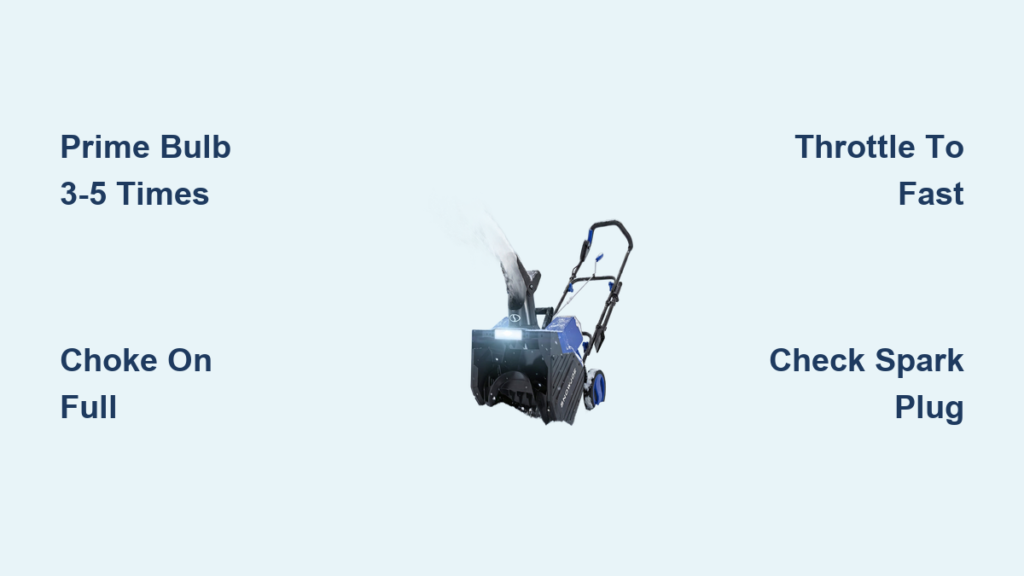
Press the Primer Bulb
Find the small rubber primer bulb on the side of the engine, usually near the carburetor. Press it firmly 3 to 5 times until you see fuel flowing through the clear housing. Priming pulls gas into the carburetor so the engine has something to combust on the first pull.
Set the Choke and Throttle Levers

Correct lever positions make the difference between a one-pull start and twenty minutes of frustration.
Move the Choke to Full
For a cold engine, slide the choke lever to the Full or Start position. This restricts airflow and creates a richer fuel mixture that ignites more easily. Once the engine runs smoothly, gradually move the choke to the Off position over 30 to 60 seconds.
Set the Throttle to Fast
Push the throttle lever to the Fast or Rabbit setting before starting. The higher RPM helps keep the engine running once the choke comes down. Some Snow Joe models label this lever as Speed or Engine Speed.
Choose the Correct Starting Method
Snow Joe offers both electric start and recoil start models. Always confirm what type you have so you do not damage the starter.
Electric Start Procedure
Follow these steps if your Snow Joe has a plug-in electric start or a battery-powered ignition button.
- Connect the snow blower to a grounded outdoor extension cord (corded models) or confirm the battery is fully charged (cordless models).
- Flip the power switch to the On position.
- Hold the electric start button for a maximum of 5 seconds.
- If the engine does not turn over, release the button, wait 10 seconds, then try again to avoid burning out the starter motor.
- Let the engine idle for 1 to 2 minutes before disengaging the choke.
Recoil (Pull Cord) Starting Technique
Use this method for pull-start models. A smooth, steady pull is far more effective than a hard yank.
- Stand firmly with one foot on the base of the snow blower to keep it steady.
- Grip the starter handle and pull the cord straight out with a smooth, steady pull.
- Let the cord rewind slowly. Do not let it snap back, as this damages the recoil spring.
- Repeat up to 5 pulls, re-priming the bulb if the engine sputters without starting.
- If the engine floods (you smell gas), wait 10 to 15 minutes before trying again.
Diagnose the Most Frequent Issues

Even with perfect preparation, things can still go wrong. Here is how to fix the problems Snow Joe owners face most often.
Engine Will Not Turn Over At All
When nothing happens when you pull the cord or press the button, the issue is usually electrical or fuel-related.
- Inspect the spark plug. Pull the wire off, unscrew the plug, and look for wet black soot or a cracked electrode. Clean light deposits with a wire brush or install a fresh plug.
- Confirm fuel is reaching the carburetor. Make sure the fuel shutoff valve is in the Open position and the tank is full of fresh gas.
- Check the auger safety switch. Many Snow Joe models will not start unless the auger control lever is pressed or engaged.
Engine Fires Up Then Dies Immediately
If the engine catches briefly but stalls right away, you are usually dealing with a fuel mixture or airflow issue.
- Choke setting is off. Leave the choke on the Half position for 30 seconds before opening it fully.
- Carburetor jets are gummed up. Old gas leaves varnish deposits inside the carburetor. Spray carburetor cleaner into the air intake while the engine runs, or take it to a small engine shop for a deep clean.
- Air filter is clogged. Remove the foam or paper filter, wash foam filters in soapy water, or tap paper filters clean. Replace any filter that is torn or saturated with oil.
Pull Cord Feels Stiff or Will Not Rewind
A cord that sticks or hangs up signals an internal mechanical problem. Stop pulling to prevent further damage.
- Do not force the cord. Internal engine seizure or a broken recoil spring requires professional repair.
- Check for ice or debris jams. Inspect the auger housing for packed snow or foreign objects locking up the impeller.
- Lubricate the control cables. A quick spray of silicone lubricant on the chute and auger controls frees up stiffness caused by cold weather storage.
Perform End-of-Season Storage
How you shut down your Snow Joe today determines how easily it starts next winter. A proper shutdown prevents 90% of next season’s starting problems.
Drain the Fuel Before Storage
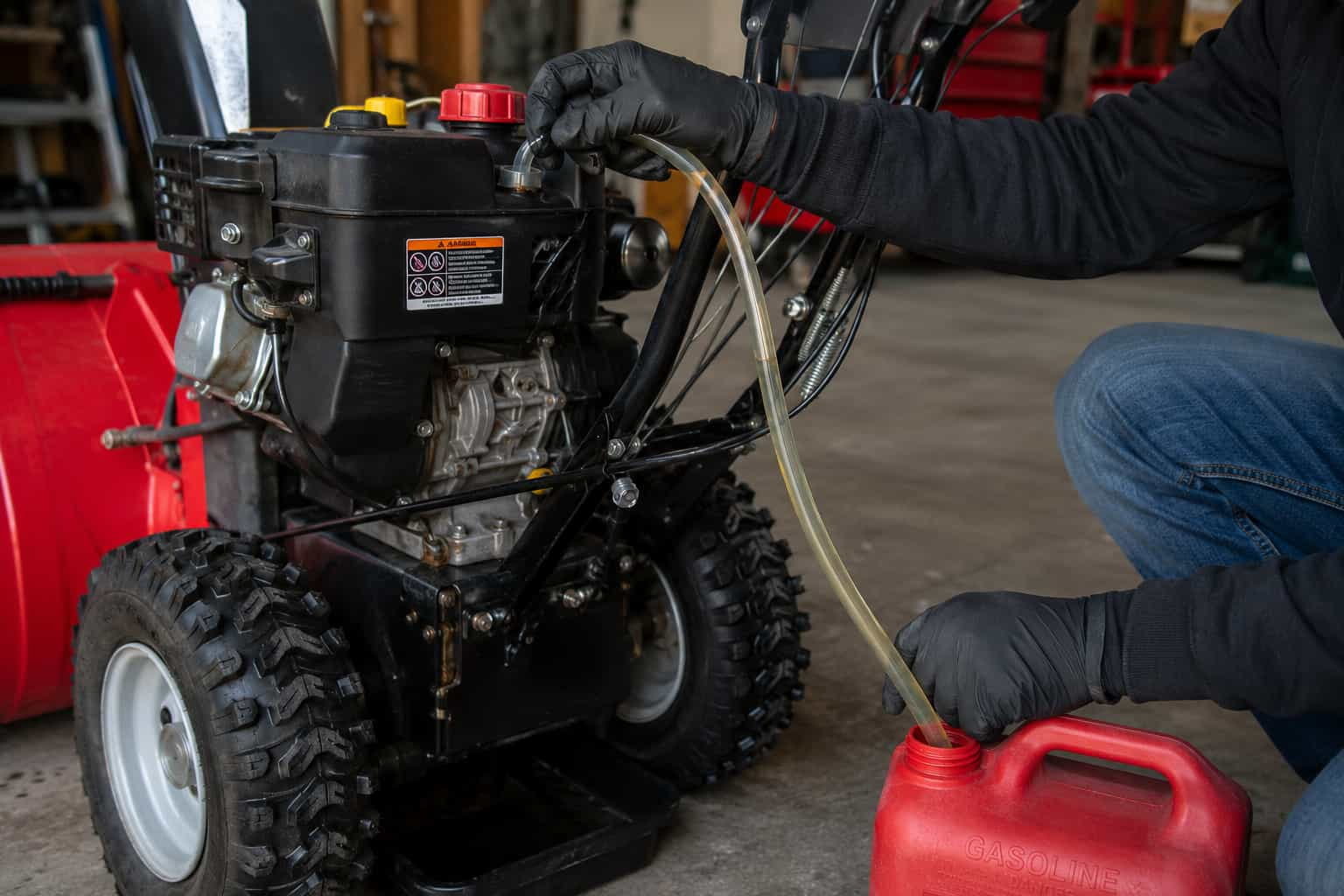
Turn off the fuel valve and let the engine run until it stalls from lack of gas. This empties the carburetor bowl and prevents varnish buildup. For storage longer than 90 days, also drain the gas tank completely.
Clean the Machine Before Parking It
Wipe down the housing, scrape packed snow out of the auger housing, and remove any salt or road grime. Store the blower in a garage, shed, or covered area where moisture cannot rust the metal parts.
Keep Your Snow Blower Ready Every Season
A few minutes of yearly maintenance eliminates most cold-morning starting headaches.
Change the Oil Once Per Year
After the first 5 hours of use, and at the start of every season after that, drain the old oil and refill with fresh SAE 5W-30 or SAE 10W-30 motor oil. Never use automotive oil with detergent additives.
Install a New Spark Plug Annually
A fresh spark plug delivers a stronger spark for easier cold starts. Check your owner’s manual for the correct gap and replacement model, typically an NGK CMR5H or equivalent.
Inspect Belts and Cables Each Fall
Look for fraying, cracking, or glazing on the drive and auger belts. Lubricate all control cables with silicone spray so they do not freeze up over the winter.
Frequently Asked Questions About Starting a Snow Joe Snow Blower
Why will my Snow Joe snow blower not start after sitting all summer?
Old fuel is the most common cause. Gasoline older than 30 days loses its volatility and leaves sticky deposits inside the carburetor. Drain the old fuel, refill with fresh 87+ octane gas, press the primer bulb 3 to 5 times, and try again.
How many times should I press the primer bulb before starting?
Press the primer bulb 3 to 5 times, or until you can see fuel flowing through the clear housing. More than 5 presses can flood a cold engine and make starting harder, not easier.
Can I use ethanol gas in my Snow Joe snow blower?
You can use fuel with up to 10% ethanol (E10), but avoid anything higher. E15 and E85 fuels attract moisture, degrade rubber seals, and leave carbon deposits that clog carburetor jets over time.
What oil should I use in a Snow Joe gas snow blower?
Use SAE 5W-30 or SAE 10W-30 motor oil rated for small air-cooled engines. Avoid automotive oils with high detergent additives, which can damage small engine bearings.
How long should I let a Snow Joe warm up before using it?
Let the engine idle for 1 to 2 minutes after starting. This warms the oil so it flows properly and lets the carburetor adjust as you gradually open it. Engaging the auger on a cold engine puts extra stress on the belts and drive system.
Is it normal for the pull cord to be hard to pull in cold weather?
A slightly stiff cord in freezing temperatures is normal because the oil inside the engine thickens. However, if the cord feels locked or will not rewind, stop pulling immediately and check for ice jams in the auger housing or a broken recoil spring.
Key Takeaways for Starting Your Snow Joe Snow Blower
Getting your Snow Joe to fire up on a cold morning comes down to three things: fresh fuel, correct choke settings, and a healthy spark plug. Always prime the bulb 3 to 5 times, start with the choke on Full, and never yank the pull cord. If the blower will not start, work through the spark plug, fuel, and air filter in that order before assuming the problem is serious. With these habits and a yearly oil change, your Snow Joe will be ready to tackle every storm for years to come.