You’ve just woken up to a foot of fresh snow, and your Huskee snow blower is your ticket to a clear driveway, if it starts. But what do you do when the pull cord won’t catch, the engine sputters, or nothing happens at all? You’re not alone. Most starting issues come down to simple oversights: stale fuel, a closed fuel valve, or incorrect choke use. The good news? With the right steps, your Huskee snow blower can fire up reliably, often on the first pull.
This guide walks you through the exact pre-start checks, starting methods, and pro tips to get your machine running smoothly every time. We’ll cover cold versus warm starts, electric and recoil starting, fuel best practices, and how to troubleshoot common failures.
Pre-Start Safety and Setup
Work in a Well-Ventilated Area
Never start your Huskee snow blower in a closed garage or shed. Gas-powered engines emit carbon monoxide, an odorless, deadly gas. Always operate or start the machine outdoors or in a fully open space. Clear the area of children, pets, and obstacles before beginning.
Clear the Starting Zone
Inspect around the snow blower. Remove sticks, rocks, extension cords, or anything that could get caught in the auger or impeller. Ensure the discharge chute is clear and pointed safely away from people, vehicles, or windows.
Fuel System Check
Confirm Fuel Valve Is On
Locate the fuel shut-off valve (petcock) near the base of the fuel tank. It must be in the “On” position. If it’s closed, no fuel reaches the engine, guaranteeing a no-start. Turn it to “On” before attempting to start.
Use Fresh, Ethanol-Free Gasoline
Fill the tank with fresh gasoline, ideally ethanol-free. Ethanol (found in E10 fuel) absorbs moisture, degrades rubber parts, and leaves sticky residue in the carburetor. This is the leading cause of hard starts. If you must use ethanol-blended gas, add a fuel stabilizer at every fill-up.
Pro Tip: Ethanol-free gas is available at many local stations. Search “ethanol-free gas near me” online. It is often only a few cents more per gallon.
Avoid Old or Contaminated Fuel
Gas older than 30 days can gum up the carburetor. If the machine sat all summer, drain the old fuel and refill with fresh. Never start with stale gas.
Check Engine Oil Level

Use the Dipstick Correctly
Remove the oil dipstick, wipe it clean, reinsert fully, then pull it out to check. The oil should sit between the upper and lower marks. Use 5W-30 engine oil, the recommended weight for cold weather operation.
Don’t Overfill
Too much oil can hydro-lock the engine or damage seals. Add oil slowly and recheck frequently. Replace the dipstick tightly after checking.
Set Engine Controls Properly
Turn Ignition Switch to “Run”
Insert the ignition key fully into the switch. On most Huskee models, it doesn’t turn; it just inserts. Ensure the engine switch is in the “Run” position. Some models have a push-button ignition; press once to activate.
Set Throttle to Full
Move the throttle lever to full speed (rabbit symbol). This increases RPM during startup, making ignition easier. If your model has an idle speed control, set it to fast.
Use the Choke Correctly
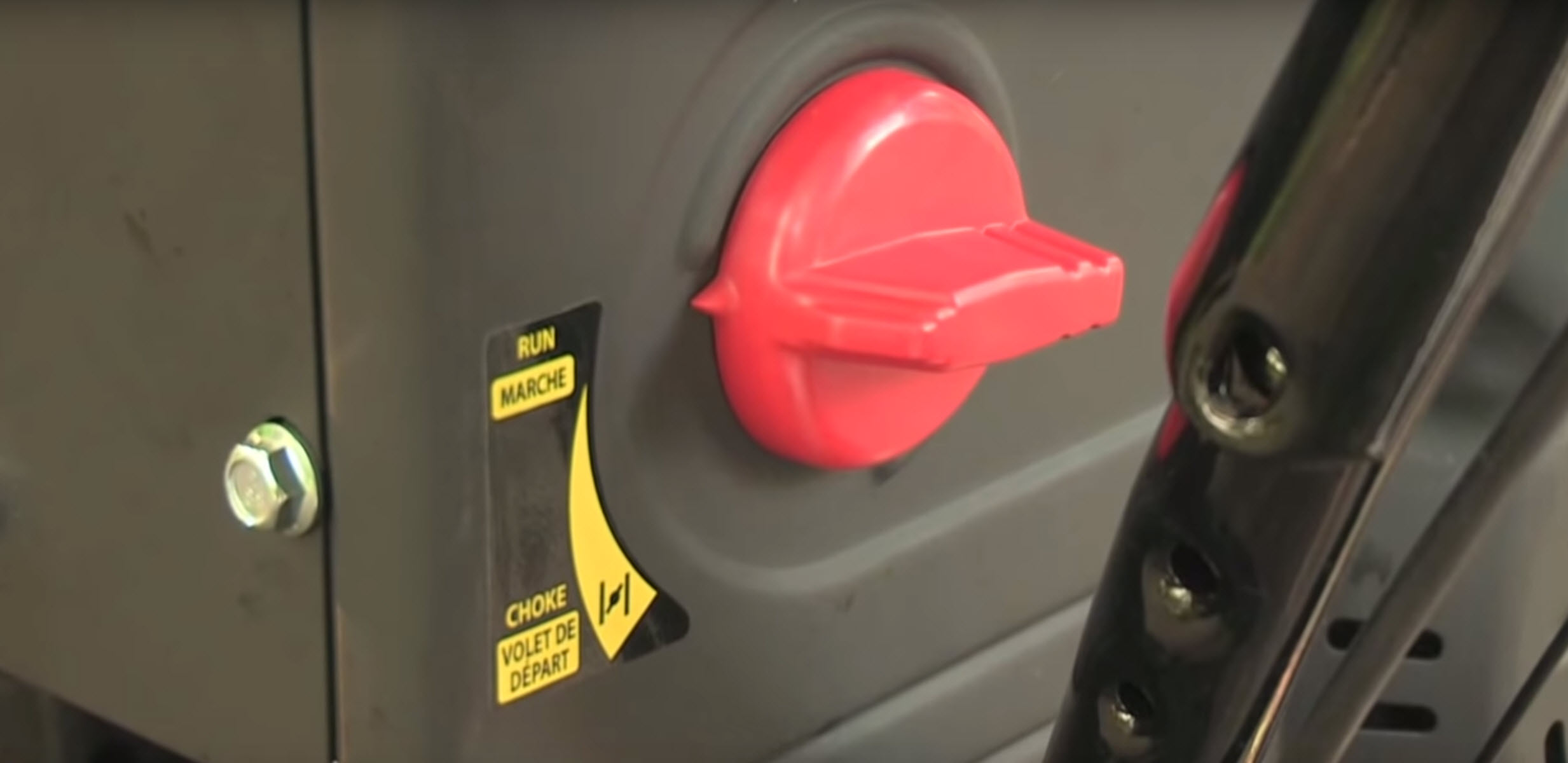
Engage Choke for Cold Starts
When the engine is cold (below 40°F), pull the choke lever to “Start” or “Choke On.” This restricts air flow, enriching the fuel mixture for easier ignition.
Note: Not all models have a choke. If yours doesn’t, skip this step.
Skip Choke for Warm Restarts
If restarting mid-job or the engine is warm, do not use the choke. Applying choke to a warm engine floods it, preventing startup.
Release Choke Gradually
Once the engine fires, do not slam the choke off. Instead, open it one notch at a time, waiting 3 seconds between adjustments. If the engine stumbles, close the choke slightly and try again. After 1–2 minutes, open the choke fully as the engine warms.
Prime the Engine

Press Primer Bulb 3–4 Times
Most Huskee models have a primer bulb. Press it firmly 3 to 4 times to send fuel to the carburetor. This is critical for cold starts.
Adjust for Temperature
- Below 15°F: Use 4 presses (Briggs & Stratton engines) or 3 presses (Tecumseh)
- Above 15°F: 2–3 presses are sufficient
Avoid Over-Priming
More than 5 presses can flood the engine. If flooded, wait 10 minutes with the choke off to let fuel evaporate before retrying.
Warning: Electric start models may not need priming. Consult your manual.
Starting Methods
Pull Cord Start: Step-by-Step
- Grasp the handle firmly; don’t yank.
- Pull smoothly and sharply in a full, steady motion.
- Let the rope recoil completely before the next pull.
- If no start after 3 pulls, turn off choke, wait 10 seconds, then retry.
- Re-prime if needed, but do not exceed 5 presses.
Visual Cue: If the engine coughs but won’t catch, it is likely flooded. Wait and try again with no choke.
Electric Start: Setup and Use
- Plug a three-wire, heavy-duty extension cord (15–20 ft) into a grounded outlet.
- Connect the other end to the snow blower’s starter port.
- Set throttle to full, fuel valve on, key inserted.
- Set choke to full open (do not prime for electric start).
- Press the start button for 3–5 seconds only.
- If it doesn’t start, wait 10 seconds before retrying.
Safety Note: Unplug both ends immediately after starting. Never leave the cord plugged in during operation.
Why Keep the Pull Cord Functional?
Even with electric start, maintain the recoil system. It’s your backup if power fails or you’re far from an outlet. A broken pull cord leaves you stranded.
Diagnose Starting Problems
Test with Starting Fluid
If the engine won’t start, suspect fuel delivery issues:
- Remove the spark plug.
- Spray a 1-second burst of starting fluid into the spark plug hole.
- Reinstall the plug.
- Attempt to start.
If it fires briefly then dies, the problem is fuel-related, likely a clogged carburetor.
Warm Up the Engine
Let It Idle 30–60 Seconds
After starting, let the engine run at idle for 30 to 60 seconds. This allows oil to circulate and the engine to stabilize. Gradually open the choke as it warms.
Engage Auger Only After Warm-Up
Never engage the auger immediately. Cold engines lack proper lubrication and power. Wait until the engine runs smoothly before clearing snow.
Shut Down Properly
Cool Down Before Turning Off
- Reduce throttle to idle.
- Let engine run for 30 seconds to cool.
- Let engine idle for 15–20 seconds at mid-throttle.
- Push throttle all the way left to stop the engine.
Why It Matters: Sudden shutdown causes thermal stress and carbon buildup. A proper cool-down extends engine life.
Troubleshoot Common Failures

Quick Diagnosis Chart
| Issue | Fix |
|---|---|
| Fuel valve off | Turn to “On” |
| Old or ethanol fuel | Drain and refill with fresh, stabilized gas |
| Low or no oil | Check and refill to proper level |
| Choke left on too long | Gradually open after startup |
| Over-primed engine | Wait 10 minutes, restart with no choke |
Spark Plug Inspection
Remove the spark plug and inspect:
- Fouled or black: Too much fuel
- Wet: Engine flooded
- Cracked or damaged: Replace immediately
Use a spark tester to confirm ignition. No spark? Replace the plug or check ignition coil.
Carburetor Clogging (90% of Repairs)
Over 90% of snowblower repairs involve a clogged carburetor, usually from ethanol residue. Symptoms include hard starting, engine sputtering, and dying or running only with full choke. Clean or rebuild the carburetor annually. Use a carburetor cleaner kit or take it to a small engine shop.
Optimize Fuel for Reliability
Choose Ethanol-Free Gas
Ethanol-free fuel prevents gum and varnish buildup, moisture absorption, and rubber and plastic degradation. Your snow blower will start easier, run cleaner, and last longer.
Store Fuel Properly
For long-term storage, drain the tank completely or add fuel stabilizer and run the engine for 2 minutes to circulate it.
Case Study: A neighbor left gas in his blower all summer. Come winter, it wouldn’t start. After cleaning the carburetor and using ethanol-free gas, it started on the first pull.
Maintain for Easy Starts
Seasonal Maintenance Checklist
- Before each season: Check spark plug, oil, and air filter
- Annually: Clean or rebuild carburetor
- Before each use: Verify fuel, oil, and controls
Long-Term Storage Tips
- Drain fuel or add stabilizer
- Run engine until it stops (to clear carburetor)
- Store in a dry, covered area
- Keep pull cord functional
Pro Tip: Use the same ethanol-free fuel in your lawnmower, generator, and power washer for consistent performance.
Quick Start Checklist
| Step | Action |
|---|---|
| 1 | Work outdoors, clear area |
| 2 | Fuel valve on, tank full (ethanol-free) |
| 3 | Oil level between marks |
| 4 | Throttle to full |
| 5 | Insert key, switch to “Run” |
| 6 | Choke on (cold start only) |
| 7 | Prime 3–4 times |
| 8 | Pull cord sharply or press start button |
| 9 | Open choke gradually |
| 10 | Warm up 30–60 seconds before use |
| 11 | Cool down 30 seconds before shutdown |
Frequently Asked Questions About Starting a Huskee Snow Blower
Why won’t my Huskee snow blower start even with fresh gas?
The most common culprit is a closed fuel shut-off valve. Check the petcock near the fuel tank and ensure it’s in the “On” position. If fuel is flowing, the issue may be a flooded engine from over-priming. Wait 10 minutes with the choke off and try again. If problems persist, test for spark and inspect the carburetor for clogs.
How many times should I press the primer bulb before starting?
Press the primer bulb 3 to 4 times for standard conditions. In temperatures below 15°F, Briggs & Stratton engines need 4 presses while Tecumseh engines need 3. Never exceed 5 presses, as over-priming floods the engine and makes starting harder.
Do I use the choke when restarting a warm engine?
No, skip the choke entirely for warm restarts. Applying choke to a warm engine floods it with fuel and prevents ignition. Simply set the throttle to full, insert the key, and pull the cord. Priming may not be necessary on a warm engine either.
Can I use regular gasoline with ethanol in my Huskee snow blower?
You can, but it’s not recommended. Ethanol absorbs moisture, degrades rubber components, and leaves sticky residue in the carburetor. This causes over 90% of snowblower repair issues. If you must use ethanol-blended gas, add fuel stabilizer at every fill-up to minimize damage.
What should I do if my electric start isn’t working?
First, ensure you’re using a three-wire, heavy-duty extension cord (15–20 feet) plugged into a grounded outlet. Press the start button for only 3–5 seconds to avoid overheating the starter. If it still won’t start, wait 10 seconds before retrying. Electric start models typically don’t need priming, so skip that step.
Final Thoughts on Starting Your Huskee Snow Blower
Starting your Huskee snow blower doesn’t have to be a battle. The key is consistency: use fresh, ethanol-free fuel, set controls correctly, and follow the proper sequence. Most failures come from avoidable mistakes, like forgetting the fuel valve or over-priming. With these steps, you’ll start strong every time, even in sub-zero temperatures.
Bookmark this guide for your first winter morning with your snow blower. Run through the quick-start checklist, and you’ll be clearing your driveway while your neighbors are still searching for their shovels. Stay safe, stay warm, and let the machine do the work.