You’ve spotted bare patches or thinning areas in your Bermuda lawn, and your first thought is to grab a bag of seed. Before you do, here’s a critical fact: Bermuda grass is one of the most self-healing turfgrasses available. It naturally spreads through above-ground stolons and underground rhizomes, filling in gaps without any help from you. This guide walks you through exactly when reseeding makes sense, which seeds actually work, and better alternatives that most homeowners should try first.
By the end, you’ll know whether your lawn needs seed or simply needs better care. You’ll also learn the precise steps for successful reseeding if that’s the right path for your situation.
Why Most Bermuda Lawns Don’t Need Reseeding
Bermuda grass is uniquely aggressive in its ability to recover and spread. Understanding this core characteristic changes how you approach lawn repairs.
Bermuda Heals Through Runners, Not Seed
Bermuda grass spreads using two natural mechanisms. Stolons grow horizontally above the soil surface, rooting at nodes to create new plants. Rhizomes extend underground, producing new growth from hidden buds. When your lawn is healthy and conditions are favorable, these runners will colonize bare areas within weeks. The real problem with thin Bermuda is almost never a lack of seed. It’s usually poor lawn health, compaction, shade, or weed competition stealing resources.
The Common Seed Mistake
Most Bermuda lawns in the United States are hybrid varieties like Tifway 419, Celebration, or Tahoma 31. These hybrids are sterile, meaning they don’t produce viable seed. The “Bermuda seed” sold at hardware stores is almost always common Bermuda, which has coarser blades, lighter green color, and much slower spread. Overseeding your hybrid lawn with common seed creates a patchy, mismatched appearance. It ruins the uniform look you worked hard to achieve. The fix for thinning hybrid Bermuda is rarely more seed. It’s usually better feeding, mowing, and weed control.
When Reseeding Bermuda Grass Makes Sense
Despite what we just covered, there are specific situations where reseeding is the right approach.
Full Lawn Renovation
Reseeding works best when you’re starting completely over. This applies after killing out a lawn overrun with weeds, on bare soil after construction, or when converting from a different grass type like bahiagrass or centipede. In these cases, planting high-quality hybrid seed gives you a fresh, uniform lawn without the cost of sod.
Repairing Winter Damage in Seeded Hybrids
Some newer hybrid varieties are available as seed, including TifTuf, Arden 15, and Princess 77. If you planted one of these and experienced winter kill damage, reseeding the same cultivar can restore lost areas while maintaining genetic consistency.
Establishing Large Areas on a Budget
For large properties, seeding hybrid Bermuda costs significantly less than sod while delivering comparable results when done correctly. This is one of the few times where the expense of quality seed makes financial sense.
Best Bermuda Grass Seed Varieties to Use

If you’ve determined reseeding is necessary, choosing the right seed matters enormously. Using common Bermuda on a hybrid lawn creates problems that take years to fix.
Recommended Hybrid Seeds
Only use certified hybrid Bermuda seed for any reseeding project. These varieties match better, spread faster, and maintain uniform appearance. Arden 15 offers fine texture and excellent cold tolerance. Princess 77 provides dense growth with good shade tolerance and fast establishment. Black Jack delivers drought resistance and aggressive spreading. Yukon produces fine leaves with high density suitable for residential lawns. Royal TXD shows proven performance with good seedling vigor. TifTuf provides exceptional wear tolerance and drought resistance.
What to Avoid
Never use generic blends or common Bermuda seed. These products often contain mislabeled seed with poor genetics. The low price Tag isn’t worth the patchy results you’ll get.
Step-by-Step Reseeding Process

Successful reseeding requires proper preparation. Skipping steps leads to wasted seed and frustration.
Kill Existing Vegetation First
For complete renovations, apply a non-selective herbicide like glyphosate to kill all existing grass and weeds. Wait seven to ten days for complete die-off before proceeding. For spot repairs, you can skip this step and work directly into existing turf.
Prepare the Soil Surface
Proper seed-to-soil contact determines your success more than any other factor. Start by scalping the lawn. Mow to three-quarters inch or lower using a rotary mower. This removes excess thatch and exposes soil for seed contact. Next, dethatch if your thatch layer exceeds one-half inch. Use a power rake or verticutter to open the canopy. Finally, core aerate to relieve compaction and create perfect pockets for seed. Run the aerator in multiple directions for full coverage.
Apply Seed Correctly
Hybrid Bermuda seed should be applied at one to two pounds per thousand square feet. Mix seed fifty-fifty with play sand to prevent clumping and improve spreader accuracy. Use a broadcast spreader at setting nine or ten when mixed with sand. Apply half the seed walking north-south, then the other half east-west. This crosshatch pattern ensures even coverage and avoids streaks.
Ensure Seed-to-Soil Contact
After seeding, gently drag a garden rake over the area. Goal is to press seed one-sixteenth to one-eighth inch deep. Don’t bury it deeply. Bermuda seed needs light to germinate. Top with a light mulch layer like seed aide cover grow, peat moss, or weed-free composted manure. Keep mulch under one-quarter inch thick. Anything thicker blocks light and suffocates seedlings.
Water for Success
This is the most critical phase for your new lawn. Water two to five times daily depending on heat and humidity. In hot climates like Arizona or Texas, plan for four to five light irrigations per day. Use fine mist or low-pressure sprinklers to avoid washing seed away. Keep the top one-half inch of soil consistently damp. Never let it dry out completely. Even one drying event can kill emerging seedlings. Once sprouts appear in ten to twenty-one days, reduce watering to once every one to two days. Apply three-eighths to one-half inch of water per session.
Fertilize for Strong Roots
Apply starter fertilizer immediately after seeding. Use a high-phosphorus formula like fifteen-twenty-ten, twelve-twelve-twelve, or superphosphate. Avoid high-nitrogen fertilizers which burn seedlings. Apply a second round of starter fertilizer two weeks after emergence to thicken the stand.
Mow at the Right Time
Wait until seedlings reach two and a half to three inches tall before the first mow. Follow the one-third rule. Never remove more than one-third of blade height in a single mow. Start at one to one and a half inches, then gradually lower to your target height over several cuts.
Timing: When to Reseed Bermuda Grass
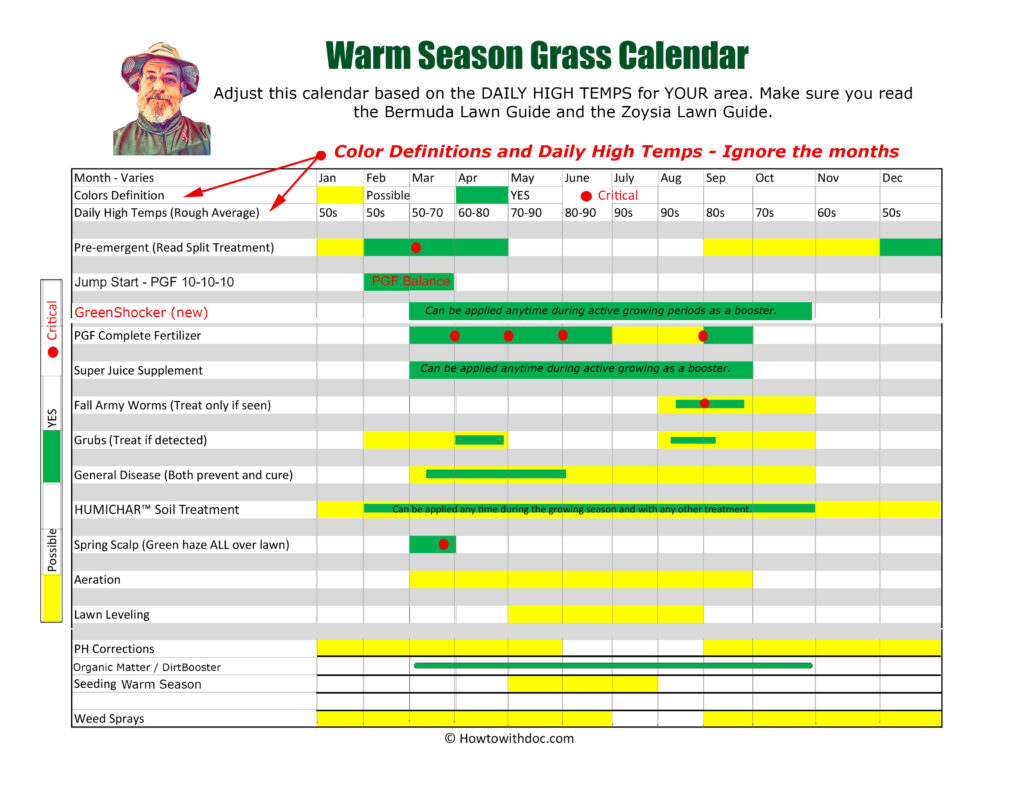
Timing makes or breaks your reseeding project. Bermuda needs soil temperatures of sixty-five to seventy degrees Fahrenheit minimum to germinate.
Best Planting Window
Reseed in late spring through early summer. This gives your lawn eight to twelve weeks of warm weather to establish strong roots before winter. Never seed in fall or winter. The seed will remain dormant and likely rot before spring arrives.
Regional Timing Guide
In the Southwest including Arizona, Nevada, and California, plant between April and June. In the Southeast including Florida, Georgia, and Alabama, aim for March through May. In Texas, Oklahoma, and Louisiana, April through June works best. In the Midwest including Missouri, Kansas, and Arkansas, May through July provides the ideal window. Use a soil thermometer to confirm temperatures rather than relying on calendar dates alone.
Common Mistakes to Avoid
These errors account for most reseeding failures.
Using common Bermuda seed creates mismatched lawns with patchy color and texture. Seeding in fall or winter guarantees failure because seed won’t germinate in cool soil. Applying pre-emergent herbicide too soon prevents all germination. Wait ninety days after seeding before using any crabgrass preventer. Skipping soil preparation means seed sits on thatch and never contacts soil. Ignoring weeds allows competition to overwhelm slow-germinating Bermuda seed.
Better Alternatives to Reseeding
For most thin Bermuda lawns, reseeding is unnecessary. These approaches work better.
Transplant Stolons from Healthy Areas
Instead of seeding, cut six to twelve inch runners from healthy areas of your lawn. Transplant them directly into bare zones. Press into soil and water daily for one to two weeks. This method matches your existing lawn perfectly, establishes faster than seeding, and carries zero risk of genetic mismatch.
Aggressive Feeding and Care
Most thin Bermuda lawns simply need better nutrition and care. Apply PGF Complete every three weeks from spring through early summer. Add Super Juice for root strength and stress resistance. Control weeds with two, four-D and sethoxydim. Scalp and bag clippings to reduce thatch. Watch for stolons spreading onto sidewalks. This active spreading means your lawn is filling in beautifully without any seed.
Consider Sprigging or Sodding
For large-scale repairs, sprigging offers results comparable to seeding at similar cost. You get exact hybrid genetics and faster establishment. Sod provides instant results with guaranteed genetics, though at higher cost.
Frequently Asked Questions About Reseeding Bermuda Lawn
Can I put Bermuda grass seed on an existing Bermuda lawn?
You can, but it’s rarely effective. Thick thatch and competition from existing grass prevent germination. If your lawn is thin, fix the underlying problem rather than adding seed.
What is the best month to reseed Bermuda grass?
Late spring to early summer is ideal. Soil temperatures need to reach sixty-five to seventy degrees Fahrenheit consistently. In most regions, this means May through July.
Will Bermuda grass spread to fill bare spots on its own?
Yes, when healthy. Bermuda spreads aggressively through stolons and rhizomes. If gaps aren’t filling, your lawn likely needs better nutrition, more sunlight, or help with compaction or weeds.
How long does it take for Bermuda seed to germinate?
Hybrid varieties like Arden 15 germinate in about ten days. Most hybrids take fourteen to twenty-one days. Common Bermuda can take up to three weeks.
Can I use common Bermuda seed on my hybrid lawn?
Absolutely not. Common Bermuda has different color, texture, and growth rate. It creates a patchy, uneven lawn that ruins your hybrid’s appearance.
Key Takeaways for Reseeding Your Bermuda Lawn
Reseeding Bermuda is rarely the solution. The grass spreads naturally through runners and recovers when given proper care. Focus on aggressive feeding, consistent mowing, and weed control before reaching for seed.
When reseeding is necessary, use only certified hybrid seed like Arden 15, Princess 77, or TifTuf. Prepare soil thoroughly through scalping, dethatching, and aeration. Water two to five times daily for the first two weeks. Never apply pre-emergent within ninety days of seeding.
For most bare spot repairs, transplanting stolons from healthy areas works faster and produces better results than seeding. Let your lawn do what it does naturally. Bermuda grass doesn’t need seeding. It needs pushing.