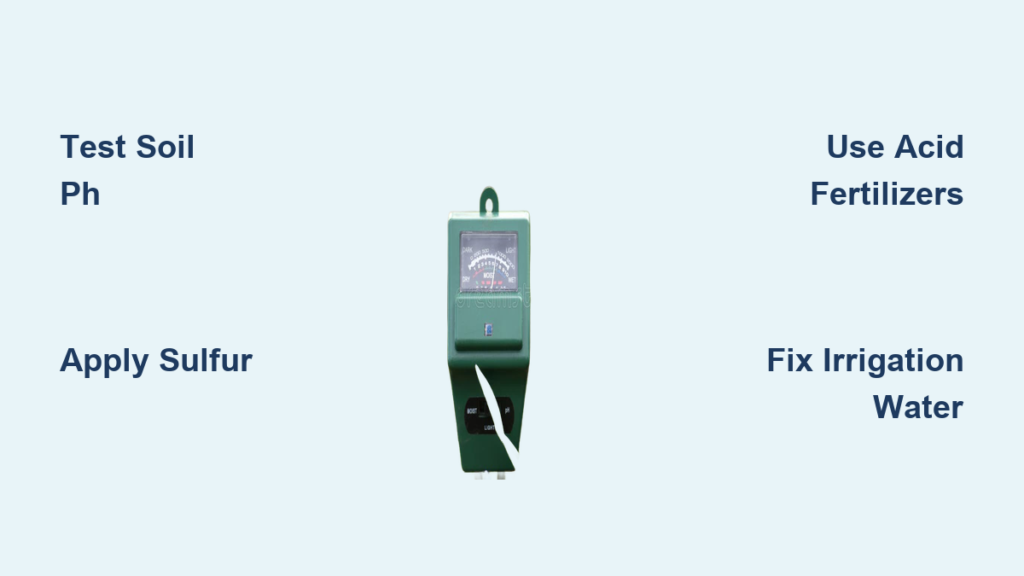
Is your lawn struggling despite regular watering, mowing, and fertilizing? If your grass looks pale, thin, or unresponsive even after feeding, it might not be a nutrient problem. It could be high soil pH. Alkaline soil locks up essential nutrients like iron and manganese, making them unavailable to grass roots. The result is weak growth, yellowing blades, and a lawn that just will not thrive.
The good news is you can lower your lawn’s pH and restore nutrient availability. But it is not a quick fix. Unlike fertilizing or watering, adjusting soil pH takes time, planning, and the right materials. This guide shows you how to accurately test soil pH, choose the best method to lower it, and avoid common mistakes that waste money or damage your turf.
Test Your Soil pH Before Making Changes
Before adding any amendments, confirm your soil’s actual pH. Guessing leads to over-treatment or wasted effort. What looks like high pH might actually be disease, compaction, or poor drainage.
Why Testing Matters
Soil pH determines nutrient availability. Most grasses grow best between 6.0 and 7.0. Above 7.5, iron, manganese, and phosphorus become less available even if they are present in the soil. But lowering pH is only effective if your soil can actually change. Some soils contain free lime, which buffers against acidification. In these cases, amendments may do little. Only a soil test reveals the full picture.
Choose the Right Testing Method
Professional lab testing provides the most reliable results. A lab test measures current pH, buffer pH (how hard it is to change), nutrient levels, organic matter, and cation exchange capacity. This data tells you whether lowering pH is feasible and how much sulfur you will need.
Digital pH meters offer quick readings and work well for tracking trends over time. Calibrate probes regularly and test multiple spots across your lawn for consistency. Home test kits give a general reading and work for quick checks, but they are less precise than lab or meter methods.
Retest every 6-12 months during pH correction to track progress and prevent over-application.
Recognize Signs of High pH in Your Lawn
You do not always need obvious symptoms to test, but certain clues should raise a red flag.
Yellow Grass Despite Fertilizing
If your lawn stays yellow or pale green after nitrogen application, it may suffer from iron chlorosis. This is a deficiency caused by high pH. Leaves show yellowing between green veins, especially in new growth. Since iron becomes insoluble above pH 7.0, adding more fertilizer will not help.
Poor Response to Feeding
Grass that does not green up or thicken after feeding, even with balanced fertilizers, suggests nutrients are locked up. You might even see clover spreading, which thrives in low-nitrogen conditions due to poor uptake by grass.
Thin, Patchy Turf
Bare spots, weak growth, and slow recovery from foot traffic point to poor root development. This is often linked to chronic nutrient deficiency in alkaline soil.
These signs overlap with other issues. Always confirm with a soil test before treating.
Understand What Raises Your Soil pH

Understanding the cause helps you decide whether to correct pH or adapt your care.
Natural Soil Composition
Many areas, especially in the Midwest and West, have naturally alkaline soils rich in calcium carbonate. These resist pH change because carbonate neutralizes acids. If your soil has free lime, repeated sulfur applications may have little effect.
Lime-Based Fertilizers
Products containing sea lime or calcium compounds raise pH over time. Even wood ash or crushed limestone used near the lawn can contribute to alkalinity.
Irrigation Water pH
One of the biggest hidden causes is alkaline water. Well water, lake water, or municipal supplies with pH above 7.5 continuously add alkalinity. A golf course using lake water at pH 8.0 saw soil pH stabilize at 8.0 despite repeated sulfur use because irrigation kept resetting the balance.
Test your irrigation water. If it is above 7.5, long-term pH reduction may not be sustainable without an acid-injection system.
Lower pH with Elemental Sulfur
Elemental sulfur is the most effective, safe, and widely recommended method for lowering lawn pH.
How It Works
Soil bacteria convert sulfur into sulfuric acid, which gradually reduces pH. This process requires warm, moist soil above 55F and active microbes. Results take 3 to 6 months.
Apply the Right Amount
To lower pH by 1.0 unit, heavy clay soil needs about 50 lbs per 1,000 sq ft. Sandy or loamy soil needs only 12.5-25 lbs per 1,000 sq ft. The maximum single application is 5 lbs per 1,000 sq ft unless tilling in. The annual limit is 20 lbs per 1,000 sq ft.
Apply 2 lbs per 1,000 sq ft in spring or fall for gradual correction.
Choose Granular Over Powder
Prilled (pelletized) sulfur spreads evenly and is less dusty than powder. Use a broadcast spreader for uniform coverage.
When to Apply
Apply in spring when soil temps exceed 55F or in fall for slow action over winter. Avoid applying in cold, dry, or dormant conditions because microbes will not convert sulfur.
Use Acidifying Fertilizers
These feed your lawn while gently lowering pH over time.
Ammonium Sulfate (21-0-0)
This releases hydrogen ions as ammonium converts to nitrate. Effects are visible in weeks, faster than elemental sulfur. Apply during active growth after dormancy but before hot weather. Caution: can burn grass if over-applied. Always water in after application.
Urea-Based Fertilizers
Slow-release formulas break down into ammonium, lowering pH gradually. They are safer for summer use than ammonium sulfate and ideal for ongoing maintenance.
Other Acidifying Options
Several nitrogen sources also lower pH, including diammonium phosphate, monoammonium phosphate, sulfur-coated urea, and iron sulfate.
Use acidifying fertilizers as part of a long-term plan, not as a one-time fix.
Try Iron Sulfate for Faster Results
Need quicker action? Iron sulfate reacts in 3-4 weeks but requires more product.
Pros and Cons
Iron sulfate works fast, improves color by adding iron, and helps reduce thatch. However, it needs six times more than sulfur for the same pH drop. It can stain concrete and risks turf burn if over-applied.
Application Tips
Apply evenly and water in immediately. Wear gloves and protective clothing. Clean tools after use to prevent rust.
Use iron sulfate when you need a visible improvement fast, but follow up with elemental sulfur for lasting change.
Improve Soil with Organic Matter
Organic amendments do not drastically lower pH but support long-term balance.
Peat Moss
Natural pH is 3.0-4.5. Apply 1-2 inches during core aeration. Mix into soil to improve texture and acidity. Best combined with sulfur for enhanced effect.
Compost
Does not lower pH sharply but boosts microbial activity. Helps nudge alkaline soils toward balance. Apply annually and work into top few inches. Sustainable and safe for all lawns.
Use compost as a topdressing after aeration to improve both structure and biology.
Avoid Dangerous or Ineffective Methods
Some products promise fast results but come with serious risks.
Sulfuric Acid (Battery Acid)
Extremely hazardous. Causes burns and corrodes tools. Used professionally in rare cases only. Requires all-plastic sprayer, protective gear, and strict safety: always add acid to water. Not recommended for homeowners.
Aluminum Sulfate
Fast-acting but toxic to roots in high amounts. Risk of aluminum buildup, especially in clay soils. Safe for ornamentals but avoid on lawns.
Citric Acid
Can be sprayed monthly at 1-2 lbs per 1,000 sq ft. Fast but short-lived. Risk of turf death if not watered in properly.
Never use household vinegar or lemon juice. They lack concentration and consistency to make a real difference.
Try Proven Commercial Products
Some blends combine acidifiers with soil conditioners for better results.
Jonathan Green Mag-I-Cal Plus
Designed for alkaline and hard soils. Contains triple-action sulfur (slow and fast release), gypsum to break up clay, and iron humates to boost microbes. Apply up to four times per year, best twice yearly. Covers 5,000 sq ft per 18-lb bag. Safe for lawns when used as directed.
Fluorovate Masterlon
Contains 26% sulfur trioxide and 4% iron. Works faster than elemental sulfur because no microbial conversion is needed. Ideal for short growing seasons. Apply half dose every three weeks to avoid shock. Must be watered in immediately.
Follow a Layered Treatment Approach
Combine methods for continuous, safe pH reduction.
In March, apply ammonium sulfate as soil warms to kickstart acidification. During core aeration, topdress with peat moss, brushing it into holes. In April, apply urea-based slow-release fertilizer for sustained effect. In late April, spread 2 lbs elemental sulfur per 1,000 sq ft for long-term control.
This approach combines fast (ammonium sulfate), mid-term (peat), and long-term (sulfur) solutions for steady progress without stressing the lawn.
Adjust for Your Soil Type
Your soil’s texture and chemistry determine how well pH correction works.
Sandy Soils
Low buffering capacity means they respond quickly to sulfur. Use 25% less than clay soil rates. Risk of leaching exists, so apply in smaller, frequent doses.
Clay Soils
High CEC and buffering resist pH change. Need more sulfur and more time. Combine with gypsum to improve structure.
Free Lime Soils
Contain calcium carbonate and resist acidification. Amendments may fail. Consider growing pH-tolerant grasses or using chelated micronutrient sprays instead.
Manage Irrigation Water Impact
If your water is alkaline, it can undo your efforts.
Test Your Water
Use a digital pH meter or test strip. If pH exceeds 7.5, it is contributing to high soil pH.
Mitigation Options
Use rainwater when possible. Install acid injection system (professional only). Or accept higher pH and focus on nutrient availability through chelates.
In some regions, fighting water-driven alkalinity is not sustainable. Adapt your strategy accordingly.
Maintain pH After Correction
Once you reach 6.0-6.5, prevent rebound with smart habits.
Test Annually
Monitor every 6-12 months. Retest three months after each application. Track trends and adjust as needed.
Use Acidifying Fertilizers Yearly
Replace neutral or lime-based products. Choose urea or ammonium sulfate during active growth.
Add Organic Matter
Apply compost each fall. Supports microbial health and buffers pH swings.
Avoid Lime-Rich Inputs
Stop using wood ash, limestone, or lime-containing fertilizers. Read labels carefully because some soil conditioners contain hidden lime.
Know When Not to Lower pH
Sometimes chasing pH 6.5 does more harm than good.
Accept High pH If
Soil has free lime and will not change. pH is below 7.5 and lawn looks healthy. Irrigation water is highly alkaline. Grass grows well despite pH.
Alternative Strategy
Apply chelated iron or manganese as foliar sprays. Use organic fertilizers rich in micronutrients. Focus on soil biology and structure over pH number.
You are better off managing turf with high pH than fighting it. A healthy lawn can thrive at pH 8.0 with proper micronutrient support.
Avoid Common Mistakes
Skipping the soil test leads to wasted money or damaged lawn. Never guess.
Overapplying sulfur can lower pH too far, making soil too acidic. Stick to recommended rates.
Expecting fast results leads to frustration. pH change takes months. Re-test before reapplying.
Using aluminum sulfate on lawns is toxic to turf. Save it for ornamentals.
Applying in cold or dry soil fails because sulfur needs warmth and moisture to work. Wait until spring.
Key Takeaways for Lowering Lawn pH
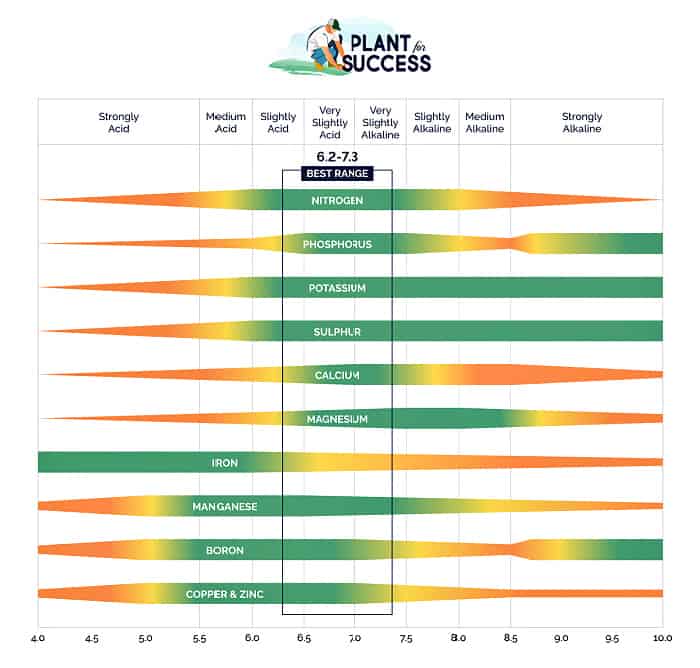
Lowering lawn pH is possible but not always necessary. Focus on what your lawn actually needs, not just a number.
Start with a soil test to confirm pH and identify free lime. Use elemental sulfur as the primary amendment, applying 2 lbs per 1,000 sq ft in spring or fall. Supplement with acidifying fertilizers during the growing season. Address irrigation water if it is above pH 7.5.
With the right approach, you can grow a thick, green, healthy lawn even in slightly alkaline soil. The key is patience, proper testing, and consistent maintenance.
Frequently Asked Questions About Lowering Lawn pH
How long does it take to lower lawn pH?
Elemental sulfur takes 3-6 months to show results because soil bacteria must convert it to sulfuric acid. Acidifying fertilizers work faster, with visible changes in weeks. Full pH correction may take 1-2 years of consistent treatment.
Can I use vinegar to lower lawn pH?
No. Household vinegar lacks the concentration needed to make a real difference. It evaporates quickly and does not affect soil pH meaningfully. Use elemental sulfur or acidifying fertilizers instead.
How much sulfur do I need to lower pH by one unit?
For heavy clay soil, about 50 lbs per 1,000 sq ft. For sandy or loamy soil, 12.5-25 lbs per 1,000 sq ft. Start with 2 lbs per 1,000 sq ft for gradual correction and retest before applying more.
What happens if I lower lawn pH too much?
Soil that becomes too acidic (below 5.5) can release aluminum and other toxic elements. It can also harm beneficial soil organisms. Always retest before reapplying and stay within recommended rates.
Should I lower pH if my lawn looks healthy?
If your lawn is healthy and growing well at pH 7.0-7.5, pH adjustment is not necessary. Focus on proper fertilization and maintenance instead. Only correct pH if you see clear signs of nutrient lockup.
Does rain help lower soil pH?
Natural rainfall is slightly acidic (pH 5.6-6.0) and can contribute to lowering pH over time. However, in regions with alkaline soil or irrigation water, rainfall alone is not enough to offset continuous alkalinity.