Nothing ruins a relaxing afternoon on the patio faster than grimy, stained, or mildew-covered lawn furniture. Whether you’re prepping for summer, recovering from winter storage, or dealing with bird droppings and spilled drinks, knowing how to clean lawn furniture properly is essential to keep it looking great and lasting for years. Most outdoor furniture can be safely cleaned with a few basic supplies, but using the wrong method for your material can cause damage, fading, or structural weakening.
This guide walks you through a universal cleaning process, then dives into material-specific techniques for poly, aluminum, wrought iron, wicker, teak, resin, and more. You’ll also learn how to tackle tough stains, disinfect surfaces, care for cushions, and protect your furniture for the long haul.
Universal Cleaning Steps for All Lawn Furniture
Every outdoor furniture cleaning should start with these foundational steps, regardless of material. Following this sequence prevents damage, ensures thorough results, and makes deep cleaning faster.
Remove Loose Debris First
Before applying any liquid, sweep away dry dirt, leaves, pollen, and dust. Use a soft brush, dry microfiber cloth, or shop vac to clean surfaces, crevices, and cushion seams. Skipping this step can grind grit into finishes or fabrics during washing.
Mix a Safe Cleaning Solution
For 90% of furniture, combine a few drops of mild dish soap like Dawn with warm water in a bucket. Avoid bleach, ammonia, or abrasive cleaners unless specifically recommended for your material. Harsh chemicals can strip protective coatings, fade colors, or degrade fabric.
Wipe Down and Scrub Gently
Use a soft sponge or cloth to gently scrub all surfaces. Focus on arms, legs, joints, and textured areas where grime builds up. For tight crevices, a soft-bristle toothbrush works wonders. Never use steel wool, wire brushes, or abrasive pads.
Rinse Thoroughly
Use a garden hose with a spray nozzle to rinse off all soap residue. Leftover suds can attract dirt or leave water spots. For large sets, rinse section by section to avoid drying before washing is complete.
Air Dry Completely
Let furniture dry in direct sunlight or a breezy area. Stand cushions on edge to speed drying and prevent mildew. Never cover or store damp furniture, as moisture trapped under covers breeds mold and odors.
How to Clean Poly Lawn Furniture

Poly furniture, made from recycled plastic (HDPE), is durable and weather-resistant, but it still needs cleaning, especially white pieces prone to mildew.
Cleaning Colored Poly Furniture
Use Berlin Gardens Heavy Duty Xtreme Clean or a generic composite deck cleaner. Apply with a sponge, let sit 5 to 10 minutes, then scrub with a soft brush. For stubborn grime, use a 1500 PSI pressure washer with the nozzle 8 to 12 inches away. Never use bleach on colored poly.
Cleaning White Poly Furniture
White poly shows mildew easily. Use Berlin Gardens Mildew Stain Remover or mix one-third cup of outdoor Clorox bleach with two-thirds cup of water. Apply, wait 10 minutes, then rinse or pressure wash at 1500 PSI. Reapply for tough stains.
Maintaining Cast Aluminum Furniture
Aluminum is rust-proof and lightweight, but its powder-coated finish can scratch if cleaned improperly.
Basic Aluminum Cleaning
Use warm, soapy water and a soft cloth. Rinse immediately. Do not use abrasive pads, steel wool, or bleach, which can damage the coating.
Treating Tough Spots
For sticky residue or stains, apply a 50/50 vinegar-water mix with a sponge. Wipe gently, rinse, and dry. After drying, apply a light coat of WD-40 with a soft cloth to repel moisture and enhance shine. Reapply every few months.
Winter Preparation for Aluminum
Before storage, drain water from legs to prevent freezing and cracking. Clean, dry thoroughly, and cover or store indoors.
Restoring Wrought Iron Patio Furniture
Wrought iron is strong and elegant but rusts if neglected. Regular cleaning prevents corrosion and keeps it looking classic.
Cleaning Wrought Iron Safely
Clean with soapy water and a soft sponge. Avoid power washers, which can chip the paint, and never use paste wax because it traps moisture.
Protecting Wrought Iron Finish
Apply automotive spray wax twice a year to protect the finish. Use matching spray paint to cover nicks or scratches, as exposed spots become rust entry points. If you’re near the ocean or a saltwater pool, clean weekly and wax quarterly to combat corrosion.
Cleaning Wicker Outdoor Furniture
Wicker adds style but traps dirt in its weave. Both natural rattan and synthetic resin types need gentle care.
Gentle Wicker Cleaning Methods
Apply mild soap and warm water with a soft cloth. Never soak natural wicker, as excess moisture causes warping. Use a soft or medium toothbrush to clean tight spots. Avoid stiff bristles that can fray the weave.
Drying Wicker Properly
After rinsing, place furniture in direct sun to dry quickly and prevent mold. Never power wash wicker, as it can loosen or break the strands.
Caring for Resin Furniture
Resin is lightweight, colorful, and easy to maintain, but non-white pieces can stain.
Routine Resin Cleaning
Use soapy water or deck cleaner for routine washing. For deep cleaning, Berlin Gardens Heavy Duty Xtreme Clean works best.
Removing Stains From Resin
Mix one-third cup of outdoor Clorox bleach with two-thirds cup of water. Apply to stains, wait 10 minutes, then rinse. For tough spots, repeat or use a 1500 PSI pressure washer held 8 to 12 inches away.
Maintaining MGP Marine Grade Polymer
MGP resists salt, chlorine, and UV, making it perfect for pools and coastal areas.
Basic MGP Care
Use mild detergent and warm water. Avoid teak oil, stains, or heat above 180 degrees Fahrenheit, which can warp the material.
Treating Grease and Oil on MGP
For oily stains, use citrus cleaner, rubbing alcohol, or mineral spirits. Wipe clean, then rinse. Light surface scratches can be minimized with automotive silicone spray or furniture polish.
Preserving Teak Outdoor Furniture
Teak’s natural oils make it weather-resistant, but cleaning and sealing affect its color.
Cleaning Teak Properly
Use mild soap and a soft cloth. Never use metal brushes, as they scratch the wood. Choose your finish preference: let it gray naturally for a low-maintenance silvery patina, or apply Summer Classics Teak Protector when graying starts to keep the honey-brown color.
Shielding Teak From Stains
Use Teak Shield to repel water, food, and drink spills. Reapply annually. Do not use teak cleaner or protector on Oyster Teak, as it will damage the finish.
Cleaning Outdoor Fabric Cushions and Umbrellas
Fabric components get dirty fast from sunscreen to spilled wine. Knowing how to clean them prevents permanent stains.
Treating Common Fabric Stains
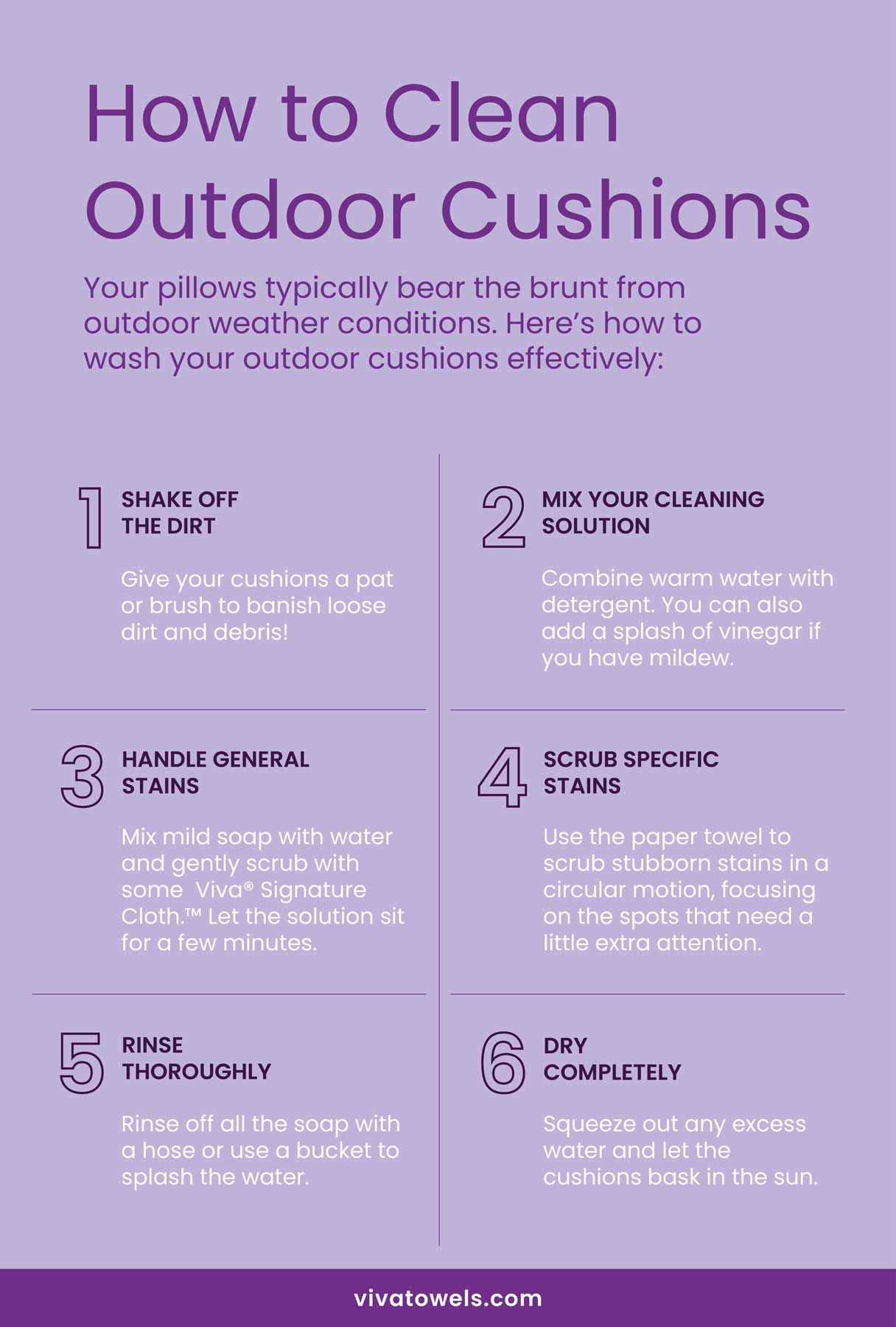
Act fast on spills. For general dirt, use one-fourth cup dish soap per gallon of water. For grease or oil, add one-third cup white vinegar to soapy water. For food or drinks, sprinkle cornstarch, wait 10 minutes, scrape off, then clean. For charcoal or pencil marks, vacuum first, then clean with soapy water.
Removing Mold and Mildew From Fabric
Brush off dry mold with a scrub brush. Mix one-fourth cup dish soap plus one cup bleach per gallon of water. Spray on, let sit in sun for 15 minutes, scrub with a soft brush, rinse, and dry completely.
Cleaning Removable Cushion Covers
Remove covers if possible. Machine wash on bulky cycle with warm (not hot) water and enzymatic cleaner plus detergent. Air dry only, never use a dryer, as heat warps fabric and foam.
Washing Patio Umbrellas
Remove bird droppings and leaves monthly to prevent staining. Use a soft brush and one-fourth cup mild detergent per gallon of warm water. Let sit 15 minutes, then rinse. Hang or tilt open to air dry. Never store wet.
Disinfecting Outdoor Furniture
For shared spaces or post-illness cleaning, disinfect high-touch surfaces.
Bleach Disinfection Method
Mix one-third cup of Clorox disinfecting bleach with CLOROMAX per gallon of water. Wear gloves and apply with sponge or brush. Let sit 6 minutes for full disinfection. Rinse thoroughly with a hose. Never mix bleach with vinegar or ammonia.
Using the Right Cleaning Tools
Using improper tools causes more damage than the dirt itself.
Recommended Tools by Task
Soft cloth or sponge works for all surfaces. Soft-bristle brush is best for fabric and crevices. Toothbrush reaches tight spots. Nylon pads are safe for resin and MGP but do not scrub aggressively. A 1500 PSI pressure washer works for poly, resin, and MGP when kept 8 to 12 inches away. Never use pressure washers on wicker or fabric.
Extending Furniture Life With Protection
Prevention beats cure when it comes to outdoor furniture longevity.
Daily and Seasonal Protection
Cover furniture with breathable outdoor covers when not in use. Remove covers when wet to prevent trapping moisture. Store cushions indoors in waterproof storage boxes. Place outdoor rugs under furniture to catch dirt and reduce cleaning frequency. Wipe down monthly during peak use to prevent buildup.
Material-Specific Maintenance Schedules
Seal or protect wood (teak, cypress) annually. Wax metal (aluminum, iron) twice yearly and touch up paint chips. Spot clean fabric immediately and deep clean one to two times per year.
Storing Furniture Properly
Proper storage prevents winter damage.
Storage Best Practices
Clean and dry completely before storage. Store in a dry, ventilated space like a garage or shed. Use contractor-grade trash bags for extra dust protection.
Frequently Asked Questions About Cleaning Lawn Furniture
What is the best universal cleaning solution for outdoor furniture?
The safest universal solution is a few drops of mild dish soap like Dawn mixed with warm water. This works for 90% of outdoor furniture materials without risking damage from harsh chemicals.
Can I use a pressure washer on all types of lawn furniture?
No. Pressure washers are safe only for poly, resin, and MGP furniture at 1500 PSI with the nozzle 8 to 12 inches away. Never use pressure washers on wicker, fabric, wrought iron, or natural wood, as they can cause structural damage.
How often should I clean my lawn furniture?
Clean at minimum twice per year: once at the start of summer and again before winter storage. Clean more frequently if you notice pollen buildup, bird droppings, spills, or visible mold and mildew.
Can I use bleach on colored outdoor furniture?
No. Bleach causes fading and discoloration on colored poly, resin, and most other materials. Use bleach only on white poly or for disinfecting, and always rinse thoroughly.
How do I remove mold from outdoor cushions?
Brush off dry mold, then spray with a solution of one-fourth cup dish soap plus one cup bleach per gallon of water. Let sit in sunlight for 15 minutes, scrub gently, rinse thoroughly, and air dry completely.
Should I cover my outdoor furniture year-round?
Use covers when furniture is not in use, but remove them when wet to prevent trapped moisture. During winter, store furniture indoors in a dry, ventilated space rather than covering it outdoors.
Key Takeaways for Cleaning Your Lawn Furniture
Cleaning lawn furniture isn’t just about looks, it’s about preserving your investment. Most damage comes from using the wrong tools or cleaners, not from the dirt itself. Always identify your furniture’s material before choosing a cleaning method, and stick to the universal soap-and-water approach first before escalating to specialized cleaners. Match your cleaning routine to your furniture’s material, and your patio will stay clean, safe, and beautiful for years to come.