How long to water lawn? It’s a question that frustrates homeowners every summer. The answer isn’t found on a timer—it’s measured in inches. Most lawns need 1 to 1.5 inches of water per week, delivered deeply to encourage roots to grow 6 to 8 inches deep. Yet most people either overwater and waste hundreds of gallons or underwater and watch their grass turn brown. Without measuring your sprinkler’s actual output, you’re just guessing. This guide shows you exactly how to calculate your lawn’s watering time, recognize when grass needs water, and apply it at the optimal time of day.
Measure Your Sprinkler Output First

You cannot determine how long to water lawn without knowing how much water your system actually delivers. Sprinkler output varies dramatically between models, pressure levels, and zones. Two identical lawns with different sprinklers may need completely different run times to achieve the same results.
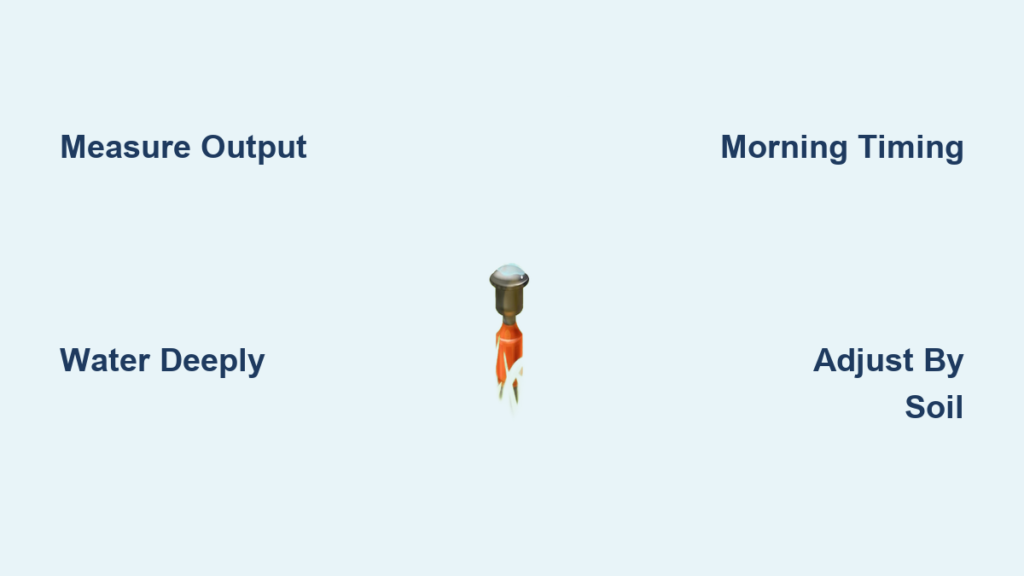
Use the Tuna Can Test
Place 3 to 5 clean, straight-sided cans around your lawn in different areas of the same sprinkler zone. Run your system for 15 to 30 minutes, then measure the water depth in each can. Calculate the average to determine your system’s output rate.
If your cans collect 0.5 inches in 30 minutes, you need 60 minutes to deliver 1 inch of water per week. This simple test also reveals uneven spray patterns, low pressure areas, and dry spots that no generic schedule can fix.
Try the Screwdriver Soil Check
After watering, push a screwdriver or soil probe into the ground. If it slides in 6 to 8 inches with minimal resistance, you’ve watered deeply enough. If it stops at 3 to 4 inches, increase your watering duration. Perform this test 2 to 4 hours after watering for accurate results, and check multiple spots since slopes and compacted areas often dry out faster.
Calculate Exact Watering Time for Your Lawn
Once you know your system’s output, you can calculate exactly how long to water lawn based on your specific lawn size. Use this formula when you know your sprinkler flow rate.
Flow Rate Math Method
Multiply your lawn area in square feet by 0.62, then divide by your sprinkler’s flow rate in gallons per minute. The number 0.62 represents the gallons needed to apply 1 inch of water per square foot. For example, a 1,000 square foot lawn with a sprinkler output of 5 gallons per minute requires 124 minutes to deliver 1 inch of water.
Weekly Runtime Determination
Most established lawns need 1 to 1.5 inches per week. If your test shows you deliver 1 inch in 45 minutes, water for 45 minutes per session. Split this into 1 to 2 watering sessions per week rather than running the entire time at once. This approach ensures deep soil penetration while avoiding wasteful runoff.
Water Deeply and Infrequently for Stronger Roots
The biggest mistake homeowners make is watering shallowly and frequently. This practice weakens your lawn by encouraging roots to stay near the surface where they dry out quickly.
Why Deep Watering Works
Watering 1 to 2 times per week with sufficient duration trains roots to grow 6 to 8 inches deep. These deep roots make your lawn more drought-tolerant and heat-resistant. Shallow root systems, by contrast, leave grass dependent on constant irrigation and vulnerable to stress during hot spells.
Signs You’re Watering Too Frequently
If you water daily or every other day and notice your grass feels spongy, develops fungal patches, or produces excessive thatch buildup, you’re overwatering. Healthy grass should dry out slightly between waterings. When footprints remain visible for more than a few minutes, that’s actually a sign your lawn needs water—not the opposite.
Best Time of Day to Water Your Lawn
Timing affects water efficiency, disease risk, and how well your lawn absorbs moisture. watering at the wrong time can waste half your water to evaporation.
Early Morning Is Ideal
Water between 5 a.m. and 10 a.m. when temperatures are cool and winds are calm. This allows water to soak into the soil before evaporation becomes significant. Grass blades dry during the day, which minimizes fungal disease risk. Many smart controller systems are set to start around 4 a.m. to ensure absorption is complete before sunrise.
Late Afternoon Works if Necessary
Watering between 4 p.m. and 6 p.m. is acceptable if morning watering isn’t possible. The grass will have a few hours to dry before nightfall, reducing disease risk compared to evening watering. However, this timing is second-best to morning sessions.
Avoid Evening and Midday Watering
Watering after sunset keeps grass wet overnight, creating perfect conditions for fungal diseases like brown patch and dollar spot. Midday watering, especially between 10 a.m. and 6 p.m., can cause up to 50% water loss through evaporation. Your grass won’t cool down—evaporation pulls heat from the air, not the blades.
Water New Lawns Differently Than Established Turf
Newly seeded, sodded, or sprigged lawns have completely different water needs than mature grass. Getting this wrong can kill your investment before it establishes.
Germination Phase Requirements
Keep the top 1 to 2 inches of soil consistently moist but not soggy. This means misting 1 to 2 times daily, sometimes more in hot or dry conditions. Use short cycles of 5 to 10 minutes to prevent puddling and runoff. Continue this frequency until grass reaches approximately 3 inches tall.
Transitioning to Mature Watering
After the first mowing, gradually reduce watering frequency while increasing duration. Shift to deep watering 2 times per week, soaking soil to 6 to 8 inches. This trains new roots to grow downward rather than staying shallow. The transition typically takes 2 to 3 weeks after the first mow.
Adjust Watering Based on Grass Type
Your grass species significantly impacts how much water it needs and how efficiently it uses moisture. Understanding your lawn’s composition helps you water more accurately.
Cool-Season Grass Water Needs
Tall fescue, Kentucky bluegrass, perennial ryegrass, and fine fescues typically need 1 to 1.5 inches per week, sometimes more during hot summer months. These grasses grow most actively in spring and fall. Tall fescue has the deepest roots among cool-season varieties and handles drought better than other types in this category. During drought, these grasses may go dormant and turn brown but will revive when water returns.
Warm-Season Grass Water Needs
Bermuda, zoysia, St. Augustine, and centipede grass generally require 1 to 2 inches per week but actually use water more efficiently than cool-season types. These grasses naturally develop deep root systems and extract moisture more effectively from soil. They stay green longer during dry spells and recover faster when water returns.
Match Watering to Your Soil Type
Soil composition determines how quickly water penetrates and how long it stays available. Adjusting your approach based on soil prevents both runoff and dry spots.
Sandy Soil Watering Strategy
Sandy soil drains quickly and cannot hold moisture well. Water more frequently with shorter durations to prevent runoff while maintaining consistent soil moisture. Consider splitting your weekly watering into three shorter sessions rather than one long session. Watch for water pooling on the surface, which indicates you’ve applied too much too fast.
Clay Soil Watering Strategy
Clay holds water longer but absorbs slowly, making it prone to puddling and runoff. Water less frequently but for longer durations to allow proper absorption. Mix compost into clay soil to improve porosity and reduce drainage problems. If water begins running off before you’ve applied the full amount, switch to the cycle-and-soak method.
Loam Soil Considerations
Loam represents the ideal balance of drainage and moisture retention. Standard deep watering once or twice weekly works well for loam soils without special adjustments.
Spot Signs of Overwatering and Underwatering
Learning to read your lawn prevents both water waste and lawn death. Visual and physical cues tell you exactly when to adjust your schedule.
Underwatering Indicators
Grass that turns dull gray-green or blue-green needs water. Wilted or flattened blades and footprints that persist for more than a few minutes indicate dehydration. Don’t wait for grass to turn completely brown—significant stress has already occurred by that point.
Overwatering Indicators
Soggy soil, standing water, and fungal growth like mushrooms or mold signal overwatering. Thatch buildup and consistently spongy turf underfoot also indicate too much water. Check your irrigation timer to confirm you’re not running unnecessary cycles.
Use the Cycle-and-Soak Method to Prevent Runoff
Runoff occurs when water hits the soil faster than it can absorb. This wastes water and prevents your lawn from receiving the full amount it needs.
How to Apply Cycle-and-Soak
Water for 10 minutes, then wait 10 to 15 minutes to allow absorption. Repeat this cycle until you’ve delivered the full weekly amount. For example, if your lawn needs 45 minutes to receive 1 inch but runoff begins after 20 minutes, water three 15-minute sessions with 15-minute breaks between each.
This method works especially well on slopes and compacted clay soils where water penetration is naturally slower.
Seasonal Watering Adjustments
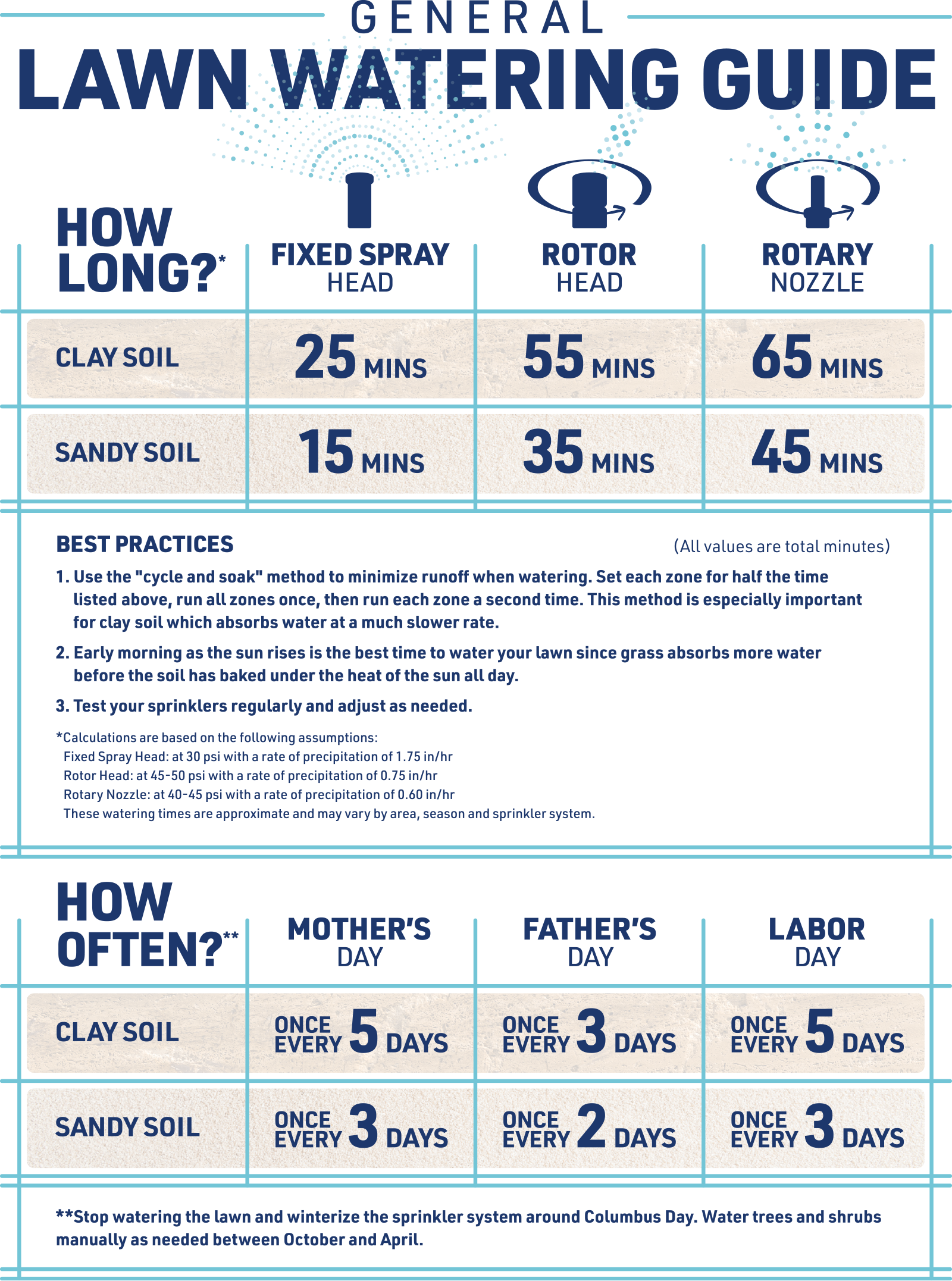
Your lawn’s water needs change throughout the year. Adjusting your schedule prevents both waste and stress during seasonal transitions.
Spring and Fall Watering
Rainfall often provides sufficient water during these moderate seasons. Water only if no significant rain occurs for 7 to 10 days. Focus on encouraging deep root development rather than maximizing growth. These seasons are ideal for establishing new lawns since evaporation rates are lower.
Summer Peak Watering
Heat increases water demand significantly. Apply 1 to 2 inches per week depending on your grass type and local temperatures. Increase duration during heat waves but avoid watering daily. Deep watering 2 to 3 times weekly outperforms frequent shallow sessions even in extreme heat.
Winter Watering
Dormant grass requires little to no irrigation in freezing climates. In mild areas without snow cover, occasional watering may prevent winter desiccation, especially for evergreens. Check soil moisture monthly during dormancy and water only if the ground is extremely dry.
Frequently Asked Questions About Lawn Watering Duration
How many minutes should I water my lawn per week?
Most lawns need 1 to 1.5 inches of water per week. Measure your sprinkler’s output using the tuna can test, then calculate the exact minutes needed. For example, if your system delivers 0.5 inches in 30 minutes, water for 30 to 45 minutes weekly, split into 1 to 2 sessions.
Can I water my lawn every day?
Daily watering is not recommended. It encourages shallow root growth and increases disease risk. Water deeply 1 to 2 times per week instead. New lawns are the exception—they need frequent misting until established.
How do I know if I’m watering enough?
Use the screwdriver test. After watering, push a screwdriver 6 to 8 inches into the soil. If it meets resistance at 3 to 4 inches, increase your watering duration. Visual signs like a dull gray-green color or persistent footprints also indicate under watering.
Is it better to water in the morning or evening?
Morning watering between 5 a.m. and 10 a.m. is best. Evening watering keeps grass wet overnight and promotes fungal diseases. Midday watering wastes water to evaporation.
How long should I run a sprinkler for new grass seed?
Keep the top 1 to 2 inches of soil consistently moist by misting 1 to 2 times daily for 5 to 10 minutes per session. Continue until grass reaches mowing height, typically around 3 inches.
What happens if I overwater my lawn?
Overwatering causes soggy soil, fungal growth, thatch buildup, and shallow roots. It wastes water, increases utility costs, and leaches nutrients from soil. Reduce watering frequency if you notice these signs.
Key Takeaways for Perfect Lawn Watering Timing
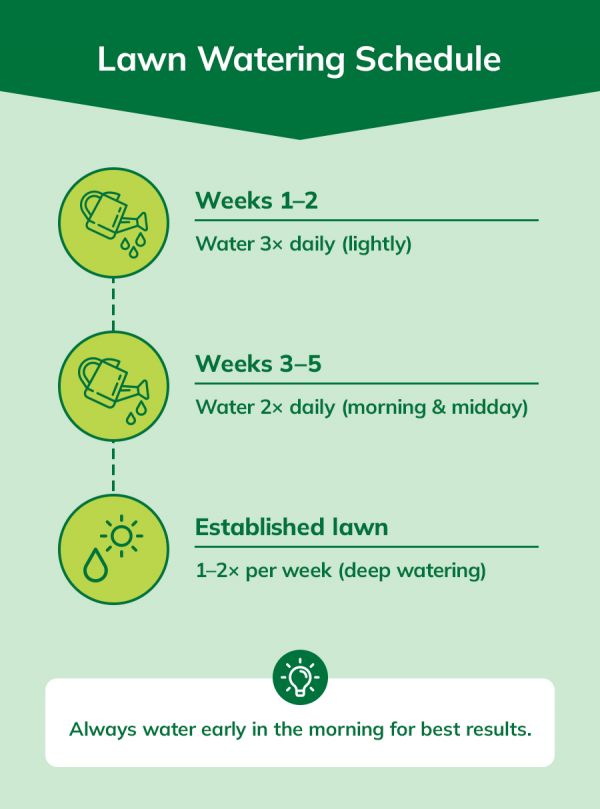
The secret to knowing how long to water lawn lies in measurement, not guessing. Apply 1 to 1.5 inches per week using deep, infrequent sessions that encourage roots to grow 6 to 8 inches deep. Measure your sprinkler’s output with the tuna can test, water in the early morning between 5 a.m. and 10 a.m., and adjust based on your grass type, soil composition, and seasonal conditions. Watch for visual signs of stress, use the cycle-and-soak method to prevent runoff, and transition new lawns to mature watering schedules after the first mow. Your lawn will become more drought-resistant, disease-free, and water-efficient when you stop watering by the clock and start watering by the inch.