Planting grass seed is just the first step. How often to water lawn seeds determines whether your yard becomes a lush green carpet or a patchy, failed attempt. The critical germination phase demands precise moisture: too little and seeds will not sprout, too much and they will rot. Most new lawns fail not because of poor seed quality, but due to inconsistent watering in the first two weeks.
This guide breaks down exactly when, how long, and how frequently to water new grass seed based on grass type, soil, weather, and growth stage. You will learn expert-backed schedules, avoid common mistakes, and transition smoothly from daily spritzes to deep weekly soaks for a thriving lawn.
Why Watering Frequency Matters for Grass Seed Germination
The golden rule for seeding success is maintaining moisture in the top 1 to 1.5 inches of soil at all times. This shallow zone is where seeds lie and where roots first emerge. If this layer dries out, even for a few hours, germination stops and young sprouts die.
However, overwatering causes fungal diseases and seed rot. The ideal condition is soil that feels cool and damp to the touch, like a wrung-out sponge. Use your finger or a small trowel to check moisture daily, especially in sunny or windy areas.
What Happens When Seeds Dry Out
Seeds absorb water to swell and begin root development. Once this process starts, drying out can kill the seed or sprout within hours. This is why inconsistent watering is the number one cause of seeding failure.
The Soggy Soil Problem
Too much water prevents oxygen from reaching seeds, causing them to rot. Saturated soil also encourages fungal growth that can destroy your entire lawn before it even starts.
How Many Times Per Day to Water New Grass Seed
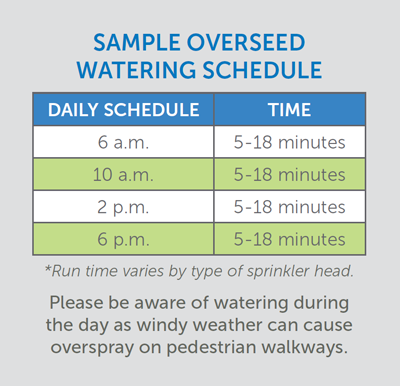
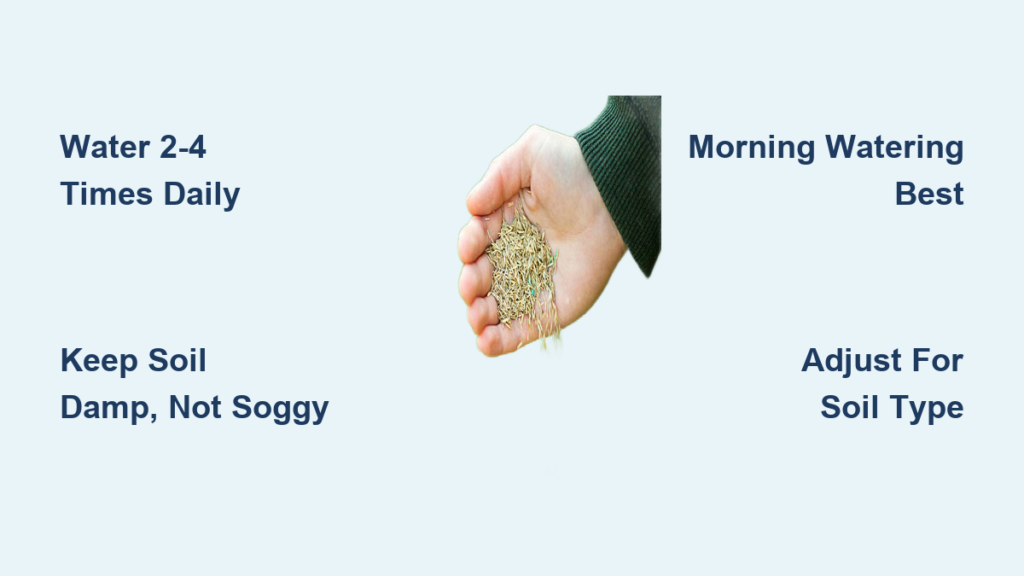
New grass seed requires 2 to 4 waterings per day during germination. Each session should deliver 1/8 to 1/4 inch of water, totaling 3 to 4 inches per week applied in short bursts.
In hot, dry, or windy conditions, increase to 4 to 5 times daily. In cooler weather below 60°F, reduce to once or twice daily. The goal is not total volume alone, but frequency and consistency.
Measuring Your Water Output
Use a rain gauge or empty tuna can to measure how much water your sprinkler delivers in 5 to 10 minutes. Adjust duration to hit the 1/8 to 1/4 inch target per session.
Daily Water Amount Guidelines
The total daily application should be 1/8 to 1/4 inch, split across multiple sessions. This translates to approximately 3 to 4 inches per week during the germination phase.
Watering Schedule by Grass Type

Grass type directly affects how long you must maintain frequent watering. Cool-season grasses germinate faster and are typically planted in spring or fall. Warm-season types take longer and need summer heat.
Cool-Season Grass Watering Timeline
Cool-season grasses include Kentucky bluegrass, perennial ryegrass, tall fescue, and fine fescue. These varieties need 2 to 3 waterings daily for 10 to 14 days for faster varieties, or 3 to 4 weeks for slower types like Kentucky bluegrass.
Warm-Season Grass Watering Timeline
Warm-season grasses include Bermudagrass, Zoysiagrass, and St. Augustinegrass. These need 3 to 4 waterings daily for 3 to 4 weeks due to their longer germination window.
Fast vs Slow Germinators
Ryegrass and fescues show green in under two weeks, allowing quicker transition to less frequent watering. Kentucky bluegrass and warm-season grasses require patience, up to 30 days of daily attention.
Best Times of Day to Water Grass Seed
Timing matters as much as frequency. Water when evaporation is lowest and grass has time to dry before nightfall.
Early Morning Watering (6:00 to 10:00 AM)
This is the ideal time. Wind is low, humidity is high, and temperatures are cool. Water before the sun rises to lock in moisture for the day. This allows blades to dry, reducing fungal risk.
Midday Watering (10:00 AM to 2:00 PM)
Only water at midday if needed in hot, dry, or windy climates. Use a short 5 to 10 minute session to prevent surface drying. Avoid during peak sun unless essential.
Late Afternoon Watering (4:00 to 6:00 PM)
This is acceptable if morning and midday sessions are not enough. The grass must dry before nightfall. Never water after 7:00 PM because wet overnight conditions invite mold and disease.
Evening and Night Watering Risks
Prolonged moisture overnight increases risk of brown patch, pythium blight, and damping-off disease. Always prioritize morning watering.
Adjusting Watering for Different Soil Types
Sandy Soil: Water More, Less Deep
Sandy soil drains quickly and dries fast. It is prone to moisture loss and nutrient leaching.
Water 3 to 4 times daily with 5 to 10 minute sessions. Seeds can dry out in under an hour in full sun. Apply a thin layer of straw or peat moss to reduce evaporation. Mix in compost before seeding to improve water retention.
Clay Soil: Water Less, Longer
Clay holds moisture well but absorbs water slowly. Overwatering causes puddling and runoff, washing seeds away.
Water 1 to 2 times daily for 10 to 15 minutes, but monitor for pooling. Water in cycles, 5 minutes, wait 15, then another 5 minutes to allow absorption. Avoid walking on wet clay because it compacts easily and blocks root growth.
Loam Soil: The Ideal Balance
Loam offers the best mix of drainage and moisture retention. Water 2 to 3 times daily for 5 to 10 minutes per session. This results in even germination, minimal runoff, and easy maintenance.
Amend poor soils with 1 to 2 inches of compost before seeding to create loam-like conditions.
Weather-Based Watering Adjustments
Hot, Dry, or Windy Weather
Temperatures above 85°F or strong winds increase evaporation dramatically.
Increase watering to 4 to 5 times daily with 5 to 10 minute sessions. If the soil surface looks pale or cracks form, add another cycle. Use a moisture meter or daily finger test to confirm dampness. Consider installing a shade cloth over small areas to reduce sun exposure and water loss.
Cool or Cloudy Weather
Below 60°F, germination slows. While seeds still need moisture, evaporation drops.
Reduce frequency to 1 to 2 times daily. Check the soil, if the top inch stays damp all day, skip a session. Do not stop watering because cold plus wet creates fungal risk.
After Rain: When to Skip Watering
Rain contributes to weekly water needs. Skip irrigation if 1/4 inch or more of rain falls in one event. Also skip if soil remains damp 2 hours after rain, or if cloudy, cool conditions follow.
Place a rain gauge or shallow pan in the yard to track precipitation. If it collects 1/4 inch, skip one watering session.
Watering Timeline Through Growth Stages
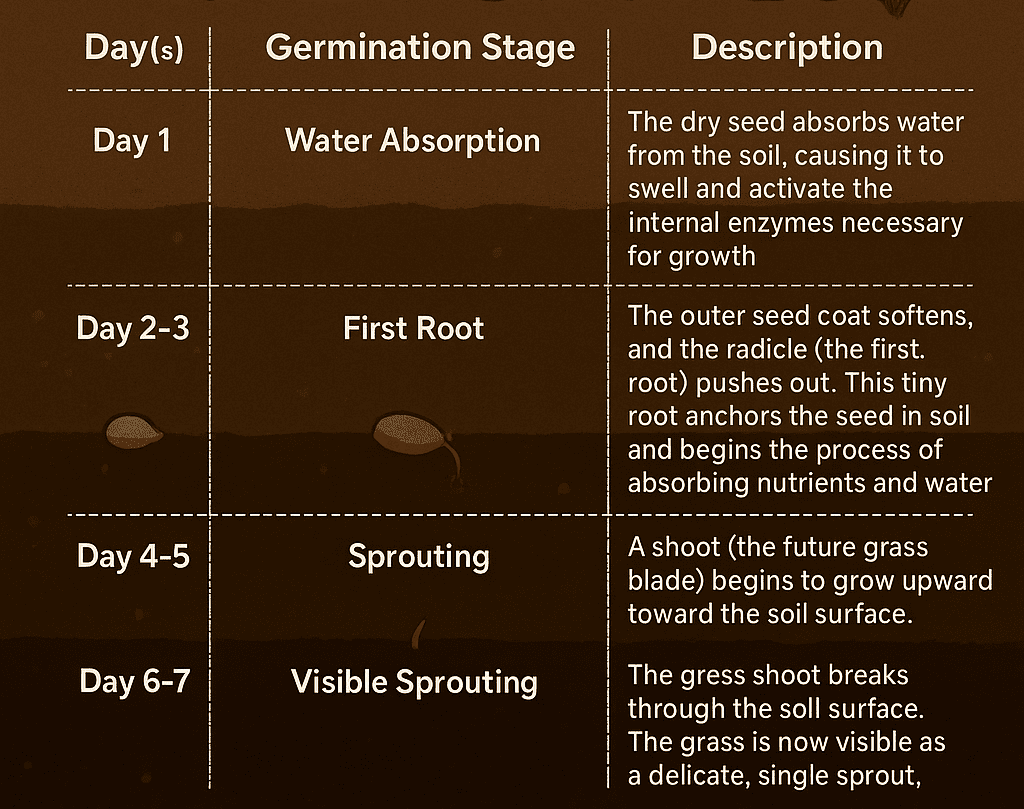
Days 0 to 14: Germination Phase
This is the most critical window. Seeds absorb water, swell, and begin root development.
Water 2 to 4 times daily. Apply 1/8 to 1/4 inch per day, split into multiple sessions. The soil must feel moist every time you test. Apply weed-free straw or peat moss to lock in moisture. Never let the surface dry because even 6 hours without water can kill germinating seeds.
Weeks 3 to 4: First Blades Emerge
Grass is now 1 to 2 inches tall. Roots are forming but still shallow.
Water once daily, twice on hot days. Each session should last about 30 minutes. The goal is to water deeper, 2 to 3 inches, to encourage root growth. Gradually reduce surface sprays as blades cover soil. Do not mow yet, wait until grass reaches 3 to 4 inches.
Weeks 5 to 6: Transition to Deep Watering
Roots are establishing. Shift from frequent light water to deep, infrequent soaks.
Water every other day with about 1/2 inch per session. Soak depth should reach 3 to 4 inches. Allow slight surface drying between sessions to push roots downward.
Week 6 and Beyond: Established Lawn
Grass is mature enough to handle normal care.
Water 2 to 3 times weekly with 1 to 1.5 inches total per week. Apply one or two long sessions instead of daily sprinkles. Only reduce frequency after first mowing. Cut grass to 2 to 3 inches, never removing more than one-third at once.
Best Irrigation Tools for New Grass Seed
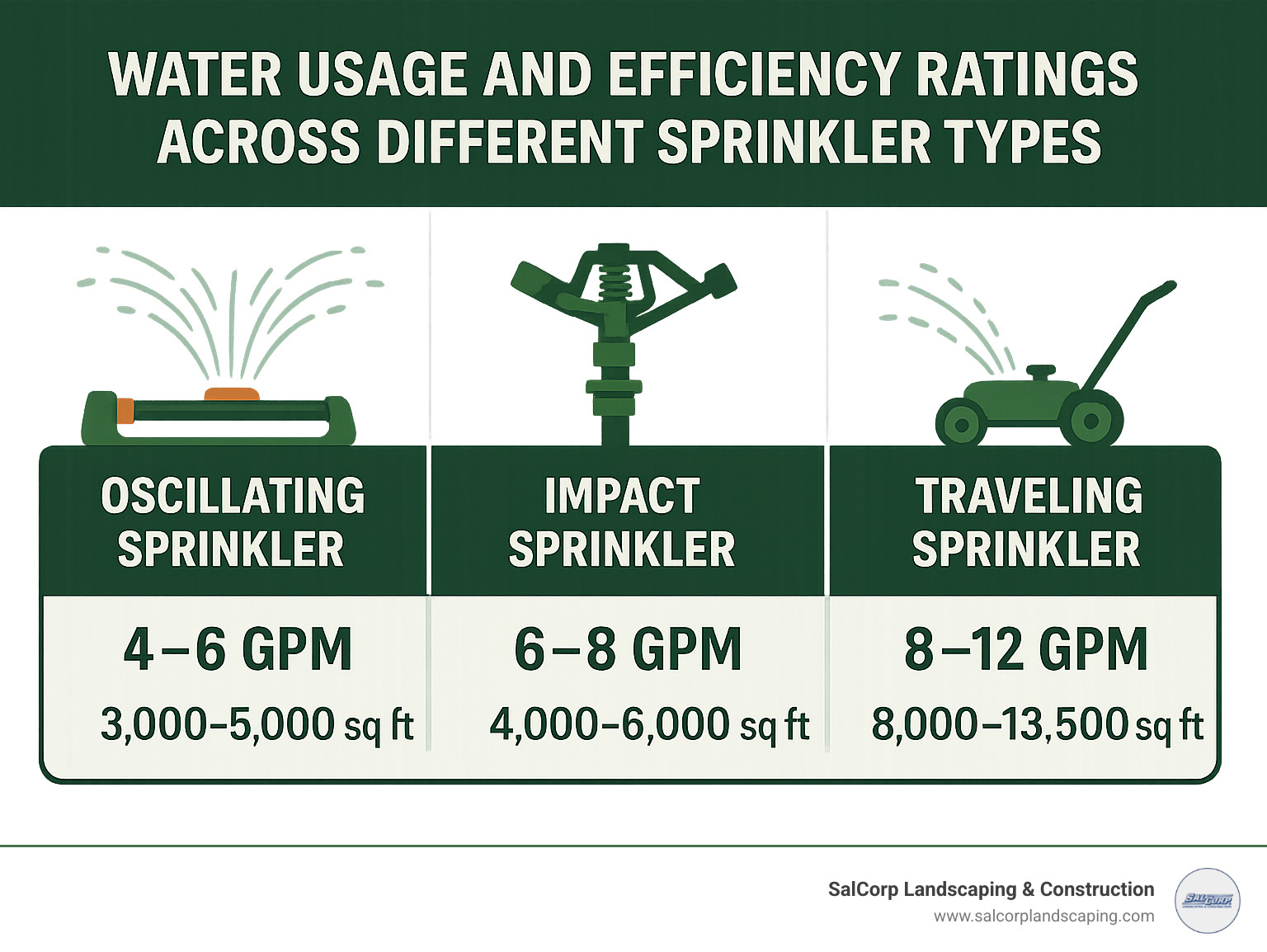
Oscillating Sprinkler
Best for medium to large lawns. Provides gentle, even spray and covers rectangular areas well. Place on a stable surface and adjust width to avoid overspray.
Impact Sprinkler
Best for uneven terrain or sloped yards. Adjustable arc and distance with durable construction. Can be loud and ensure spray is not too forceful.
Soaker Hose
Best for small patches or irregular shapes. Delivers water slowly and directly to soil. Run 15 to 20 minutes twice daily for spot repairs.
Pulsating Sprinkler
Best for large areas. Use on low setting because high pressure may displace seeds.
Automate with Timers
Manual watering is unreliable. Programmable timers are essential for consistency.
Set 2 to 4 daily cycles, for example at 6:00 AM, 10:00 AM, and 4:00 PM. Use rain sensors to automatically shut off during rainfall. If away, set the timer or arrange for daily checks because one missed day can kill sprouts.
Signs of Overwatering Grass Seed
Soggy Soil or Puddles
Cause is poor drainage or excessive watering. Skip 1 to 2 sessions and reduce duration. Aerate clay soil later.
Fungal Growth
Symptoms include mushrooms, slimy patches, and brown spots. Cause is wet soil overnight. Stop evening watering, improve airflow, and reduce frequency.
Seed Rot
Signs are no sprouts after 3 weeks and a musty smell. Cause is constant saturation. Follow the 1/8 to 1/4 inch per day rule and allow slight drying in clay soil.
Signs of Underwatering Grass Seed
Dry, Cracked Soil
Visual cue is surface pulling away from sidewalks. Increase to 3 to 4 times daily and check sprinkler coverage.
Brown or Wilting Sprouts
Cause is roots drying out. Water immediately and mist every 2 hours in heat.
No Germination After 14 to 21 Days
Check if soil is moist. If yes, seed may be old or planted too deep. If dry, seeds likely died. Re-seed and restart the watering schedule.
Grass-Specific Watering Requirements
Kentucky Bluegrass: Patience Required
This popular cool-season grass takes 2 to 4 weeks to sprout.
Water 3 to 4 times daily for at least 3 weeks. Use a mulch blanket to retain moisture. Do not mow until after 4 weeks, even if blades look ready.
Bermudagrass: Heat-Loving but Thirsty
Warm-season staple but slow to establish from seed.
Water 3 to 4 times daily for 3 to 4 weeks. Soil temperature must be above 65°F for germination. Once mature, water deeply 2 to 3 times weekly.
Tall Fescue: Drought-Tolerant After Establishment
Germinates in 7 to 12 days but needs consistent moisture early.
Water 2 to 3 times daily for 10 to 14 days. Root depth can reach 2 to 3 feet when mature, so water deeply after Week 6. Performs well in partial shade, reduce watering frequency under trees.
Expert Tips for Successful Lawn Seeding
Use Mulch to Lock in Moisture
A thin layer of weed-free straw or Sphagnum peat moss cuts evaporation by up to 50%. Apply 1 bale per 1,000 square feet with light coverage that does not smother seeds. Once grass reaches 2 inches, rake lightly to avoid shading.
Never Skip the First Mow
Mowing signals it is safe to reduce watering.
Wait until grass is 3 to 4 inches tall. Set mower high, never cut below 2 to 2.5 inches. After third mow, apply starter fertilizer and consider pre-emergent herbicide. Never use weed killers before third mow because they damage young grass.
Transition Gradually
Cutting back too fast causes stress.
Week 1: Reduce from 4 to 3 times daily. Week 2: Down to 2 times daily. Week 3: Every other day. Week 4: 2 to 3 times weekly with deep soaks. Let grass tell you, if blades wilt, add a session.
Frequently Asked Questions About Watering Lawn Seeds
How long do I need to water new grass seed every day?
Water new grass seed 2 to 4 times daily for the first 2 to 3 weeks until germination is complete. This typically means watering for 5 to 15 minutes per session, depending on your sprinkler output and soil type.
Can I overwater grass seed?
Yes, overwatering is just as harmful as underwatering. Too much water causes seed rot, fungal growth, and poor root development. Soil should feel like a wrung-out sponge, never soggy or puddled.
What happens if I miss a day of watering?
Missing even one day during germination can kill emerging sprouts. If you must be away, use a programmable timer or arrange for someone to water. Consistency is critical for the first 2 to 3 weeks.
When can I stop watering grass seed every day?
Reduce frequency after the first mowing, when grass reaches 3 to 4 inches tall. Gradually transition from daily watering to 2 to 3 deep waterings per week over 4 to 6 weeks.
Does grass type affect how often I should water?
Yes, cool-season grasses like ryegrass germinate in 5 to 10 days and need 10 to 14 days of frequent watering. Warm-season grasses and Kentucky bluegrass take 14 to 30 days and need 3 to 4 weeks of consistent moisture.
Should I water grass seed in the evening?
Avoid evening and nighttime watering. Wet grass overnight promotes fungal diseases like brown patch and pythium blight. Water in early morning instead.
Key Takeaways for Watering Lawn Seeds Successfully
Success starts with consistent moisture during germination. Match your watering frequency to your grass type, soil composition, and current weather conditions. Use timers to maintain consistency because human error leads to failed germination.
Apply mulch after seeding to reduce evaporation by up to 50 percent. Watch for warning signs like soggy soil, fungal growth, or cracked earth, and adjust immediately. Transition gradually from daily light watering to deep weekly soaks over 4 to 6 weeks.
By following this guide, you will avoid the common pitfalls that cause most new lawns to fail. Within weeks, you will enjoy a thick, healthy lawn that thrives for years to come.