Weeds creeping into your lawn can turn a lush green yard into a patchy, unsightly mess. If you have noticed dandelions, crabgrass, or clover taking over, you are not alone. Most homeowners face this battle every season. The best way to kill weeds in lawn requires understanding weed types, applying herbicides correctly, and maintaining a healthy lawn. This guide covers proven methods from identification to long-term prevention so you can reclaim your turf.
Identify Weeds Before Treating

Knowing exactly what you are fighting saves time, money, and frustration. Treating weeds without proper identification leads to wasted effort and potential grass damage.
Grassy Weeds vs Broadleaf Weeds
Weeds fall into two main categories, and each requires different control tactics.
- Grassy weeds resemble lawn grass but grow faster and thicker. They include crabgrass, foxtail, barnyard grass, and Bermuda grass.
- Broadleaf weeds have wide leaves with distinct shapes. Common examples are dandelion, clover, plantain, oxalis, and spurge.
Annual, Perennial, and Biennial Lifecycles
Weeds also differ in how long they live, which affects when and how you should treat them.
- Annual weeds complete their life in one season. Summer annuals like crabgrass germinate in spring and die in fall. Winter annuals like shepherd’s purse germinate in fall.
- Perennial weeds live more than two years and return from roots or tubers each season. Examples include dandelion, nutsedge, and wild garlic.
- Biennial weeds grow foliage the first year and flower and seed in the second year. Burdock and mullein fit this category.
Pro Tip: Use a smartphone plant identification app or your local extension service to upload photos for accurate weed IDs. Correct diagnosis determines half the battle.
Build a Thick Lawn to Prevent Weeds
A dense, healthy lawn is your strongest defense against weeds. Weeds colonize areas where grass is thin, weak, or stressed.
Mow at the Right Height
Setting your mower to the correct height prevents weed establishment.
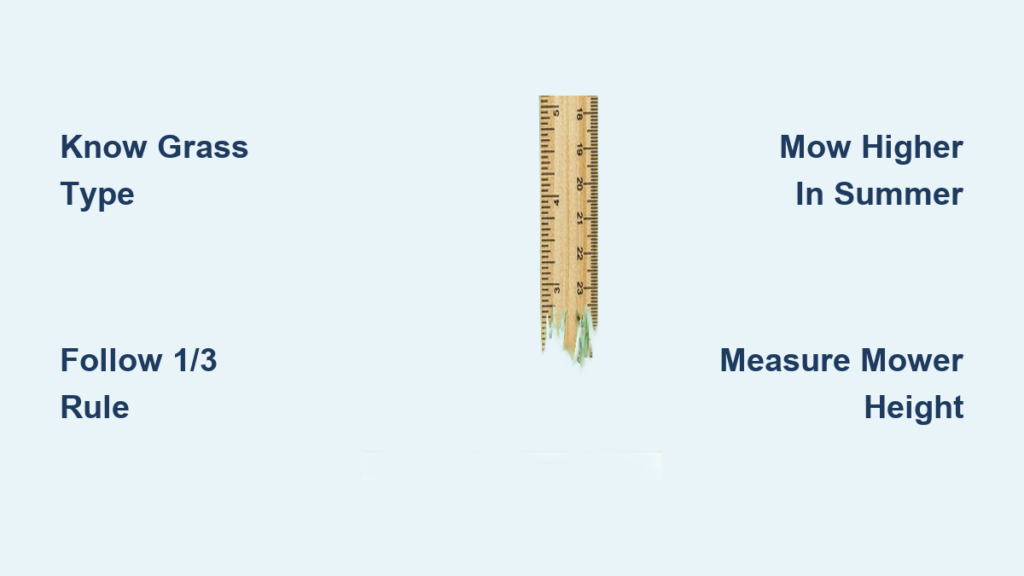
- Cool-season grasses like fescue and bluegrass thrive at 2.5 to 3.5 inches.
- Taller grass shades soil, blocking sunlight from weed seeds.
- Mow twice weekly during peak season to prevent weeds from flowering and seeding.
- Never remove more than one-third of blade height at once, as scalping weakens grass.
Water Deeply and Infrequently
Shallow watering encourages shallow roots in both grass and weeds.
- Apply 1 to 1.5 inches of water per week from rain or irrigation.
- Water in one or two deep sessions rather than daily sprinkling.
- Early morning application reduces evaporation and fungal disease risk.
Fertilize Based on Soil Test Results
Proper fertilization strengthens grass while avoiding weed-feeding excess.
- Test your soil annually to check pH, nutrients, and compaction levels.
- Apply 2 pounds of nitrogen per 1,000 square feet yearly, split between fall and spring.
- Use balanced fertilizers like 13-5-8 to boost grass without feeding weeds.
Warning: Avoid high-nitrogen spring feeds. They fuel crabgrass and Poa annua growth.
Apply Pre-Emergent Herbicides Before Weeds Sprout
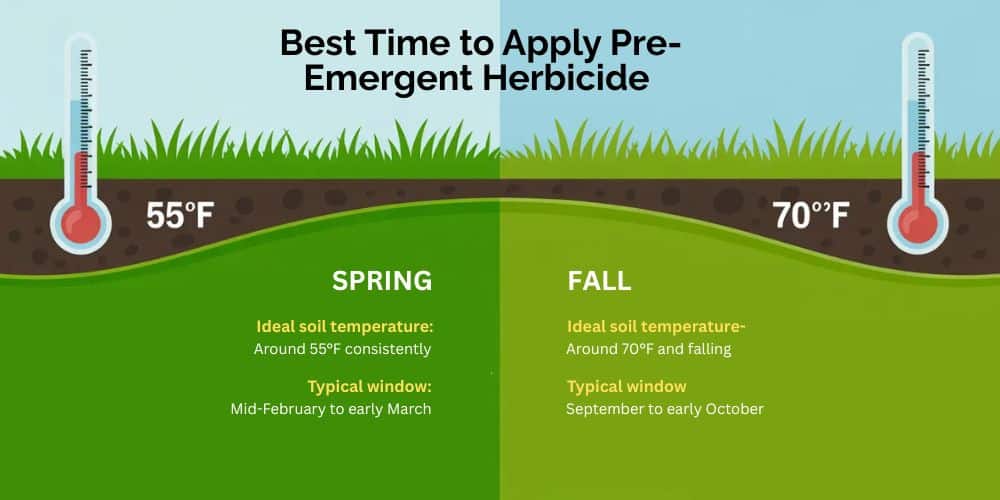
Pre-emergent herbicides create an invisible barrier in soil that kills germinating seeds. This proactive approach stops weeds before they become visible.
Choose the Right Pre-Emergent Product
Not all pre-emergents work equally. Rotating products yearly prevents weed resistance.
- Prodiamine offers 10 to 12 weeks of control. Apply in early spring when soil reaches 55°F.
- Pendimethalin provides 6 to 8 weeks of protection. Apply at soil temperatures of 50 to 55°F.
- Indaziflam lasts up to 12 months. Best applied in fall for season-long suppression.
- Simazine targets winter annuals like Poa annua. Use in fall with a different mode of action.
Critical: Water in pre-emergents with one-quarter to one-half inch of irrigation to activate the chemical barrier.
Time Applications Perfectly
Missing the application window allows weeds to break through.
- Crabgrass germinates when soil temperatures reach 55 to 60°F for 3 consecutive days.
- In Zone 8A, this typically occurs around February 15 to March 1.
- In northern zones, aim for April to May applications.
Pro Tip: Use a soil thermometer or check local extension service forecasts to time applications precisely.
Kill Existing Weeds with Post-Emergent Herbicides
Once weeds are visible, targeted sprays eliminate them without harming your lawn when applied correctly.
Selective vs Nonselective Options
Understanding the difference protects your desirable grass.
- Selective herbicides kill weeds while sparing grass. Use these for general lawn treatment.
- Nonselective herbicides kill everything green. Use these only for spot treatment or total renovation.
Best Herbicides by Weed Type
For Broadleaf Weeds
- 2,4-D works on dandelion, clover, and plantain. Use 1.1 ounces per gallon on young, actively growing weeds.
- Tzone (Sulfentrazone plus Flumioxazin) handles tough weeds like oxalis, spurge, black medic, and morning glory.
- Triclopyr plus Triad TZ provides broad control with fast results.
User Feedback: “Tzone made my lawn look 50x better in two weeks.”
For Grassy Weeds
- Quinclorac effectively controls crabgrass and invasive grasses. Mix with 2,4-D and surfactant for wider control.
- Tenacity (Mesotrione) kills Poa annua, clump fescue, and nutsedge. Works as both pre and post-emergent.
For Nutsedge
- Sedgehammer (Halosulfuron-methyl) is the gold standard. Apply when nutsedge is 3 to 5 inches tall and actively growing.
- Requires 2 to 3 applications, 10 to 14 days apart.
Application Best Practices
- Spray when weeds are young. Mature weeds resist treatment.
- Apply in early morning at 60 to 75°F with no wind and no rain expected for 24 hours.
- Add surfactant (1 to 2 teaspoons per gallon) to help herbicides stick and penetrate waxy leaves.
- Wait 2 to 3 days after mowing before spraying. Re-mow 2 days after application.
Avoid: Applying during heatwaves above 90°F. Herbicides can volatilize and drift to ornamental plants.
Try Organic and Natural Weed Control Methods
If you prefer avoiding synthetic chemicals, several natural methods work well for light infestations.
Hand-Pulling and Digging
This method works best for small areas or isolated weeds.
- Pull after rain or watering when soil is soft.
- Use a dandelion digger or sickle blade to remove the entire taproot.
- Never leave root fragments. Dandelions and nutsedge regrow from tiny pieces.
Smother with Cardboard and Mulch
This technique works for flower beds, tree rings, or weedy patches.
- Lay cardboard (no tape or wax) over the area, overlapping edges by 6 inches.
- Wet it down to prevent blowing away.
- Top with 3 to 4 inches of wood chips, leaves, or grass clippings.
- Wait 4 to 8 weeks. Weeds die from lack of light.
Caution: This method is not ideal for large lawns or slopes due to erosion risk.
Use Boiling Water and Vinegar
These methods kill foliage but not roots, providing temporary results.
- Boiling water: Pour directly on weeds in cracks, driveways, or patios.
- Horticultural vinegar (20 to 30% acetic acid) outperforms household vinegar (5%).
- Add 1 to 2 teaspoons of dish soap per quart to help solutions stick.
- Reapply every 5 to 7 days for persistent weeds.
Warning: Both can damage surrounding grass and soil biology. Use with precision.
Apply Corn Gluten Meal
Corn gluten meal is an organic pre-emergent that inhibits root development in germinating seeds.
- Apply before weed seeds sprout, typically early spring or fall.
- Use 20 pounds per 1,000 square feet.
- Reapply annually for best results.
Limitation: This product will not kill existing weeds. Best paired with other methods.
Apply Herbicides Correctly for Maximum Effectiveness
Even the best product fails with improper application. Precision matters for results.
Calibrate Your Sprayer
Proper calibration prevents under or over-application.
- Mark a 1,000 square foot area (10 feet by 100 feet).
- Fill sprayer with 3 gallons of water.
- Spray the area and measure how much water remains.
- Adjust walking speed until you use 1 gallon per 1,000 square feet.
- Mix herbicide accordingly.
Use the Right Equipment
- Backpack sprayer (battery-powered) provides the most accurate application.
- Hose-end sprayers often deliver inconsistent coverage.
- Paintbrush or sponge applicators work well for targeting individual weeds.
Track Coverage with Dye
Add blue dye to your spray mix to see where you have applied.
- Prevents striping or double-spraying.
- Fades within 14 days with no long-term stain.
Rotate Herbicides and Prevent Weeds Long-Term
Weed control requires an ongoing strategy that evolves with seasons. A one-time fix does not work.
Follow a Year-Round Schedule
| Month | Action |
|---|---|
| February | Apply pre-emergent (Prodiamine or Pendimethalin) |
| April | Reapply pre-emergent if needed |
| September to October | Post-emergent for perennials (Tzone, 2,4-D) |
| October to November | Apply fall fertilizer, overseed thin areas |
Rotate Herbicide Classes
Using the same chemical every year breeds herbicide-resistant weeds.
- Alternate between Prodiamine, Indaziflam, and Simazine.
- Change active ingredients, not just brand names.
Overseed and Aerate After Weed Kill
Once weeds die, fill gaps with grass to prevent reestablishment.
- Dethatch to remove dead material.
- Core aerate to relieve compaction.
- Overseed in early fall with a quality grass blend.
- Water daily until seedlings establish.
Best Timing: September to October offers cooler temperatures and fewer competing weeds.
Know When to Start Over
If your lawn is over 50% weeds, especially with invasive grasses like Bermuda or nutsedge, complete renovation may be faster and cheaper than fighting a losing battle.
Complete Lawn Renovation Steps
- Spray with glyphosate on a calm, sunny day.
- Wait 7 to 10 days for full kill.
- Dethatch and aerate the area.
- Amend soil based on test results.
- Re-seed or sod with desirable grass variety.
User Insight: “I would nuke and reseed from scratch if I could do it again.”
Frequently Asked Questions About Killing Weeds in Lawn
What is the fastest way to kill weeds in my lawn?
Post-emergent herbicides provide the fastest visible results. Tzone and 2,4-D show results in 10 to 14 days. For organic options, hand-pulling provides immediate removal but requires manual effort.
When should I apply pre-emergent herbicide?
Apply pre-emergent in early spring when soil temperatures reach 50 to 55°F, typically February through May depending on your climate zone. For winter annuals, apply in fall.
Can I use Roundup on my lawn?
Glyphosate (Roundup) kills all green plants, including grass. Use it only for spot treatment of individual weeds or for complete lawn renovation before reseeding.
What kills nutsedge but not grass?
Sedgehammer (Halosulfuron-methyl) specifically targets nutsedge while sparing most lawn grasses. Apply when nutsedge is actively growing and repeat 2 to 3 times.
How do I prevent weeds from coming back?
Prevent weeds by maintaining a thick, healthy lawn through proper mowing, deep watering, and appropriate fertilization. Apply pre-emergent herbicides annually and rotate herbicide classes to prevent resistance.
Is it better to pull weeds or spray them?
For small infestations, hand-pulling removes weeds immediately. For larger problems, herbicides treat more weeds faster and kill root systems that hand-pulling might miss.
Key Takeaways for Killing Weeds in Lawn
The best way to kill weeds in lawn combines early identification, strategic herbicide use, proper timing, and consistent lawn care. Focus first on identifying your specific weed types, as this determines whether you need pre-emergent or post-emergent products. Apply pre-emergents before seeds germinate in spring, and use targeted post-emergents when weeds are young and actively growing. Build a dense, healthy turf through proper mowing height, deep watering, and balanced fertilization. This approach creates the strongest defense against future weed invasions. Whether you choose organic methods, targeted chemicals, or a combination, consistency and precision deliver lasting results. With the right plan, you can enjoy a lush, weed-free lawn year after year.