Winter storms dump snow on driveways, sidewalks, and walkways, leaving homeowners searching for reliable help. If you provide snow blowing services, your rates determine whether you attract steady work or struggle to stay profitable. Setting the right price balances fair compensation with what your local market will actually pay.
Your pricing strategy depends on driveway size, snow frequency, equipment costs, and customer expectations. A well-structured rate sheet helps you win jobs, retain clients, and avoid burnout. This guide covers proven pricing models, regional adjustments, add-on services, and common mistakes to sidestep. By the end, you will know exactly how to charge for snow blowing in any market.
Choose the Right Pricing Model
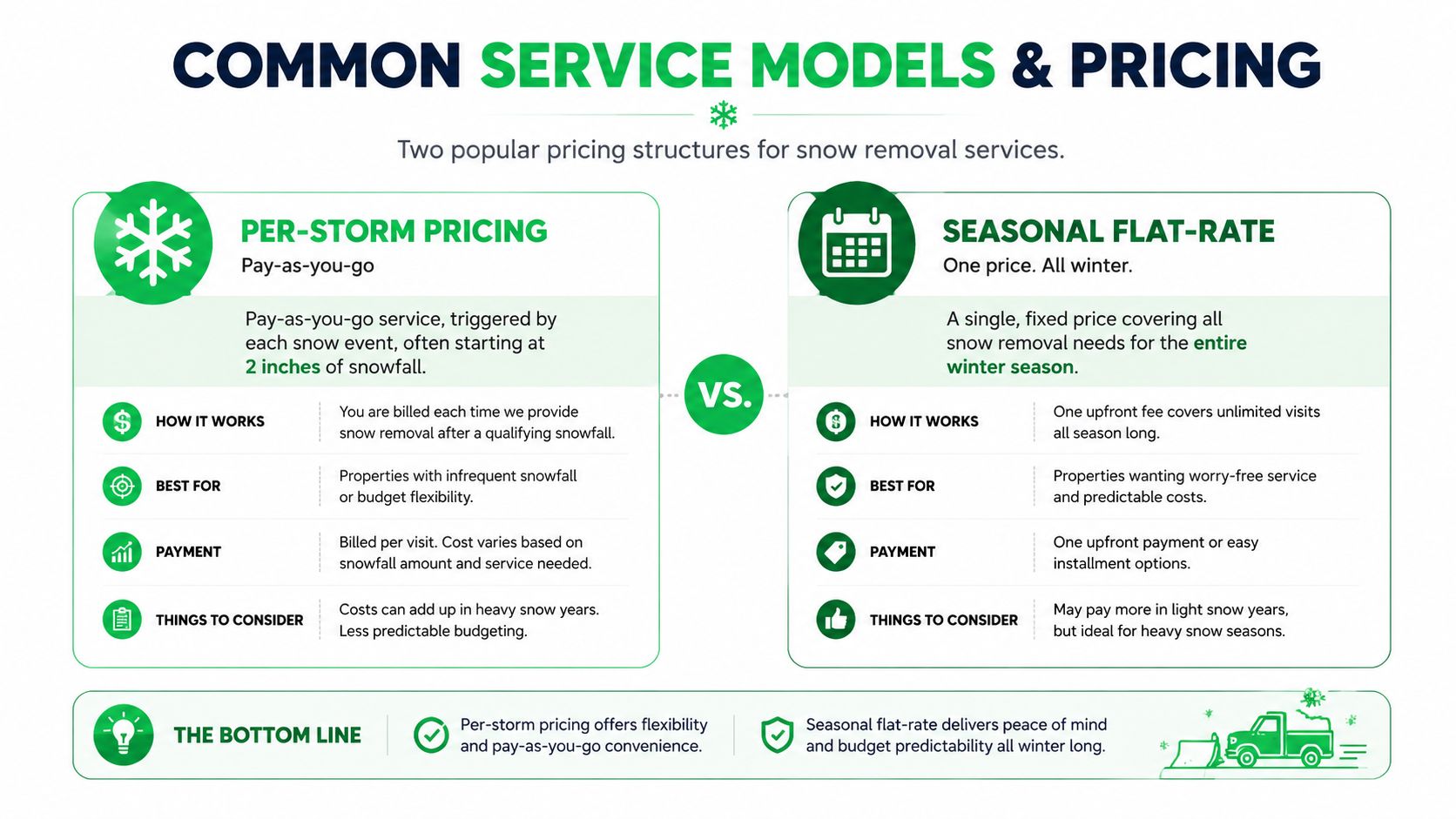
Your pricing structure shapes your income and customer relationships. Match the model to your service area and client needs.
Charge Per Visit for One-Time Clearings
Per-visit pricing is the simplest approach. Customers pay a flat fee each time you clear their property, which appeals to homeowners who only need occasional help.
• Typical rate range: $30 to $75 per visit
• Best for: Driveways under 1,000 square feet
• Advantage: Low commitment for clients
• Downside: Income drops during quiet winters
Pro Tip: Require a minimum snowfall of 2 inches before showing up. Otherwise, you waste time on dustings that barely need clearing.
Offer Seasonal Contracts for Steady Income
Seasonal pricing locks in a set fee for the entire winter. Clients get peace of mind, and you get guaranteed revenue regardless of storm patterns.
• Typical rate range: $300 to $600 per season
• Best for: Suburban homes with predictable snowfall
• Advantage: Stronger customer loyalty and predictable cash flow
• Downside: Risk if snowfall far exceeds normal levels
Expert Note: Spell out visit limits, response windows, and included services like windrow removal. Vague contracts lead to disputes.
Bill by the Hour for Complex Jobs
Hourly rates make sense when time matters more than square footage. Large lots, steep hills, and multi-zone properties often fit this model.
• Typical rate range: $40 to $75 per hour
• Best for: Commercial lots, estates, or awkward layouts
• A clean way to charge for tough conditions
• Downside: Clients may fear runaway costs
Warning: Always estimate hours upfront and call the client if the job runs long. Transparency builds trust.
Set Rates Based on Driveway Size

Driveway dimensions are the single biggest pricing factor. Larger areas demand more fuel, time, and equipment wear.
Small Driveways Under 1,000 Square Feet
These quick jobs dominate urban and town settings. A single-stage blower handles them easily.
• Per visit: $30 to $50
• Seasonal: $250 to $400
• Equipment: Single-stage snow blower is sufficient
Visual Cue: If the driveway fits one or two cars with minimal extra space, classify it as small.
Medium Driveways Between 1,000 and 2,000 Square Feet
Typical suburban driveways often include curves, slopes, or extra parking pads. Two-stage blowers speed up the work.
• Per visit: $50 to $70
• Seasonal: $400 to $550
• Equipment: Two-stage snow blower recommended
Pro Tip: Add $10 to $15 for circular layouts or tight turns that slow your pace.
Large Driveways Over 2,000 Square Feet
Rural and luxury properties often need multiple passes or commercial-grade machines.
• Per visit: $70 to $120+
• Seasonal: $550 to $900+
• Equipment: Three-stage or commercial blower
Expert Note: Charge more for long lanes, steep grades, or properties with multiple parking zones. These features add real time.
Adjust for Location and Conditions
Geography shapes what customers expect to pay. Rates swing widely based on snowfall frequency, labor costs, and local competition.
Compare Local Market Rates
Scout competitors before setting your prices. Browse Nextdoor, Craigslist, and Facebook Marketplace for current listings.
• Northern states like Minnesota and Wisconsin support higher rates due to constant demand
• Mountain regions and Upstate New York allow premium pricing during peak season
• Moderate zones like Pennsylvania and Ohio require competitive pricing to win jobs
Action Step: Call three to five local services as a mystery shopper to gather real rate data.
Factor in Snow Type and Frequency
Wet, heavy snow drags down your pace compared to light powder. Frequent storms boost visits but also wear out equipment faster.
• Add 10 to 20 percent for wet snow or ice buildup
• Offer discounts during low-snow winters or bundle with other services
Common Mistake: Forgetting to charge for re-blows when snowplows push snow back into cleared driveways. Build this into your policy.
Add Value With Service Upgrades
Stand out by offering extras that justify premium pricing. Homeowners love convenience and will pay more for full-service clearing.
Clear Walkways and Steps
Most clients want more than just the driveway cleared. Front walks, side paths, and porch steps round out the job.
• Add $10 to $20 per visit
• Includes: Front walk, side paths, porch steps
Pro Tip: Use a snow broom or shovel on decorative surfaces to avoid damaging pavers or wood.
Remove Windrows at the End of the Driveway
Plows often leave dirty piles blocking the end of the driveway. Clearing these shows attention to detail.
• Add $5 to $10 per visit
• Use a shovel or compact loader if you have one
Customer Win: A clean end-of-driveway earns repeat calls and word-of-mouth referrals.
Offer Priority Response
Busy customers will pay extra to be first on your list after a storm ends.
• Add $15 to $30 to per-visit or seasonal rate
• Guarantee: Cleared within two to four hours of snowfall stopping
Expert Note: Send a text alert with your ETA. Quick communication separates pros from amateurs.
Avoid Common Pricing Mistakes

Pricing pitfalls drain profits and burn out even experienced providers. Rushing harder or cutting rates leads to long-term losses that compound across an entire season.
Undercharging to Win Jobs
Low prices attract calls but erode your margins and reputation.
• Risk: Burnout from handling too many low-paying jobs
• Solution: Sell your reliability and quality, not just your price
Reality Check: Charging $25 for a large driveway may win one job, but it rarely earns respect or repeat business.
Not Charging for Re-Blows
Snowplows regularly push snow back onto freshly cleared driveways. If you do not plan for this, you lose money on every storm.
• Policy: Include one free re-blow per storm or charge extra beyond that
• Communicate: Tell clients plow zones are not guaranteed clear
Pro Tip: Snap before-and-after pictures to document your work and justify re-blow charges.
Ignoring Equipment Costs
Snow blowers wear down fast. Fuel, oil, belts, and auger replacements add up quickly over a season.
• Track expenses for oil changes, shear pins, and auger repairs
• Build these costs into your hourly or seasonal rate
Rule of Thumb: Set aside 15 to 20 percent of revenue for maintenance and future equipment replacement.
Accept Payment Easily and Professionally
Smooth payment collection boosts customer satisfaction and repeat business. Make it easy for clients to pay you promptly.
Use Mobile Payment Apps
Digital tools speed up transactions and reduce hassles.
• Recommended options: Venmo, PayPal, Cash App, Zelle
• Pro Tip: Send a payment reminder with a direct link after each visit
Bonus: Digital payments eliminate cash disputes and lost receipts.
Offer Auto-Pay for Seasonal Contracts
Recurring billing keeps cash flow steady and clients committed.
• Collect the full amount upfront or split into monthly installments
• Use signed contracts via email or paper for clarity
Expert Note: Include late fees and cancellation terms in every contract to protect your time and income.
Know When to Raise Your Rates
Growing demand or rising costs signal it is time to adjust your pricing. Waiting too long leaves money on the table.
Signs It Is Time to Increase Your Rates
• You are fully booked after every storm
• Competitors in your area charge more than you
• Fuel or equipment costs have jumped significantly
Strategy: Raise rates 10 to 15 percent each season or when renewing contracts.
Communicate Changes Clearly
Give existing customers a heads-up before the season begins. Clear communication prevents sticker shock.
• Example message: “Due to higher fuel and maintenance costs, seasonal rates are now $475, up from $425.”
• Offer loyalty discounts to soften the increase for long-term clients
Pro Tip: Frame the increase as improved service or faster response times, not just higher costs.
Frequently Asked Questions About Charging for Snow Blowing
What Is the Average Cost to Blow Snow From a Driveway?
Most homeowners pay between $30 and $75 per visit for a standard residential driveway. Seasonal contracts range from $300 to $600 depending on region and driveway size.
Should I Charge Per Visit or Offer Seasonal Contracts?
Both models work well. Per-visit pricing attracts occasional clients and keeps commitments low. Seasonal contracts provide guaranteed income and stronger customer loyalty. Choose based on your typical client base and local snow patterns.
How Much Should I Charge Per Hour for Snow Blowing?
Hourly rates typically range from $40 to $75 depending on your market, equipment, and job complexity. Urban areas with high demand support the higher end of that range.
Do I Need to Remove Windrows for Free?
No. Windrow removal is an optional add-on that most homeowners appreciate. Charge $5 to $10 extra per visit to cover the extra time and effort.
How Do I Handle Snowplow Re-Blows?
Set a clear policy before the season starts. Include one free re-blow per storm or charge a flat fee for additional visits. Document each visit with photos to avoid disputes.
When Should I Raise My Snow Blowing Rates?
Raise rates when you are consistently fully booked, when competitors charge more, or when fuel and equipment costs rise. A 10 to 15 percent increase each season keeps your pricing aligned with expenses.
Key Takeaways for Pricing Your Snow Blowing Services
Setting the right rates for snow blowing comes down to matching your pricing model to your market and workload. Choose between per-visit, hourly, or flat seasonal fees based on what your clients prefer and what your region demands. Always factor in driveway size, snow conditions, and equipment costs to avoid undercharging.
Stand out by offering add-ons like walkway clearing, windrow removal, and priority response. These extras justify premium pricing and boost your income per visit. Avoid common mistakes like ignoring re-blow costs or undercharging just to win jobs, since those habits drain profits and lead to burnout.
Your next step is to research three to five local competitors this week and build a rate sheet based on their pricing plus your unique value. Test your rates on a few jobs, track your time and expenses, and adjust each season to stay profitable.