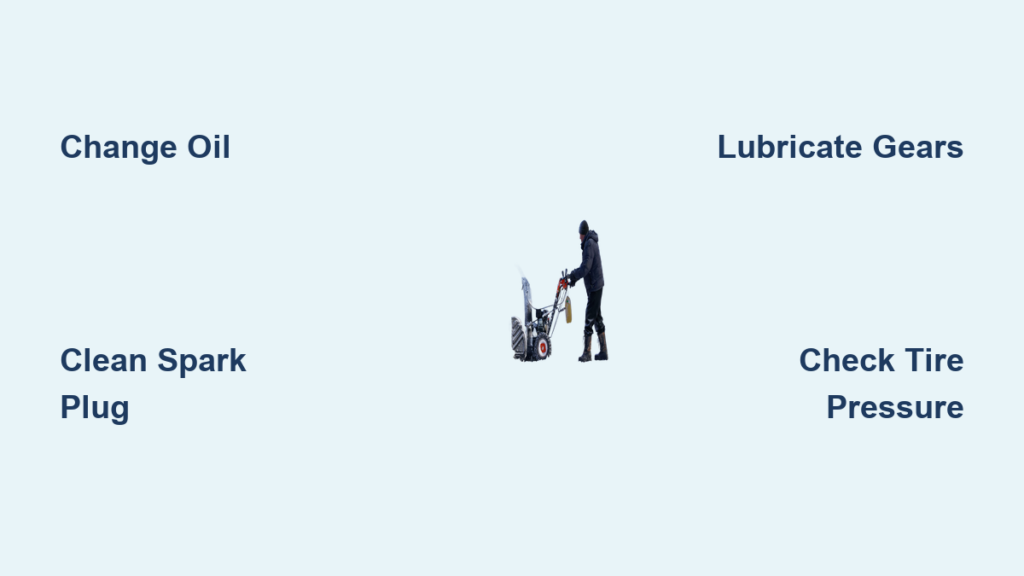
Nothing’s worse than a snowstorm rolling in and your snow blower sputtering or refusing to start. A proper snow blower tune-up before winter arrives guarantees reliable performance when you need it most. Whether you handle the work yourself or hire a professional, this essential prep extends your machine’s lifespan and prevents costly mid-season breakdowns. This guide covers the complete 10-step process, from oil changes to rust protection, plus pro tips and product recommendations to keep your equipment running strong.
1. Warm Up the Engine Before Draining Oil
Before draining old oil, run the engine for 3 to 5 minutes. Warm oil flows more freely and suspends sludge and contaminants, which means a cleaner, more complete drain. Perform this step outdoors in a well-ventilated area. Never run a snow blower indoors.
2. Drain and Replace the Engine Oil
Fresh oil keeps your engine running smoothly during cold starts. Locate the oil drain plug on the side or bottom of the engine. You may need to remove the wheel for access. Drain the oil completely into a pan, reinstall the plug tightly, and refill with just under a quart of high-quality small engine oil. Always check your owner’s manual for the correct viscosity. Use the dipstick to verify the level and avoid overfilling, which can damage the engine.
3. Clean or Replace the Spark Plug
A clean spark plug ensures strong ignition and better fuel efficiency. Remove the plug with a socket wrench and inspect it for carbon buildup, cracks, or electrode wear. Clean reusable plugs with a wire brush or wire wheel. Even plugs that look worn can often be restored with a thorough cleaning. Reinstall the plug loosely for now and finalize tightening after the combustion chamber cleaning step.
4. Clean the Combustion Chamber with Tune-Up Fluid
Carbon deposits reduce compression and increase oil consumption over time. Pour 1 to 2 oz of Sea Foam or a similar small engine cleaner directly into the spark plug hole. Let it soak for 10 to 15 minutes to penetrate piston rings and loosen carbon buildup. Keep face and hands clear during the next step.
5. Fire Up the Engine and Burn Off Residue
After the fluid has soaked, fully reinstall the spark plug and reconnect the ignition wire. Start the engine and expect a burst of white smoke as the fluid burns off along with loosened deposits. This is normal and shows the system is cleaning itself. Run the engine for 5 to 10 minutes to clear the residue completely.
6. Inspect and Lubricate the Drive Belt and Gear System
Flip the snow blower onto its face with the carburetor side up to prevent fuel leaks. Remove the bottom cover to access the belts and gears. Check the belt for cracks, fraying, or glazing, and verify it has slight give when pressed. Apply PB Blaster to rusted bolts for easier removal. Lubricate the ring gear and speed selector shafts with light grease.
Critical warning: Do NOT grease the rubber drive wheel. It relies on friction to function, and grease will cause slipping. If grease gets on the rubber, clean it immediately with brake cleaner.
7. Apply Grease to Fastener Threads
Before reassembling the bottom plate, apply a small amount of grease to the threads of all fasteners. This prevents corrosion and seizing during storage, making next year’s tune-up faster and easier. A grease pen works well for precise application.
8. Lubricate the Gearbox
Most snow blower gearboxes use grease rather than oil. Locate the zerk fitting on the gearbox and use a grease gun to inject grease until it emerges from the back shaft. Wipe away any excess. Stop when you see fresh grease exit to avoid damaging the seals with over-greasing.
9. Protect Against Rust
Spray a rust inhibitor like Surface Shield on all exposed metal surfaces, including the chute, tines, cast iron housing, drive wheels, and shafts. Many rust protectants leave a water-resistant coating with a pleasant cedar or citrus scent. Reapply mid-season if you notice any early rust spots.
10. Check and Adjust Tire Pressure
Most snow blower tires arrive underinflated from the factory. Check the sidewall for the maximum pressure rating, typically 20 PSI. Do not exceed 15 PSI. Lower pressure provides better traction on snow and ice, a smoother ride, and reduced skidding. Use a quality gauge rather than guessing.
Final Run Test
After reassembly, restart the engine and let it run for 2 to 3 minutes. Check for unusual sounds like grinding or knocking, inspect for oil or grease leaks, and confirm the chute control moves freely. Test auger engagement and verify the drive system moves forward and reverse. Some white smoke during the first few minutes is normal as residual tune-up fluid burns off.
Tune-Up Checklist
• Warm engine before oil change
• Drain and refill engine oil
• Clean or replace spark plug
• Apply tune-up fluid to combustion chamber
• Let fluid soak 10 to 15 minutes
• Fire up and burn off residue
• Inspect drive belt for wear
• Lubricate gears and shafts
• Grease fastener threads
• Lubricate gearbox via zerk fitting
• Apply rust inhibitor to metal parts
• Check and set tire pressure (15 PSI max)
• Final run test (no leaks, full function)
Recommended Products
• Sea Foam: Combustion chamber cleaner
• PB Blaster: Loosen rusted bolts
• Surface Shield: Rust protection
• 5W-30 Small Engine Oil: Engine lubrication
• Wire Brush: Spark plug cleaning
• Grease Gun with Zerk Fitting: Gearbox lubrication
• Brake Cleaner: Remove grease overspray
Common Mistakes to Avoid
Overfilling oil causes hydrolock or seal damage. Always verify with the dipstick. Greasing the rubber drive wheel causes slipping; clean it immediately with brake cleaner if contaminated. Ignoring tire pressure reduces traction, so stick to 15 PSI maximum. Skipping thread lubrication leads to seized bolts, so grease threads every time. Over-greasing the gearbox blows out seals, so stop when grease appears at the shaft.
Professional Tune-Up Option
If you’d rather leave the work to professionals, a complete single-stage snow blower tune-up is available for $109.95 plus parts and tax. The service includes spark plug replacement, oil change, scraper and paddle inspection, auger belt check, and carburetor adjustment. Pickup and delivery costs $89.95 but is free when scheduled between October 1st and October 31st.
Service locations include:
• Village Ace Hardware Inc: 6240 N Port Washington Rd, Glendale, WI 53217, (414) 961-1143
• Village Ace Hardware Prospect: 2170 N Prospect Ave, Milwaukee, WI 53202
• Village Paint & Design (Glendale): 6246 N Port Washington Rd, (414) 961-1144
• Village Paint & Design (Prospect): 2170 N Prospect Ave, (414) 509-6486
• Village Outdoor Living: 6075 N Green Bay Ave, Glendale, WI 53209, (414) 446-8441
Frequently Asked Questions About Snow Blower Tune-Up
How often should I tune up my snow blower?
An annual tune-up before winter is ideal. Regular maintenance extends equipment life and ensures reliable starts when you need them most. A well-maintained snow blower can last 15+ years.
Can I use regular motor oil for my snow blower?
Use high-quality small engine oil with the correct viscosity for your model, typically 5W-30 for cold-weather performance. Check your owner’s manual for specifications, as the wrong oil can damage the engine.
Is white smoke after a tune-up normal?
Yes, white smoke during the first 5 to 10 minutes of operation is normal. This is the tune-up fluid burning off along with loosened carbon deposits. If smoke continues beyond that timeframe, have the engine inspected.
Why shouldn’t I exceed 15 PSI in my snow blower tires?
Snow blower tires typically have a sidewall rating of 20 PSI, but 15 PSI provides better traction on snow and ice. Higher pressure reduces grip and ride comfort, making the machine harder to control.
What happens if I over-grease the gearbox?
Over-greasing can damage seals and cause leaks. Apply grease until you see it emerge from the back shaft, then stop. More is not better when it comes to gearbox lubrication.
Key Takeaways for Your Snow Blower Tune-Up
A thorough snow blower tune-up involves 10 essential steps that protect your investment and ensure reliable winter performance. Schedule service early to take advantage of free pickup offers and avoid the pre-storm rush. Whether you DIY or use a professional service, fresh oil, a clean spark plug, proper lubrication, and rust protection make the difference between a machine that starts on the first pull and one that leaves you stranded. Tune up now, and when the snow starts falling, you’ll be clearing your driveway while others are still tugging starter cords.