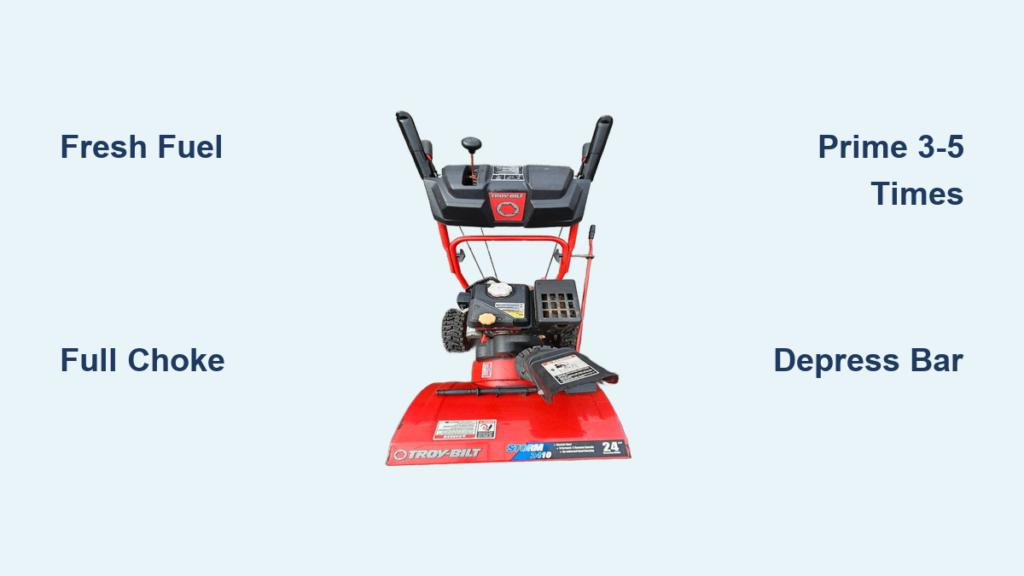
You step outside to a fresh blanket of snow, grab your Troy-Bilt 2410, and pull the cord—nothing happens. A cold engine, stale fuel, or a missed step can quickly turn a simple chore into a frustrating morning. Learning how to start a Troy-Bilt 2410 snow blower correctly saves you time, prevents engine wear, and gets you back inside faster.
The Troy-Bilt 2410 is a two-stage gas snow blower built for medium to heavy snow. It runs on a 208cc four-cycle engine that needs the right fuel, oil, choke, and priming to start reliably in cold weather. Whether you’re starting it for the first time this season or after a few weeks in storage, the steps below walk you through the full startup process, common mistakes, and pro tips for a smooth start every time.
Prepare Before Starting

A few minutes of prep prevents hard starts and protects your engine. Never skip these checks.
Check Fuel Level and Quality
Make sure the tank has fresh gasoline. Fuel older than 30 days loses volatility and can clog the carburetor. If the blower was stored, drain old gas and refill with fresh unleaded fuel rated 87 octane or higher. Add fuel stabilizer if you plan to store it again later.
Verify Oil Level
Pull the dipstick to check engine oil. The Troy-Bilt 2410 takes 20W-50 motor oil in cold climates or 10W-30 in milder conditions. Top off if low, but never overfill. Too much oil can hydrolock the engine and block startup.
Inspect Spark Plug Condition
Remove the spark plug and look for fouling, corrosion, or wetness. A blackened or fuel-soaked plug points to flooding or bad combustion. Clean it with a wire brush or swap in a replacement. Reinstall and tighten by hand first, then snug with a wrench.
Set Choke and Throttle Correctly

Choke and throttle settings make or break a cold ignition.
Cold Engine: Use Full Choke
If the engine has not run in hours, push the choke lever fully to the ON or closed setting. This restricts air and richens the mix so the cold engine fires easily.
Warm Engine: Use Partial or No Choke
Restarting a warm engine? Leave the choke OFF. Full choke on a warm engine floods it and causes hard starting.
Set Throttle to Fast Position
Move the throttle lever to FAST, or to the Start mark if your model has one. This opens the throttle plate slightly and helps the engine catch and stabilize.
Prime the Engine
The 2410 uses a manual primer bulb to push fuel into the carburetor.
Press Primer Bulb 3 to 5 Times
Press the clear rubber primer bulb firmly three to five times. You should see fuel flowing through the bulb. If the bulb stays soft or empty, check for a fuel line clog.
Do Not Over-Prime
Pressing more than five times can flood it. If that occurs, head to the flooded engine section below.
Engage Safety Features

The Troy-Bilt 2410 has built-in safety systems you must activate before starting.
Clear Debris from Auger and Housing
Check the auger and discharge chute for ice, snow, or debris. Never try to start the blower with blockages in place.
Depress Operator Presence Bar
Hold down the operator presence bar on the right handle. You cannot start the engine without it fully depressed.
Start the Engine
Now you are ready to fire it up.
Pull Starter Cord Smoothly
With choke ON, throttle FAST, and the presence bar held down, pull the recoil cord with a quick, steady motion. Use a full pull rather than a sharp yank.
Repeat if Needed
If the engine does not start in two or three pulls, press the primer two or three more times and try again. Most engines fire within five pulls when prepped correctly.
Transition Off Choke Gradually
Once it starts, let the engine run for 10 to 15 seconds on full choke. Then slowly move the choke to OFF as it warms up. Leaving choke on too long causes rough running and heavy smoke.
Fix a Flooded Engine

If the engine cranks but will not fire and smells like gas, it is likely flooded.
Symptoms of Flooding
Look for these signs:
• Strong fuel odor
• Sputtering or no ignition
• Wet spark plug
Clear the Flood
- Move choke to OFF
- Hold throttle in FAST
- Pull the starter cord 5 to 6 times with full force to pull air through the carburetor
- Wait 5 minutes, then retry with no priming and choke off
Troubleshoot Common Start Issues
Even with the right steps, problems can pop up. Here is how to fix them fast.
No Pull Resistance Check Recoil
If the cord pulls freely with no resistance, the recoil assembly may be damaged. Look for broken springs or loose pulleys. Stop pulling to avoid making it worse.
Engine Fires but Dies
This usually means the choke came off too soon or fuel flow is weak. Let the engine warm gradually. If it keeps dying, check for a clogged fuel filter or stale gas.
No Spark Test the Plug
Reinstall the plug, touch the metal base to the engine, and pull the cord while watching for a blue spark. No spark points to a faulty ignition coil.
Post-Start Checks
Once the engine is running, confirm everything works before clearing snow.
Let Engine Warm Up
Run at half throttle for 2 to 3 minutes before engaging the auger. This spreads oil and smooths operation.
Test Auger and Drive
Engage the auger lever and drive system. Listen for odd noises or binding before tackling the driveway.
Storage Tips to Ensure Easy Starts
Good off-season care saves you headaches next winter.
Use Fuel Stabilizer
Add stabilizer to the tank and run the engine for 5 minutes to circulate it through the carburetor.
Run Engine Dry or Drain Fuel
Either run the engine until it stalls from fuel loss or drain the tank and carburetor to prevent gum buildup.
Store Indoors in Dry Place
Keep the blower in a garage or shed, covered and off the concrete floor to avoid moisture damage.
Frequently Asked Questions About the Troy-Bilt 2410 Snow Blower
Why won’t my Troy-Bilt 2410 snow blower start in cold weather?
Cold engines need full choke, fresh fuel, and 3 to 5 primer presses. Stale gas or a weak spark plug are the most common culprits when starting fails in freezing temperatures.
How many times should I prime my Troy-Bilt 2410 before starting?
Press the primer bulb 3 to 5 times for a cold start. Pressing more than 5 times can flood the engine and make starting even more difficult.
Can I start the Troy-Bilt 2410 without using the operator presence bar?
No. The operator presence bar must be fully depressed or the engine will not start. This safety switch prevents accidental startups.
What type of oil does the Troy-Bilt 2410 use?
Use 20W-50 motor oil in cold climates or 10W-30 in milder weather. Always check the dipstick and avoid overfilling.
How do I know if my snow blower engine is flooded?
A flooded engine cranks without firing, smells strongly of gas, and may have a wet spark plug. Set choke to OFF, pull the cord 5 to 6 times, wait 5 minutes, then retry.
Should I leave fuel in the tank over winter?
No. Either drain the tank and carburetor or run the engine dry before storage. Old fuel gums up the carburetor and blocks startup next season.
Key Takeaways for Starting Your Troy-Bilt 2410
Starting your Troy-Bilt 2410 comes down to three essentials: fresh fuel, the right choke setting, and proper priming. Always check oil and the spark plug before pulling the cord, and never forget the operator presence bar. If the engine floods, set choke OFF and clear it with several firm pulls. Your next step is to spend 5 minutes prepping your blower before the next storm so it starts on the first pull when you need it most.