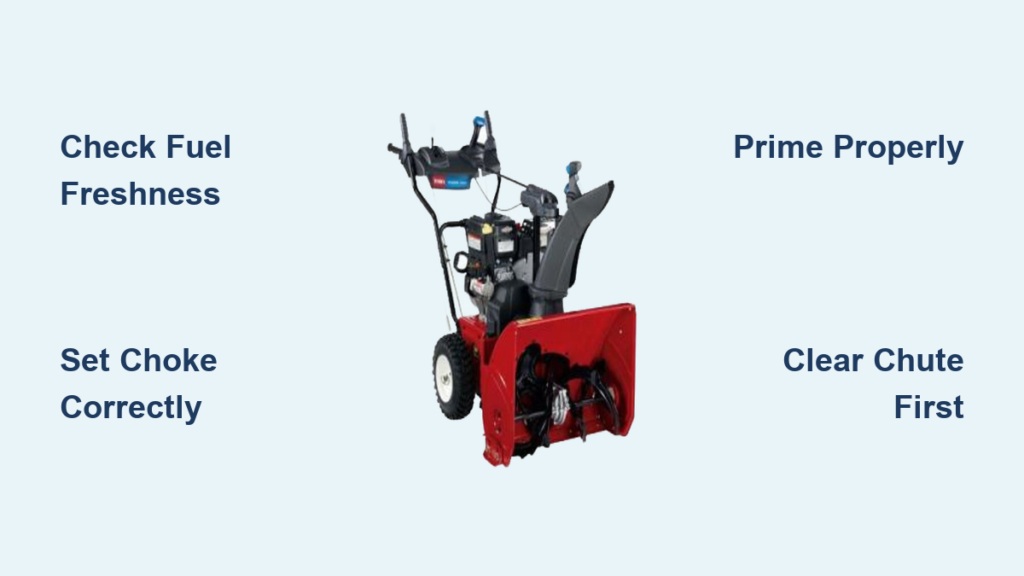
There’s nothing worse than trudging outside on a cold morning, only to find your snowblower won’t start. A frozen carburetor, stale gas, or the wrong choke setting can turn a 5-minute job into an hour-long headache. Knowing the correct startup sequence for your Toro snowblower saves you time, frustration, and an expensive service call.
This guide walks you through every step, from prep to ignition, with model-specific tips for both single-stage and two-stage units. You’ll learn how to prime correctly, adjust the choke for the temperature, and troubleshoot common problems when the engine refuses to cooperate.
Prepare the Snowblower Before Starting

Skipping preparation is the fastest route to a flooded engine or a no-start situation. Take three minutes to set up properly, and your Toro will reward you with a quick, reliable fire-up.
Position on Flat Ground and Clear the Chute
Place the machine on a flat, stable surface before pulling the cord. Starting on a slope risks loss of control or tipping. Check that the discharge chute is in the neutral position and free of packed snow, ice, or debris. Blocked chutes create back pressure that can stall the engine or damage the impeller the moment you engage it.
Check Fuel, Oil, and Key
Fill the tank with fresh gasoline and avoid ethanol blends when possible. Stale fuel (older than 30 days) is the number-one cause of hard starts. If your model has a fuel shutoff valve, confirm it’s flipped to the “On” position.
Pull the dipstick and confirm the level sits at the proper mark. Add oil if low, but never overfill—excess oil causes smoking and can hydraulically lock the engine. For electric-start models, make sure the ignition key is fully inserted.
Set the Choke and Throttle

The right air-fuel mixture makes the difference between a first-pull start and twenty minutes of frustration. Adjust your controls based on the outside temperature.
Match Choke to Temperature
A cold engine needs a richer fuel mixture to ignite:
- Below 30°F: Move the choke to fully closed.
- Above 30°F: Set choke to half or three-quarters closed.
- Restarting within 5 minutes: Leave the choke open—no enrichment needed.
For single-stage Toro models, move the choke lever to the start (closed) position before ignition.
Move Throttle to Fast
Set the throttle to the “Fast” or “High” position. This delivers maximum fuel-air mixture during startup and stabilizes idle once the engine catches. Leaving it on “Slow” reduces combustion efficiency and increases stalling risk.
Prime the Engine the Right Way
Priming sends fuel into the carburetor so the first pull has something to ignite. Too few presses and the engine won’t catch; too many and you’ll flood it.
Press the Primer Bulb Correctly
Press the primer bulb firmly and evenly. If you’re wearing thick gloves, remove one hand for consistent pressure.
- 15°F or warmer: Press 2 times
- Below 15°F: Press 4 times
- Single-stage models: Press 3 times regardless of temperature
Allow the bulb to reinflate fully between presses. Rushing reduces fuel delivery and leads to hard starts.
Start Electric Models Safely

Electric-start Toro snowblowers save your shoulder, but careless use can burn out the starter motor.
Use a Grounded Extension Cord
Plug a grounded outdoor-rated extension cord into the snowblower first, then into the outlet. Press the starter button in 5-second bursts, waiting at least 10 seconds between attempts. Never exceed 10 tries in a row—the starter can overheat and fail.
Once the engine runs smoothly, unplug the cord immediately. Leaving it connected creates tripping hazards and risks electrical damage.
Pull Start with Proper Technique
Recoil-start models demand a controlled pull. Yanking the cord can break the rope or flood the engine in seconds.
Pull Smoothly, Not Hard
Grasp the recoil handle firmly and pull with a steady, consistent motion. Let the engine’s momentum do the work, not your muscle. If the engine doesn’t start after 5–6 pulls, stop and wait 10–15 seconds before trying again. This pause lets excess fuel evaporate and prevents flooding.
Adjust Choke After Startup
Leaving the choke closed too long is one of the most common beginner mistakes. It wastes fuel, floods the engine, and fouls the spark plug with carbon.
Open Choke Gradually
Once the engine runs steadily for 10–15 seconds, begin moving the choke toward the “Run” (open) position. For single-stage models, move the choke lever fully open as soon as the engine stabilizes. Leaving it closed too long causes rich fuel mixtures, poor performance, and excessive exhaust smoke.
Warm Up Before Clearing Snow
Let the engine idle for 30–60 seconds before tackling the driveway. This circulates oil through the engine and brings components up to operating temperature. Jumping straight into deep snow strains a cold engine and shortens its life.
While the engine idles, confirm that the throttle, auger engagement lever, and chute rotation controls all respond smoothly.
Fix Common Starting Problems

Even with perfect technique, issues pop up. Here’s how to diagnose the usual suspects.
Engine Smells Like Gas (Flooded)
A strong fuel odor means the combustion chamber is overwhelmed with gasoline.
- Close the fuel shutoff valve (if equipped).
- Turn off the choke.
- Pull the recoil starter 3–5 times to clear excess fuel.
- Wait 15 minutes.
- Reopen the fuel valve and retry with no priming and the choke off.
This clears the chamber and restores the proper air-fuel balance.
Engine Won’t Start After Multiple Attempts
Work through this checklist:
- Fuel: Is it fresh? Is the tank at least a quarter full?
- Spark plug: Remove it and inspect for fouling, corrosion, or an improper gap.
- Air filter: A clogged filter chokes the engine. Replace if dirty.
- Primer bulb: Cracked or soft bulbs don’t draw fuel. Replace if damaged.
- Choke setting: Double-check the position based on current temperature.
If all else fails, consult your owner’s manual or visit Toro.com for model-specific support.
Engine Starts But Stalls
The most common culprits are choke left engaged too long, a clogged carburetor, or a dirty fuel filter. Clean the carburetor with aerosol cleaner, and replace in-line fuel filters annually.
Maintain for Reliable Starts All Season
A few minutes of seasonal care prevents most starting headaches.
Clean the Air Filter and Inspect the Spark Plug
Clean foam filters with warm, soapy water and let them dry completely. Replace paper filters every season. Inspect the spark plug at the start of each winter and replace it if the electrode is eroded, the gap is off, or the insulator is cracked. Set the gap to 0.030 inches using a Toro-recommended plug for best results.
Check Belts and Auger
Inspect drive and auger belts for cracks, fraying, or slack. A slipping belt reduces throwing power and strains the engine.
Follow Critical Safety Guidelines
Never skip safety steps, even if you’re in a hurry.
Start on Level Ground with a Clear Chute
Always place the snowblower on a level, stable surface before starting. Confirm the discharge chute is completely clear of snow and debris. Starting with a packed chute can jam the impeller and cause sudden kickback.
Follow Manufacturer Guidelines
Adhere to all warnings in your Toro owner’s manual. Improper use voids warranties and risks serious injury.
Frequently Asked Questions About Starting a Toro Snowblower
Why won’t my Toro snowblower start in cold weather?
Cold engines need a richer fuel mixture to ignite. Set the choke to the closed position and press the primer bulb 4 times when temperatures drop below 15°F. Use fresh fuel, since cold weather magnifies the effects of stale gasoline.
How many times should I prime my Toro snowblower?
Press the primer bulb 2 times at 15°F or warmer, 4 times below 15°F, and 3 times for single-stage models regardless of temperature. Allow the bulb to reinflate fully between presses.
What should I do if my Toro snowblower is flooded?
Close the fuel shutoff valve, turn off the choke, and pull the recoil starter 3–5 times to clear excess fuel. Wait 15 minutes, then reopen the fuel valve and restart with no priming and the choke off.
Can I use ethanol gasoline in my snowblower?
Ethanol blends attract moisture and can damage engine components over time. When possible, use ethanol-free gasoline to reduce moisture buildup and extend engine life.
How long should I let my Toro snowblower warm up?
Let the engine idle for 30–60 seconds after starting. This circulates oil and brings components to operating temperature before you engage the auger.
When should I replace the spark plug on my Toro snowblower?
Inspect the spark plug at the start of each winter season. Replace it if the electrode is eroded, the gap is incorrect, or the insulator shows cracks. Set the gap to 0.030 inches.
Final Thoughts on Starting Your Toro Snowblower
Starting a Toro snowblower comes down to following the right sequence: prep fuel and oil, set the choke and throttle for the temperature, prime correctly, and use smooth starting technique. Most starting problems trace back to stale fuel, incorrect choke settings, or a flooded engine, all of which are simple to fix.
Before your next snowfall, spend ten minutes checking the spark plug, cleaning the air filter, and draining old fuel from the tank. These small habits keep your Toro firing on the first pull all season long. For model-specific diagrams, replacement components, and troubleshooting guides, visit Toro.com or contact an authorized dealer near you.