Is your lawn showing strange patches, discoloration, or thinning areas? You’re not alone. Lawn diseases, most commonly caused by fungi, can quickly turn a lush green yard into a patchy, unsightly mess. The good news: how to treat lawn disease is a solvable problem with the right approach. Early detection, accurate diagnosis, and timely action can save your turf and prevent future outbreaks. In this guide, you’ll learn how to identify common lawn diseases, apply effective treatments, and build long-term resilience through smart cultural practices.
Identify the Disease Before Treating
Accurate diagnosis is critical. Misidentifying the disease leads to wasted time, money, and continued damage to your turf. Use visual cues, environmental clues, and professional testing to pinpoint exactly what you’re fighting.
Match Symptoms to Common Disease Patterns
Different diseases leave distinct signatures on your lawn. Start by observing the shape, color, and texture of affected areas.
- Circular patches often indicate brown patch, fairy ring, or dollar spot
- Irregular yellowing or browning could signal melting out, Pythium blight, or drought stress
- Powdery white or gray residue suggests powdery mildew
- Red threads extending from grass blades are a classic sign of red thread disease
- Mushrooms or dark green rings appearing in your lawn indicate fairy ring activity
- Greasy black spots that spread rapidly in hot, humid weather are telltale of Pythium blight
Correlate Symptoms with Grass Type and Season
Certain grasses are more vulnerable to specific diseases. Timing matters too. Some fungi thrive in cool, wet springs while others explode during summer heat.
| Grass Type | Common Diseases | Peak Season |
|---|---|---|
| Kentucky bluegrass | Leaf spot, melting out, red thread | Spring through summer |
| Perennial ryegrass | Dollar spot, red thread | Spring through fall |
| Tall fescue | Brown patch, rust | Summer months |
| Bermudagrass | Spring dead spot, large patch | Spring |
| St. Augustinegrass | Brown patch, dollar spot | Warm months |
Use this reference to narrow down possibilities based on your lawn variety and current weather conditions.
Confirm with Laboratory Testing if Needed
When symptoms are unclear or overlapping, send a sample to a plant disease diagnostic lab. This eliminates guesswork and ensures targeted treatment.
How to collect a proper sample:
- Cut a 4×4 inch plug from the edge of an active patch where diseased grass meets healthy grass
- Include roots, soil, and thatch in the sample
- Place in a plastic bag with a damp paper towel, not soaking wet
- Keep cool and ship next-day delivery with details including grass type, symptoms, and your watering and fertilizing habits
Results typically return within five to seven days and include pathogen identification and specific treatment recommendations.
Treat Fungal Diseases with Effective Methods
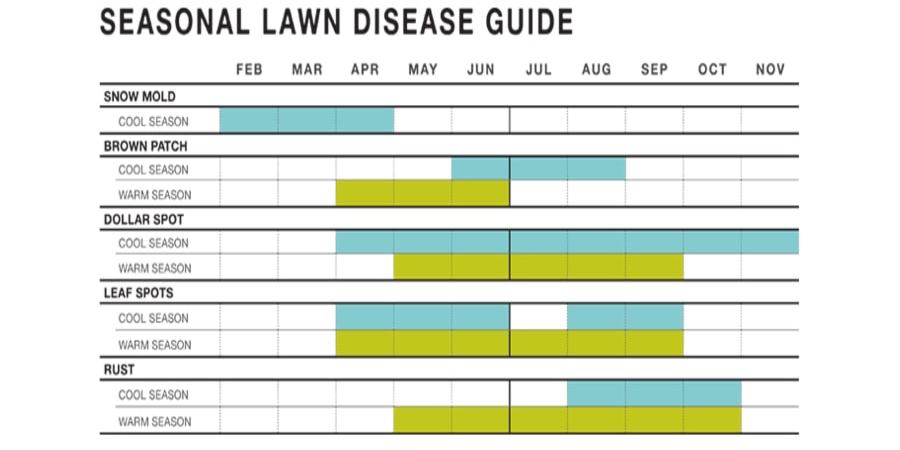
Most lawn diseases are fungal. Once identified, apply the right treatment based on severity and timing. Options include chemical fungicides, biological controls, and cultural adjustments.
Stop Brown Patch Quickly
Brown patch causes large, sunken brown circles with a distinctive frog-eye appearance. The center often remains green while the edges are brown.
Immediate actions to take:
- Stop watering at night since fungal growth thrives on wet blades
- Aerate compacted soil to improve airflow and drainage
- Apply azoxystrobin products at two to four pounds per one thousand square feet every ten to twenty-eight days
- Reduce nitrogen applications during hot, humid periods to avoid lush, disease-prone growth
Pro tip: Use a granular spreader and water in lightly after application for soil-level protection.
Control Dollar Spot in Your Lawn
Dollar spot appears as small, straw-colored spots about the size of a silver dollar. You may notice hourglass-shaped lesions on individual grass blades.
Treatment steps:
- Fertilize to maintain adequate nitrogen levels since dollar spot favors low-nitrogen turf
- Water deeply once weekly instead of daily light sprinkling
- Apply propiconazole products at one-half to four ounces per one thousand square feet
- Aerate to reduce thatch and improve root health
Warning: Reapply every seven to fourteen days during active infection. Avoid spraying when temperatures exceed ninety degrees Fahrenheit.
Eliminate Red Thread Naturally
Red thread shows up as pinkish patches with red, thread-like extensions from grass tips. This disease is common in cool, wet weather and often indicates nitrogen deficiency.
Fix it without heavy chemicals:
- Apply balanced fertilizer to correct nitrogen deficiency
- Mow in the morning after dew has dried to reduce moisture on blades
- Aerate and dethatch to improve airflow around grass plants
For severe cases, spray chlorothalonil or thiophanate-methyl at the first sign of infection. Clean mower blades after use even though mowing itself does not spread red thread.
Manage Snow Mold After Winter
After snow melts, you may find matted, bleached patches with white or pink fungal strands. This is snow mold, and it requires spring recovery efforts.
Recovery steps:
- Lightly rake affected areas to break up mats and stimulate new growth
- Apply light nitrogen fertilizer to encourage regrowth
- Mow shorter in fall to reduce matting potential under snow
- Prevent next year’s outbreak with fall-applied fungicides if your lawn has a history of snow mold
Stop Pythium Blight Before It Spreads
Pythium blight is aggressive and destructive. Small greasy black spots grow rapidly in hot, humid weather and can destroy large areas overnight.
Emergency response:
- Avoid high-nitrogen fertilizers during summer months
- Improve drainage with core aeration
- Apply azoxystrobin preventatively during high-risk periods
- Never mow wet grass since this spreads spores rapidly
Note: This disease moves fast. Act at the first sign of greasy spots.
Break the Fairy Ring Cycle
Fairy ring creates dark green circles, sometimes with mushrooms, and can cause inner patches to die due to hydrophobic soil that repels water.
Treatment options:
- Core aerate heavily and water deeply to improve water infiltration
- Verticut to remove thatch exceeding one-half inch
- Dig out infected soil to twelve inches deep and two feet beyond the ring
- Understand that fungicides have limited success on fairy ring, so focus on cultural fixes
Use Fungicides the Right Way
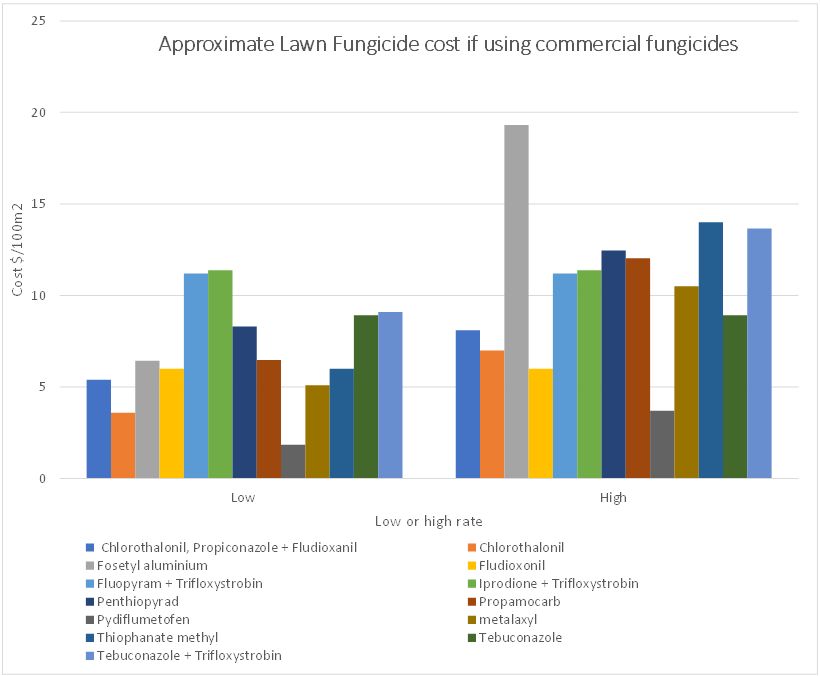
Fungicides work best when applied correctly. Overuse leads to resistance while underuse produces poor results.
Choose the Right Fungicide for Your Disease
Not all fungicides work on all diseases. Match the active ingredient to the specific pathogen you’re fighting.
| Disease | Best Fungicide | Active Ingredient |
|---|---|---|
| Brown patch | Heritage G | Azoxystrobin |
| Dollar spot | Patch Pro | Propiconazole |
| Leaf spot | Azoxystrobin or Propiconazole | Preventative options |
| Rust | Chlorothalonil if severe | Usually not needed |
| Snow mold | Fall-applied DMI fungicides | Propiconazole |
Apply at the Correct Time and Rate
Timing is everything. Most fungicides work best as preventative treatments rather than cures.
- Heritage G: Apply every ten to twenty-eight days starting before disease onset
- Propiconazole products: Use at first sign of disease and reapply every seven to fourteen days
- Best application time is early morning when temperatures are cool and grass is dry
- Water in granular products and let sprays dry before irrigation begins
Rotate Fungicide Groups to Prevent Resistance
Fungi adapt quickly to repeated chemical exposure. Use the FRAC rotation strategy to maintain effectiveness.
- Group eleven fungicides like azoxystrobin work best for prevention
- Group three fungicides like propiconazole are effective for active infections
- Alternate between groups and never use the same type repeatedly
This simple practice keeps fungicides working for years to come.
Fix Lawn Care Habits That Cause Disease
Most lawn diseases start with poor maintenance practices. Fixing cultural habits is the most sustainable way to prevent recurrence.
Water Smart to Prevent Fungal Growth
Improper watering is the number one cause of lawn disease. Your habits directly impact fungal development.
Do this:
- Water between four and eight in the morning so grass dries before nightfall
- Apply one to two inches per week through deep, infrequent watering
- Cycle irrigation on slopes to prevent runoff and standing water
Avoid this:
- Evening watering which extends leaf wetness into the night
- Daily light sprinkles that create shallow roots and wet blades
- Overwatering which invites root rot and fungal growth
Pro tip: Run a catch can test by placing containers around your yard during irrigation to measure coverage and adjust sprinkler heads for even distribution.
Mow High and Keep Blades Sharp
Mowing too short or with dull blades stresses grass and opens it to infection.
Best mowing practices:
- Cool-season grasses should be mowed at three to four inches
- Warm-season grasses should be mowed at one to three inches
- Never cut more than one-third of the blade length in a single session
- Keep mower blades sharp since torn grass invites disease
- Alternate mowing patterns to reduce soil compaction
During active disease outbreaks, remove clippings to reduce spore load.
Fertilize Based on Soil Test Results
Too much or too little nitrogen creates disease-prone lawns. Balance is essential.
Follow these rules:
- Apply four to six pounds of nitrogen per one thousand square feet annually
- Never apply more than one pound of nitrogen per single application
- Use slow-release fertilizers to avoid flushes of tender growth
- Test soil every two to three years with ideal pH between six point five and six point seven
Seasonal tip: Avoid high-nitrogen fertilizers in summer for cool-season grasses.
Aerate and Dethatch Annually
Compacted soil and thick thatch exceeding one-half inch trap moisture and block air, creating perfect conditions for fungi.
Schedule this maintenance:
- Cool-season lawns should be core aerated in early fall
- Warm-season lawns should be aerated in early summer
- Dethatch when thatch exceeds one-half inch using a power rake or verticutter
Bonus: Topdress with one-quarter inch of compost after aeration to boost beneficial microbes.
Boost Soil Health with Biological Treatments

Healthy soil grows healthy grass. Biological treatments build long-term disease resistance without heavy chemicals.
Apply Microbial Soil Boosters
These products introduce beneficial microbes that outcompete pathogens and strengthen your lawn naturally.
Recommended application system:
- Apply Blend first to inoculate soil with diverse beneficial microbes
- Follow with Penetrate to break up compacted soil and improve water flow
- Apply Nourish Biosol seven to fourteen days later to feed microbes and stimulate root growth
- Use Howler to enhance microbial synergy
Application schedule:
- Apply Blend and Penetrate together first
- Follow with Nourish Biosol seven to fourteen days later
- Repeat every three to four weeks during the growing season
Result: A self-sustaining soil ecosystem that naturally suppresses disease.
Try Natural Remedies with Realistic Expectations
Some homeowners prefer non-chemical options, though effectiveness varies significantly.
- Baking soda spray raises leaf surface pH but has limited effect on established fungi
- Dish soap acts as a surfactant helping fungicides stick but is not a treatment itself
Reality check: These are not replacements for fungicides when dealing with active disease outbreaks.
Prevent Disease Before It Starts
The best treatment is prevention. Build a lawn that resists disease through smart planning and consistent maintenance.
Choose Disease-Resistant Grass Varieties
Upgrade your lawn with improved cultivars that naturally resist common diseases.
- Tall fescue is highly resistant to many fungal diseases
- Perennial ryegrass varieties with endophytes offer natural disease resistance
- Hybrid Bermudagrass types provide better resistance than common varieties
Tip: Buy seed labeled disease-resistant or consult your local extension service for regional recommendations.
Improve Sunlight and Airflow
Shade and poor air circulation create fungal paradise. Address these issues directly.
Fix it by pruning trees and shrubs to let in more sunlight. Avoid planting grass in dense shade. Consider switching to ground covers like creeping thyme or pachysandra in heavily shaded areas.
Overseed for Density and Recovery
A thick lawn crowds out disease naturally. Overseeding fills thin areas and introduces stronger grass varieties.
Best times:
- Cool-season lawns should be overseeded in early fall or early spring
- Warm-season lawns should be overseeded in late spring to early summer
- Soil temperature must be below eighty degrees Fahrenheit for cool-season seed germination
Use tall fescue or perennial ryegrass for quick coverage.
Key Takeaways for Treating Lawn Disease Successfully
A disease-free lawn requires combining accurate diagnosis, effective treatment, and strong cultural practices. The most important steps are diagnosing first, treating early, and rotating fungicides to prevent resistance.
Start by identifying the specific disease affecting your lawn. Use visual symptoms, grass type, and seasonal timing to narrow down possibilities. When uncertain, rely on laboratory testing for accurate diagnosis.
Apply fungicides correctly using the FRAC rotation strategy. Heritage G works preventatively while propiconazole products treat active infections. Alternate between these groups to keep treatments effective.
Fix cultural practices that cause disease. Water early in the morning, mow at proper heights with sharp blades, and fertilize based on soil test results. Aerate and dethatch annually to keep soil healthy.
Build long-term resistance through biological treatments and disease-resistant grass varieties. A thick, healthy lawn is your best defense against future outbreaks.
Take action today. Inspect your lawn, identify any problems, fix one cultural habit, and apply appropriate treatment. Your lush, resilient lawn awaits.
Frequently Asked Questions About Treating Lawn Disease
Can grass recover from fungus without treatment?
No, lawn fungus rarely resolves on its own. Without intervention, fungal diseases spread and can kill entire sections of turf. Secondary pathogens often colonize dead areas, causing additional damage. Early treatment with proper fungicides and cultural corrections gives your lawn the best chance of recovery.
How long does it take for lawn fungus to disappear?
With proper treatment, visible improvement appears within one to two weeks. Full recovery takes several weeks depending on the extent of damage and weather conditions. Dead patches require reseeding once soil temperatures warm appropriately.
Should I hire a professional to treat lawn disease?
Yes, consider hiring a professional for severe or recurring cases. Experts can accurately diagnose the specific pathogen, apply targeted treatments, and implement long-term management plans. They also have access to commercial-grade products not available to homeowners.
Does mowing spread red thread disease?
No, red thread spreads through airborne spores, not through mowing. However, cleaning mower blades after use prevents mechanical transfer of other diseases and is a good general practice during disease outbreaks.
What is the single most important thing I can do to prevent lawn disease?
Water correctly. Improper watering is the leading cause of lawn disease. Water between four and eight in the morning, apply one to two inches per week through deep, infrequent watering, and never water at night. This single change prevents most common fungal diseases.