Seeding a large lawn—whether it spans half an acre or several thousand square feet—demands more than scattering seed and hoping for the best. Without a strategic approach, you risk patchy growth, wasted seed, and months of effort lost to poor germination. The key to success lies in proper planning, equipment selection, and consistent aftercare, especially when irrigation is limited or unavailable.
This guide delivers a field-tested roadmap for seeding large areas effectively. You will learn how to choose the right grass, prepare the ground without tilling unnecessarily, use professional-grade seeding methods like slit seeding, and maintain moisture without an automatic irrigation system. Whether you are renovating an existing lawn or starting from bare soil, these steps will maximize germination and minimize wasted time and money.
Define Your Lawn Project Scope
Assess Total Square Footage
Start by measuring your area accurately. Lawns over 10,000 square feet qualify as large-scale projects requiring mechanical assistance. Use a measuring wheel or GPS-based app for precision. Knowing the exact size ensures correct seed and fertilizer calculations, which is critical when buying in bulk. Underestimating your area leads to running short on materials mid-project.
Decide Between Full Renovation or Phased Approach
If your lawn has thin spots but decent coverage, overseeding may suffice. For heavily weedy or bare areas, full reseeding might be necessary. However, on large properties, phased seeding over two to three years reduces labor and watering demands. Prioritize high-visibility zones first and tackle less visible areas in subsequent seasons. This approach makes the project manageable without sacrificing quality.
Evaluate Long-Term Maintenance Capacity
Ask yourself: Do you have time and tools to water daily for three to four weeks? Can you mow a half-acre efficiently? If not, consider reducing your turf area or switching to low-maintenance ground covers like clover or wildflower mixes. This is especially important for rental properties where long-term investment may not make sense.
Evaluate Soil and Site Conditions
Identify Existing Vegetation and Weeds
Walk your site and note the dominant plants present. Dallisgrass, crabgrass, or nutsedge indicate poor turf health and may require aggressive treatment. Clover suggests low nitrogen levels in the soil. K31 fescue is coarse and outdated, better replaced with modern turf-type tall fescue. Treat aggressive weeds with glyphosate one to two weeks before seeding, then wait seven to ten days before re-treating any regrowth.
Test Soil Type and Drainage
Clay soils hold water but compact easily, while sandy soils drain too fast. Perform a simple percolation test: dig a one-foot hole, fill it with water, and time how long drainage takes. If it takes over four hours, you have poor drainage, which is common in clay soils. Address this by topdressing with compost or loam after seeding to improve structure over time.
Confirm Irrigation Availability
No irrigation makes seeding high-risk. Manual watering across 20,000 or more square feet requires multiple daily passes with sprinklers, which is only feasible with automation. Consider installing temporary soaker hoses or drip lines on timers, or opt for dormant seeding in late fall when natural moisture is higher.
Prepare the Seedbed Properly
Clear and Level the Ground
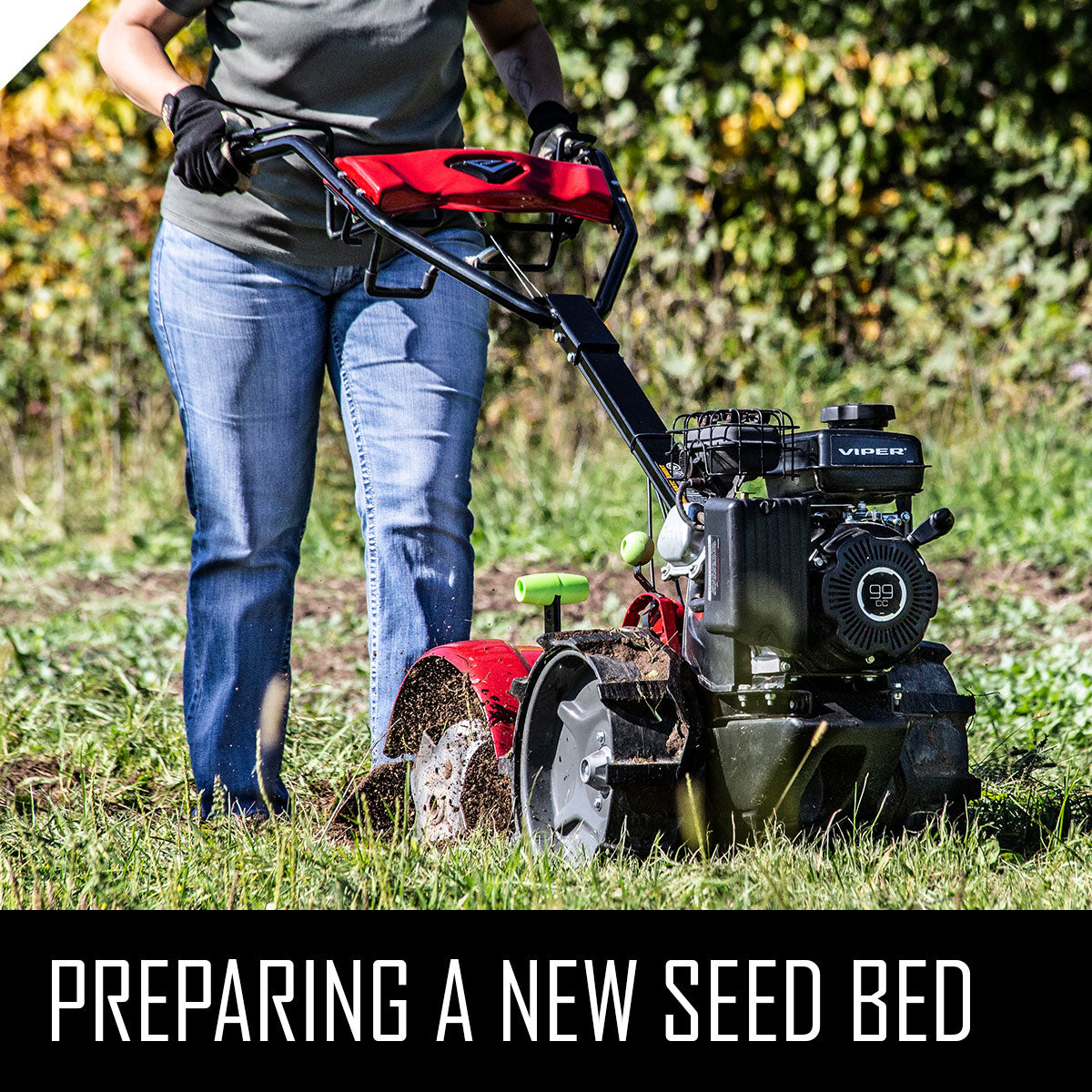
For existing lawns, avoid tilling because it brings up dormant weed seeds. Instead, use core aeration to open the soil without disturbing the weed bank. For bare or new areas, till four to six inches deep using a rototiller or bobcat with a Harley rake. Remove rocks, roots, and debris before leveling.
Level the surface with a drag or land plane. Eliminate low spots that collect water and high bumps that dry out unevenly. A smooth, even grade ensures uniform seed placement and consistent watering. Rent a skid steer with a Harley rake for large areas; it levels quickly and costs less than you might expect.
Aerate Before Overseeding
Use a core aerator to pull plugs from compacted soil. This improves air, water, and nutrient flow to the root zone. Aerate in two directions for best results. Leave the plugs on the surface where they break down and return nutrients to the soil.
Test Soil and Adjust pH
Send a soil sample to a testing lab. Target pH 6.0 to 7.0 for cool-season grasses. If too acidic, apply lime four to six weeks before seeding. If too alkaline, use elemental sulfur. Amend with nutrients based on the report rather than guessing.
Choose the Right Grass Seed
Match Grass to Climate Zone
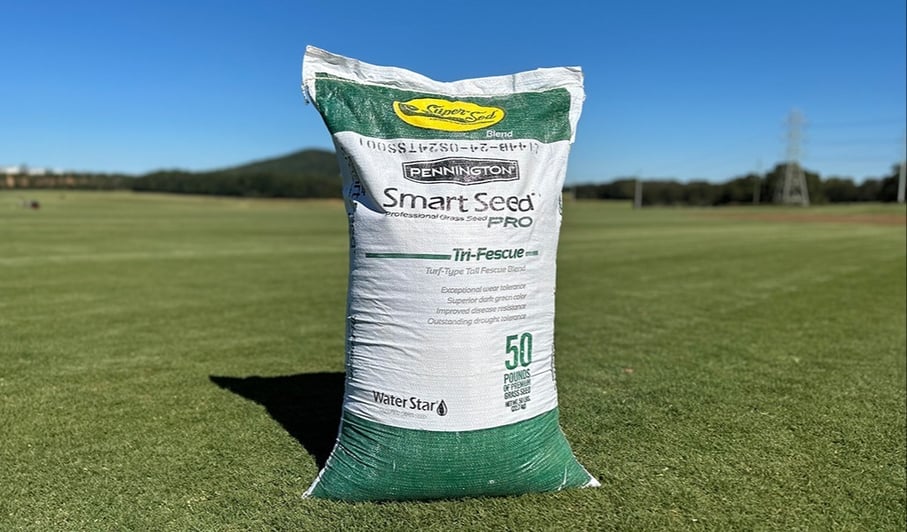
For zones three through seven, cool-season grasses like tall fescue, Kentucky bluegrass, and perennial ryegrass work best. For zones seven through ten, warm-season grasses like Bermuda and zoysia thrive. In zone seven transitional areas, turf-type tall fescue wins due to its drought tolerance and deep roots.
Pick High-Quality Seed Blends
Avoid cheap seed from big-box stores. Look for certified seed with zero percent weed seed and zero percent other crop seed. Buy bulk fifty-pound bags from farm co-ops like Rural King or Tractor Supply to save thirty to fifty percent per pound.
Use Blends for Resilience
Single varieties fail under stress. Use blends like ninety percent turf-type tall fescue plus ten percent perennial ryegrass for fast cover and erosion control. Alternatively, eighty percent tall fescue plus twenty percent bluegrass creates a self-repairing, denser turf. Avoid annual ryegrass unless used as a short-term nurse grass.
Seed with Precision and Coverage
Broadcast Seed with a Calibrated Spreader
Use a high-capacity rotary spreader. Calibrate by setting the dial to mid-range, spreading over a known area, and adjusting until you hit the label rate. Apply half the seed in one direction, then half perpendicularly to eliminate gaps.
Use Slit Seeding for Best Results
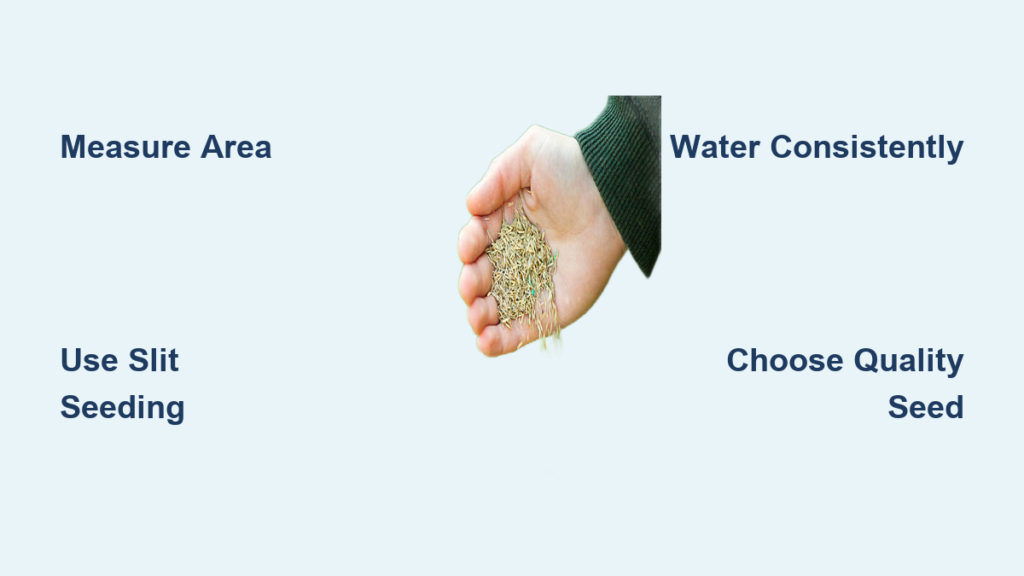
For large areas, slit seeding is superior. A machine cuts quarter-inch slits and drops seed directly into the soil. Benefits include no raking needed, excellent seed-to-soil contact, and less seed loss to birds. Rent a walk-behind or tractor-mounted slit seeder; it is worth every dollar for lawns over 10,000 square feet.
Hand Seed for Edges and Corners
Use a hand spreader or seed by hand in tight spots. Break up clumps and rub seed between your palms for even distribution in areas a mechanical spreader cannot reach.
Ensure Seed-to-Soil Contact
Drag or Rake Lightly
After broadcasting, lightly incorporate seed into the top one-eighth to one-quarter inch. Use a chain harrow dragged behind a tractor, a tine rake for small zones, or a DIY drag made from chain-link fence attached to a two-by-four frame. Do not bury seed deeply; light is needed for germination.
Roll to Press Seed In
Use a light lawn roller filled halfway with water to press seeds into soil. Avoid heavy rolling on wet ground, which causes compaction. Rolling improves contact without disturbing placement.
Fertilize for Strong Roots
Apply Starter Fertilizer
Use a phosphorus-rich starter fertilizer like ten-twenty-ten or nineteen-nineteen-nineteen just before or after seeding. Phosphorus fuels root development. Apply with a broadcast spreader calibrated to the correct rate. Do not mix synthetic fertilizer directly with seed because it can burn seedlings. Apply a few days apart or use organic granular fertilizer instead.
Buy Fertilizer in Bulk
For large lawns, buy forty to fifty pound bags from agricultural suppliers. Costs drop significantly compared to small retail bags. Store unused fertilizer in a dry, covered area.
Mulch to Retain Moisture
Choose the Right Mulch
Wheat straw works well for large areas and is budget-friendly. Use wheat, not hay, which contains weed seeds. Coco coir offers excellent moisture retention and is eco-friendly but costs more. Hydroseeding works best for slopes and erosion control but costs twenty to fifty cents per square foot. Apply no more than one-quarter inch of mulch; thicker layers block light and trap heat.
Avoid Peat Moss
Peat dries out fast and becomes hydrophobic, repelling water once dry. It is hard to re-wet, which is bad for germination. Skip it on large projects.
Water Consistently for Germination
Keep Soil Moist, Not Soggy
Water two to four times daily for ten to fifteen minutes per zone. Goal: keep the top one to two inches damp. Check by poking your finger into the soil. Reduce frequency after seven to ten days when sprouts appear, then switch to deeper, less frequent watering to encourage root growth.
Use Smart Watering Tools
Oscillating sprinklers lose pressure over distance and are ineffective for large lawns. Daisy-chain impact sprinklers with timers provide even coverage. Seed right before a forecasted rain cycle to let nature help with irrigation.
Seed at the Right Time
Fall Is Ideal for Cool-Season Grasses
Plant forty-five days before first frost. Soil is warm, nights cool to around sixty degrees, and rainfall increases. This window gives new grass time to establish before winter arrives.
Spring Seeding Carries Risks
Soil warms slowly while summer heat arrives fast. If seeding in spring, do it early, preferably late April in northern zones. Expect higher weed pressure and be prepared for more maintenance.
Try Dormant Seeding in Late Fall
Sow seed when soil is too cold to germinate, below fifty degrees. Seeds stay dormant until spring. Risk exists from birds or runoff removing seeds. Best for low-traffic, flat areas.
Protect and Maintain New Grass
Block Foot Traffic
No walking, pets, or mowing until grass is three inches tall. Even light traffic dislodges seeds or compacts soil. Use temporary fencing if needed.
Mow High and Sharp
First mow at three to four inches. Never cut more than one-third of blade height. Use sharp blades; dull ones tear and stress young grass.
Fertilize After Establishment
Wait until you have mowed six times before applying regular fertilizer. Use slow-release or organic formulas to avoid burning.
Delay Weed Control
Pre-emergent herbicides kill grass seedlings. Wait until grass has been mowed four to six times. For weeds, use Tenacity post-emergence, which is safe for new tall fescue.
Avoid Common Seeding Failures
No Irrigation Requires Plan Changes
Without automatic watering, germination rates plummet. Solutions include phasing the project, installing temporary soaker hoses, using drought-tolerant turf-type tall fescue, or choosing dormant seeding.
Prevent Bird Seed Theft
Birds love fresh seed. Mulch immediately or use hydroseeding to hide seeds from avian predators.
Fix Uneven Coverage
Patchy lawns result from poor spreader calibration or single-pass seeding. Always use the double-pass method and overlap spreader paths by fifty percent.
Save Money on Large-Scale Seeding
Buy Seed and Fertilizer in Bulk
Farm co-ops sell fifty-pound bags at half the price of retail. Savings fund rental equipment for the project.
Rent, Do Not Buy Equipment
Slit seeders cost one hundred fifty to two hundred fifty dollars per day. Harley rakes run about two hundred dollars per day with a skid steer. Aerators cost eighty to one hundred twenty dollars per day. Worth it for one-time projects.
Use DIY Tools
Build a seed drag from chain-link fence on a wooden frame. Create a water boom from PVC pipe with drilled holes. Modify an old fertilizer spreader for larger capacity.
Frequently Asked Questions About Seeding Large Lawn Areas
What Is the Best Time to Seed a Large Lawn?
Early fall is ideal for cool-season grasses. Plant forty-five days before first frost for optimal germination. Soil remains warm while air temperatures cool, and increased rainfall reduces your watering burden.
How Much Does It Cost to Seed One Acre of Lawn?
Costs vary widely based on seed quality and method. Expect to spend eight hundred to two thousand dollars per acre for seed, fertilizer, and mulch. Hydroseeding adds significant cost but provides professional results on slopes.
Can I Seed My Lawn Without an Irrigation System?
Yes, but it is risky. Phase your project over multiple years, use drought-tolerant grass like turf-type tall fescue, and consider dormant seeding in fall. Without irrigation, success depends heavily on natural rainfall.
What Equipment Do I Need for Seeding a Half-Acre?
At minimum, you need a broadcast spreader, hose-end sprinkler, and rake. For best results, rent a slit seeder and core aerator. A riding mower or tractor makes dragging and rolling easier on larger areas.
How Long Does It Take for Grass Seed to Germinate?
Turf-type tall fescue takes ten to fourteen days. Perennial ryegrass germinates fastest at three to five days. Kentucky bluegrass is slowest at fourteen to twenty-one days. Cool temperatures delay germination across all species.
Should I Use a Slit Seeder or Broadcast Spreader?
For existing lawns, slit seeding provides superior seed-to-soil contact and works through thatch. For bare soil, broadcast seeding with double-pass coverage works well. Slit seeding costs more in rental fees but delivers better results on large renovation projects.
Key Takeaways for Seeding Large Lawn Areas Successfully

Success with large-area seeding comes down to three factors: proper soil preparation, quality seed selection, and consistent moisture maintenance. Skip any of these and you will face patchy germination, weed invasion, or dead seedlings. Invest in soil testing before buying seed; correcting pH and nutrient deficiencies pays dividends for years.
Equipment rental is not optional for areas over ten thousand square feet. A slit seeder dramatically improves germination rates compared to broadcast spreading. Similarly, proper calibration of your spreader prevents wasted seed and uneven coverage. Take time to measure your area and calculate exact material needs.
Finally, be realistic about maintenance capacity. If you cannot commit to daily watering for three to four weeks, either reduce your project scope or install irrigation before seeding. A beautifully prepared seedbed means nothing if it dries out before germination. Follow these steps and your large-area lawn will establish strongly.