Is your once-lush lawn now brown, patchy, and lifeless? You are not alone. Every year, countless homeowners face the frustration of a dead or dying lawn, but the solution is not always to tear it out and start over. The key to fixing a dead lawn lies in proper diagnosis, because misidentifying the problem wastes time, money, and effort. This guide walks you through every step to bring your lawn back to life, from testing whether grass is dead or dormant to reseeding, sodding, and maintaining a healthy green yard.
Confirm: Dead or Dormant Grass?
Before you invest time and money into repair, determine if your grass is truly dead or simply dormant. Treating dormant grass like it is dead leads to unnecessary work, while mistaking death for dormancy delays recovery.
Perform the Pull Test
Grasp a handful of brown grass and gently tug.
- Dormant grass resists pulling because roots remain intact and the crown is green at the base
- Dead grass pulls out easily with no resistance, often revealing mushy roots or a foul odor
- If the base of the plant shows green, it is likely dormant and will recover with moisture and cooler temperatures
Know Your Grass Type
Different grass types dormancy seasons.
| Grass Type | Dormancy Season | Recovery Window |
|---|---|---|
| Cool-season (Kentucky bluegrass, tall fescue) | Summer heat and drought | Returns in fall (September to October) |
| Warm-season (Bermuda, Zoysia, St. Augustine) | Winter cold | Returns in spring (April to May) |
In the transition zone, warm-season grasses begin dormancy when nighttime temperatures fall below 50 degrees Fahrenheit.
Diagnose What Killed Your Lawn

Restoring your lawn fails if you do not fix the underlying problem first. Use these symptoms to identify the cause.
Common Causes of Dead Grass
- Drought stress produces crispy, brown blades and cracked soil. Water deeply and check for recovery after 7 to 10 days.
- Overwatering and poor drainage create mushy grass, foul odor, and fungal patches. Water pooling for more than 30 minutes indicates drainage problems.
- Soil compaction causes thin growth, water runoff, and visible footprints. Push a screwdriver into dry soil. If it will not penetrate, the soil is compacted.
- Thatch buildup over one-half inch makes the lawn feel spongy and prevents water penetration.
- Lawn diseases appear as brown patch (large irregular circles), dollar spot (silver-dollar-sized spots), or red thread (pinkish webbing before browning).
- Insect infestations, especially grubs, cause grass to pull up easily. Look for C-shaped larvae in soil or birds pecking at the lawn.
- Dog urine creates brown spots with a bright green ring around the edge due to nitrogen burn.
- Soil pH outside the ideal range of 6.0 to 7.0 causes yellowing and poor nutrient uptake.
- Mowing too short (below one inch) weakens roots and exposes soil to weeds.
Prepare Your Lawn for Restoration
Proper preparation ensures new grass establishes successfully. Skip these steps and your seed will not grow.
Remove Weeds First
Weeds steal water, nutrients, and sunlight from new grass.
- Hand-pull weeds in small areas or use a weeding tool
- Apply post-emergent herbicide for large infestations
- Wait 2 to 4 months before seeding after herbicide use, except for Tenacity, which is safe with seed
Never use pre-emergent herbicides before seeding because they block grass germination.
Dethatch the Lawn
Thatch thicker than one-half inch blocks air, water, and nutrients from reaching roots.
- Use a power rake or dethatcher and pass over the lawn in overlapping rows
- Remove all debris after dethatching
- Perform this in early spring or early fall when grass is actively growing
Aerate Compacted Soil
Aeration relieves compaction and improves water, air, and nutrient flow.
- Rent a core aerator from a hardware store and run it three times per year
- Core aeration removes 2 to 3 inch soil plugs, creating space for roots
- Allow cores to break down naturally, as they enrich the soil
Mow Low Before Seeding
Cut existing grass to 1 to 2 inches before overseeding.
- This removes dead blades and reduces shade on new seedlings
- Improves seed contact with soil for better germination
- Never remove more than one-third of blade height in a single mow
Choose Between Overseeding and Sodding
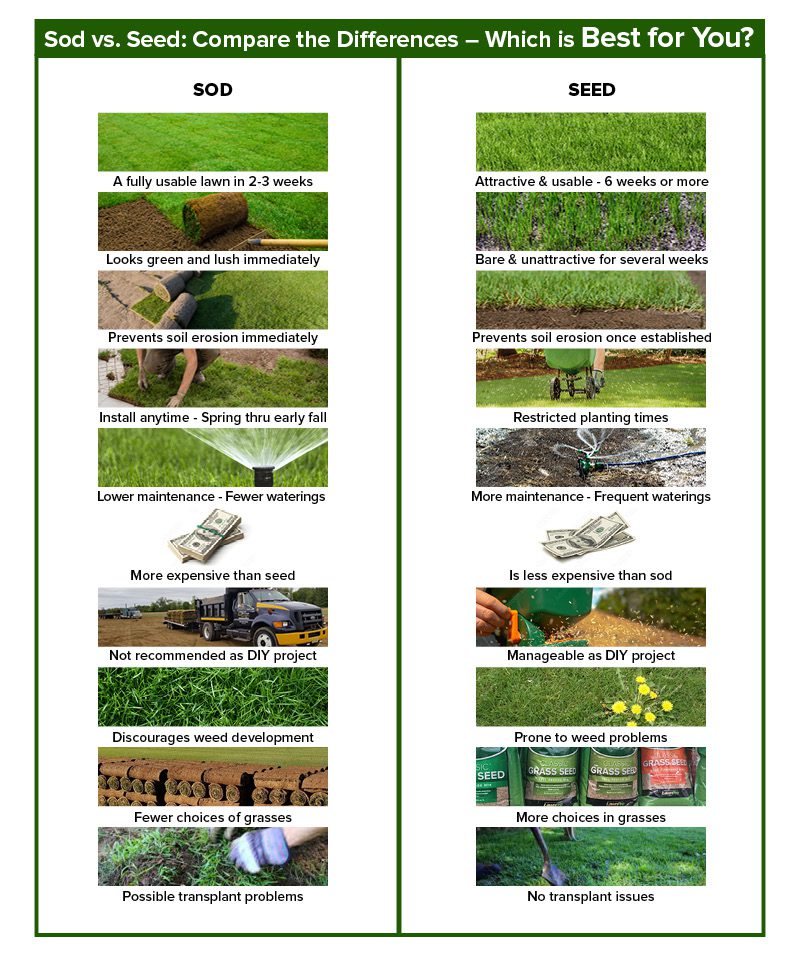
Select the method that fits your budget, timeline, and lawn condition.
Overseed: Budget-Friendly, Slower Results
Overseeding works best for lawns with at least 30 percent living grass remaining.
Pick the Right Grass Seed
Match seed to your climate and conditions.
| Grass Type | Climate | Light | Drought Resistance |
|---|---|---|---|
| Tall fescue | Cool-season | Sun and shade | High |
| Kentucky bluegrass | Cool-season | Full sun | Moderate |
| Perennial ryegrass | Cool-season | Full sun | Low |
| Bermuda | Warm-season | Full sun | High |
| Zoysia | Warm-season | Sun and partial shade | High |
| St. Augustine | Warm-season | Shade tolerant | Moderate |
Use a blend of grass types for disease resistance and resilience.
Apply Seed Evenly
- Use a broadcast spreader for even coverage
- Apply 1 to 2 pounds per 1,000 square feet
- Lightly rake seed into soil to ensure seed-to-soil contact
Top-Dress with Compost
Apply one-fourth inch of compost, topsoil, or peat moss.
- Too thick blocks light and delays germination
- Too thin provides no protection for the seed
Fertilize with Starter Formula
Use high-phosphorus fertilizer such as 10-20-10 or 16-16-16.
- Promotes root development
- Avoid high nitrogen now, as it encourages weak top growth
- Apply nitrogen-rich fertilizer 6 to 8 weeks after germination
Sod: Instant Lawn, Higher Cost
Sod provides immediate results but costs 5 to 10 times more than seeding.
- Best for erosion control or complete renovation
- Lay sod tightly, stagger seams, and roll to remove air pockets
- Water the same as a seeded lawn, with frequent light watering initially
- Avoid walking on new sod for 2 to 3 weeks
Water for Germination and Growth
New grass lives or dies by your watering habits.
Watering Schedule
| Stage | Frequency | Duration | Goal |
|---|---|---|---|
| Days 1 to 10 | 2 to 3 times daily | 10 to 20 minutes | Keep top inch consistently moist |
| Germination | Increase if hot or windy | Light spray | Prevent drying out |
| After 3 weeks | 1 to 2 deep soaks per week | Long sessions | Encourage deep roots |
| Established lawn | 2 inches per week | 1 to 2 times | Sustainable growth |
Check moisture by feeling soil one inch deep. It should feel slightly wet. Dry means under-watered, soggy means overwatered.
Mow and Maintain New Growth
Timing and technique matter when mowing new grass.
First Mow Timing
Wait until grass reaches 3 to 3.5 inches before the first mow.
- Cut no more than one-third of blade height
- Use sharp blades to avoid tearing
- Mow regularly afterward to encourage thickness and lateral growth
Fertilize on Schedule
- Apply starter fertilizer at seeding time
- Six to 8 weeks later, apply one pound of nitrogen per 1,000 square feet
- Feed 2 to 4 times per year based on grass type
Time Your Lawn Repair by Region
Northern Lawns (Cool-Season Grasses)
The best time to overseed is early fall, from late August through October.
- This avoids summer heat stress and allows establishment before winter
- Spring seeding is a backup option from late March through May
- Test pH and add nitrogen after winter leaching
Southern Lawns (Warm-Season Grasses)
Seed warm-season grasses in late spring through early summer, from April to June.
- Soil temperatures should reach 65 to 70 degrees Fahrenheit or higher
- Focus on weed control in spring, then dethatch, aerate, and overseed in fall
- Avoid fall seeding, as frost kills new seedlings
Fix Small Dead Patches Quickly
For isolated damage, use this fast repair method.
- Remove dead grass and debris from the affected area
- Scarify to expose bare soil
- Apply seed and starter fertilizer
- Rake in lightly
- Top-dress with 5 to 10 millimeters of compost
- Firm soil with a roller or by foot
- Cover with fleece to deter birds and retain moisture
- Water 2 to 5 times daily
Germination occurs in 8 to 10 days, with full patch recovery in 4 to 6 weeks.
Handle Grub Damage First
Grubs eat grass roots, so treat them before repairing the lawn.
- Apply insecticide or beneficial nematodes to eliminate grubs
- Protect repaired areas with fleece, as birds dig for grubs
- Re-seed after treatment is complete
Tools You Need for Lawn Repair
- Core aerator to relieve compaction (rentable, use three times per year)
- Power rake or dethatcher to remove thatch
- Broadcast spreader for even seed and fertilizer application
- Scarifier to prepare soil surface
- Garden roller or use your feet to firm soil after seeding
- Fleece to protect seed from birds and retain moisture
- Soil test kit to check pH and nutrients
- Compost spreader for large areas
Timeline: What to Expect
| Week | Action | Results |
|---|---|---|
| 0 | Aerate, dethatch, mow, seed, fertilize, top-dress | Lawn prepped for renewal |
| 1 to 2 | Water 2 to 3 times daily | Germination begins (8 to 10 days) |
| 3 to 4 | Continue watering, reduce frequency | New grass visible |
| 5 to 6 | Begin deep watering | Roots establish, lawn thickens |
| 8 plus | First mow, follow-up fertilizer | Dense, green growth |
| 12 plus | Resume normal care | Fully restored lawn |
Full recovery takes 6 to 12 weeks, though sandy soils may require 2 to 3 years to fully fill in.
Frequently Asked Questions About Fixing a Dead Lawn
How do I know if my grass is dead or just dormant?
Perform the pull test. Dormant grass resists pulling and has green at the base. Dead grass pulls out easily with no root resistance.
Can I seed a dead lawn in summer?
Cool-season grasses should be seeded in early fall, not summer. Warm-season grasses should be seeded in late spring through early summer. Summer heat stresses new seedlings and causes seeding failure.
Should I aerate before or after seeding?
Aerate before seeding. Core aeration improves seed-to-soil contact and relieves compaction, giving new seed the best chance to establish.
How long does it take to revive a dead lawn?
Germination appears in 8 to 10 days. A fully green, evenly covered lawn typically appears in 6 to 12 weeks, depending on grass type and growing conditions.
What is the fastest way to fix a dead lawn?
Sodding provides the fastest results, giving you an instant lawn within hours. However, it costs 5 to 10 times more than overseeding and requires similar initial watering care.
Why does my lawn keep dying despite my efforts?
The underlying cause may not be addressed. Test your soil pH, check for compacted soil or thatch buildup, and identify pest or disease problems before seeding.
Key Takeaways for Fixing Your Dead Lawn
Fixing a dead lawn starts with proper diagnosis. Use the pull test to confirm whether grass is dead or dormant, then identify and correct the underlying cause before any repair begins. Prepare the lawn properly through weed removal, dethatching, aeration, and mowing before applying seed or sod. Choose overseeding for budget-friendly results or sod for instant gratification, and match your grass type to your climate. Water consistently, mow at the right height, and fertilize on schedule to maintain your restored lawn. With patience and proper care, your dead lawn can become a lush, green yard that lasts for years. Start today by testing your soil and diagnosing the problem.