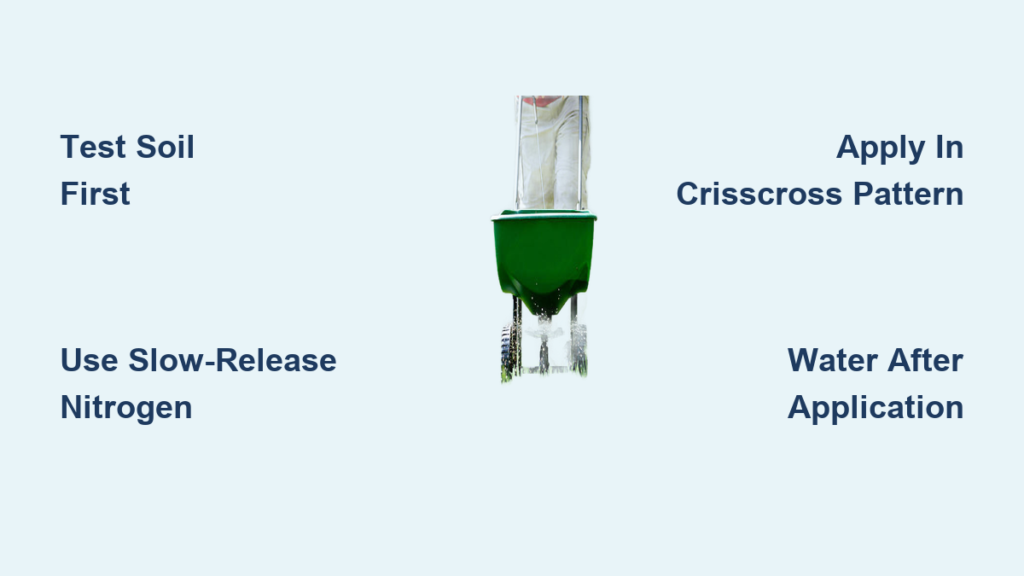
You’ve mowed, watered, and weeded, but your lawn still looks dull? Knowing how to apply lawn fertilizer correctly transforms patchy yards into lush, green carpets. Most homeowners waste product, burn their grass, or harm the environment by skipping key steps like soil testing, proper timing, and spreader calibration. When done right, fertilizing boosts grass density, improves color, and strengthens resistance to drought, weeds, and disease. This guide walks you through exactly when to fertilize, what product to choose, how much to apply, and the common mistakes that ruin results.
Choose the Right Fertilizer for Your Lawn
Before spreading anything, pick a fertilizer that matches your lawn’s actual needs. Using the wrong product causes more harm than good.
Understanding N-P-K Ratios
Every fertilizer bag displays three numbers like 18-6-12, representing nitrogen (N), phosphorus (P), and potassium (K). These are your lawn’s primary nutrients.
• Nitrogen drives leaf growth and green color.
• Phosphorus builds strong roots, essential for new lawns.
• Potassium boosts stress tolerance and winter hardiness.
For established lawns, focus on nitrogen and potassium. High-phosphorus fertilizers waste money and pollute waterways since most soils already contain enough phosphorus.
Organic vs. Synthetic Fertilizers
Organic options like Milorganite and compost feed soil microbes and release nutrients slowly, reducing burn risk. They require more product per application due to lower nitrogen content. Synthetic fertilizers like urea deliver fast results with high nutrient concentration. Fast-release types burn grass if over-applied, while slow-release synthetics provide steady feeding without the burn risk.
Pro Tip: Use slow-release nitrogen for most applications. It reduces leaching, prevents burn, and means fewer applications per year.
Test Soil Before You Fertilize
Skipping a soil test is like guessing your car’s oil level without checking. You might over-apply or miss critical deficiencies.
Why Soil Testing Matters
Soil testing reveals nutrient deficiencies and pH imbalances, prevents over-application of phosphorus that pollutes waterways, and helps you choose the right N-P-K blend. University extension labs offer affordable soil testing showing pH, organic matter, and nutrient levels. Aim for pH between 6.0 and 7.0.
Rule of Thumb: Without a soil test, assume medium organic matter and avoid high-phosphorus fertilizers unless establishing new grass.
Calculate How Much Fertilizer to Apply
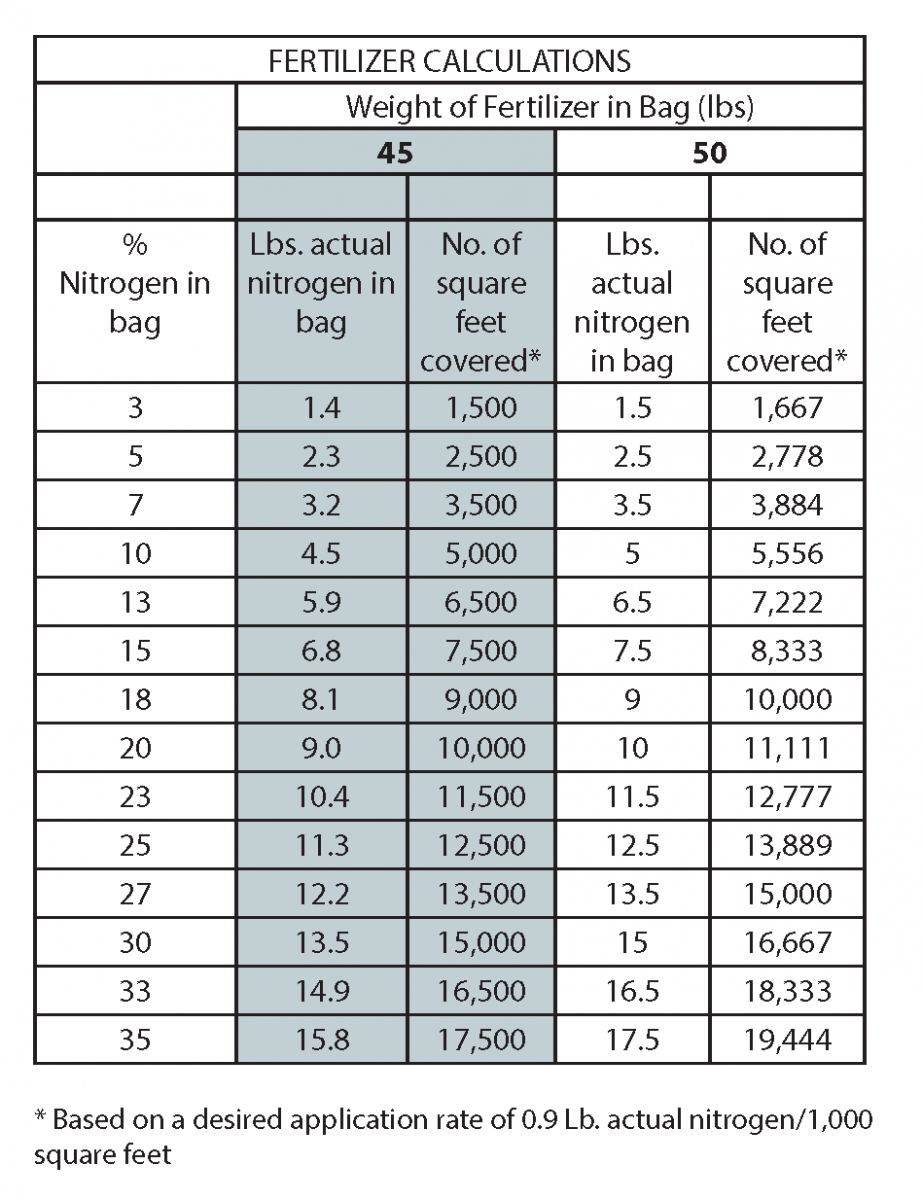
Applying too much fertilizer causes lawn burn and runoff. Follow this simple math to get the rate right.
The Nitrogen Rule
Never apply more than 1 pound of nitrogen per 1,000 square feet in a single pass, especially with fast-release products. To calculate product needed, divide 100 by the nitrogen percentage on the bag, multiply by your lawn’s square footage, then divide by 1,000.
Example Calculation
Fertilizer: 15-0-10 (15% nitrogen)
Lawn size: 5,000 sq ft
100 ÷ 15 = 6.67
6.67 × 5,000 = 33,350
33,350 ÷ 1,000 = 33.35 lbs
Result: Apply about 33 pounds of 15-0-10 to apply 1 lb of nitrogen per 1,000 sq ft.
Shortcut: Use the Purdue Turf Fertilizer Calculator online for instant results.
Time Your Fertilizer Applications Correctly
When you fertilize matters as much as how. Cool-season grasses like Kentucky bluegrass and fescue dominate most U.S. lawns and follow a clear seasonal rhythm.
Feed Cool-Season Grasses in Fall
The best time to fertilize is late summer to early fall, specifically August 15 through September 15. Roots are actively growing while top growth slows, so energy goes underground. Grass stores nutrients for winter and spring recovery.
Fertilization Schedule for Cool-Season Lawns
• Late summer to early fall: Most effective single feeding
• Early fall plus late spring: Strong green-up and fall root boost
• Early fall, late fall, and spring: Includes winterizer for cold hardiness
Winterizer Tip: Apply late-season fertilizer in October or November, about one week after your final mow. This feeds roots without stimulating vulnerable top growth.
Avoid Early Spring Feeding
Fertilizing before mid-May encourages weak growth prone to disease and summer stress. Save spring application for late May or early June, and only if your lawn needs it.
Use the Right Spreader and Settings
Even the best fertilizer fails if applied unevenly. Your spreader determines consistent coverage.
Choose a Broadcast Spreader
Broadcast (rotary) spreaders throw fertilizer in a wide arc, ideal for large or irregular lawns. Drop spreaders offer precision but work slowly and striping appears if you miss a pass.
Pro Tip: Calibrate your spreader before each use. Fill it, walk a test strip, and adjust the setting until output matches the bag’s recommendation.
Set the Correct Rate
Check the fertilizer bag for spreader settings by brand. If not listed, find the recommended lbs per 1,000 sq ft, set spreader to medium, test, and adjust up or down.
Warning: Never guess. Over-application causes burn; under-application wastes money.
Apply Fertilizer in a Grid Pattern

Even distribution prevents streaks, bare spots, and wasted product.
Step 1: Trim the Edges First
Walk slowly around driveways, sidewalks, and curbs. Keep 2 to 5 feet away to prevent fertilizer from washing into storm drains. Manually control the spreader handle to stop output near hardscapes.
Step 2: Make Crisscross Passes
- First pass: Apply half the fertilizer in one direction (north to south).
- Second pass: Apply the other half perpendicular (east to west).
- Overlap each pass by 2.5 feet, using wheel tracks as a guide.
Visual Cue: Imagine laying down planks. Each pass should slightly overlap the last for full coverage.
Walk at the Right Speed
Your pace controls how much fertilizer lands where.
• Ideal speed: 3.5 mph, a brisk, steady walk.
• Too slow causes over-application and clumping.
• Too fast creates thin spots and weak coverage.
Practice Tip: Time yourself over 50 feet. At 3.5 mph, it should take about 10 seconds.
Water In After Application
Most fertilizers need water to activate and move into the root zone.
When to Water
Water immediately after applying fast-release or high-salt fertilizers. This prevents fertilizer burn and speeds nutrient uptake. Apply ¼ to ½ inch of water, enough to moisten soil without runoff.
Exception: Weed-and-Feed Products
If your fertilizer contains herbicides, check the label. Pre-emergent herbicides for crabgrass must stay dry for 24 hours. Post-emergent herbicides for dandelions need to stick to leaves. Wait 12 to 24 hours before watering.
Best Practice: Avoid weed-and-feed products. Fertilizer and herbicides work best when applied separately at their ideal times.
Avoid Common Fertilizer Mistakes
Even experienced homeowners make these errors. Don’t let them ruin your lawn.
Overapplying Nitrogen
More isn’t better. Excess nitrogen causes rapid weak growth, increases disease risk, and leaches into groundwater or runs off into streams. Stick to 1 lb N per 1,000 sq ft per application.
Using Weed-and-Feed at the Wrong Time
Crabgrass preventers work in early spring before soil hits 55°F. Spring fertilizing should wait until late May. Applying both together means one or both fails.
Better Approach: Apply pre-emergent in April, fertilize in September.
Ignoring Grass Clippings
Leaving clippings on the lawn returns up to 1 lb of nitrogen per 1,000 sq ft annually. That’s free fertilizer. Use a mulching mower and mow regularly so clippings break down fast.
Maintain a Healthy Lawn Year-Round
Fertilizer is just one piece of the puzzle. Combine it with smart cultural practices.
Mow High and Sharp
Set mower to 3 to 3.5 inches for cool-season grasses. Taller grass shades roots, reduces weeds, and needs less water. Sharpen blades monthly. Dull cuts invite disease.
Aerate and Dethatch
If thatch exceeds ½ inch, aerate in fall or early spring. Core aeration helps fertilizer reach soil and improves root growth.
Inspect for Pests
Check for grubs, chinch bugs, or fungus before fertilizing. A stressed lawn won’t benefit from feeding until pests are controlled.
Store Fertilizer Safely
Leftover fertilizer? Store it properly to keep it effective and safe.
Keep fertilizer in a cool, dry place away from children and pets. Seal bags tightly to prevent moisture absorption. Never mix products or store near pesticides unless labeled safe.
Warning: Never dump excess fertilizer down drains or on garden beds. It contaminates water sources.
Frequently Asked Questions About Applying Lawn Fertilizer
When is the best time to apply lawn fertilizer?
The best time for cool-season grasses is late summer to early fall, specifically August through mid-September. This timing supports active root growth and nutrient storage for winter. A single fall application provides the most effective results for most lawns.
How often should I fertilize my lawn?
Most lawns need 2 to 4 applications per year depending on maintenance level and grass type. High-maintenance lawns with removed clippings may need 3 to 4 applications. Low-maintenance lawns with returned clippings may need only 1 to 2 applications annually.
Can I apply fertilizer in hot summer weather?
Avoid fertilizing during extreme heat, especially with fast-release products. Hot weather combined with quick-release nitrogen causes fertilizer burn. If you must fertilize in summer, use slow-release products and water immediately after application.
What happens if I apply too much fertilizer?
Over-application causes fertilizer burn, creating brown patches and weak grass. Excess nitrogen leaches into groundwater or runs off into streams, causing environmental harm. It also promotes rapid weak growth that attracts disease. Always follow the 1 lb N per 1,000 sq ft rule.
Should I fertilize before or after mowing?
Mow before fertilizing for better soil contact. However, avoid mowing immediately after applying fertilizer, especially with weed-and-feed products, as the mower wheels can spread product unevenly. Wait 24 hours when using herbicide products.
Can I use organic and synthetic fertilizers together?
Yes, you can combine both types. Many homeowners use synthetic for quick greening and organic for slow-release feeding. Just calculate total nitrogen carefully to avoid exceeding the 1 lb per 1,000 sq ft limit. Organic and synthetic nitrogen feed grass the same way once converted.
Key Takeaways for Applying Lawn Fertilizer
The best lawns aren’t made in a day. They’re built with consistent, science-backed care. By learning how to apply lawn fertilizer the right way, you invest in a healthier, greener yard that resists stress, weeds, and drought. Always test your soil before applying, choose slow-release nitrogen products, and never exceed 1 pound of nitrogen per 1,000 square feet in a single application. Use a broadcast spreader, walk at 3.5 mph, and apply in a crisscross pattern with 2.5-foot overlap. Fertilize in late summer to early fall for cool-season grasses, and water in unless using herbicide products. Skip the shortcuts, follow these steps, and enjoy a lawn that looks like it was done by a pro.