Nothing’s more frustrating than a snowstorm rolling in and your Snow Devil snow blower refusing to start. You’re bundled up, the driveway’s buried, and that pull cord feels like it’s mocking you. Most starting problems come down to simple oversights in fuel, choke, or priming—not mechanical failures. This guide walks you through the exact process to start your Snow Devil reliably, avoid common pitfalls, and keep it running strong all winter. Whether you own a pull-start or electric-start model, the right technique makes all the difference.
Pre-Start Safety and Workspace Setup
Clear the Area and Ensure Proper Ventilation
Always start your Snow Devil snow blower in a well-ventilated space. Never run it in a closed garage because carbon monoxide is odorless, deadly, and can accumulate in seconds. Open garage doors completely, or better yet, start the unit outside. Remove snow, ice, and debris from around the machine, especially near the auger. Stand with both feet planted firmly on stable footing before pulling the starter cord.
Verify Fuel Supply and Quality
Check that the fuel tank is at least half full. Use ethanol-free gasoline whenever possible. This single upgrade prevents the majority of hard-start issues. Regular gasoline with ethanol attracts moisture, degrades over time, and gums up the carburetor. If you must use standard fuel, add a fuel stabilizer every 30 days of storage. Always discard old fuel from last winter because gasoline breaks down within 30–60 days.
Confirm the Fuel Shut-Off Valve Is Open
Locate the fuel shut-off valve near the base of the tank and make sure it’s in the “ON” position. Some Snow Devil models use a petcock or manual switch. If this valve stays closed, no fuel reaches the engine, and starting becomes impossible.
Ignition System and Throttle Settings

Turn On the Engine Switch
Find the on/off switch near the handlebar controls and flip it to “On.” On key-style models, simply insert the key without turning. This step activates the ignition system. Without power to the ignition, the spark plug won’t fire.
Inspect the Spark Plug
Remove the spark plug and examine its condition. A fouled plug appears wet, black, or oily and needs cleaning or replacement. Cracked ceramic or a damaged electrode means you should swap it out immediately. To test for spark, attach the plug to its wire, ground it against the engine block, and pull the cord. No visible spark points to a faulty plug or ignition coil.
Set Throttle to Fast or Full
Move the throttle to the “Start,” “Fast,” or full-throttle position. Many models display a flame icon for this setting. Higher RPM during startup helps the engine catch faster and stay running through the warm-up phase.
Priming the Engine and Setting the Choke
Prime the Carburetor Correctly
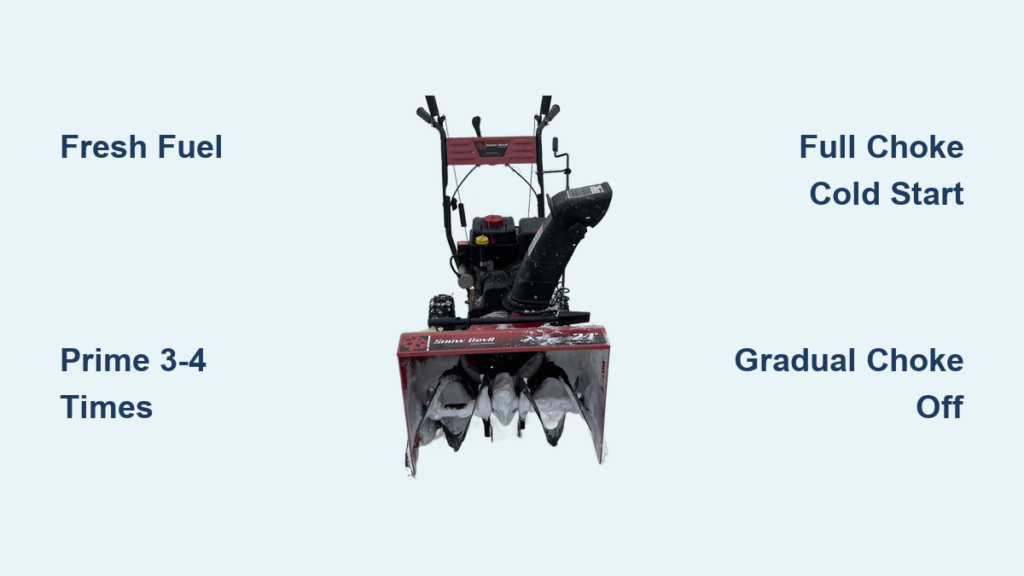
Locate the primer bulb on the carburetor or side of the engine. Press it 3–4 times firmly to push fresh fuel into the carburetor. Never exceed 4 presses because over-priming floods the engine, especially in cold weather. If the bulb feels unusually hard or fuel leaks out, stop pressing. Let the engine sit for 5–10 minutes to clear excess fuel before attempting again.
Engage Full Choke for Cold Starts
Set the choke lever to “Full” or “Start” by pulling it all the way up or sliding it to the closed position. This enriches the fuel-air mixture so a cold engine can ignite. If the temperature is mild or the engine is already warm, use half choke or no choke at all. Over-choking in warm conditions floods the engine and delays startup.
Starting the Engine
Pull-Start Technique: Firm and Fast
Grasp the starter rope handle with both hands and pull firmly in one quick, smooth motion. A sharp, full pull gives the engine the best chance to fire. If the engine doesn’t start, wait 10 seconds to let excess fuel dissipate, then try again. After 2–3 failed attempts, verify the choke, fuel, and spark plug settings. Always guide the rope back gently instead of letting it snap to prevent recoil damage.
Electric-Start Method: Plug In and Power Up
If your Snow Devil features electric start, connect a heavy-duty outdoor-rated extension cord to a grounded outlet. Turn the engine switch to “On,” set the choke to full, and prime 3–4 times. Press and hold the button for 3–5 seconds until the engine cranks and starts. Release the button after 5 seconds max, then wait at least 30 seconds between attempts to prevent overheating the starter motor.
Warm-Up and Choke Adjustment
Idle for 30–60 Seconds
Once the engine fires, let it idle for 30–60 seconds before touching the choke. This stabilization period allows the engine to settle into a smooth running rhythm. Listen for sputtering, which signals the choke is still needed.
Gradually Open the Choke One Notch at a Time
Turn the choke off one notch, wait 3–5 seconds, and listen again. Repeat this process 2–3 times until the choke is fully open. If the engine sputters or stalls, return the choke to full and let it run another 10–15 seconds before retrying. Slamming the choke off too fast can stall a cold engine.
Increase Throttle for Operation
After the choke is fully open and the engine runs smoothly, raise the throttle to your desired operating speed. Watch for unusual smoke. Blue or white smoke suggests oil burning, while black smoke indicates a fuel mixture that’s too rich.
Post-Start Warm-Up and Proper Shutdown
Warm Up Before Clearing Snow
Let the snow blower run for 1–2 minutes before tackling the driveway. This ensures all internal components receive adequate oil coverage and the engine reaches optimal operating temperature. Jumping straight into heavy work strains a cold engine.
Follow the Correct Shutdown Procedure
When finished, throttle down to idle and let the engine run for 30 seconds before turning the switch to “Off.” This cooldown period prevents thermal stress and extends engine life, much like letting a car idle after highway driving.
Troubleshooting a Snow Devil That Won’t Start

No Fuel Reaching the Engine?
- Confirm the fuel valve is fully open
- Replace old or ethanol-laced fuel with fresh, ethanol-free gas
- Inspect the fuel line for cracks or blockages
Spark Plug Not Firing?
- Remove and visually inspect the plug
- Clean carbon deposits with a wire brush or replace a damaged plug
- Test with a spark plug tester or known-good plug
Engine Flooded from Over-Priming?
If you smell fuel or the engine sputters and dies:
– Set the choke to “OFF”
– Hold the throttle wide open
– Pull the starter cord 5–6 times without priming to clear excess fuel
– Wait 10 minutes, then restart with no prime and half choke
Preventing Future Starting Problems
Keep the Air Filter Clean
A clogged air filter restricts airflow and causes hard starts. Remove it and clean foam filters with soap and water, or replace paper filters when dirty. Perform this task annually or before winter storage.
Stop Carburetor Clogs Before They Start
The leading cause of starting failure is a gummed-up carburetor from old fuel. Prevent this by:
– Using ethanol-free gasoline exclusively
– Adding fuel stabilizer every 30 days during storage
– Running the engine dry before long-term storage
If the engine starts briefly with starting fluid but then dies, the carburetor likely needs professional cleaning or rebuilding.
Long-Term Maintenance for Reliable Starts
Winterize Your Snow Devil at Season’s End
- Drain the fuel tank completely or run the engine dry
- Alternatively, add fuel stabilizer and run for 2 minutes to circulate
- Remove and clean the spark plug, then apply a drop of oil to the cylinder
- Store the unit in a dry, covered area
Perform Annual Pre-Season Checkups
Before each winter:
– Replace the spark plug
– Clean or replace the air filter
– Inspect fuel lines and the primer bulb for damage
– Lubricate auger bearings and other moving parts
Expert Tips for Effortless Starts Every Time
Ethanol-Free Gas Is the Ultimate Upgrade
This is the single best investment for any small engine. It costs only a few cents more per gallon and prevents varnish buildup, moisture absorption, and carburetor clogs. Search “ethanol-free gas near me” to find nearby stations that carry it.
Maintain the Pull Cord as Backup
Even electric-start models can fail when you need them most. Replace frayed ropes or weak recoil springs before winter so your backup starting method always works.
Store the Snow Devil Properly
Never leave fuel sitting in the tank for months. Stabilized fuel lasts longer, but draining the system is the safest option. A dry fuel system prevents corrosion and keeps carburetors clean.
Quick Start Checklist
| Step | Action |
|---|---|
| 1 | Work in a ventilated area |
| 2 | Fuel tank half full with ethanol-free gas |
| 3 | Fuel valve in the ON position |
| 4 | Engine switch turned ON |
| 5 | Throttle set to full or fast |
| 6 | Choke set to full for cold starts |
| 7 | Prime the engine 3–4 times |
| 8 | Pull starter sharply or activate electric start |
| 9 | Open choke gradually as engine warms |
| 10 | Run 1–2 minutes before clearing snow |
Frequently Asked Questions About Starting a Snow Devil Snow Blower
Why won’t my Snow Devil snow blower start in cold weather?
Cold temperatures thicken the oil and slow fuel vaporization, making ignition harder. Use full choke, prime 3–4 times, and ensure you’re using fresh ethanol-free gasoline. A weak or fouled spark plug also struggles in cold conditions.
How long should I let my Snow Devil warm up before using it?
Let the engine idle for 1–2 minutes after starting. This allows oil to circulate properly and the engine to reach operating temperature, reducing wear on internal components.
Can I use regular gasoline with ethanol in my Snow Devil?
Yes, but it’s not recommended. Ethanol attracts moisture, degrades quickly, and causes carburetor clogs. If you must, use fuel stabilizer every 30 days and expect more frequent maintenance issues.
What does it mean if my Snow Devil starts but then immediately dies?
This usually indicates a fuel delivery problem. Check that the fuel valve is open, the choke is adjusted gradually, and fresh fuel is in the tank. A clogged carburetor from old fuel is the most common culprit.
How do I know if my spark plug needs replacing?
Remove the plug and inspect it. A healthy plug has a dry, light tan electrode. Replace any plug that appears wet, black, oily, cracked, or has a damaged electrode.
Is electric start better than pull start for Snow Devil models?
Electric start is easier on cold mornings but requires an extension cord and outlet. Pull start works anywhere and remains reliable if the cord and recoil spring are maintained. Many owners use electric start at home and keep the pull cord as a reliable backup.
Final Thoughts on Starting Your Snow Devil Snow Blower
Starting your Snow Devil doesn’t have to feel like a battle with the machine. The real secret isn’t brute strength or luck. It’s preparation: fresh ethanol-free fuel, proper priming, correct choke settings, and gradual warm-up. Follow these steps consistently and your snow blower will fire up on the first or second pull every single time. Perform basic annual maintenance and store the unit properly during summer months. Your Snow Devil will reward you with reliable performance for many winters to come.