Is your lawn feeling spongy underfoot? Does water pool on the surface instead of soaking in? These could be signs of excessive thatch, a hidden layer of organic debris that builds up between grass blades and soil. While a thin layer of thatch (under ½ inch) actually benefits your lawn by insulating roots and conserving moisture, anything thicker becomes a problem.
Knowing when to dethatch lawn is critical for maintaining turf health. The ideal timing depends on your grass type, climate zone, and seasonal growth patterns. This guide will walk you through exactly when to dethatch for maximum recovery and a healthier, denser lawn.
Signs Your Lawn Needs Dethatching
Before grabbing tools, confirm that dethatching is necessary. Many lawn issues mimic thatch problems, so visual and physical checks are essential.
Feel for a Spongy Surface
Walk across your yard barefoot. If it feels spongy or bouncy, like walking on a mattress, that’s a classic sign of thick thatch. Healthy lawns should feel firm with some give. This cushioning happens because the thatch layer acts like a barrier between your feet and the soil.
Test Soil Penetration
Try pushing a screwdriver or finger into the ground through the grass. If it’s difficult to penetrate more than 1 to 2 inches, thatch may be blocking access. In a healthy lawn, the soil should allow easy insertion. Resistance indicates buildup that’s impeding root contact.
Check Water Absorption
After watering or rain, watch how your lawn responds. Water pooling on the surface instead of soaking in is a red flag. Thick thatch repels water, leading to runoff and shallow root development. Grass may turn brown despite regular irrigation because moisture never reaches the roots.
Look for Weak, Patchy Grass
Even with regular feeding and mowing, your lawn may look patchy, discolored, or weak. Thatch prevents fertilizers from reaching the soil, making standard care ineffective. If your grass is not responding to maintenance, thatch could be the hidden culprit.
How to Measure Thatch Thickness

Guessing is not enough. You need an accurate measurement to decide whether dethatching is required.
Take a Turf Sample
Use a spade or trowel to cut out a small wedge-shaped plug of grass and soil, about 2 to 3 inches deep. Do this in multiple areas, especially where the lawn feels thickest or weakest.
Identify the Thatch Layer
Lay the sample on its side and examine the cross-section. Between the green grass blades and the dark mineral soil, you will see a brownish, fibrous layer. This is the thatch. It is not pure dirt or dead grass clippings. It is a dense mat of stems, roots, and rhizomes.
Measure with a Ruler
Use a ruler to measure the thickness of this brown layer:
- Less than ½ inch: Normal and beneficial
- ½ to ¾ inch: Monitor closely, consider light maintenance
- More than ¾ inch: Time to dethatch
- 1 inch or more: Severe buildup, plan gradual removal over 2 to 3 years
University experts warn that removing extremely thick thatch all at once can tear out healthy grass. For severe cases, dethatch lightly each year until the layer reduces.
Best Time to Dethatch Cool-Season Grasses
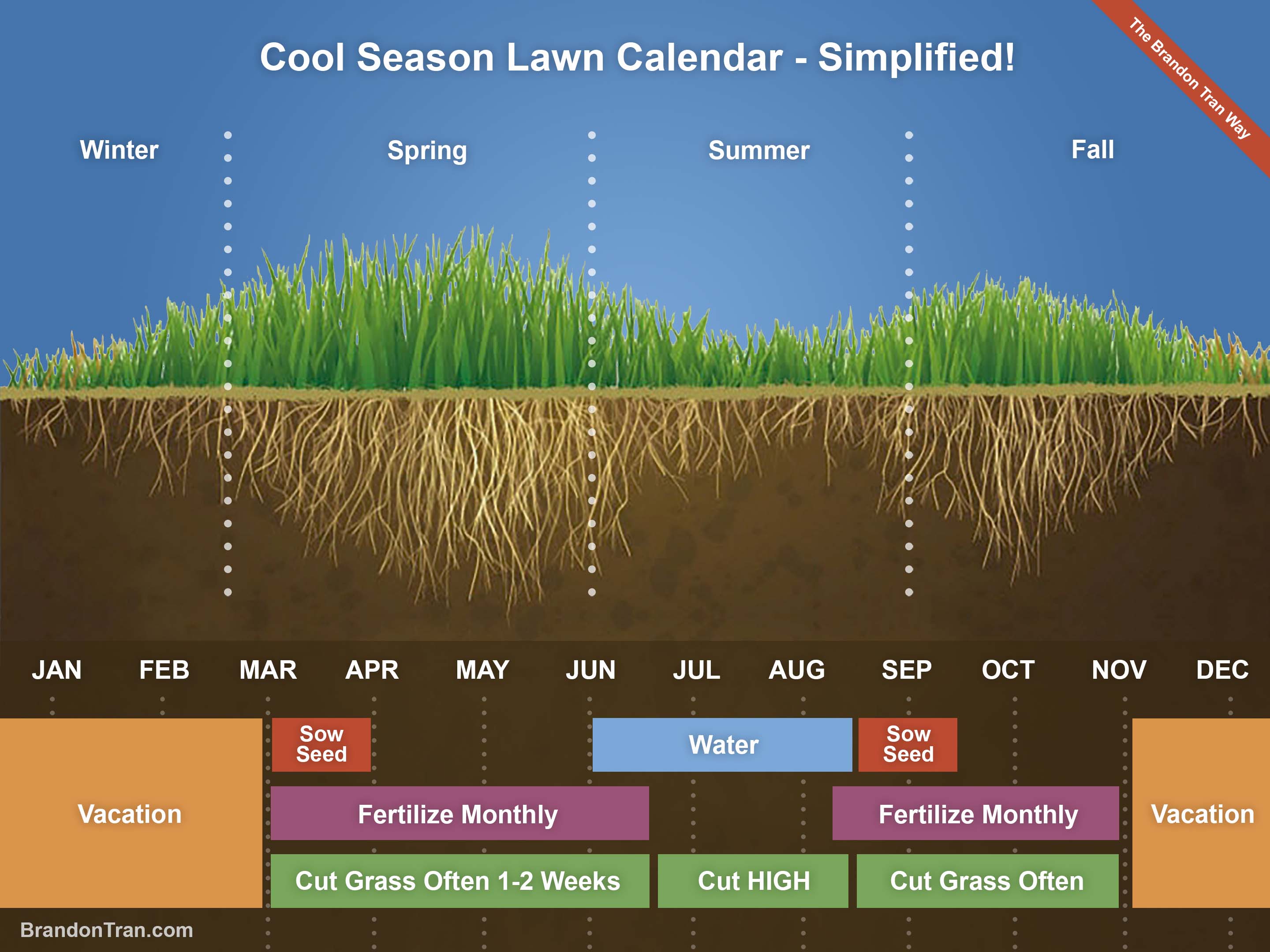
Cool-season grasses have specific growth patterns that dictate optimal dethatching timing.
Fall Provides Ideal Conditions
Grasses: Kentucky bluegrass, tall fescue, perennial ryegrass, fine fescue
The best window is late August to mid-October. Cool-season grasses grow most vigorously in fall. Dethatching during this period gives them 4 to 6 weeks of strong growth to heal before winter. Fall also offers cooler temperatures that reduce stress, less competition from weeds, and ideal conditions for overseeding.
Spring Is a Secondary Option
You can also dethatch in late April to early May, after soil dries from winter. However, spring dethatching increases weed risk since bare soil is exposed during peak germination season. Avoid dethatching in winter when grass is dormant or in summer when heat stress is highest.
Best Time to Dethatch Warm-Season Grasses
Warm-season grasses thrive in heat and require different timing.
Late Spring Through Summer Works Best
Grasses: Bermudagrass, Zoysia, St. Augustine, centipedegrass
The best window is late May to July. Dethatch 2 to 3 weeks after green-up, once the lawn has been mowed twice. This ensures the grass is actively growing and can recover quickly.
Ideal conditions include daytime temps between 80 and 95°F and soil that is moist but not soggy. Avoid dethatching in winter when grass is dormant or before full green-up in early spring.
Regional Timing Guidelines
Local climate affects when your grass grows most actively.
USDA Zone 6A (Mid-Atlantic, Midwest)
- Fall dethatching: September to mid-October
- Spring dethatching: Late April to early May
- Soil must be dry enough to walk on without sinking
This region benefits from two clear growing seasons, making both spring and fall viable, but fall is preferred.
Calgary, Alberta (Zone 3, Short Season)
- Spring: Late April onward, once soil thaws and dries
- Fall: Mid-August to mid-September
- Aligns with safe seeding windows and active growth
Due to the short growing season, fall dethatching must be done early to allow recovery before frost.
Mild Climates (Pacific Northwest, Bay Area)
- More flexibility due to year-round growth
- Still align with peak growth periods
- Cool-season lawns: Fall
- Warm-season lawns: Late spring
- Avoid dethatching during dry summers unless irrigation is available
Ideal Weather and Soil Conditions
Even with perfect timing, poor conditions can ruin dethatching efforts.
Soil Moisture Matters
Dethatch when soil is moderately moist. Too wet and tines tear out turf and cause compaction. Too dry and equipment cannot penetrate, increasing stress. Water lightly 1 to 2 days before if soil is dry. Wait 2 to 3 days after heavy rain.
Temperature Guidelines
- Cool-season grasses: Below 85°F
- Warm-season grasses: 80 to 95°F
- Avoid extreme heat, frost, or drought periods
Best Time of Day
Early morning, after dew dries but before midday heat, is ideal. Cooler temps reduce stress and improve equipment handling.
Choose the Right Dethatching Tool
Select equipment based on lawn size and thatch severity.
Manual Dethatching Rakes
Best for small lawns under 500 square feet or spot treatments. Heavy-duty rakes with curved tines dig into light thatch. Pros include low cost and safety near sprinklers. Cons are labor-intensive work and ineffectiveness on thick layers.
Power Rakes
Best for medium to large lawns with moderate thatch. Rotating tines lift thatch to the surface. You can rent these from hardware stores with adjustable depth control. Risk includes potential damage to sprinklers if blades are rigid.
Vertical Mowers (Verticutters)
Best for thick thatch over 1 inch or lawn renovation. Vertical blades slice through thatch into soil. This is the most aggressive method and removes significant debris. Requires careful depth setting, no more than ½ inch into soil.
Electric Dethatchers
Best for medium lawns and eco-conscious users. Lightweight and cordless, often with spring-loaded tines. Pros include easy maneuverability and protection for sprinklers.
Dethatch, Aerate, or Overseed: Know the Order

Each service improves lawn health, but sequence matters.
Always Dethatch Before Aerating
Dethatch first, then aerate. Dethatching removes surface debris, allowing aerator tines to penetrate deeper. Aerating first loosens soil, making it easier for dethatching tools to pull up roots and damage turf. The exception is if soil is severely compacted and thatch is minimal.
Overseed Immediately After Dethatching
The best time to overseed is right after dethatching. Exposed soil provides excellent seed-to-soil contact. No pre-emergent herbicides are needed yet. Fall timing reduces weed competition.
Avoid pre-emergent herbicides if overseeding because they prevent grass seed from germinating for up to 4 months. Apply pre-emergent only after new grass has been mowed 3 to 4 times.
Fertilize After Dethatching
Apply a starter fertilizer after dethatching and overseeding. Look for balanced NPK with extra phosphorus to support root development. Water thoroughly after application. Keep soil moist for 2 to 3 weeks to help seeds germinate and grass recover.
Post-Dethatching Lawn Care
Your work is not over once the thatch is gone. Aftercare ensures recovery and prevents setbacks.
Remove All Thatch Debris
Rake up and dispose of or compost all thatch material. Leaving it on the lawn can re-form a mat or harbor pests. Mix with green waste or soil to speed decomposition if composting. Avoid composting if thatch contains weeds or disease.
Water Deeply and Regularly
Water every 2 to 3 days for the first 2 to 3 weeks. Deep watering encourages roots to grow into the soil, not stay in surface layers. Avoid frequent light sprinklings because they promote shallow roots.
Watch for Weed Invasion
Bare soil after dethatching is a weed invitation. This is normal and temporary. Prevent weeds by overseeding quickly to fill gaps, applying post-emergent herbicides only after new grass is established, and using pre-emergent herbicides 6 to 8 weeks after overseeding.
How Often Should You Dethatch
Most lawns do not need annual dethatching.
General Frequency Guidelines
- Every 1 to 3 years: Most lawns
- Annually: Fast-thatching grasses like Kentucky bluegrass and Bermudagrass
- Every few years or never: Slow-thatch grasses like tall fescue and perennial ryegrass
- Twice a year: Rarely needed, even for aggressive grasses
Over-dethatching damages healthy grass and stresses the lawn.
Factors That Speed Up Thatch Buildup
Several factors increase thatch accumulation:
- Grass type: Rhizomatous grasses produce more thatch
- Over-fertilizing: Especially nitrogen
- Overwatering: Reduces microbial activity
- Soil compaction: Limits earthworms
- Low soil pH: Below 5.5
- Pesticide overuse: Kills decomposers
Preventing Thatch From Building Up Again
Keep your lawn healthy with smart maintenance.
Test and Balance Soil pH
Test every 3 to 4 years. Ideal range is 6.0 to 7.0. Below 6.0, apply lime. Above 7.0, apply sulfur. Balanced pH supports microbes that break down thatch naturally.
Aerate Annually
Core aeration every 1 to 2 years breaks up compaction, introduces oxygen and microbes into soil, and helps decompose existing thatch. Best time is fall for cool-season and late spring for warm-season.
Mow and Water Correctly
Mow high to shade soil and reduce stress. Never cut more than one-third of blade height at once. Mulch clippings because they do not cause thatch and return nutrients. Water deeply, 1 to 1.5 inches per week, 1 to 2 times weekly.
Encourage Natural Decomposition
Add compost or compost tea to boost microbial activity. Reduce chemical pesticide use. Consider microbial inoculants for thatch-prone lawns.
Frequently Asked Questions About When to Dethatch Lawn
Can I dethatch my lawn in spring?
Yes, but fall is better for cool-season grasses. Spring dethatching works for both cool-season and warm-season grasses, but spring timing increases weed risk because bare soil is exposed during peak germination season. If you dethatch in spring, overseed quickly to fill gaps.
What happens if I dethatch at the wrong time?
Dethatching during dormancy or heat stress can cause permanent damage. Winter dethatching leaves grass unable to recover. Summer heatwaves combined with mechanical stress can kill grass. Wet soil causes turf tearing. Wrong timing also invites weeds into exposed soil.
How long does it take for a lawn to recover after dethatching?
Most lawns show visible improvement within 3 to 4 weeks after dethatching, assuming favorable conditions and proper aftercare. Full recovery to dense, healthy turf may take one full growing season, especially if overseeding was performed.
Can I dethatch a newly seeded lawn?
No. Wait at least one full growing season after seeding or sodding before dethatching. Young lawns have not established strong root systems yet and are more vulnerable to damage. Wait until the second growing season minimum.
Does dethatching hurt my lawn?
Dethatching temporarily stresses grass, which is why timing matters. When done correctly during peak growth, lawns recover quickly. Incorrect timing or aggressive removal on thin lawns can cause damage. Always measure thatch first and dethatch only when necessary.
What is the difference between dethatching and aerating?
Dethatching removes organic debris (thatch) from the surface layer. Aeration removes plugs of soil to alleviate compaction. Dethatch when thatch exceeds ¾ inch. Aerate when soil is compacted. Both improve air, water, and nutrient movement, but they address different problems.
Key Takeaways for When to Dethatch Lawn
The best time to dethatch lawn is when your grass is growing strongest. Fall is ideal for cool-season grasses like Kentucky bluegrass and tall fescue. Late spring through summer works best for warm-season grasses like Bermudagrass and Zoysia. Always measure thatch thickness first and only dethatch when the layer exceeds ¾ inch.
Use the right tools for your lawn size and thatch severity. Dethatch before aerating, overseed immediately after, and apply starter fertilizer to support recovery. With proper timing and follow-up care, your lawn will bounce back thicker, healthier, and more resilient.