Is your lawn slow to drain after rain? Does the soil feel hard and compacted, resisting even the sharpest shovel? If so, you may need to apply gypsum—a powerful soil conditioner that revitalizes dense clay or sodium-affected soils without altering pH. Unlike lime, which corrects acidity, gypsum works by improving soil structure, enhancing water infiltration, and displacing harmful sodium with beneficial calcium. But timing is critical. Applying gypsum at the wrong time—or to the wrong soil—can waste effort and resources.
The best time to apply gypsum to lawn is during active growing seasons when soil conditions support deep penetration and microbial activity. Spring and fall are ideal windows, but year-round application is possible if the ground is not frozen or saturated. This guide reveals the optimal schedule, conditions, and methods for applying gypsum based on soil type, climate, and lawn needs.
Spring Gypsum Application for Lawn Recovery
Apply in Early to Mid-Spring
Early spring is one of the best times to apply gypsum, especially after winter compaction has settled in. As soil temperatures begin to rise and grass enters active growth, gypsum helps break up compacted layers that restrict root development. For cool-season lawns like fescue, bluegrass, or ryegrass, target March to April, depending on your region. This timing allows the amendment to start working before summer heat increases stress on shallow-rooted turf.
Pairing spring gypsum with core aeration dramatically boosts effectiveness. Aeration creates channels for gypsum particles to reach deeper soil layers, where they can displace sodium and bind clay particles into stable aggregates. Water the lawn lightly after application to move gypsum into the root zone.
Apply gypsum alongside your early spring fertilizer. This combines nutrient support with soil conditioning, giving your lawn a dual advantage heading into the growing season.
Ideal for Clay Soil Recovery
Clay soils swell and shrink with moisture changes, often becoming dense and impermeable after winter rains. Gypsum improves flocculation—clumping fine particles into crumbs—making the soil more porous. If your lawn shows signs of poor drainage, surface crusting, or thinning grass, spring is the time to intervene.
Avoid applying gypsum to dry, cracked clay. Instead, wait until the soil is moist but not waterlogged. This ensures the product dissolves properly and moves into the profile rather than sitting on the surface.
After watering, puddles should disappear within 10 to 15 minutes on treated soil. If they persist, reapplication or additional aeration may be needed.
Fall Gypsum Timing for Long-Term Results
Best Season for Long-Term Results
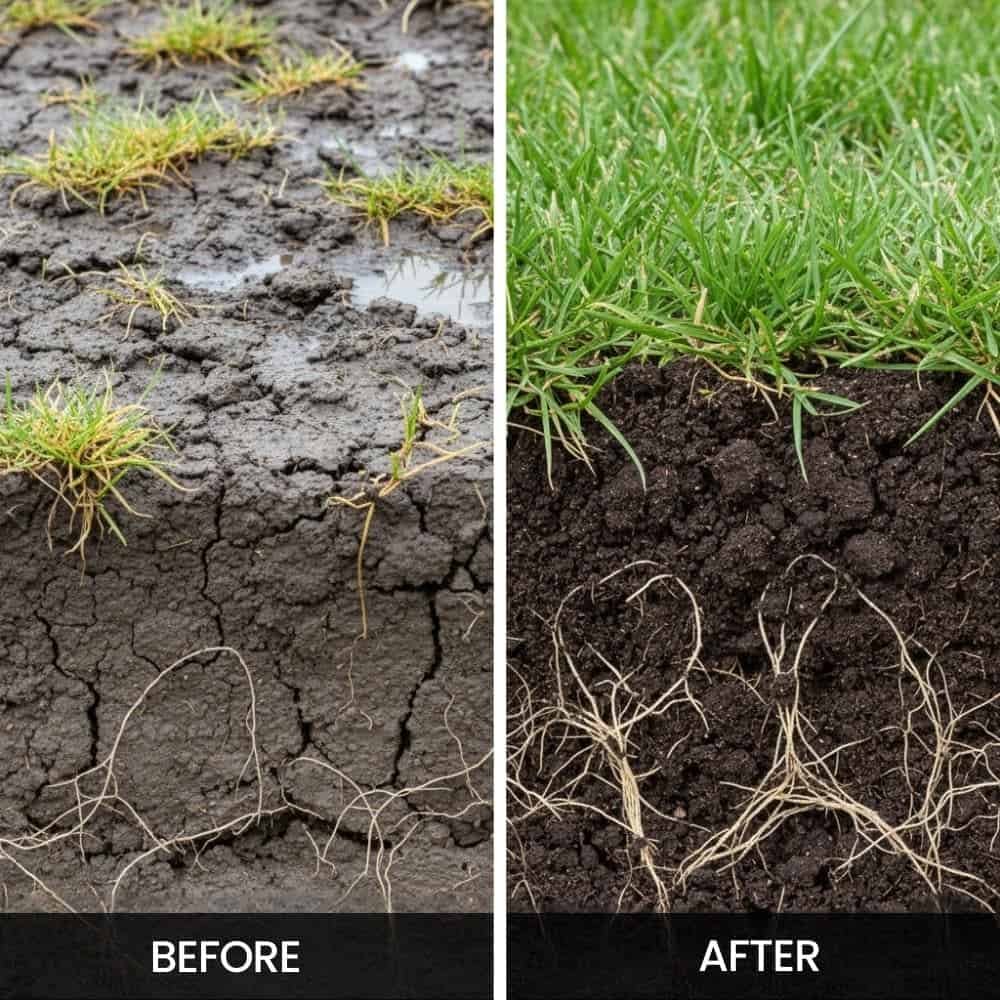
Fall is arguably the most effective season to apply gypsum, particularly in regions with wet winters. Applying in September to October prepares your lawn to handle heavy rainfall by improving soil permeability ahead of saturation. This reduces the risk of waterlogging, surface sealing, and root suffocation during colder months.
In the UK and Pacific Northwest U.S., where autumn rains begin early, fall applications are standard practice. The moist, unfrozen soil allows gypsum to dissolve and react gradually over winter, setting the stage for healthier spring growth.
Gypsum applied in fall continues to work through winter, especially in temperate climates where microbial activity persists.
Combine with Aeration and Overseeding
To maximize impact, apply gypsum after core aeration. The holes left by aeration act as direct entry points for calcium sulfate, speeding up soil restructuring. Many homeowners pair this with overseeding and topdressing, creating a full renovation cycle.
Mow lawn short
Core aerate
Overseed if needed
Apply gypsum
Topdress with compost
Water in thoroughly
This sequence builds structure, fertility, and density—all critical for a resilient lawn.
Allow 2 to 3 hours for a 5,000 square foot lawn using a broadcast spreader and aerator.
Winter Use Guidelines for Gypsum
Apply Only in Dry, Frost-Free Windows
While not a primary season, winter can be suitable for gypsum application, but only under specific conditions. Avoid frozen, snowy, or saturated ground, as walking on it causes further compaction and smearing. However, during mild, dry spells in January or February, you can safely apply gypsum if the soil is firm enough to support foot traffic without leaving ruts.
In the UK and similar maritime climates, winter applications help maintain momentum against persistent waterlogging. Use liquid gypsum on slopes or sensitive areas to minimize disturbance.
Never apply to squelchy soil. Wait for a 3 to 5 day dry period before proceeding.
Focus on Problem Zones
Winter is ideal for spot-treating areas prone to standing water. Use granular or liquid gypsum on these zones, then water in lightly if no rain is forecast within 48 hours. This targeted approach prevents widespread disruption while maintaining soil health.
Assuming winter inactivity means no lawn care is a common mistake. Light interventions like gypsum application can yield big spring benefits.
Summer Application Tips for Lawn Care
Use Early or Late in Growing Season
Summer applications are acceptable, especially in arid or high-desert climates where soil structure degrades under heat stress. The best times are early June or late August, avoiding peak July heat. Gypsum helps maintain pore space and nutrient availability when evaporation rates are high.
If applying in summer, water immediately after spreading. Without irrigation, gypsum can sit on foliage and cause minor leaf burn. Aim for 0.25 to 0.5 inches of water to move the product into the soil.
In high-desert areas, some landscapers apply gypsum with every fertilizer, up to four times per year, to sustain soil function.
Ideal for Renovation Projects
Summer is often used for lawn repairs or sod installation. Before laying new turf, apply gypsum to improve subsoil structure, especially in clay-heavy sites. This prevents future settling and poor drainage.
Incorporate gypsum into the top 3 to 4 inches of soil during prep for lasting results.
How Often to Apply Gypsum to Lawn
Standard Maintenance Frequency
For ongoing soil health, apply gypsum 2 to 3 times per year. This schedule maintains calcium levels, supports aggregation, and counteracts seasonal compaction from foot traffic or mowing.
In problem soils, especially heavy clay or sodic types, every 3 to 4 months is recommended. Frequent, smaller doses prevent nutrient lock-up and ensure continuous improvement.
Gypsum breaks down over time and leaches slowly. Regular reapplication sustains benefits.
Cumulative Annual Target
Regardless of frequency, aim for a total of 50 pounds per 1,000 square feet per year. This benchmark ensures sufficient calcium and sulfate to drive structural change.
Split this total based on product type. Slow-acting granular: 25 pounds in spring, 25 pounds in fall. Fast-acting products: 5 to 10 pounds every 3 months, requiring 5 to 10 applications.
Fast-acting products use finer particles and binding polymers but still require the same total annual amount for full effect.
Soil Conditions That Indicate Gypsum Need
Signs Your Lawn Needs Gypsum
Apply gypsum only when soil structure, not pH, is the issue. Key indicators include water pooling after rain or irrigation, hard compacted surface that resists aeration tools, thin patchy grass with shallow roots, crusted soil surface that impedes seedling emergence, and high sodium levels common in irrigated or coastal areas.
Fill a jar with soil and water, shake, and let sit 10 minutes. If the water stays cloudy, clay dispersion is occurring, and gypsum can fix it.
When Soil Testing Is Essential
Never guess. A soil test confirms whether gypsum is needed. Test for pH, calcium and sodium levels, and cation exchange capacity.
Avoid gypsum if calcium is already high or pH is alkaline above 7.5. It will not help and may contribute to salt buildup.
Retest soil every 6 to 12 months to track progress and adjust applications.
When NOT to Use Gypsum on Your Lawn
Avoid on Sandy or Acidic Soils
Gypsum provides little benefit on sandy soils unless sodium levels are high. These soils already drain well and lack the clay particles needed for flocculation.
Similarly, acidic soils with pH below 6.0 need lime, not gypsum. Gypsum does not raise pH and will not correct aluminum toxicity or nutrient deficiencies caused by acidity.
Applying gypsum to low-pH soil wastes money and delays proper treatment.
Skip If Calcium Is Already Sufficient
Excess calcium can interfere with magnesium and potassium uptake. If your soil test shows adequate calcium over 2,000 ppm, skip gypsum. Overuse may lead to nutrient imbalances and reduced turf quality.
Using gypsum as a cure-all is a common error. It is a targeted solution, not a universal fix.
Choosing the Right Gypsum Product
Use Pelletized Gypsum for Lawns
Pelletized granular gypsum is the best form for lawn applications. It flows smoothly through broadcast or drop spreaders, resists wind drift, and breaks down gradually for sustained release.
Avoid powdered gypsum in spreaders. It clogs machinery and creates dust hazards.
Liquid Gypsum for Precision Use
Liquid gypsum is popular in the UK and Europe, especially for established lawns and sloped areas. It is diluted and sprayed evenly, minimizing soil disturbance.
Best uses include spot treatments, post-aeration applications, and lawns with thatch or moss issues. Liquid gypsum must be watered in to reach the root zone. It works faster initially but may require more frequent reapplication.
Liquid forms can be more expensive over time despite lower per-use rates.
Fast-Acting Gypsum Explained
Sta-Green and Polymer-Enhanced Formulas
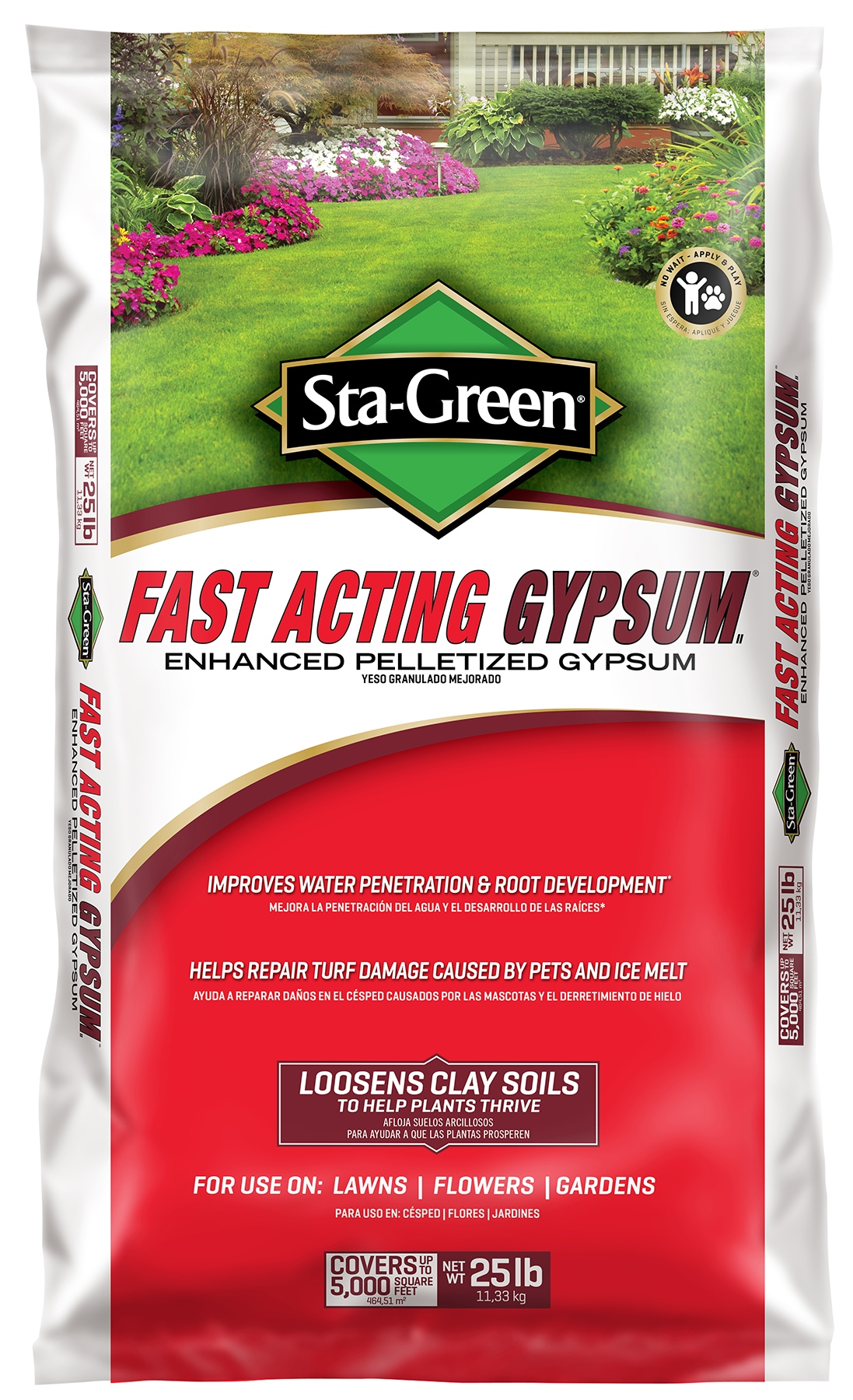
Some brands market fast-acting gypsum at just 5 pounds per 1,000 square feet. This is possible due to finely ground particles that increase surface area and polymer technology that reduces leaching and improves retention.
While effective, understand that total annual requirements remain approximately 50 pounds per 1,000 square feet. You will need 5 to 10 applications to match a single traditional dose.
Faster results per application come with higher long-term cost and labor.
Slow-Acting vs. Fast-Acting Comparison
| Factor | Slow-Acting | Fast-Acting |
|---|---|---|
| Application Rate | 25 to 50 lbs/1,000 sq ft | 5 to 10 lbs/1,000 sq ft |
| Frequency | 2 to 3 times per year | 5 to 10 times per year |
| Cost Efficiency | Higher | Lower |
| Ease of Use | Fewer applications | More frequent applications |
Choose slow-acting for cost-effective long-term improvement and fast-acting for targeted rapid intervention.
Step-by-Step Application Guide
Prepare Before You Begin
Test soil to confirm need. Mow lawn to 2 to 3 inches. Core aerate if possible. Calibrate spreader using manufacturer chart.
Thirty to 45 minutes for prep on a 10,000 square foot lawn.
Apply and Activate
Fill spreader with pelletized gypsum. Apply at recommended rate. Overlap passes slightly for even coverage. Water in immediately with 0.25 to 0.5 inches of irrigation.
Soil should darken slightly after watering. This means gypsum is moving down into the root zone.
Follow-Up Care
Avoid heavy foot traffic for 2 to 3 days. Do not dethatch or power rake immediately. Reapply in 3 to 4 months if needed.
Mark your calendar for the next application to stay on schedule.
Common Mistakes to Avoid When Applying Gypsum
Skipping Aeration
Applying gypsum without aeration limits penetration. Most of the product stays in the thatch layer, reducing effectiveness by up to 50 percent. Always aerate first when possible.
Rent a core aerator annually or biannually.
Not Watering In
Gypsum must dissolve and reach the soil to work. Leaving it on the surface delays results and risks foliar contact.
Water within 24 hours, or sooner if sunny and dry.
Misjudging Application Rates
Using 5 pounds instead of 50 pounds once per year will not fix structural issues. Understand that cumulative total matters.
Track annual totals and split doses accordingly.
Expected Results Timeline for Gypsum Application
Track Improvement Over Time
One to 2 weeks: slight improvement in surface drying. Four to 6 weeks: less puddling, better water absorption. Three to 6 months: deeper roots, thicker grass, reduced compaction. Six to 12 months: noticeable soil crumb structure, more earthworms. One to 2 years: fully transformed, dark, aggregated soil.
Gypsum is not a quick fix. Results build gradually with consistent use.
Safety and Environmental Notes
Safe for Pets and Kids
Gypsum is non-toxic and safe once watered in. Keep children and pets off the lawn until the product is washed off blades of grass, usually 1 to 2 hours after watering. Store in original container away from moisture.
Prevent Runoff
Avoid applying before heavy rain. While gypsum is low-risk, excessive runoff can contribute to sulfate buildup in waterways.
Apply just before light rain or scheduled irrigation.
Frequently Asked Questions About Applying Gypsum to Lawn
When is the best time to apply gypsum to my lawn?
The best times are spring and fall. Apply gypsum in early to mid-spring as soil warms and grass enters active growth. Fall applications in September to October prepare your lawn for winter rains and allow gypsum to work through colder months. These seasons offer optimal soil conditions for penetration and microbial activity.
Can I apply gypsum in summer or winter?
Summer applications work if you water immediately and avoid peak heat. Late August is ideal. Winter use is possible only during dry, frost-free periods when soil is firm enough to walk on without causing compaction. Never apply to frozen, snowy, or waterlogged ground.
How often should I apply gypsum to my lawn?
Apply gypsum 2 to 3 times per year for standard maintenance. For problem soils like heavy clay or sodic conditions, apply every 3 to 4 months. The key is reaching a cumulative total of 50 pounds per 1,000 square feet annually.
What happens if I apply gypsum to the wrong soil type?
Gypsum provides little benefit on sandy soils that already drain well. On acidic soils below pH 6.0, gypsum will not raise pH and may waste resources. If calcium levels are already adequate, gypsum can cause nutrient imbalances. Always test soil first.
How long does it take to see results from gypsum application?
Initial improvements appear within 1 to 2 weeks. Noticeable changes in drainage and root development occur within 4 to 6 months. Full soil transformation takes 1 to 2 years with consistent applications combined with aeration and proper lawn care.
Can I combine gypsum with fertilizer or other treatments?
Yes. Applying gypsum with early spring fertilizer combines soil conditioning with nutrient feeding. Apply after core aeration for best penetration. Avoid applying with pesticides that may wash off before watering in.
Key Takeaways for Applying Gypsum to Lawn
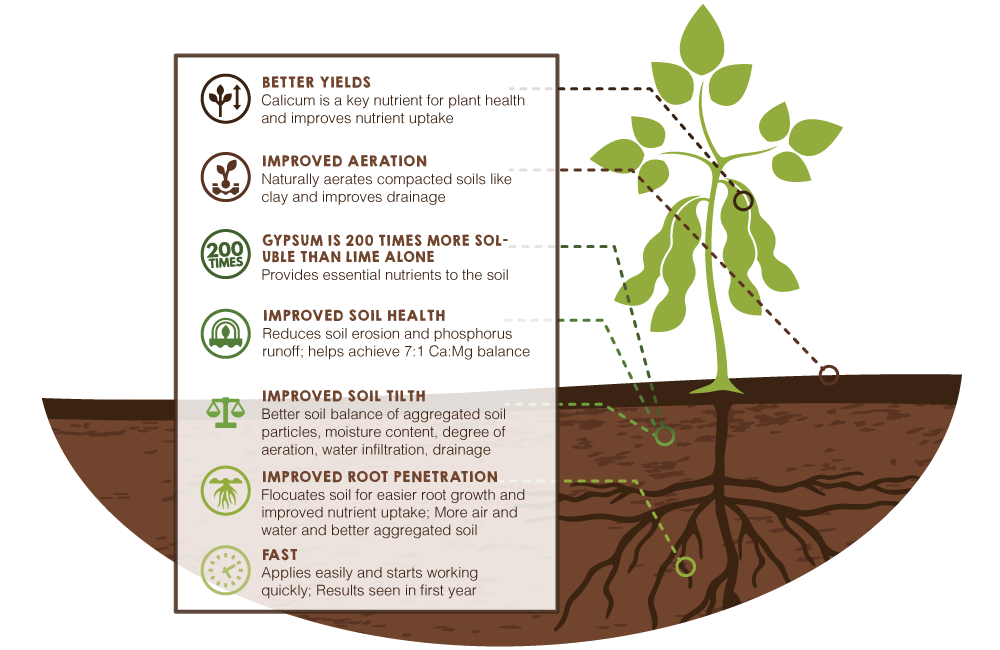
Gypsum is a proven soil conditioner that improves drainage, reduces compaction, and displaces harmful sodium in clay-rich or sodic lawns. Apply it in spring for recovery from winter damage or in fall to prepare for wet conditions. The optimal schedule is 2 to 3 applications per year, totaling 50 pounds per 1,000 square feet. Always test soil first, use pelletized or liquid forms, and water in immediately after application. Combine gypsum with core aeration for maximum penetration. Results are gradual, with meaningful improvements visible within 3 to 6 months and full soil transformation over 1 to 2 years.