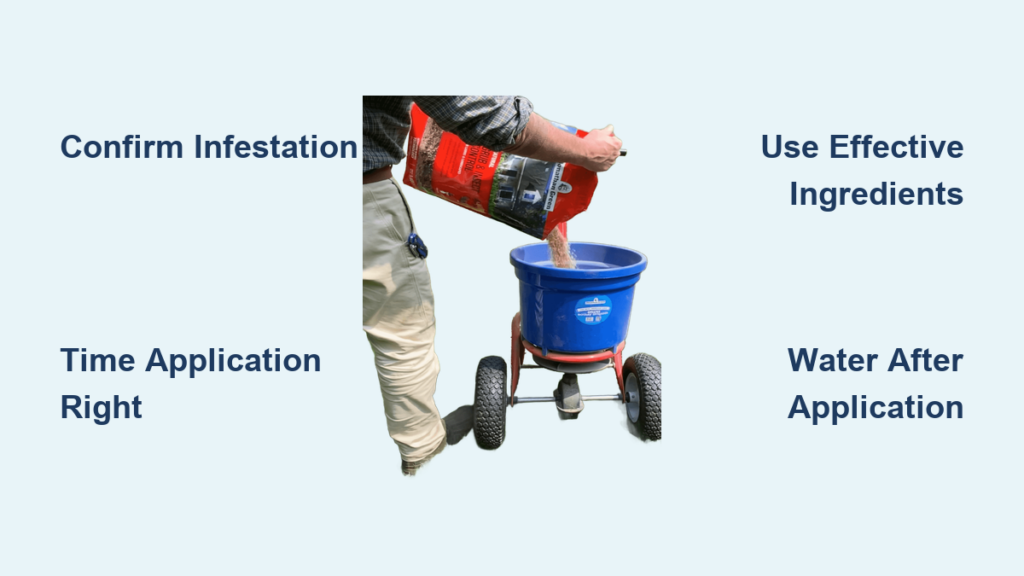
Brown, patchy grass that lifts like loose carpet? You might be dealing with lawn grubs. These C-shaped, white larvae feed on grassroots and can turn a lush yard into a battleground for skunks and raccoons. But not every thinning lawn needs grub treatment. Many lawns are misdiagnosed. This guide walks you through how to treat lawn for grubs using science-backed timing, effective products, and smart cultural practices.
Before reaching for chemicals, confirm grub presence and understand their life cycle. Healthy turf can tolerate low populations up to 5 to 10 grubs per square foot without lasting damage. You will learn how to scout properly, choose the right product, time your application, and build a resilient lawn that fights back.
Confirm Grub Infestation Before Treating
Treating without proof wastes money and harms beneficial insects. Grub damage mimics drought, disease, or compaction. Always confirm before you act.
Spot the Real Signs of Grubs
Watch for these indicators in your lawn. Spongy or loose turf that peels back easily is a primary sign. Irregular brown patches expanding in late summer or early spring point to feeding damage. Animal digging from raccoons, skunks, or birds indicates they are hunting grubs. Visible grubs, white and C-shaped, ½ to 1 inch long appear in soil. Adult beetles seen near lights or plants in June through August are a warning sign that egg-laying is imminent.
How to Scout for Grubs
Follow these steps to confirm infestation. Cut a 12-inch by 12-inch square of turf at the edge of damaged area with a shovel. Lift the sod and inspect the roots and top 2 inches of soil. Count all grubs in the sample. Repeat this in 3 to 5 areas to get an average population.
Know the Treatment Threshold
Population density determines if treatment is needed. Zero to 5 grubs per square foot requires no treatment. Healthy lawns recover on their own. Five to 10 grubs per square foot means monitor closely. Treat only if damage spreads. Ten to 12 or more grubs per square foot requires action. Root loss is severe at this level.
Time Treatment to the Grub Life Cycle
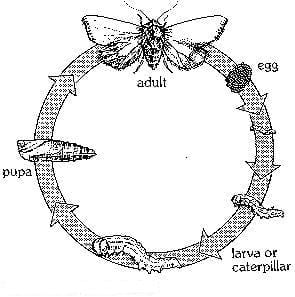
Timing is everything. Treat too early or too late, and products fail. Most grubs follow a one-year cycle with key windows for prevention and control.
Annual Grub Life Stages
Egg laying occurs in June through July. Adult beetles lay eggs in warm, moist, sunny lawns. Irrigated turf is a prime target. Eggs hatch in 10 to 14 days. Young grub feeding happens in July through September. Newly hatched grubs begin feeding on roots. This is the best window for preventive treatments. Mature grub damage spans fall through spring. Grubs grow through three stages. They feed heavily in fall, overwinter deep in soil, and resume feeding briefly in spring before pupating.
Optimal Treatment Timing
Apply preventive treatments in late May to mid-July to stop new grubs before they feed. Use curative treatments in August through October when existing grubs are small and actively feeding. Avoid spring treatments after mid-May. Grubs stop feeding and are nearly pupated. Spring grub killers often fail because the damage is already done.
Choose Between Preventive and Curative Treatments
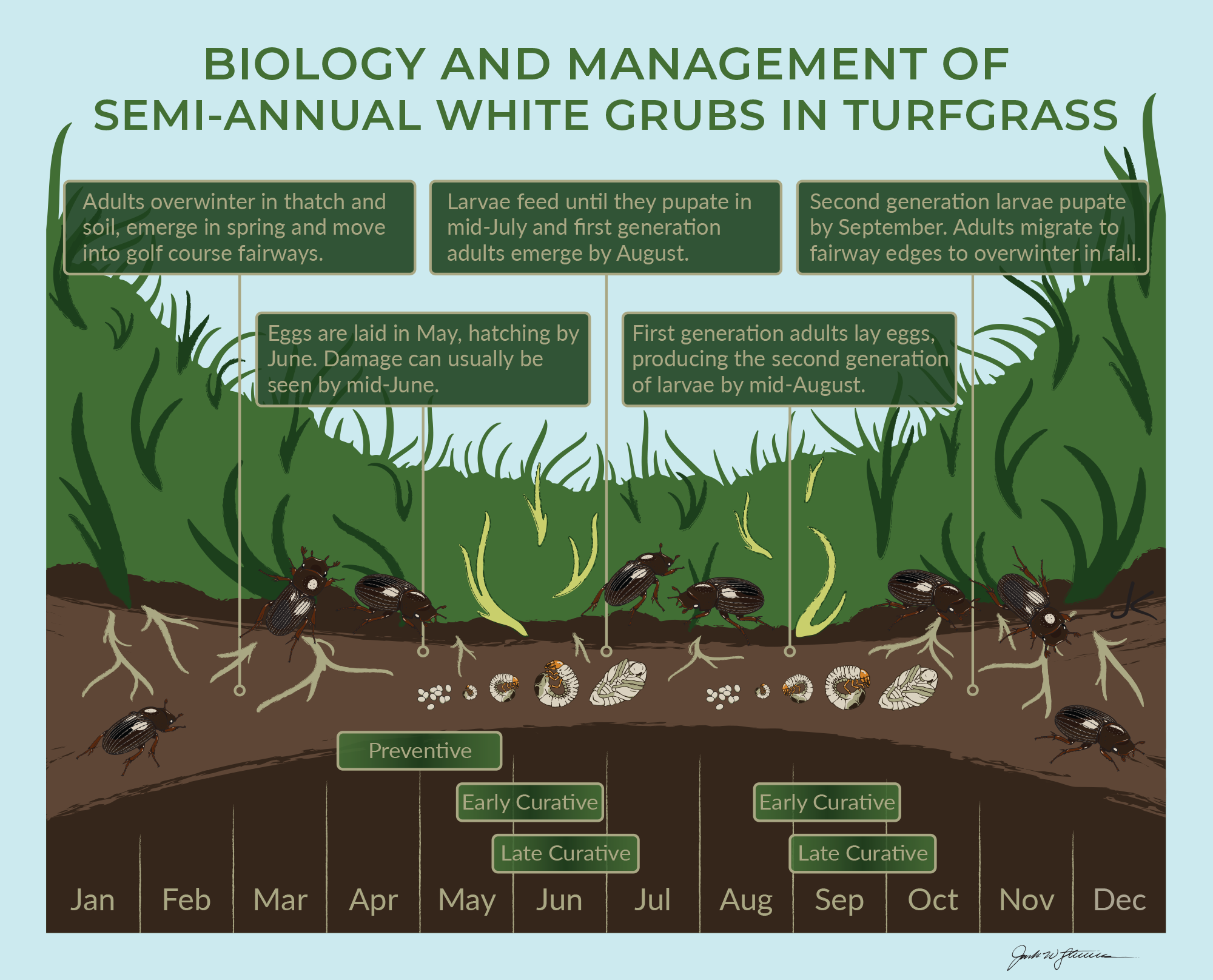
Pick the right type based on grub activity and damage level. Each serves a different purpose in your management strategy.
When to Use Preventive Treatments
Preventive insecticides protect roots by killing grubs as they hatch. They are ideal if you have had grub issues before or see high beetle activity. These products are systemic. They move into roots and last for months. Apply before damage appears.
When to Use Curative Treatments
Use curative insecticides when you see damage and confirm high grub counts. These kill existing grubs fast. They are contact killers with short soil life. Timing is critical. The best window is August through October when grubs are small and feeding.
Apply Preventive Grub Control Products Correctly
Preventive products work best when applied properly. Follow these guidelines for maximum effectiveness.
Best Preventive Active Ingredients
Several active ingredients proven effective include chlorantraniliprole and imidacloprid. Thiamethoxam, clothianidin, and halofenozide also work well. Chlorantraniliprole offers bee-safe protection with longer residual. Imidacloprid provides season-long control but requires careful timing.
Application Timing by Product
Apply chlorantraniliprole from April through July. Early application outperforms June treatments in university trials. Apply imidacloprid in June through mid-July. Apply halofenozide in mid-June through July.
Water In Immediately
Apply 0.5 inches of water right after spreading granules. Use coffee cans or rain gauges to measure. Without irrigation, the product stays on the surface and fails.
Pollinator Safety Tips
Imidacloprid, thiamethoxam, and clothianidin are toxic to bees. Mow flowering weeds before applying. Chlorantraniliprole is bee-safe, even on blooming clover. Avoid drift to garden beds or pollinator habitats.
Use Curative Treatments for Active Infestations
When damage is visible and grub counts are high, curative products provide fast control.
Best Curative Active Ingredients
Trichlorfon kills grubs in 24 to 72 hours. Carbaryl takes 10 to 14 days to show results. Clothianidin works for late-season control. Each has different speed and residual characteristics.
When to Apply Curatives
The best window is August through October when grubs are small and feeding. Avoid applying after May 15 in spring. Grubs have stopped feeding and are nearly pupated. Spring applications waste money and time.
How Fast Do They Work
Trichlorfon kills grubs in 24 to 72 hours. Carbaryl takes 10 to 14 days to show results, with full effect in 3 to 4 weeks. Do not expect visible results in 24 hours despite product names.
Application Tips
Treat the entire damaged area plus a 10-foot buffer. Water in with 0.5 inches of irrigation immediately. For heavy infestations, a second application after 14 days may be needed.
Avoid Ineffective Grub Control Products
Many products claim grub control but do not work. Save your money and protect your lawn.
Ineffective Ingredients to Avoid
Bifenthrin, permethrin, lambda-cyhalothrin, cyfluthrin, and deltamethrin do not work. These pyrethroids bind to thatch and do not reach grubs feeding below. They kill ants and fleas but not grubs.
Products That Do Not Work
Spectracide Triazicide contains gamma-cyhalothrin. University testing showed it failed. Products labeled 24-Hour Grub Killer are misleading. Trichlorfon works fast but grubs take 5 to 14 days to die. Do not judge too soon.
Effective Combination Products
Some blends offer real value. Bayer Complete Insect Killer combines imidacloprid with beta-cyfluthrin. Caravan pairs fungicide with thiamethoxam. Grub control plus fertilizer combinations feed turf while protecting roots.
Try Organic and Biological Control Methods
For chemical-free options, biological methods can work with proper application and realistic expectations.
Use Beneficial Nematodes
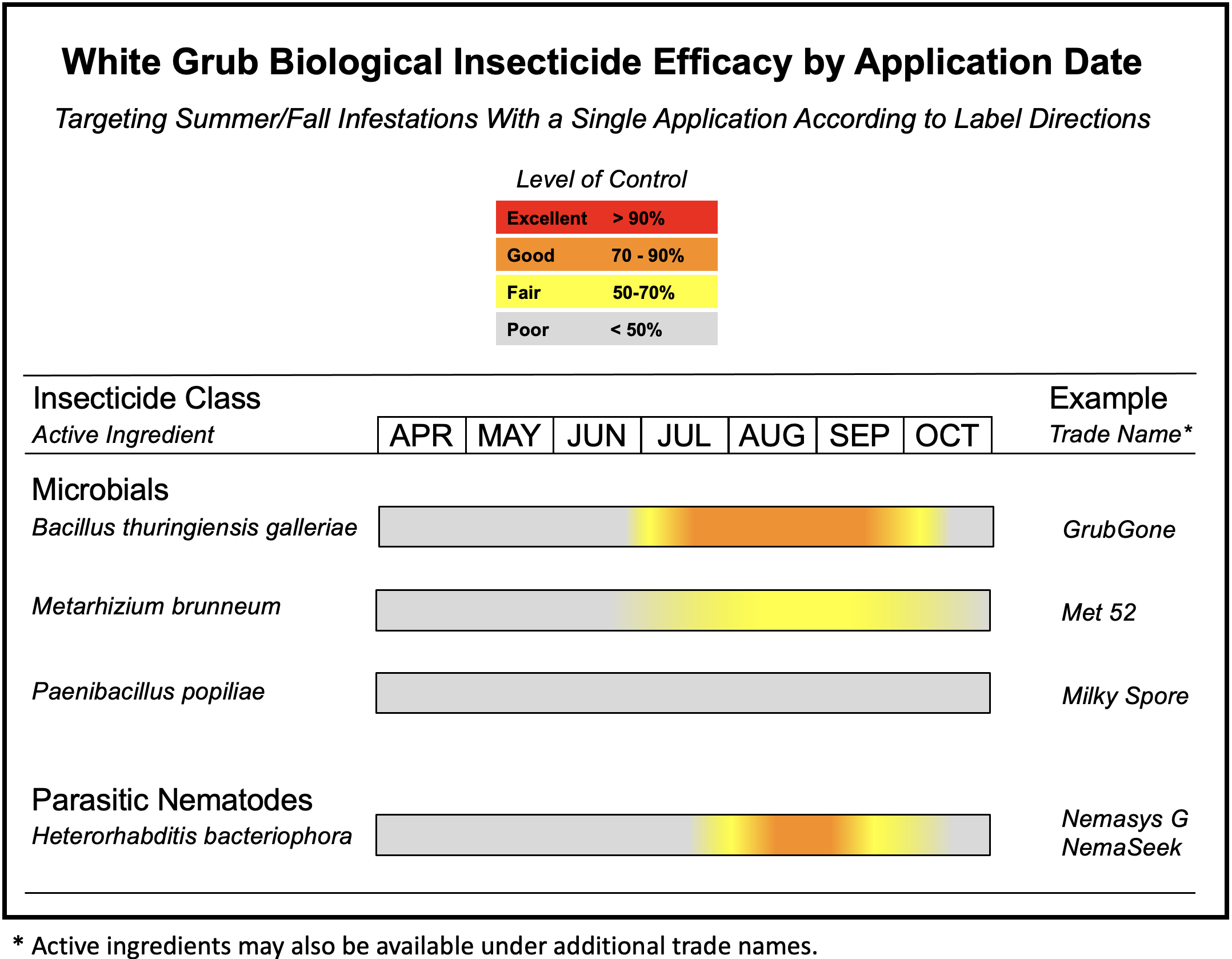
Microscopic worms invade grubs and kill them in 48 hours. Apply in August through September when soil is above 60°F. Apply in the evening to avoid UV light. Water heavily before and after application. Keep soil moist for 7 to 10 days. Effectiveness reaches 60 to 100 percent when applied correctly. Must be fresh and stored properly.
Try Milky Spore With Caution
Paenibacillus popilliae infects Japanese beetle grubs only. Apply in late summer or fall. Requires 2 to 3 years of repeated applications. Real-world infection rate is only 20 to 25 percent. Not effective against other grub species.
Neem Oil as a Supplement
Neem disrupts grub feeding and molting. Spray in late summer or early fall. Non-toxic to pets and pollinators. Moderate effect. Best used with other methods.
Strengthen Lawn Health to Resist Grubs
A strong lawn tolerates grubs and recovers faster. Use cultural practices to reduce risk.
Mow High to Deter Beetles
Set mower to 3.5 to 4 inches. Taller grass creates deeper roots and better grub resistance. Shade from tall blades makes lawn less attractive for egg-laying beetles.
Fertilize Smartly
Fertilize once a year in late October through early November. Avoid excess nitrogen in spring. It promotes thatch and attracts beetles.
Aerate and Dethatch
Core aeration reduces compaction and improves root growth. Dethatch if the layer is over ½ inch. Less thatch means less food and habitat for grubs.
Reduce Summer Watering
Withhold irrigation in July through August to dry surface soil. Dry conditions reduce egg hatch and deter beetles from laying. Resume watering if lawn goes dormant. No permanent damage occurs.
Choose Resistant Grass Types
Tall fescue tolerates 12 to 14 grubs per square foot. Kentucky bluegrass and perennial ryegrass show damage at 8 to 10 grubs per square foot. Mix in tall fescue for better resilience.
Follow Integrated Pest Management Principles
Avoid knee-jerk insecticide use. Use a smarter, step-by-step approach.
IPM Steps for Grub Control
Monitor by watching for beetles in summer and brown patches in fall. Confirm by scouting and counting grubs. Do not guess. Set threshold. Only treat if 10 or more grubs per square foot. Choose method. Start with least toxic options like nematodes or cultural practices. Act by applying right product at right time. Evaluate by checking results in 2 to 4 weeks.
When to Call a Professional
DIY methods fail when infestations are severe or you lack tools and expertise.
Hire a Pro If You
Find 6 to 10 or more grubs per square foot across large areas. See recurring damage year after year. Want professional-grade products like Dominion 2L or Acelepryn G. Need accurate diagnosis to rule out disease or chinch bugs. Lack time or equipment for even application.
Frequently Asked Questions About Treating Lawn for Grubs
How do I know if my lawn has grubs?
Look for spongy turf that lifts easily, irregular brown patches, and animal digging. Cut a 12-inch square of turf and count grubs in the root zone. More than 10 per square foot confirms infestation.
When is the best time to apply grub control?
Preventive treatments work best in late May through mid-July. Curative treatments are most effective in August through October. Spring treatments after mid-May waste money.
Do grubs kill the entire lawn?
Grubs feed on roots, causing patches that lift like carpet. Severe infestations can kill large areas. However, healthy lawns tolerate low populations without lasting damage.
Are pyrethroid products effective for grubs?
No. Bifenthrin, permethrin, and similar pyrethroids bind to thatch and do not reach grubs. They work on surface pests but not root-feeding grubs.
Can I treat my lawn organically?
Yes. Beneficial nematodes provide 60 to 100 percent control when applied correctly in warm, moist soil. Milky spore works only on Japanese beetle grubs over multiple years.
How much water do I need after applying grub control?
Apply 0.5 inches of irrigation immediately after any treatment. Use coffee cans to measure. Water moves the product into the root zone where grubs feed.
Key Takeaways for Treating Lawn Grubs Successfully
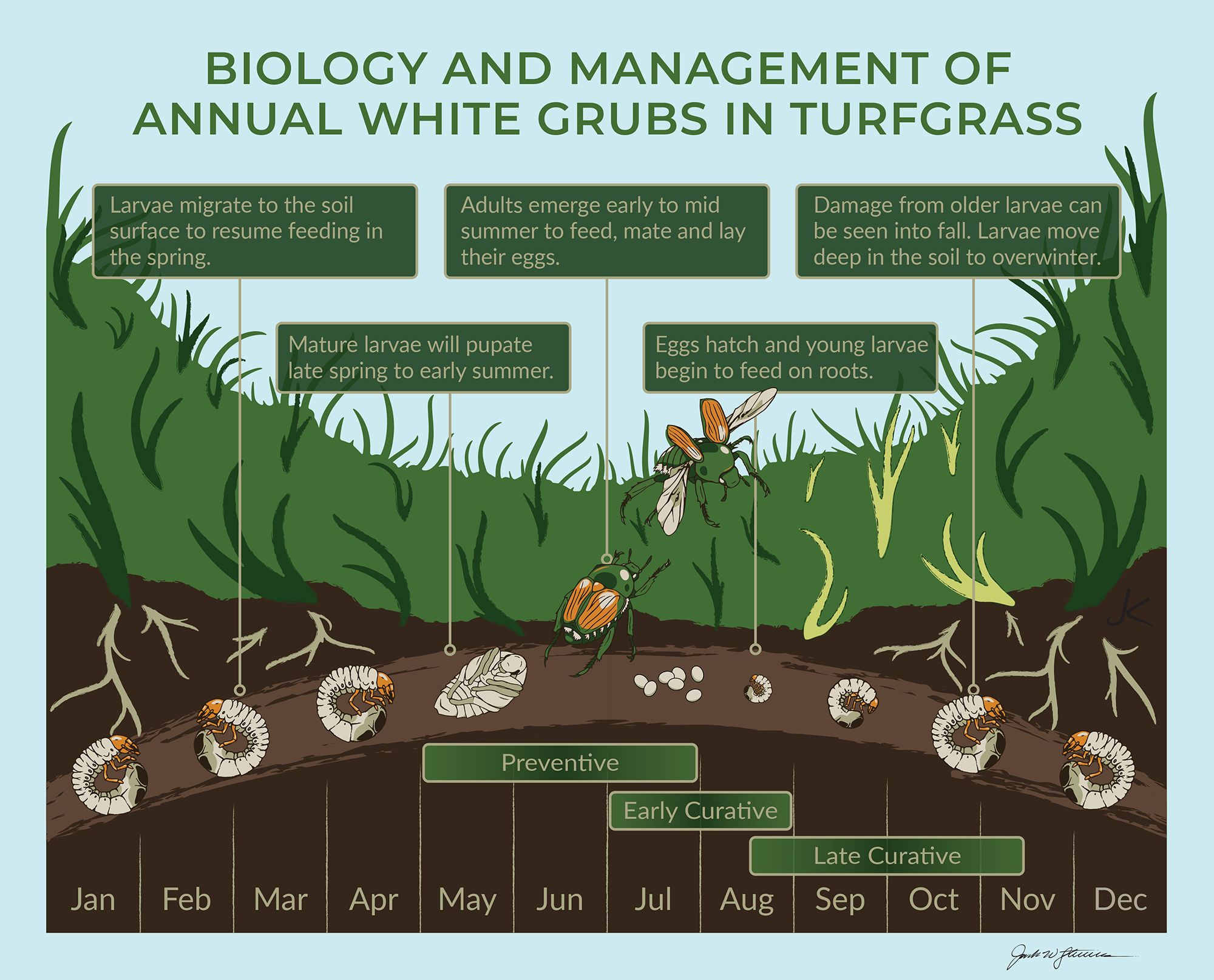
A healthy lawn is your best defense against grub damage. By combining accurate diagnosis, precise timing, and smart product choices, you can stop grub damage without over-treating. Always scout first. Dig and count before buying any product. Apply preventive treatments in late May through July. Use curative products only in August through October when grubs are actively feeding. Water in every application with 0.5 inches of irrigation. Mow high at 3.5 to 4 inches and fertilize in fall. Choose chlorantraniliprole for bee-safe, long-lasting prevention. Whether you use chemicals, biology, or cultural care, the goal is the same. Build a thick, green lawn that withstands pests and thrives year after year.