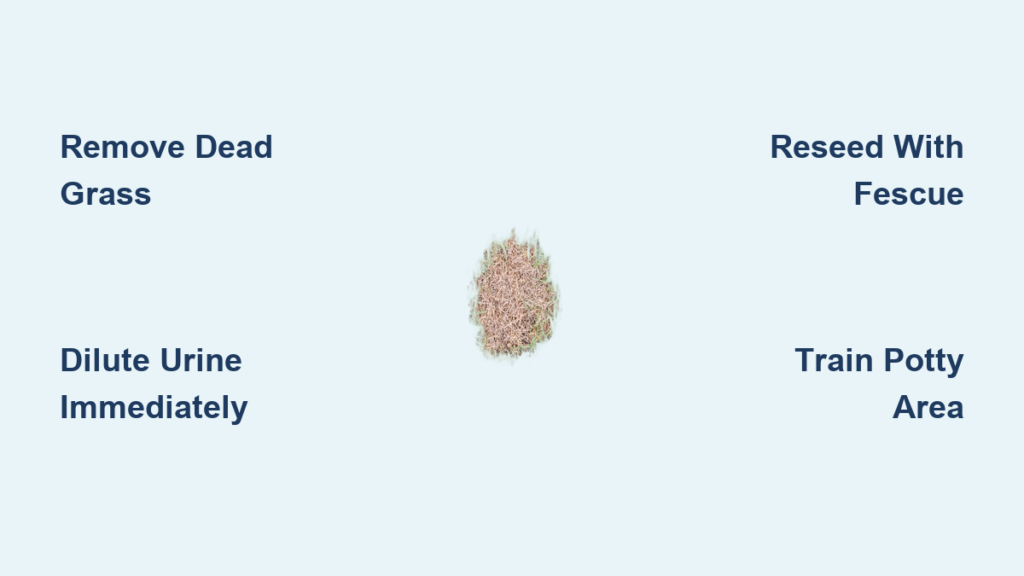
Dog urine brown spots on lawn are one of the most frustrating challenges for pet owners who want both a beautiful yard and a healthy, happy dog. These unsightly patches appear when concentrated nitrogen in your dog’s urine burns grass roots, killing the turf in small circular areas. While this damage doesn’t indicate illness in your pet, it can leave your lawn looking patchy and neglected. Understanding how to treat brown spots on lawn from dog urine is the first step toward restoring your grass and preventing future damage.
This comprehensive guide covers proven methods to repair existing brown spots, practical prevention strategies that work with your dog’s health, and product recommendations backed by experts. You’ll learn exactly what causes the damage, how to fix it quickly, and which approaches actually deliver lasting results.
Why Dog Urine Damages Your Lawn
Nitrogen Overload Burns Grass Roots
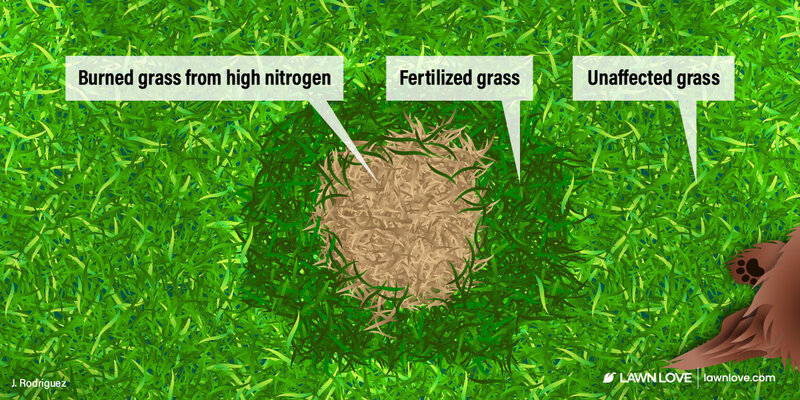
Dog urine contains high levels of nitrogen as a natural byproduct of protein metabolism in your dog’s body. When your dog urinates on the lawn, this concentrated liquid acts like an overdose of fertilizer. Instead of feeding the grass, it chemically burns the roots and dehydrates plant cells, leading to dead, brown patches. The damage is most severe when urine pools in one spot without any dilution.
The common belief that urine acidity causes the damage is actually incorrect. Research from veterinary experts confirms that nitrogen concentration, not pH levels, is the primary culprit behind lawn burns. Even healthy dogs on balanced diets can cause significant spots if their urine is particularly concentrated.
Factors That Make Damage Worse
Certain conditions increase both the likelihood and severity of brown spots on your lawn. Understanding these factors helps you target your prevention efforts more effectively.
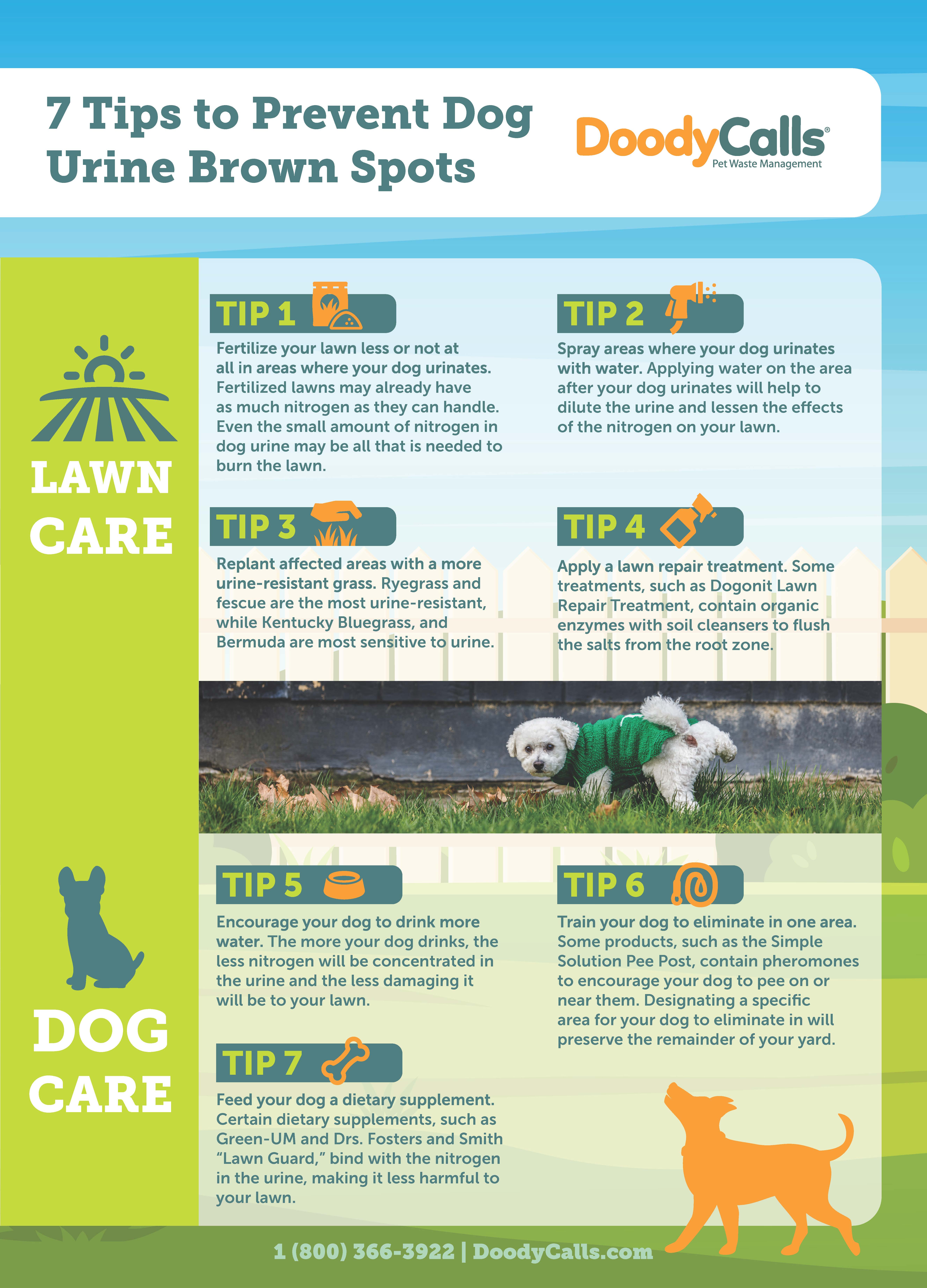
Low water intake leads to more concentrated urine, which means higher nitrogen delivery to grass roots. Dogs that don’t drink enough water produce urine similar to concentrated fertilizer. High-protein diets, including premium kibble or raw food diets, increase nitrogen output in urine. Female dogs and male dogs that squat deposit all their urine in one concentrated spot, causing more localized damage than dogs that mark territory in smaller amounts. Repeated urination in the same area prevents grass recovery and compounds the damage over time. Grass types like Kentucky bluegrass and Bermuda grass are particularly sensitive to urine damage, while tall fescue and perennial ryegrass show much better resistance.
You might notice a “halo effect” around brown spots, where a ring of extra green surrounds the dead center. This occurs because nitrogen at the edges is diluted enough to act as fertilizer, while the core receives a lethal concentration.
Quick Steps to Repair Brown Spots
Remove Dead Grass and Prepare the Soil
Start by clearing away damaged turf. Use a garden rake or small shovel to scrape out dead grass, roots, and debris from the affected area. Loosen the top 1 to 2 inches of soil to improve aeration and drainage. If the soil feels hard or compacted, break it up thoroughly to help new grass establish strong roots.
Healthy soil should crumble easily when you touch it, not form dense clumps. This preparation step is crucial for successful reseeding or sod installation.
Neutralize Soil Acidity
If your dog repeatedly uses the same spot, urine buildup may make the soil acidic. To balance the pH and create better growing conditions, you have two main options.
Sprinkle baking soda lightly over the area at a rate of approximately 1 teaspoon per square foot, then water thoroughly. Alternatively, apply dolomite lime according to package directions, which works well for larger chronically affected zones. Both options help create better growing conditions but do not reduce nitrogen concentration. Avoid overuse, as either can harm grass if applied too heavily.
Reseed or Install Sod
For pet-resistant grass seed, turf-type tall fescue and perennial ryegrass offer the best resistance to urine damage. Recommended products include EZ Seed Patch Master by Scotts, which combines fescue seed, fertilizer, and mulch in one convenient blend. The best time to plant is during spring or early fall when soil temperatures stay above 50 degrees Fahrenheit. Water lightly 2 to 3 times daily to keep soil moist. germination typically takes 7 to 14 days. Overseed slightly heavier than the recommended rate to speed up coverage.
For instant repair, cut a sod patch to fit the hole and press it firmly into place. Water daily for 7 to 10 days and wait until the grass has been mowed at least twice before allowing your dog access to the area. Sod may not match your existing lawn perfectly, especially for small repairs.
Protect New Growth
Until new grass is fully established, block off the area using temporary fencing, garden stakes with flags, or visual barriers like potted plants. Allow at least 2 to 3 weeks of undisturbed growth before letting your dog near the repaired spot.
Preventing Future Brown Spots
Dilute Urine Immediately After Your Dog Pees
The single most effective prevention method is flushing the spot right after your dog eliminates. Pour 1/2 to 1 gallon of water over the area within minutes of urination. This dilutes the nitrogen concentration and prevents it from burning grass roots.
Keep a watering can or hose with a spray nozzle near your yard’s main potty zone for quick access. For larger lawns, consider installing a timed sprinkler or drip irrigation system that automatically rinses high-use areas.
Increase Your Dog’s Water Intake
More hydration produces more diluted urine, which means less damage to your lawn. Several strategies encourage dogs to drink more water throughout the day.
Place multiple water bowls around your house and yard to increase accessibility. Use a pet water fountain, as running water attracts dogs and encourages them to drink more. Add ice cubes or a small amount of low-sodium broth to water bowls for added interest. Soak dry kibble in water for 10 minutes before feeding to increase overall water intake.
For dogs with specific urinary health needs, discuss veterinary-recommended options like Royal Canin Urinary SO with your vet. This prescription diet safely increases thirst without compromising your dog’s health.
Train Your Dog to Use a Designated Potty Area
Confining urination to one specific area saves the rest of your lawn from damage. Choose a discreet spot in your yard, such as a side yard or area under a tree. Use positive reinforcement by treating and praising your dog whenever they use the designated zone. Take your dog to the zone consistently after meals, naps, and play sessions. Consider using a pee post with pheromones, such as Simple Solution Pee Post, to attract your dog to the area.
The best materials for potty areas include gravel or pea stone for good drainage and odor control, mulch for a natural look at low cost, or artificial turf that hoses down easily and resists odors.
Upgrading Your Lawn Care Routine
Adjust How You Fertilize
Too much nitrogen from fertilizer combined with dog urine creates double trouble for your grass. Switch to low-nitrogen or slow-release fertilizers to avoid overwhelming your lawn. Avoid applying fertilizer near known potty spots, and test your soil annually to prevent nutrient overload. Look for fertilizers labeled “pet-safe” or “lawn repair” with balanced NPK ratios.
Aerate and Topdress Soil
Healthy soil handles stress much better than compacted or poor soil. Aerate your lawn once per year using a core aerator in spring or fall. This removes soil plugs and improves air, water, and root movement. It is especially helpful in high-traffic or compacted areas.
Add a 1/4 inch layer of compost over bare or thin spots. Compost boosts beneficial microbes, improves drainage, and helps buffer chemical imbalances in the soil.
Mow and Water Smart
Keep your grass at 2.5 to 3.5 inches tall, as taller grass recovers faster from damage. Never cut more than one-third of the blade at once, and always use sharp mower blades to prevent tearing.
For general lawn health, water deeply 1 to 2 times per week, aiming for 1 inch total. Water early morning between 5 and 9 AM to reduce fungal risk. For an extra urine-prevention boost, add a 2-minute afternoon sprinkle to flush accumulated salts and nitrogen from the soil.
Products That Actually Work
Enzymatic Treatments for Spot Repair
Several products have shown effectiveness when combined with proper lawn care practices.
Southland Organics Dog Spot is a liquid concentrate that encapsulates nitrogen to stop burn and revitalizes soil. It is safe for pets, kids, and all grass types. Apply directly to brown spots without rinsing.
Dogonit Lawn Repair uses plant enzymes, saponins, and organic acids to break down urea, loosen soil, and improve root growth. Spray on affected areas and rinse with water afterward.
See Spot Run Lawn Protection offers a natural formula to neutralize urine impact. It can be used preventively or after damage appears and mixes with regular fertilizer.
Results vary with these products, but they prove most effective when combined with dilution habits and proper reseeding.
Products to Skip
Dog Rocks claim to filter water and reduce lawn burn, but there is no strong scientific proof of effectiveness. These may not meaningfully change urine chemistry.
Urine-neutralizing supplements like Grass Green, Green-UM, and Lawn Guard claim to bind nitrogen or alter pH. However, veterinary experts warn that these can disrupt urinary health and increase crystal risk in some dogs. Most user feedback reports no visible improvement, making these supplements a poor investment.
Best Grass Types for Dog Owners
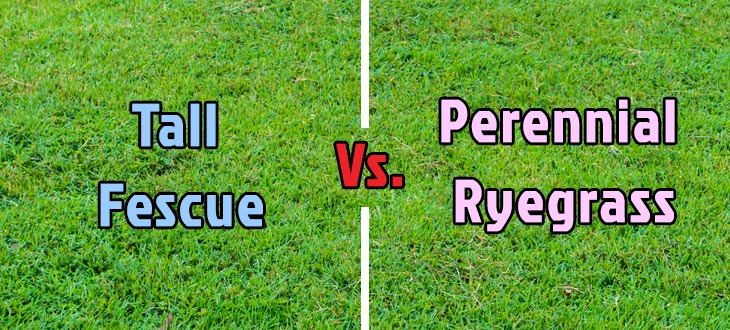
Certain grass varieties resist urine damage far better than others.
Tall fescue earns five stars for urine resistance. It has deep roots, handles drought well, and closely matches the look of bluegrass. Perennial ryegrass receives four stars for its fast growth and durability. Fine fescue also gets four stars for shade tolerance and low maintenance.
Kentucky bluegrass only earns two stars despite looking attractive, as it is highly sensitive to urine damage. Bermuda grass similarly scores two stars and remains vulnerable to burns.
For widespread damage, consider reseeding damaged areas with fescue or ryegrass. For severe cases with widespread spots, a full lawn renovation with urine-resistant varieties may be worth the investment.
Non-Grass Alternatives for Potty Zones
White clover, also called microclover, naturally fixes nitrogen and actually thrives where dog urine hits. It stays green and blends well with grass. Mow regularly to control spread.
Artificial turf works well for small yards or high-use zones. Choose pet-safe, UV-stable versions and rinse weekly to prevent odor buildup.
Gravel, mulch, or moss work perfectly in designated potty areas. They require zero maintenance and are completely urine-proof.
Frequently Asked Questions About Dog Urine Lawn Damage
Does dog urine acidity cause brown spots on grass?
No, the acidity of dog urine is not the main cause of lawn damage. Research confirms that nitrogen concentration, not pH levels, burns grass roots. The myth about urine acidity persists, but focusing on nitrogen dilution is the scientifically accurate approach.
How quickly should I treat a brown spot after it appears?
Act as soon as you notice the damage. Remove dead grass, prepare the soil, and reseed within a few days. The longer you wait, the harder it becomes for grass to recover, especially if your dog continues using the same area.
Can I use supplements to change my dog’s urine and protect my lawn?
Veterinary experts strongly discourage this approach. Altering your dog’s internal chemistry for lawn protection can disrupt urinary health and increase the risk of bladder stones. No peer-reviewed studies prove these supplements work, and the potential harm to your pet outweighs any lawn benefits.
Will watering my lawn more often prevent dog urine spots?
Daily watering helps flush accumulated salts and nitrogen from the soil, which reduces damage over time. However, watering alone does not prevent spots from fresh urination. Combine daily watering with immediate dilution after your dog pees for best results.
How long does it take for reseeded grass to recover from dog urine damage?
Grass typically germinates within 7 to 14 days under ideal conditions. However, full recovery and establishment take 3 to 6 weeks. Protect the area from your dog for at least 2 to 3 weeks, and wait until the grass has been mowed twice before allowing pet access.
Is it better to use sod or seed for repairing dog urine spots?
Sod provides instant coverage and is more resilient to immediate pet activity once rooted. Seed is more affordable and allows you to choose urine-resistant varieties like tall fescue. For small repairs, seed usually blends better with existing grass. For large areas or quick fixes, sod may be worth the extra cost.
Key Takeaways for Treating Dog Urine Brown Spots
Successfully treating and preventing dog urine brown spots requires a multi-pronged approach that prioritizes both your lawn’s health and your dog’s wellbeing. The most effective strategy combines immediate action with long-term habits.
Remove dead grass and reseed with urine-resistant varieties like tall fescue or perennial ryegrass. These grasses handle nitrogen exposure much better than Kentucky bluegrass or Bermuda grass. Protect new growth for at least 2 to 3 weeks before allowing your dog back on the area.
Dilute urine spots immediately by pouring 1/2 to 1 gallon of water over the area within minutes of your dog eliminating. This single habit prevents more damage than any product or supplement. Increase your dog’s water intake through multiple bowls, fountains, or adding water to food.
Train your dog to use a designated potty area using positive reinforcement and pheromone attractants. Confining damage to one zone makes prevention manageable and protects the rest of your lawn.
Adjust your lawn care by using low-nitrogen fertilizers, aerating annually, and maintaining proper mowing height. These practices strengthen grass resilience against all types of stress, including urine damage.
Skip the supplements that claim to alter your dog’s urine chemistry. These products lack scientific backing and may harm your pet’s health. Save your money and focus on behavior modification and proper lawn care instead.
With consistent effort and patience, you can maintain a lush green lawn while keeping your dog happy and healthy. The results take time, but the combination of proper treatment, smart prevention, and good lawn maintenance delivers lasting results you can enjoy all season long.